Forbes

Search documents
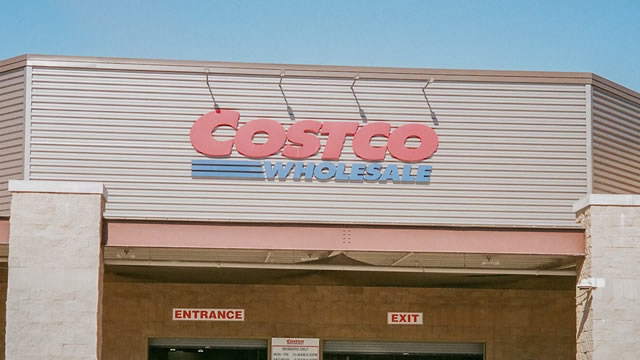
How Costco Stock Falls To $700?
Forbes· 2026-01-26 13:45
Core Viewpoint - Costco Wholesale (COST) shares have increased by 16% over the past month, currently trading at $983.25, but a multi-factor evaluation suggests it may be prudent to sell the shares due to a very high valuation and a negative outlook on the stock [1][3]. Valuation - Costco has a market capitalization of $437 billion, but its valuation appears very high, with a suggested target price of $687 [5][4]. - The stock is considered unattractive due to its very high valuation despite moderate operational efficiency and financial health [3][4]. Growth - Costco has experienced an average revenue growth rate of 6.7% over the last three years, with revenues increasing by 8.3% from $259 billion to $280 billion in the past 12 months [7]. - Quarterly revenues rose by 8.3%, reaching $67 billion in the most recent quarter, up from $62 billion a year prior [7]. Profitability - Over the last 12 months, Costco's operating income was $11 billion, resulting in an operating margin of 3.8% [8]. - The company generated approximately $15 billion in operating cash flow during this period, with a cash flow margin of 5.3% [8]. - Costco's net income for the same timeframe was nearly $8.3 billion, leading to a net margin of around 3.0% [8]. Financial Stability - As of the end of the most recent quarter, Costco had a debt of $8.1 billion, with a debt-to-equity ratio of 1.9% [9]. - The company holds $17 billion in cash (including cash equivalents) within total assets of $83 billion, resulting in a cash-to-assets ratio of 20.8% [9]. Downturn Resilience - Costco has shown more resilience than the S&P 500 index during various economic downturns, recovering quickly from declines [10]. - Historical data indicates that Costco shares have fully recovered from significant drops during the 2022 inflation shock, the 2020 COVID pandemic, and the 2008 global financial crisis [12].


How Does Constellation Energy Stock Compare With Its Peers?
Forbes· 2026-01-26 13:35
Group 1 - Constellation Energy Corporation (CEG) has underperformed in the stock market over the past year, showing lower operating margins and negative free cash flow compared to many competitors, despite moderate revenue growth [2][3] - CEG's operating margin stands at 12.1%, the lowest among its peers, while NextEra Energy (NEE) boasts a significantly higher margin of 28.2%, indicating NEE's stable regulated utility and renewable energy framework compared to CEG's exposure to a competitive power market [3] - The valuation of CEG appears elevated, with a price-to-earnings (PE) ratio of 33.0, which is higher than most of its peers, reflecting market caution regarding the volatility of merchant power despite increasing demand for its nuclear assets driven by AI [3][8] Group 2 - CEG's revenue growth is at 3.6%, which is lower than several competitors like Duke Energy (DUK), Southern Company (SO), Vistra (VST), and Exelon (EXC), which benefit from rate base growth and mergers and acquisitions; however, CEG outperforms NEE, which experienced a revenue decline of 6.9% due to project cycles [8]


Bitcoin Downside: Where Does This Fall In BTC Price End?
Forbes· 2026-01-26 13:20
Market Overview - Bitcoin has declined by 25% over the past six months, currently trading below $88,000, attributed to macroeconomic uncertainties and diminishing institutional flows [2][5] - The peak price near $126,000 in late 2025 was followed by decreasing enthusiasm and leveraged trading, leading to forced liquidations [2][5] Price Projections - CryptoQuant anticipates a medium-term downside target of around $70,000, with a significant pullback potentially reaching $56,000, which is historically where bear markets have settled [5] - More severe scenarios suggest prices could drop to $25,000 or even $10,000 under catastrophic conditions [5] Institutional Behavior - U.S. spot Bitcoin ETFs experienced outflows of $4.57 billion in November and December 2025, marking their worst two-month performance on record [9] - The trend of institutional exits is accelerating, with significant outflows indicating structural de-risking rather than temporary profit-taking [9] Technical Indicators - Bitcoin is trading below its 365-day moving average of approximately $101,000, with bearish signals emerging on the weekly chart [9] - Current price range is between $85,000 and $92,000, with selling pressure evident at each rally attempt [9] Historical Context - Historical patterns show that sharp corrections of 40-50% typically recover within 6-16 months, while deeper bear markets with 70-80% declines take 24-28 months to recover [7] - Previous significant drawdowns include a 78% drop from about $69,000 to below $16,000, which required 28 months for recovery [10] Recovery Outlook - Recovery hinges on macroeconomic catalysts, with a dovish pivot from the Federal Reserve potentially stabilizing conditions by Q2-Q3 2026 [12] - Conservative estimates suggest Bitcoin could reach $120,000-$170,000 by the end of 2026 if ETF flows stabilize and macroeconomic conditions improve [15] Supply-Demand Dynamics - Long-term holders have resumed accumulation after a distribution phase, indicating a favorable supply-demand dynamic [15] - Despite market turbulence, U.S. spot Bitcoin ETFs attracted over $20 billion in total flows during 2025, laying the groundwork for renewed accumulation [15]

These Are The Stock Market's Newest Dividend Payers
Forbes· 2026-01-25 18:00
Core Insights - The article discusses seven new dividend payouts from various companies, highlighting their potential as investment opportunities due to initial high yields and growth prospects [2][3] Group 1: Tutor Perini (TPC) - Tutor Perini announced its first dividend of $0.06 per share with a yield of 0.3%, marking a significant turnaround after three years of net losses [4][5] - The company reported record operating cash flow of $574.4 million and a backlog of $21.6 billion by Q3 2025, leading to a tripling of its share price in 2025 [5] - For full-year 2025, Tutor Perini is expected to report a profit of $4.10 per share, with the dividend representing only 6% of earnings, indicating room for future increases [6] Group 2: Orla Mining (ORLA) - Orla Mining initiated a quarterly dividend of $0.015 with a yield of 0.4%, transitioning from a junior miner to a mid-tier producer [7][8] - The company experienced a 143% increase in share price in 2025 and is expected to report a smaller profit for 2025 after doubling its net income in 2024 [9] - Future dividend growth may be limited due to the cyclical nature of mining profits, but management is confident in the sustainability of profits [10] Group 3: ePlus (PLUS) - ePlus announced a quarterly dividend of $0.25 with a yield of 1.1%, providing IT and professional services [12] - The company has seen a 2,000% increase in share price over the past 15 years, but is currently navigating mixed financial results [13][14] - Revenue growth is expected to be high-single-digit, but earnings per share are projected to decline in the current fiscal year [14] Group 4: Visteon (VC) - Visteon initiated a quarterly dividend of $0.275 with a yield of 1.2%, focusing on automotive technology [15][16] - After a history of volatility and declining net income, the company has shown a stable rebound in profits during the 2020s [17] - Despite the dividend announcement, the stock experienced a selloff following the first payment [17] Group 5: G-III Apparel Group (GIII) - G-III announced a quarterly dividend of $0.10 with a yield of 1.3%, operating in the apparel sector [18][19] - The company has seen steady net income, despite a loss in fiscal 2023 due to brand writedowns and supply chain issues [19][20] - G-III's dividend announcement reflects a strategy to attract shareholders amid limited growth prospects [20] Group 6: California BanCorp (BCAL) - California BanCorp initiated a quarterly dividend of $0.10 with a yield of 2.2%, showing rapid revenue growth from $13.6 million in 2015 to $180 million in 2024 [21][22] - Despite the growth, the company's stock has not seen significant appreciation, but the dividend may change investor sentiment [23] Group 7: Carnival Corp. (CCL) - Carnival Corp. announced a quarterly dividend of $0.15 with a yield of 2.1%, marking a resumption of its dividend program suspended during COVID-19 [24][26] - The company reported a substantial profit in 2024, returning to pre-COVID profit levels in 2025, indicating recovery from the pandemic's impact [26]

UFC 324 Results: Alex Perez KOs Charles Johnson, Joshua Van Reacts
Forbes· 2026-01-25 02:46
Core Insights - Charles Johnson suffered a significant knockout loss to Alex Perez during the UFC 324 prelims, marking a challenging night for the veteran flyweight contender [2][4] - The current 125-pound champion, Joshua Van, took to social media to taunt Johnson after the fight, highlighting the competitive history between the two fighters [3][7] Fight Analysis - Johnson's defeat was attributed to his inability to defend against Perez's strikes, particularly failing to raise his right hand while in range [5] - The fight concluded with a TKO at 3:16 of Round 1, as Perez capitalized on Johnson's defensive lapses [6][12] Historical Context - Johnson previously defeated Joshua Van by knockout in July 2024, making him the only fighter to achieve this against Van [8] - Van's recent trolling of Johnson is intensified by their past encounter, as Johnson's loss to Perez provides Van with new leverage in their rivalry [9] Event Summary - UFC 324 took place at T-Mobile Arena in Las Vegas, featuring several notable matchups, including the interim lightweight championship [10][13]


This Cheap 5.3% Dividend Soars With Stocks (Perfect For 2026)
Forbes· 2026-01-24 17:30
Market Outlook - The expectation for a strong year in 2026 is supported by data, predicting a roughly 12% gain for the S&P 500 [2][3] - The Atlanta Fed's GDPNow indicator suggests an impressive 5% GDP growth in Q4 2025, significantly higher than the 1% growth forecasted by most economists [9] Employment and Economic Indicators - The labor market shows signs of improvement, with the unemployment rate beginning to fall after peaking at the end of 2025, despite rising since early 2023 [11] - Private employment in the US has increased from 126.6 million pre-pandemic to 134.6 million post-pandemic, indicating a recovery in the job market [12] Investment Opportunities - Closed-end funds (CEFs) are highlighted as attractive investment options, particularly those trading at discounts to net asset value (NAV) [5][6] - Central Securities Corporation (CET) is noted for trading at a 17% discount to NAV, focusing on high-quality firms like Alphabet, Progressive Corp., and Amazon, while offering a 5.3% dividend [7][8] Earnings and Sales Performance - S&P 500 companies reported a 7.8% increase in sales in Q4, indicating a healthy economic environment [13] - CET has shown solid returns over the past three years, benefiting from market recovery and productivity gains from AI [14] Future Projections - The current discount of CET to NAV is expected to narrow, providing potential for capital appreciation alongside market growth in 2026 [15][16] - Management's commitment to translating portfolio gains into dividends suggests a favorable outlook for income and growth for investors [16]

Trump Threatens Canada With 100% Tariff If It Makes Deal With China
Forbes· 2026-01-24 14:45
Core Viewpoint - President Trump threatens to impose a 100% tariff on all Canadian imports if Canada finalizes a trade deal with China, escalating tensions between the U.S. and Canada [1][5]. Group 1: Trade Relations - Trump accused Canadian Prime Minister Mark Carney of trying to make Canada a "drop off port" for Chinese goods entering the U.S. market [1][5]. - Canada imported $421 billion worth of goods from the U.S. in 2024, with energy products accounting for $131 billion, indicating the significance of trade between the two countries [4]. Group 2: Political Context - The threat follows Carney's criticism of Trump's foreign policy at the World Economic Forum, where he warned against authoritarianism [2]. - Trump has a history of using tariffs as a negotiation tool, previously imposing tariffs on Canadian steel and aluminum, which disrupted bilateral trade [6]. Group 3: Economic Implications - Carney announced plans to remove trade barriers with China to unlock billions for Canadian sectors, including agri-food, by allowing 49,000 Chinese electric vehicles into Canada [3]. - Trump's statement suggests that a trade deal with China could lead to severe economic consequences for Canada, including the potential destruction of its businesses and social fabric [5].

Toyota Recalls 162,000 U.S. Pickup Trucks Over Display That May Get Stuck
Forbes· 2026-01-23 19:50
Core Point - Toyota announced a recall of approximately 162,000 vehicles in the U.S. due to a faulty display that may increase the risk of a crash, specifically affecting 2024-2025 Toyota Tundra and Tundra Hybrid models [1][2] Group 1: Recall Details - The recall involves issues with the multimedia display, which may become stuck or show a black screen, and the rearview image may not display while the vehicle is in reverse, potentially violating federal safety standards [1][2] - Affected customers will be notified by late March [2] Group 2: Historical Context - In 2025, Toyota recalled 3.2 million vehicles across 15 recalls, ranking second in the U.S. behind Ford, which recalled a record 12.9 million vehicles [4] - Previous recalls for the Tundra included approximately 127,000 vehicles in November 2024 for engine contamination issues and another recall in October covering 394,000 vehicles for a software issue affecting the rearview display [5]


Amazon Bets Big On Brick-And-Mortar With A Mega-Store Outside Chicago
Forbes· 2026-01-23 16:55
Core Insights - Amazon is attempting to expand its e-commerce dominance into physical retail, particularly in the grocery sector, which is nearing a $1 trillion market size [2][3] - Currently, Amazon holds a mere 3% share of the grocery market, despite generating over $100 billion in grocery sales in 2024 [3][4] - The company plans to open a 230,000-square-foot mega-store outside Chicago in 2027, significantly larger than a typical Walmart supercenter [4][5] Market Position - Amazon's grocery market share is 1.6% for both Amazon and Whole Foods, while Walmart commands a 21% share with 4,600 U.S. stores [3] - Amazon's North America segment sales for the first three quarters of the fiscal year reached $299.3 billion, compared to Walmart U.S. at $353.8 billion [15] Store Development - The new store in Orland Park Village will include 800 parking spots and create 500 jobs, with zoning approval obtained in about two weeks [6][7] - The store will feature a mix of groceries, household essentials, and general merchandise, designed for customers to make one-stop shopping trips [10][11] Operational Strategy - The store will incorporate a design that allows for browsing and fulfilling same-day grocery orders, with options for in-store kiosks and delivery to customers' cars [11][12] - Amazon's previous attempts at physical retail have included various concepts, but many have not succeeded, indicating a need for a successful model in brick-and-mortar retail [16][18] Competitive Landscape - Amazon holds a dominant 40% share of e-commerce sales among the top 2,000 online retailers, while Walmart trails at 11% [14] - The success of the new mega-store will depend on attracting customers from competitors like Walmart and Costco [20]



Why Ralph Lauren Is Outpacing Tapestry Stock In 2026?
Forbes· 2026-01-23 16:40
Core Insights - Ralph Lauren (RL) is outperforming Tapestry (TPR) in 2026 within the Apparel, Accessories & Luxury Goods sector, despite both companies facing challenges from uneven discretionary spending and promotional pressures [2] - RL's advantages include a lower price-to-operating-income valuation compared to TPR and stronger revenue and operating income growth, indicating superior brand momentum and execution [3] Company Performance Comparison - RL's stock may present a more favorable investment opportunity than TPR due to its lower valuation metrics and better financial performance [3] - Tapestry operates through three main brands: Coach, Kate Spade, and Stuart Weitzman, with a significant retail presence of 939 Coach stores globally [5] Investment Strategy Insights - Asset allocation is emphasized as a more strategic approach than merely stock picking, with Trefis' wealth management partner demonstrating positive returns during market downturns [4] - The Trefis High Quality Portfolio aims to mitigate stock-specific risks while providing exposure to potential upside, outperforming its benchmark indices [6][8] Market Trends and Future Outlook - Analyzing Tapestry's stock price in relation to its historical performance may reveal whether the current valuation discrepancy is temporary or indicative of ongoing underperformance [7] - Continuous underperformance in Tapestry's revenue and operating income growth could suggest that its stock is overpriced compared to competitors, with limited chances of reversion [7]