母基金研究中心

Search documents
第四届达沃斯全球母基金峰会议程公开
母基金研究中心· 2026-01-21 09:16
Core Viewpoint - The fourth Davos Global FOF Summit will take place on January 21, 2026, in Davos, Switzerland, hosted by the Global FOF Association and organized by the China International Technology Promotion Association's FOF branch [2][3]. Group 1: Summit Overview - The participating institutions at this year's summit are notably strong, with the number of overseas guests surpassing that of domestic attendees for the first time [3][4]. - The Global FOF Association will release the "2025 World's Best FOF Investment Institutions List," continuing its tradition of publishing an annual list for six consecutive years, selected through recommendations and evaluations from invited investment associations in Europe, the United States, the Middle East, and other regions [4][3]. Group 2: Agenda Highlights - The itinerary for the fourth Davos Global FOF Summit includes a series of keynote speeches and panel discussions scheduled from 14:30 to 20:00 [5][7]. - Keynote speeches will feature prominent figures such as Nan Li Collins from the UN Sustainable Stock Exchange and Scott Voss from HarbourVest, among others [10][12]. - Panel discussions will cover topics like macro strategies and the new paradigm of cross-border investment opportunities, featuring experts from various sectors [13].


第四届达沃斯全球母基金峰会参会嘉宾公布
母基金研究中心· 2026-01-20 04:24
Core Viewpoint - The Fourth Davos Global Fund of Funds Summit will take place on January 21, 2026, in Davos, Switzerland, focusing on the future development of the global fund of funds and venture capital industries, with over 100 leading figures expected to attend [2][3]. Group 1 - The summit is organized by the Global Fund of Funds Association and the China International Science and Technology Promotion Association Fund of Funds Branch, marking a significant multilateral dialogue in the global fund of funds industry [2][3]. - Previous editions of the summit have seen Chinese General Partners (GPs) raise over $1 billion, highlighting the event's importance in the private equity investment sector [4][5]. - The summit aims to discuss strategies for navigating economic cycles and explore new directions for the future of global funds and venture capital cities [3][5]. Group 2 - The guest lineup for the Fourth Davos Global Fund of Funds Summit has been unveiled, featuring prominent figures from various sectors, including finance and investment [6].
50亿省级国改母基金招GP | 科促会母基金分会参会机构一周资讯(1.14-1.20)
母基金研究中心· 2026-01-20 04:24
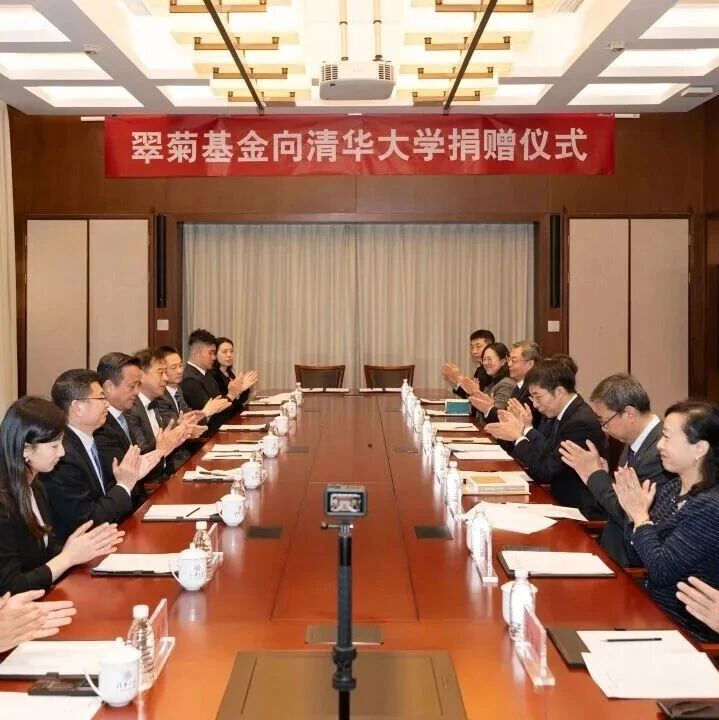
Group 1 - The establishment of the "China International Science and Technology Promotion Association Mother Fund Branch" aims to enhance the role of mother funds in China's capital market and promote the healthy development of the investment industry, particularly the mother fund sector [1][26]. - The Henan Provincial State-owned Enterprise Reform Development Equity Investment Fund, initiated by the Henan Capital Group, has a scale of 5 billion yuan and focuses on investment in key industries and strategic emerging industries within Henan Province [2][4]. - The sub-fund management institutions are required to secure at least 50% of the total fund size in investment intentions, excluding contributions from the mother fund [4]. Group 2 - Coller Capital has successfully raised $17 billion for its largest fund, Coller International Partners IX, which focuses on secondary market transactions in private equity [8][9]. - The fund aims to provide diversified investment opportunities in the private equity secondary market and has already invested over 70% of its capital [9]. - The fund's investor base includes over 250 participants, comprising major pension funds, insurance companies, sovereign wealth funds, and other financial institutions [9]. Group 3 - Guoxin Fund led a financing round for Shize Biotechnology, which specializes in iPSC-derived cell therapies for neurological diseases, highlighting the potential of cell therapy in the biopharmaceutical sector [10][12]. - Shize Biotechnology has received multiple clinical trial approvals from both Chinese and U.S. regulatory authorities, indicating its strong position in the market [12][13]. - The investment from Guoxin Fund is part of a broader strategy to enhance state-owned capital's presence in the biotechnology field, aiming to support high-quality development in cell therapy [14]. Group 4 - Wuhan Haipai Technology has officially opened in the Yangguang Chuanggu Park, focusing on large-scale interactive sports solutions, which adds momentum to the local industry [15][17]. - The company has developed advanced positioning systems and interactive technologies, with a team comprising members from leading tech firms [17]. Group 5 - The launch of the Rui Chi C9, a new smart light truck by Rui Chi Automotive, reflects the rapid development of the new energy commercial vehicle market in Chongqing, with a starting price of 169,900 yuan [20][21]. - Two Rivers Capital has been actively involved in optimizing governance and strategic decision-making for Rui Chi Automotive, ensuring alignment with long-term development goals [21]. Group 6 - The Cui Ju Fund has made a donation to Tsinghua University to support campus infrastructure and talent development, emphasizing the importance of collaboration between educational institutions and social forces [24][25].
国家发改委再出大招:研究设立国家级并购基金
母基金研究中心· 2026-01-20 04:24
Core Viewpoint - The establishment of a national-level merger and acquisition (M&A) fund is a strategic move by the government to promote innovation and entrepreneurship, signaling a shift towards market-driven M&A to enhance industrial integration and cultivate new productive forces [2][9]. Policy and Market Context - The announcement aligns with previous policies aimed at reforming the M&A market, including the "Six Opinions on Deepening the Reform of M&A and Restructuring in Listed Companies" and measures to support high-quality development of venture capital [2][3]. - Local governments are actively establishing large-scale state-owned M&A funds, with over 10 regions implementing supportive policies for M&A and fund establishment [2][3]. Structural Opportunities - The current environment presents a historic structural opportunity for M&A funds, driven by a more market-oriented listing process and the need for industrial consolidation in key sectors [4]. - Many industries face challenges of fragmentation, with numerous small companies, creating a demand for M&A to enhance competitiveness and develop leading enterprises [4]. Market Dynamics - The private equity market is evolving, with a shift from financial investors to active industry integrators, as evidenced by a significant increase in M&A activity involving private equity funds [7]. - The proportion of M&A exits in the private equity market remains low compared to developed markets, highlighting the need for improved exit strategies [5][6]. Challenges and Mechanisms - The successful operation of a national-level M&A fund requires a market-oriented and professional framework, including the establishment of a capable team for governance and integration [8]. - There is a need to define the roles and collaborative relationships between national, local, and market-driven M&A funds to create a cohesive ecosystem [8]. Strategic Implications - The proposed national-level M&A fund represents a paradigm shift towards a strategy that integrates national objectives with market operations, aiming to enhance industrial integration and competitiveness in critical sectors [9].

这个区产业基金+种子基金全面启动
母基金研究中心· 2026-01-20 04:24
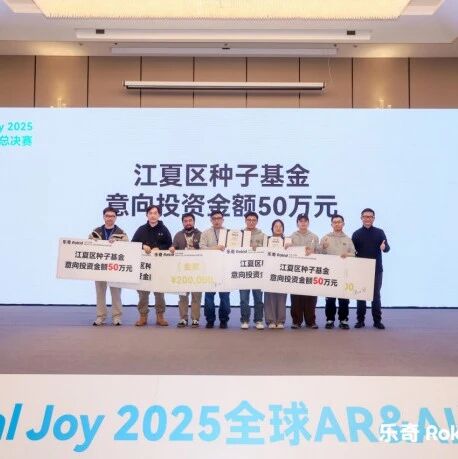
Group 1 - The core viewpoint of the article highlights the establishment of a 1 billion yuan artificial intelligence investment fund, marking the initiation of a dual-driven model for industrial development in Jiangxia, focusing on the AR and AI sectors [2][5]. - The fund, named "Xia Chuang Ling Ban," is a collaboration between Jiangxia Science and Technology Investment, Wuchang Investment, and Rokid, targeting the entire AI industry chain, particularly in smart glasses and vertical applications like industrial inspection and digital cultural tourism [5][6]. - The fund aims to leverage Rokid's nearly 300 core patents and comprehensive technology system to attract social capital and guide quality projects to Jiangxia, thereby accelerating the construction of an AR and AI industry cluster [5][6]. Group 2 - The seed fund serves as an incubator for early-stage innovative projects, complementing the existing government investment fund system in Jiangxia, and aims to facilitate the transformation of talent and technological achievements locally [6][8]. - The seed fund focuses on supporting the transformation of university research results, entrepreneurship among faculty and students, and nurturing technology-based SMEs through public solicitation and competition-based evaluations [6][8]. - The recent competition attracted nearly 500 teams, with four gold award teams securing investment intentions from the seed fund, demonstrating the fund's role in connecting global innovative teams with local capital [6][8].
唐劲草:新政之下,国资母基金正在走向“六宽一高”
母基金研究中心· 2026-01-19 08:44
Core Viewpoint - The implementation of three new policies related to government investment funds aims to alleviate fundraising anxiety in the equity investment industry by optimizing the operation of state-owned mother funds, focusing on the "Six Widens and One High" approach, which emphasizes flexibility and efficiency in fund management [1][2]. Group 1: Six Widens and One High - **Wide Registration**: The new policy breaks traditional geographic restrictions, allowing sub-fund managers to choose registration locations without being tied to local tax implications, fostering collaboration between cities [3]. - **Wide Contribution**: The policy allows for an increased government contribution ratio in venture capital funds, with some local governments raising their contribution to 70%-90%, facilitating faster fund establishment [4]. - **Wide Funding**: The adjustment allows government funds to invest without waiting for all other investors to contribute, thus resolving the "wait-and-see" issue in fundraising [5]. - **Wide Return Investment**: The return investment requirements have been relaxed, with some regions lowering the return ratio to as low as 0.6 times, enhancing the attractiveness for quality venture capital institutions [6]. - **Wide Incentives**: A flexible profit-sharing mechanism is established to motivate sub-fund managers, linking their performance to higher profit-sharing ratios [7]. - **Wide Tolerance for Errors**: The policy acknowledges the high-risk nature of tech investments, allowing for a tolerance mechanism for project failures, thus encouraging investment in innovative sectors [8]. Group 2: High Efficiency - **High Efficiency**: The new policies aim to streamline the approval process for fund recruitment, targeting a maximum approval time of three months, while providing comprehensive support to sub-fund managers [10]. Group 3: Overall Impact - The "Six Widens and One High" framework is a practical implementation of the new policies, aiming to balance policy guidance with market dynamics, ultimately serving as a stabilizing force in the equity investment sector and driving high-quality economic development [11].

陈道富:探索并构建“新投融资体制”
母基金研究中心· 2026-01-18 08:32
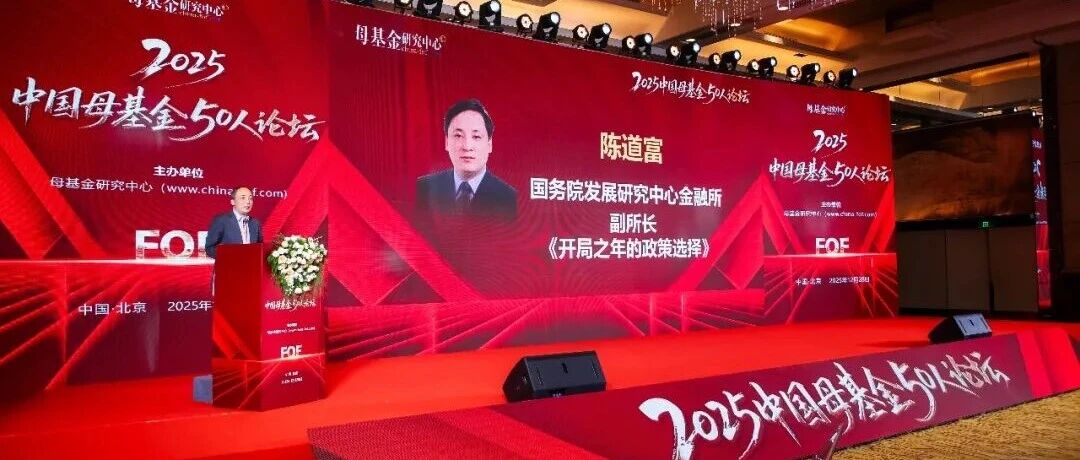
Core Viewpoint - The article discusses the insights shared at the 2025 China Mother Fund Forum, focusing on the evolving investment landscape and the need for a new investment and financing system to adapt to the challenges posed by the digital economy and service-oriented growth [2][3][8]. Summary by Sections Policy Choices and Economic Outlook - The analysis emphasizes the importance of understanding the policy choices for 2026 within the framework of the "14th Five-Year Plan" and China's modernization goals, highlighting the need for significant progress while maintaining stability in policy direction [3][4]. - Key judgments about the economic situation include recognizing the challenges faced in 2025, the necessity for structural reforms, and the importance of consolidating a stable economic foundation for future growth [5][6]. Investment Trends and Challenges - A critical observation is that fixed asset investment growth has entered negative territory in 2025, necessitating efforts to stabilize effective investment in 2026. Traditional investment models in infrastructure and manufacturing are reaching their peak, prompting the need for new investment directions [7][8]. - Future investment will focus on areas integrated with artificial intelligence and the digital economy, as well as high-quality development in the service sector. However, these sectors present high uncertainty and require a shift from traditional financing models [7][9]. New Investment and Financing System - The article advocates for the establishment of a new investment and financing system that aligns with the digital age and service economy, highlighting various emerging practices such as increased equity investment by insurance funds and the role of public REITs in asset revitalization [8][9]. - The new system must accommodate the unique characteristics of digital and intelligent transformation investments, which require a more nuanced approach to risk and return, emphasizing the need for a collaborative effort among market participants to optimize existing policies and create innovative financing tools [9][10].
超5700亿,2025年第四季度活跃出资的LP来了
母基金研究中心· 2026-01-17 08:38
Core Insights - The total number of newly registered private equity and venture capital funds reached 1,486 in Q4 2025, marking a year-on-year increase of 28.99% and a quarter-on-quarter increase of 14.31% [2] - The cumulative capital contribution from LPs reached 57.84 billion RMB, with state-owned enterprises contributing 25.68 billion RMB, accounting for 48.35% of the total [1] Fund Overview - In Q4 2025, there were 511 newly registered private equity funds and 975 venture capital funds, with venture capital funds maintaining a dominant position [2] - The registration of funds was concentrated in Zhejiang, Jiangsu, and Guangdong provinces, indicating strong GP activity and industrial absorption capacity in the Yangtze River Delta and Greater Bay Area [2] LP Contribution Trends - The frequency of LP contributions showed fluctuations in Q4, but overall, there was an upward trend [5] - Monthly active institutional LPs numbered 645, 912, and 821 in the respective months of Q4 2025 [3] Active LP Types - In Q4 2025, institutions with a contribution ratio of 1% or more made a total of 2,602 contributions, with corporate investors being the most active group, contributing 921 times, accounting for 35.4% [6] - State-owned enterprises contributed 756 times (29.1%), while government-guided funds contributed 158 times (6.1%), together accounting for 35.2% of total contributions [7] Contribution Scale - The total contribution scale from LPs with a ratio of 1% or more reached 57.84 billion RMB, with state-owned enterprises contributing 27.06 billion RMB, representing 46.8% [9] - Government-guided funds contributed 4.34 billion RMB (7.5%), while corporate investors contributed 6.74 billion RMB (11.7%) [9][10] Active LP Rankings - The top LPs by contribution frequency included Hefei New Station Technology Industry Development Group and Shaanxi Provincial Science and Technology Innovation Fund, among others [14] - The top LPs by contribution scale included the National Social Security Fund and Beijing Energy Group, with the former contributing 4.8 million RMB [15] LP Investment Characteristics - State-owned LPs continue to play a leading role, focusing on strategic emerging industries and local advantageous industrial chains [17] - Corporate investors exhibit high-frequency participation with a focus on small-scale, diversified investments in vertical industries [18] - Government-guided funds leverage fiscal policies to direct social capital towards key technology sectors, maintaining a significant guiding role [19] - Institutional investors, including pension funds and insurance companies, focus on long-term asset allocation with a preference for high-quality assets [20]

这个省,两支百亿母基金招GP
母基金研究中心· 2026-01-16 09:37
Summary of Key Points Core Viewpoint The article discusses the recent developments in China's mother fund industry, highlighting the total management scale of 777 billion yuan and the geographical distribution of these funds across various provinces. The investments are primarily focused on sectors such as aerospace, biomedicine, and advanced manufacturing. Fund Manager Recruitment - Zhejiang province is recruiting general partners (GPs) for two mother funds with a scale of 101.03 billion yuan, focusing on strategic emerging industries [4][5] - Sichuan province is seeking GPs for a quantum technology sub-fund as part of its efforts to build a 100 billion yuan mother fund cluster [7] - Guangdong province's Maoming city is also looking for GPs for its industry guidance fund [8] - Henan province is initiating the recruitment of GPs for its state-owned enterprise reform mother fund with a scale of 50 billion yuan [9][10] - Other provinces like Anhui, Hebei, and Fujian are similarly recruiting GPs for various funds aimed at technology and innovation [11][12][13] Mother Fund Establishment - The Dehua 20 billion yuan industry guidance mother fund has been officially established, expanding its funding sources and optimizing investment layouts [13][14] - The Cheng Tong Science and Technology Jiangsu Fund was officially unveiled, focusing on strategic emerging industries [15][17] - A 10 billion yuan real estate mother fund is being established by Guolian Tongbao and Zhonglian Fund [19] Mother Fund Policies - Shandong province has released an action plan to promote high-quality development of venture capital, aiming for a 10% annual growth in investment by 2027 [20][22] - The government has introduced new regulations to guide the layout and investment direction of government investment funds [32] Other Developments - Hubei's Hongtai New Industry Fund has completed its registration, marking its official establishment with a scale of 10 billion yuan [34][35] - Shanghai's Pudong Leading Area Fund has increased its capital from 50 billion to 200 billion yuan, a 300% increase [36] - The Panzhihua Vanadium-Titanium Industry Development Fund has been established with a total scale of 50 billion yuan to support local industry development [39]

子基金出资卡壳?唐劲草:问题可能出在新规理解偏差
母基金研究中心· 2026-01-16 09:37
Core Viewpoint - The recent issuance of three significant documents by the National Development and Reform Commission, Ministry of Finance, Ministry of Science and Technology, and Ministry of Industry and Information Technology aims to establish a systematic framework for the layout and investment direction of government investment funds, promoting high-quality development and market-oriented operations [1][3]. Group 1: Policy Framework - The three documents create a regulatory framework for the high-quality development of government investment funds, emphasizing the need for clear positioning, market-oriented operations, and compliance with national strategic priorities [1][3]. - The core logic of the policy is to enhance quality and efficiency, addressing issues such as ambiguous positioning and homogenized competition among funds [3][7]. Group 2: Investment Guidelines - The new regulations clarify that government investment funds should not be hindered in their contributions to sub-funds, with the intent to empower rather than restrict, encouraging market-oriented and efficient operations [2][3]. - The policy encourages a clear understanding of the return investment rules, stating that funds without return investment requirements will receive full evaluation scores, thus promoting market-oriented resource allocation [4][5]. Group 3: Compliance and Operational Flexibility - Existing funds are allowed to adjust their return investment ratios to within 1.5 times the actual contribution without facing a "one-size-fits-all" adjustment, providing a buffer period for compliance [5][6]. - Non-fiscal state-owned capital contributions have more operational flexibility, only needing to adhere to basic compliance requirements, while fiscal contributions must strictly follow all stipulated rules [6][7]. Group 4: Implementation and Market Impact - The successful execution of these policies relies on accurate interpretation and proactive engagement from state-owned enterprises, which should focus on aligning investments with national strategies [7]. - The government encourages a balance between market-oriented operations and local development needs, aiming to foster a conducive environment for the growth of new productive forces and a modern industrial system [7].