美股研究社

Search documents
西门子 + 阿里云 + 宇树:工业 AI 的“新三角”正在成型
美股研究社· 2026-03-25 11:50
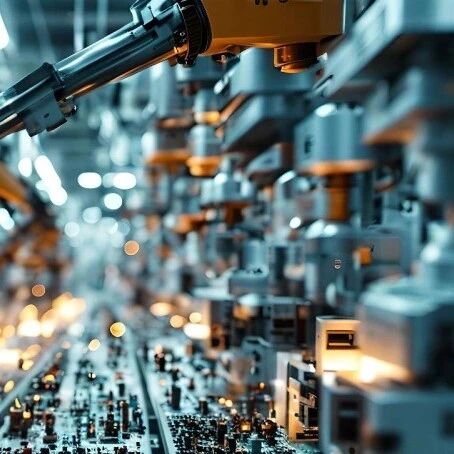
Core Viewpoint - The collaboration between industrial giants, cloud computing platforms, and robotics signifies a shift of AI from the internet realm to the industrial era, marking the beginning of a new phase in AI development focused on physical world applications rather than just virtual ones [1][3][16]. Group 1: Collaboration and Integration - The partnership between Siemens, Alibaba Cloud, and Yuzhu Technology represents a significant step towards achieving a "closed-loop" system in industrial AI, integrating software, cloud computing, and robotics [5][6]. - Siemens provides industrial software and automation systems, serving as the "operating system" for manufacturing, while Alibaba Cloud offers scalable computing power and infrastructure, addressing concerns about data security and deployment costs [6][9]. - Yuzhu Technology introduces humanoid robots that enhance the execution layer of AI, enabling adaptability in unstructured environments and solving the challenge of transitioning from simulation to real-world application [7][9]. Group 2: Advantages of the Chinese Market - China is identified as the optimal environment for the implementation of industrial AI due to its comprehensive manufacturing ecosystem and the willingness of local factories to adopt new technologies for efficiency gains [9][10]. - Local cloud providers like Alibaba have developed mature capabilities in data processing and service responsiveness, which are crucial for addressing the specific needs of Chinese enterprises [10][11]. - The rapid advancement in robotics within China, exemplified by Yuzhu Technology, is narrowing the gap with international competitors, making the commercialization of "robot + AI" more feasible [10][11]. Group 3: Investment Implications - The collaboration indicates a paradigm shift in the industrial landscape, where the value chain is transitioning from traditional manufacturing to a focus on data, models, and execution capabilities [13][14]. - The importance of ecosystem collaboration is emphasized, as no single company can cover the entire industrial AI chain, necessitating a focus on connectivity and integration among cloud, models, and hardware [13][14]. - The efficiency gains from AI in manufacturing are expected to be exponential, with robots capable of managing multiple processes and continuously learning, which will significantly impact profit margins [15][16].

指望淘天很快交出高分,是不现实的
美股研究社· 2026-03-24 11:41
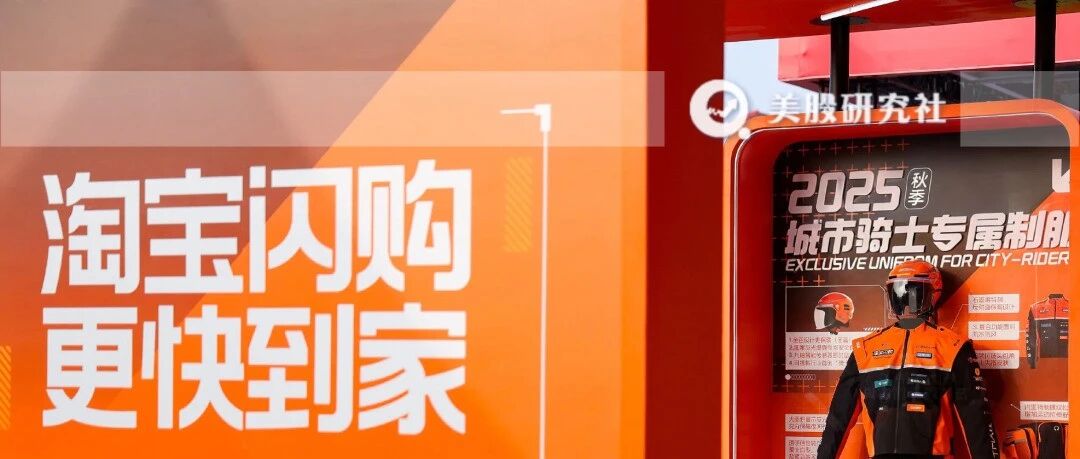
这次阿里巴巴26财年Q3的财报,淘天集团明显处于"阵痛期"。 客户管理收入 (CMR) 同比增长 0.82%,增速是比较缓慢的 。一方面是国补和软件服务费造 成的高基数影响,另一方面是今年春节比去年晚了19天,导致实物消费爆发力推迟到了下一季 度。 经调整 EBITA 为 346.13 亿元 ,同比下降 42.69% ,闪购"烧钱换规模"并未停止,影响了 利润表现。 虽然管理层在电话会表示,由于淘宝闪购的拉动, 实物 电商的年度活跃买家增长 1亿,但仅 从CMR和EBITA看,目前还看不出闪购对实物消费的规模提升有明显作用。 财报当天,阿里巴巴股价下跌超过7个百分点。股市有句老话,"涨,什么都是对的;跌,什么 都是错的",这两天有不少投资者怪罪在淘天身上, 开始用放大镜找茬,"闪购业务拖累淘 天"的论调再次被提及。 这种焦虑非常容易理解,毕竟真金白银买了不少。但我在想,投资者是不是有点太过心急了。 用一个季度财报去评判一家公司的长远布局,就像百米冲刺的成绩去评判马拉松一样,似乎本 身就不太公平。 被 误 读 的 " 拖 累 " , 市 场 为 何 市场似乎早已默认了一个前提,业务扩张周期的投资应该立刻见效。 ...

悦享控股:利润来了,但“AI故事”才刚刚开始变贵
美股研究社· 2026-03-24 11:41
Core Viewpoint - The article highlights the paradox in capital market pricing where a content company that starts to generate stable profits may receive a lower valuation due to perceived growth stagnation, while simultaneously betting on AI can lead to higher valuations due to its disruptive growth potential [1]. Financial Performance - The latest financial report from Yuexiang Holdings confirms its profitability with projected revenue of 1.07 billion yuan, net profit of 184 million yuan, and operating cash flow of 129 million yuan for 2025, indicating a transition from a growth narrative to a stable profit phase [5]. - The company has achieved positive cash flow and stable profits, marking a significant milestone in its survival and self-sustaining capabilities [5]. Revenue Structure Shift - Over 92% of Yuexiang Holdings' revenue now comes from "platform services and digitalization," indicating a shift from a content-driven model to a technology-driven one, reducing reliance on hit content [6]. - The growth is characterized by a migration in revenue structure rather than simple scale expansion, with a focus on higher average revenue per user (ARPU) rather than user growth, reflecting a stable phase in user engagement [8]. AI Strategy and Market Position - The company is heavily investing in AI products such as Huanju AI, Klon AI, and HomeGlow AI, aiming to create new growth curves, which could potentially raise valuation expectations [6][11]. - The market faces a pricing split, questioning whether the company is a mature content platform or a growing AI application company, which could lead to different valuation metrics [7]. Future Growth Potential - The future growth of Yuexiang Holdings hinges on the success of its AI applications, which need to prove their ability to generate significant revenue and user engagement [12]. - The management emphasizes a strategy of "steady operation + increased R&D investment," indicating a focus on long-term growth potential rather than short-term profit maximization [13]. Conclusion - The financial report signals that while Yuexiang Holdings has moved from survival to profitability, it has yet to demonstrate sustainable growth, with the future dependent on the success of its AI initiatives [15].

一家“设备中间商”的IPO:萌讯机械的天花板在哪里?
美股研究社· 2026-03-24 11:41
Core Viewpoint - The article emphasizes that in the wave of smart manufacturing, the capital market is returning to rationality, focusing on the real value distribution within the industry chain rather than just the concept of "automation" [1]. Group 1: Company Positioning - The IPO process of Mengxun Machinery is fundamentally about answering whether it is a mere trader or a technology company with system integration capabilities, which will determine its market valuation [3]. - Mengxun Machinery's business model is complex, positioned in the midstream of the industry chain, connecting third-party equipment manufacturers and serving industrial clients in automotive and electronics [5]. - The company faces a critical investment judgment: if it is primarily a "device trader + integrator," its valuation will be closer to traditional manufacturing, while if it can establish barriers in system integration and software, it may transition to a higher valuation as an "industrial solution provider" [6]. Group 2: Growth Quality - Mengxun's current revenue of $16 million indicates it is a small player in the machinery industry, which raises concerns about its ability to absorb high R&D costs and support a "high-end automation platform" narrative [7]. - The article highlights the importance of analyzing the quality of growth rather than just scale, as many integrators sacrifice profit margins to increase revenue, leading to "growth without profit" [9]. - Key observations for the IPO include customer concentration, cash flow matching, and the proportion of overseas revenue, as these factors can significantly impact the company's financial stability [10]. Group 3: Transition to Software and Services - The article argues that Mengxun must transition from one-time equipment sales to ongoing software and service revenues to break through its current size limitations [12]. - This transition is crucial as software revenue can provide high margins and customer stickiness, smoothing out the cyclical nature of hardware sales [12]. - However, the competition in the MES and industrial software space is intense, and without unique process understanding or cost advantages, it may be challenging for Mengxun to penetrate core market segments [12]. Group 4: Industry Context - Mengxun is positioned at the intersection of several potential growth trends, including smart manufacturing upgrades and increased automation penetration, supported by national policies promoting equipment updates [13]. - The article suggests that the true investment opportunity lies in whether Mengxun can evolve from an "executor" in the supply chain to a "rule maker," which would require establishing unique technical standards or data accumulation [13]. - The IPO is characterized as a "transforming manufacturing service provider," with certainty in its alignment with smart manufacturing trends but uncertainty regarding its technical barriers and long-term premium potential [15].

Robotaxi不再是故事:文远知行财报背后的一个关键拐点
美股研究社· 2026-03-24 11:41
Core Viewpoint - The autonomous driving industry is transitioning from a "technology validation phase" to a more challenging "commercial examination" phase, where the focus shifts from technical capabilities to financial viability [1][2]. Group 1: Financial Performance and Business Model Transition - The latest financial report from WeRide reflects a significant shift in the industry, emphasizing the importance of financial sustainability as the business scales [2]. - Revenue growth is notable, with product revenue increasing threefold and overall revenue nearly doubling, but the critical insight lies in the shift from a service-driven model to a product and scale delivery model [4][5]. - The proportion of product revenue has surged from 24% to 52% within a year, indicating a fundamental restructuring of the business model [5]. Group 2: Market Dynamics and Profitability Challenges - Despite revenue growth, profitability remains a concern, with gross margins around 30%, which is low for software but acceptable for hardware, reflecting the company's mixed attributes [5][8]. - Adjusted losses have widened, indicating increased investments rather than operational deterioration, as the company focuses on cost reduction and efficiency improvements [5][8]. - The market is now prioritizing "growth quality" over mere growth, questioning the replicability of the growth model rather than just revenue expectations [6][8]. Group 3: Strategic Shifts and Future Outlook - The company is actively reducing reliance on one-time project revenues, transitioning towards data services and operational support, which suggests a long-term strategy for sustainable growth [7][8]. - The ability to eliminate safety drivers is identified as a crucial variable for future profitability, as human labor costs significantly impact the economic model of Robotaxi services [9]. - The company's partnerships with platforms like Uber and Grab are strategic moves to leverage existing user bases and reduce costs, positioning the business for future scalability [9][10]. Group 4: Industry Context and Competitive Landscape - The autonomous driving sector is entering a more rigorous phase where the competition will focus on achieving profitable city operations rather than just technological advancements [11][13]. - The financial report indicates that the industry is moving towards a phase where profitability and operational efficiency will be the key differentiators, similar to the evolution seen in early cloud computing and shared mobility sectors [11][13]. - The report serves as a case study for the industry, illustrating a potential path forward through increased product revenue and regulatory breakthroughs in international markets [13].

告别 SaaS 狂热:私募巨头为何集体押注“硬资产”?
美股研究社· 2026-03-24 11:41
Core Insights - The emergence of generative AI is fundamentally reshaping the capital markets, challenging the long-held belief in a "software-defined world" and prompting a shift towards investments in tangible assets like machinery, energy, and infrastructure [1][6]. Group 1: Market Dynamics - This transition is not merely a sector rotation but a re-evaluation of what constitutes true value in business, reflecting a return to the essence of commercial understanding [2]. - The growth logic is reversing from a "light asset premium" to a "certainty premium," where the focus shifts from high growth to assets that are less likely to be disrupted by technology [3][7]. Group 2: Investment Trends - Over the past decade, private equity has heavily invested in software, particularly SaaS, driven by high margins and strong cash flows, leading to a valuation consensus that supported over $1 trillion in investments [4]. - Leading private equity firms like Blackstone and Bain Capital are systematically shifting towards HALO assets—those with low obsolescence rates, such as industrial manufacturing and energy, as a direct response to the technological paradigm shift [6]. Group 3: Software Valuation Challenges - The core assumption that software has near-zero marginal costs and high barriers to entry is being undermined by generative AI, which allows rapid application development, reducing the difficulty and cost of software creation [6]. - The traditional valuation metrics centered around ARR, retention rates, and LTV/CAC are being disrupted by AI, leading to a situation where many software assets are overvalued in the current market [9][10]. Group 4: Cash Flow Preferences - The credit market is responding to these changes, with software asset financing cooling off while infrastructure assets are receiving lower spreads and higher subscriptions, indicating a preference for predictable cash flows [7][10]. - HALO assets are characterized by stable cash flows and long life cycles, making them attractive in a high-interest rate environment where certainty of returns is prioritized over high growth expectations [11][12]. Group 5: Future Outlook - The rise of HALO assets is not without concerns, as they are inherently low-growth assets that could see returns compressed if capital floods into these areas [13]. - The potential for overcapacity in AI data centers poses a risk, highlighting the need for capital to seek more nuanced opportunities that combine hard assets with operational capabilities [14]. - The transition from a focus on "illusory growth" to "real anchors" signifies a deeper value reassessment, where the physical world's constraints and the limits of energy and land become central to pricing [15][16].

京东押注欧洲:不是出海,而是在重写供应链战争
美股研究社· 2026-03-24 11:41
Core Viewpoint - The growth logic of the domestic e-commerce industry has fundamentally shifted from simple traffic accumulation to supply chain expansion and efficiency release, as traditional expansion models are no longer sustainable [1][5]. Group 1: Market Context - The Chinese e-commerce growth model is reaching its peak, with competition shifting from "incremental competition" to "stock competition" as user growth plateaus and traffic benefits diminish [6][5]. - The rise of live-streaming and social e-commerce has further fragmented user attention, leading to price wars and subsidy battles that compress profit margins [6][5]. Group 2: Strategic Move to Europe - JD's entry into Europe is not merely a story of expansion but a strategic necessity to redefine its boundaries and test its core capabilities on a global scale [3][4]. - Europe is viewed as a "must-have option" for JD, as the domestic market presents hard constraints on growth, making international expansion essential for survival [4][5]. Group 3: Competitive Landscape - The European market offers a unique structure with strong consumer purchasing power and high average order values, but fragmented e-commerce infrastructure presents opportunities for improvement [6][5]. - Unlike the strong platform model of Amazon, European retail is more fragmented, allowing JD to leverage its logistics expertise to enhance delivery efficiency [6][5]. Group 4: Supply Chain Strategy - JD aims to "sell capabilities" rather than just traffic, focusing on exporting its successful supply chain efficiency to fill local infrastructure gaps in Europe [7][9]. - The collaboration with brands like BayMar is not just about introducing European products but about competing for supply chain entry points, positioning JD as a global supply chain organizer [9][10]. Group 5: Long-term Vision - JD's strategy involves building a dual-track approach: importing quality European goods to China while establishing a local retail presence in Europe through Joybuy [10][11]. - This approach aims to create a closed-loop system that ensures stable supply and consistent user experience, integrating supply chain management across borders [10][11]. Group 6: Financial Implications - The European venture may initially lead to financial losses due to high infrastructure costs and user education, but it serves as a testing ground for JD's ability to replicate its supply chain model globally [13][12]. - If successful, JD could transition from a traditional e-commerce model to a global supply chain service provider, altering its revenue structure and valuation logic [13][12]. Group 7: Competitive Challenges - JD faces significant competition not only from e-commerce platforms but also from established local retailers and logistics companies in Europe [14][12]. - The battle is not just about e-commerce but about establishing new global standards for supply chain efficiency, which could redefine the competitive landscape [14][12]. Conclusion - JD's move into Europe represents a critical step in its evolution from a domestic retailer to a global supply chain leader, emphasizing the importance of supply chain depth and breadth in determining retail success [17][15].

长约时代来临:一场重塑存储行业定价权的战争
美股研究社· 2026-03-24 11:41
Core Viewpoint - The article discusses the current dichotomy in the semiconductor storage sector, highlighting the contrast between strong fundamentals and a cold capital market response, particularly in the context of Micron Technology's recent financial performance and SK Hynix's plans for a U.S. IPO [2][3]. Group 1: Market Dynamics - The storage sector is experiencing a "split moment," characterized by a divergence between strengthening fundamentals and market skepticism, as evidenced by Micron's stock price decline despite strong earnings [2][4]. - The shift in the semiconductor industry towards the AI era is causing a profound change in underlying logic, with AI-driven demand for high bandwidth memory (HBM) leading to increased capital expenditures, while the capital market remains cautious [3][6]. Group 2: Valuation and Investment Sentiment - The traditional cyclical nature of the storage industry is being challenged as cloud providers begin to sign long-term agreements with prepayment constraints, leading to a re-evaluation of the cyclical attributes of storage stocks [6][7]. - Investors are questioning the sustainability of the "smoothing" of cycles, as long-term contracts may limit the potential for explosive profit growth that typically occurs in traditional cycles [7][9]. Group 3: Long-Term Contract Mechanism - The essence of the long-term contract mechanism is a shift from "betting on prices" to "locking in cash flows," providing suppliers with revenue visibility and reducing financing costs [8][9]. - This mechanism also diminishes the volatility of prices and weakens the industry's self-correcting ability during downturns, potentially leading to overcapacity if demand structures change [9][10]. Group 4: Future Variables and Risks - The key variable for the future of the storage industry may shift from demand to "capital expenditure discipline," as major players like Samsung, SK Hynix, and Micron pursue expansion plans that could lead to uncertainty in the medium to long term [11][12]. - Historical patterns indicate that crises in the storage industry often arise not during periods of low demand but during overly optimistic phases, where aggressive capacity decisions are made based on misjudged demand sustainability [11][12]. Group 5: Conclusion and Strategic Implications - The article concludes that the current market dynamics are not simply a story of rising demand but a reconstruction of pricing logic in the industry, emphasizing the need for manufacturers to maintain discipline in capital expenditures [13]. - Investors may need to adjust their expectations, moving away from strategies based on price speculation to those focused on cash flow quality and technological barriers, as the storage sector transitions from a cyclical gamble to a more stable cash flow model [13].


AI日报丨阿里达摩院发布新型CPU;Meta挖角AI初创公司Dreamer团队;苹果公司将于6月召开年度全球开发者大会
美股研究社· 2026-03-24 11:41
Group 1 - The article highlights the rapid development of artificial intelligence (AI) technology, presenting significant opportunities in the market [3] - The AI report aims to uncover and analyze the latest AI concept stocks and market trends, providing in-depth industry insights and value analysis [3] Group 2 - NetEase Youdao's desktop-level AI agent product, LobsterAI, received praise from Peter Steinberger, the founder of the OpenClaw project, with over 270,000 visits in its first month, ranking in the top five of the OpenClaw ecosystem [5] - ByteDance has applied for multiple "SEEDANCE" trademarks, indicating its ongoing development of the AI video generation model, Seedance 2.0, which creates high-quality videos from text or images [6] - Meitu's AI Skills have been integrated into the OpenClaw ecosystem, allowing all OpenClaw users to access and utilize these capabilities [8] Group 3 - Alibaba's DAMO Academy unveiled the new flagship CPU, XuanTie C950, at the RISC-V ecosystem conference, designed for cloud computing, generative AI, and high-end robotics, supporting large models natively [9] - Meta Platforms Inc. has hired the team from AI startup Dreamer to enhance its AI Agents projects, focusing on creating personalized and always-on intelligent agents [11] - Apple plans to showcase significant AI advancements and new developer tools at its annual Worldwide Developers Conference from June 8-12 [12] Group 4 - NVIDIA and Emerald AI are collaborating with several energy companies to develop a new type of AI factory that connects more rapidly to the power grid, enhancing energy asset flexibility [13][14]



营收暴涨26%,利润却腰斩:名创优品到底做错了什么?
美股研究社· 2026-03-23 12:32
Core Viewpoint - The financial report of Miniso reveals a significant contrast between revenue growth and profit decline, indicating a potential transformation in its growth model from pure retail to a mixed capital-retail entity [1][2][16]. Group 1: Financial Performance - Miniso reported a revenue of 21.4 billion yuan, representing a year-on-year growth of approximately 26%, which is notable in the current retail environment [1]. - However, net profit plummeted by nearly 50%, raising concerns about the sustainability of its growth [1][5]. - The profit decline is attributed primarily to investment losses related to Yonghui Supermarket, indicating that the core retail business remains intact [5][6]. Group 2: Strategic Transformation - The financial report suggests that Miniso is transitioning from a "pure retail" model to a "capital + retail" mixed model, which introduces new uncertainties and reshapes market pricing logic [2][5]. - Historically, Miniso's success was driven by an efficient supply chain, rapid turnover, and high-cost performance, focusing on efficiency rather than capital [5][11]. - The shift towards investment activities, such as the stake in Yonghui Supermarket, indicates a strategic move to secure stable offline traffic and supply chain synergies [5][6]. Group 3: Market Valuation and Investor Sentiment - The market has begun to reassess Miniso's valuation, reflecting concerns over the company's future profitability and the impact of investment losses on its financial stability [7][9]. - Investors typically categorize retail companies into two valuation types: stable cash flow companies and growth expansion companies. Miniso has historically been viewed as a growth expansion company, but the recent profit fluctuations challenge this perception [8][9]. - The introduction of investment losses complicates the valuation process, leading to potential "diversification discounts" as investors struggle to separate the core retail business from investment activities [8][9]. Group 4: Structural Changes and Future Outlook - Three structural changes are critical for Miniso's future: the nature of its revenue growth, the complexity of its profit generation, and the potential distraction from its core business due to investment activities [11][12]. - The 26% revenue growth raises questions about whether it is driven by natural store growth or aggressive expansion strategies, which may not be sustainable in the long term [12]. - The company's profitability model is evolving, introducing uncertainties that could distort net profit figures and affect cash flow stability [13][14]. - Miniso's international expansion efforts could either enhance its growth trajectory or dilute focus and resources, posing risks to its operational efficiency [14][16]. Conclusion - Miniso's financial report indicates a shift from a high-certainty retail company to one with increased uncertainty due to its mixed business model [16][17]. - The market is now evaluating whether Miniso can maintain its growth trajectory while managing the complexities introduced by its investment strategies [17][18].