雷峰网

Search documents
之江实验室薛贵荣:当AI开始做科研,我看到了大语言模型的天花板丨GAIR 2025
雷峰网· 2025-12-24 00:22
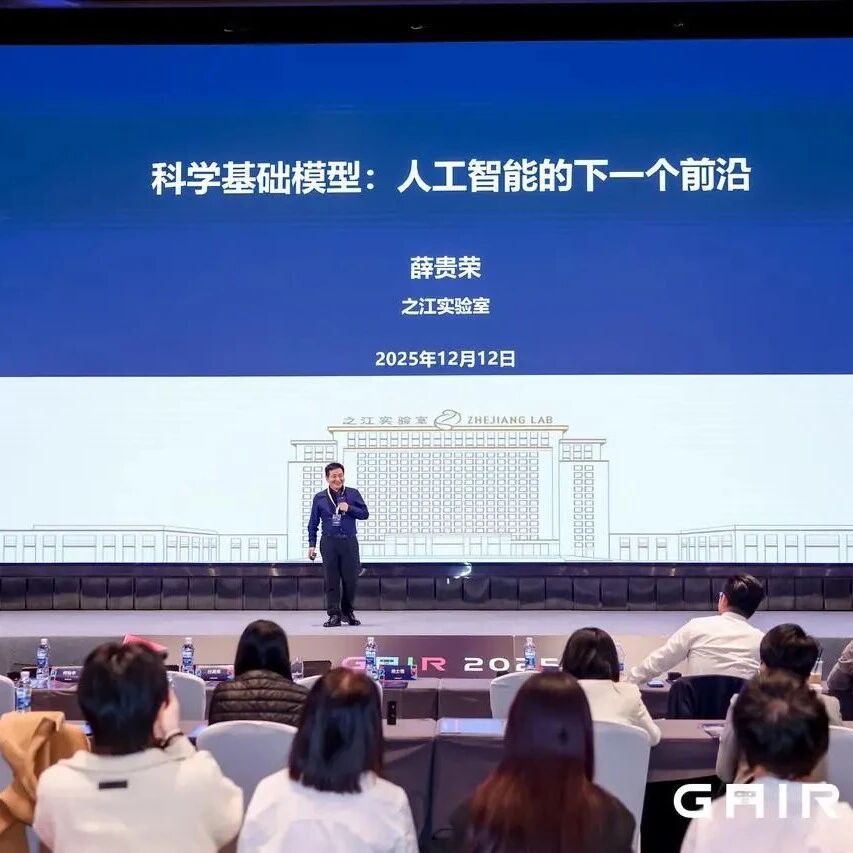
Core Viewpoint - The GAIR conference highlights the evolution of AI technology and its transition from laboratory research to industrial applications, emphasizing the importance of scientific foundational models to overcome the limitations of large language models in understanding complex scientific data [2][4]. Group 1: Limitations of Large Language Models - Large language models are constrained by "language boundaries," making it difficult for them to comprehend high-dimensional, multi-modal scientific data and to independently achieve verifiable scientific discoveries [4][22]. - In a challenging HLE test covering over 100 disciplines, the best-performing model achieved only a 25.4% accuracy rate, indicating significant limitations in addressing scientific problems [4][18]. - The primary difference between large language models and scientific foundational models lies in their data representation; the latter utilizes cross-disciplinary, multi-type scientific data as tokens, rather than solely text [4][26]. Group 2: Scientific Foundational Models - The 021 scientific foundational model developed by Zhijiang Laboratory aims to break through language limitations and unify scientific data for enhanced reasoning and discovery across disciplines [4][5]. - Tokenizing scientific data effectively is crucial for establishing connections between different types of data, enabling comprehensive analysis of scientific problems across various fields [5][28]. - The model supports applications in 19 key disciplines, covering 174 areas of scientific knowledge, and aims to streamline processes that traditionally require extensive time and resources [31][36]. Group 3: Collaborative Efforts and Future Directions - The initiative involves collaboration with national laboratories, universities, and enterprises to co-create and enhance the model, fostering a deeper understanding of key scientific data and challenges [36][38]. - An open research platform, zero2x, is being developed to facilitate access to data and models, encouraging broader participation in scientific discovery and innovation [38]. - The goal is to transform scientific research paradigms and accelerate the integration of AI into scientific endeavors, ultimately leading to significant advancements in the field [38].

钉钉疯人院,跑出三个爆款
雷峰网· 2025-12-24 00:22
Core Viewpoint - The article discusses how DingTalk, under the leadership of Wu Zhao, is transitioning from the mobile internet era to an AI-native era through significant product innovations and a cultural shift towards extreme innovation and user-centric design [6][7][33]. Group 1: Product Innovations - DingTalk has launched three major products: DingTalk A1, AI Listening, and AI Tables, marking a significant upgrade from the previous version [6][8]. - DingTalk A1, an AI hardware product, quickly became a bestseller, addressing user pain points such as interface convenience and transcription limits by offering 1,300 minutes of free transcription monthly [10][14][15]. - AI Listening has undergone a complete overhaul, achieving a speech recognition accuracy of 97%-98% through substantial investment in AI model training and user feedback integration [22][23]. - AI Tables, rebranded from "Multi-dimensional Table," aims to redefine spreadsheet tools for the AI era, focusing on user accessibility and integration with existing databases [27][28][30]. Group 2: Cultural and Strategic Shifts - The return of Wu Zhao to DingTalk has reinvigorated a culture of extreme innovation, reminiscent of the company's early days, emphasizing a "Be Crazy" attitude towards product development [7][14]. - The strategic focus on understanding customer needs through extensive market research has led to more precise product definitions and enhancements [11][14]. - DingTalk's approach to AI integration is not merely superficial; it aims for a fundamental restructuring of its products to align with the demands of the AI era, ensuring that technology serves the user effectively [42][43]. Group 3: Market Positioning and Future Outlook - DingTalk's innovations are positioned to disrupt the traditional office software market, particularly by targeting the B-end users who prioritize functional tools like spreadsheets [26][28]. - The company is leveraging its existing user base and technological infrastructure to create a self-reinforcing ecosystem that enhances product capabilities over time [24][30]. - The long-term vision includes establishing DingTalk as a central hub in the AI-driven office landscape, potentially reshaping industry standards and practices [40][41].

阿里无人车的「阵痛史」:团队赛马、战略摇摆与整合困局
雷峰网· 2025-12-23 14:30
Core Viewpoint - The article discusses the evolution and challenges faced by Alibaba's autonomous vehicle initiatives, particularly focusing on the logistics sector, highlighting missed opportunities and internal conflicts that led to the decline of its autonomous vehicle projects [3][4][5]. Group 1: Industry Developments - The autonomous logistics vehicle sector has seen significant capital influx and operational advancements in 2023, with companies like New Stone Technology and NineSight completing substantial funding rounds, indicating a rebound after years of stagnation [3]. - NineSight is reportedly in talks to acquire Alibaba's logistics vehicle division, which could enhance its competitive position in the logistics market [3][4]. - The article notes that the autonomous vehicle sector in China is approaching a pivotal moment with several companies preparing for IPOs, marking a transition from a nascent stage to a more mature market [3]. Group 2: Alibaba's Internal Dynamics - Alibaba's autonomous vehicle efforts began with the establishment of the Cainiao ET Logistics Laboratory, which aimed to develop autonomous logistics vehicles but faced strategic misalignments and leadership changes that hindered progress [7][9]. - The dual approach within Alibaba, with the Cainiao ET Laboratory focusing on logistics and the Damo Academy's autonomous driving lab targeting passenger vehicles, led to resource duplication and inefficiencies [15][29]. - The merger of the Cainiao ET Laboratory into the Damo Academy's autonomous driving lab in 2020 was a significant turning point, consolidating efforts but also leading to internal conflicts and a loss of focus on logistics applications [30][36]. Group 3: Key Personnel and Leadership Changes - Key figures such as Zhang Chunhui and Chen Junbo played pivotal roles in the development of Alibaba's autonomous vehicle projects, with their departures marking critical moments in the decline of these initiatives [12][50]. - The leadership transition within the Damo Academy, particularly the appointment of Wang Gang and subsequent changes in strategic direction, contributed to the fragmentation of the autonomous vehicle team [25][41]. - The article highlights the contrasting management styles of Chen Junbo and Guo Zhenyu, which created friction within the team and ultimately affected project outcomes [47][49]. Group 4: Project Outcomes and Future Directions - The autonomous logistics vehicle "Xiaomanlv" achieved significant operational milestones, including reaching 1 million delivery orders, but faced challenges in scaling due to budget constraints and strategic misalignment [36][52]. - The ambitious plans for the "Dabanlv" project, aimed at developing autonomous heavy-duty trucks, were ultimately abandoned following key personnel exits, signaling a broader decline in Alibaba's autonomous vehicle ambitions [50][54]. - The article concludes with the integration of the Xiaomanlv project back into Cainiao, indicating a shift in focus towards logistics and a potential re-evaluation of Alibaba's strategy in the autonomous vehicle space [53][54].


独家丨长城哈弗将采用Momenta智驾方案,新车计划明年初上市
雷峰网· 2025-12-23 14:30
Core Viewpoint - Momenta has secured contracts with Great Wall Motors for two new models, including the Haval Menglong, which will feature an L2+ level of assisted driving capabilities and is expected to launch in early next year [2]. Group 1: New Model Features - The new models will utilize Momenta's latest end-to-end solution, based on the R6 flywheel large model, similar to that used in the Buick Zhijing L7, and will be developed on the Qualcomm Snapdragon 8620 chip with an effective computing power of 156 TOPS [2]. - The assisted driving capabilities will include features such as highway NOA (Navigation on Autopilot) and parking assistance, but will not support urban NOA initially [2]. Group 2: Future Developments - Momenta plans to shift its mass production solutions entirely to end-to-end models, incorporating large models based on reinforcement learning [5]. - The R6 flywheel large model, which utilizes reinforcement learning, was first mass-produced in the Buick Zhijing L7, providing urban NOA capabilities [5]. Group 3: Collaboration with Great Wall Motors - Momenta has established a dedicated demo testing team for assisted driving at Great Wall's headquarters in Baoding, with CEO Cao Xudong actively overseeing the project and providing technical demonstrations [7]. - Great Wall Motors also collaborates with Yuanrong Qixing for its assisted driving solutions, with plans for the Wuling Blue Mountain model to launch in August 2024 featuring Yuanrong's urban NOA solution [7].


付昊桓教授:超智融合赋能地球模拟,洞见未来气候轨迹丨GAIR 2025
雷峰网· 2025-12-23 06:31
Core Viewpoint - The integration of supercomputing performance breakthroughs with artificial intelligence is transforming global weather forecasting from unpredictability to predictability [2][3]. Group 1: Event Overview - The 8th GAIR Global Artificial Intelligence and Robotics Conference commenced in Shenzhen, focusing on the intersection of AI and industry [3]. - The conference featured a keynote by Professor Fu Haohuan, discussing the application of supercomputing in Earth system modeling and the challenges faced [3][4]. Group 2: Supercomputing in Earth System Modeling - Recent advancements in domestic supercomputing systems, such as Sunway, have significantly improved the spatial and temporal resolution of Earth system models, achieving daily global climate simulations at a one-kilometer level [4]. - The goal is to develop a high-precision weather forecasting system for the Greater Bay Area with a resolution of 100 meters, leveraging supercomputing and AI [4][8]. Group 3: Challenges in Supercomputing - The exponential growth in computational demand due to increased model complexity and the need for higher spatial resolution presents significant challenges [12][14]. - Integrating vast amounts of observational data from thousands of satellites into models is a critical area where AI can play a significant role [14]. Group 4: Development of Domestic Supercomputers - The Sunway series of supercomputers, particularly the Sunway TaihuLight, has achieved world-leading performance with a peak capability exceeding 100 Pflops and a parallel scale of 10 million cores [18][21]. - The development of over 200 scalable applications on the Sunway architecture demonstrates the potential of domestic supercomputers in scientific computing [21][22]. Group 5: Future Directions - The upcoming Shenzhen Supercomputing Phase II aims to enhance computational efficiency significantly, with expected double-precision performance reaching 2 ExaFLOPS [76][79]. - The integration of traditional supercomputing with AI supercomputing is anticipated to create new applications and improve weather forecasting capabilities [76][84].

电商税落地背后:执行迷雾、进退失据
雷峰网· 2025-12-23 06:31
Core Viewpoint - The implementation of e-commerce tax has significantly increased the demand for tax compliance services among sellers, revealing a divide in the market between those who prepared for compliance and those who did not [2][4]. Group 1: E-commerce Tax Implementation - The e-commerce tax is not a new tax but integrates online transactions into the existing tax system, addressing previously overlooked gaps [3]. - The release of the tax policy in June led to a surge in compliance inquiries, particularly after major platforms like Amazon confirmed data submissions to tax authorities [4][5]. - Many sellers initially underestimated the impact of the tax, believing it primarily targeted domestic platforms and not cross-border sellers [3]. Group 2: Seller Experiences and Reactions - Sellers are experiencing heightened pressure due to increased costs from platform fees, advertising, and now taxes, leading to a significant impact on profit margins [7]. - Different seller sizes are affected variably; larger sellers can absorb costs better, while mid-sized sellers face the most challenges, and smaller sellers may temporarily evade the worst impacts [7][8]. - Some sellers view the tax as a leveling force that eliminates unfair competition from those who previously evaded taxes [8][9]. Group 3: Compliance Challenges - The lack of clear guidelines for tax compliance has left many sellers confused about how to properly report and prove compliance [13]. - Issues such as missing invoices and unclear business identities complicate the tax reporting process, leading to potential penalties for unreported income [14][15]. - The current tax reporting system requires sellers to navigate complex regulations, often leading to operational difficulties and increased costs [16][17]. Group 4: Future Industry Trends - The 9810 cross-border e-commerce export model offers some relief for sellers struggling with compliance, allowing for VAT exemptions under certain conditions [20]. - However, this model is not without risks, particularly regarding proof of ownership and the timing of tax refunds [21]. - New pilot programs for fixed-rate taxation for smaller sellers aim to reduce compliance burdens, signaling a potential shift towards more accommodating tax policies [22][23]. - The integration of tax data with e-commerce platforms is expected to enhance regulatory oversight, making it harder for sellers to evade taxes [30][31]. Group 5: Long-term Implications - The evolving tax landscape is likely to push out speculative sellers while favoring those with sustainable business practices [32]. - Compliance is becoming essential for survival in the industry, with non-compliant sellers facing increasing pressure to adapt or exit the market [32].


国产GPU账本:神秘的「赎回负债」,壁仞科技亏损背后的秘密?
雷峰网· 2025-12-23 00:34
Core Viewpoint - The article discusses the significant losses of Biran Technology, which reached 6.3 billion RMB over three and a half years, attributing these losses primarily to redeemable liabilities rather than operational inefficiencies [2][4][10]. Financial Performance - Biran Technology's revenue has shown strong growth, increasing from 499 thousand RMB in 2022 to 62.03 million RMB in 2023, and projected to reach 337 million RMB in 2024, resulting in a compound annual growth rate of 2500% [3][15]. - The company's losses for the years 2022, 2023, and 2024 were 1.47 billion RMB, 1.74 billion RMB, and 1.54 billion RMB respectively, with a projected loss of 1.6 billion RMB for the first half of 2025 [4][9]. Redeemable Liabilities - Redeemable liabilities, also known as "convertible redeemable preferred shares," are a hybrid financial instrument that can be converted into equity or debt, leading to significant accounting implications under international financial reporting standards [4][6]. - The redeemable liabilities for Biran Technology were 348 million RMB in 2022, 604 million RMB in 2023, and 674 million RMB in 2024, with a projection of 1.01 billion RMB for 2025 [9]. - The total impact of redeemable liabilities on Biran Technology's losses amounted to 2.637 billion RMB over three and a half years, indicating that the actual operational loss was 3.72 billion RMB, which is more in line with industry standards [10][12]. Adjusted Net Loss - Adjusted net loss is a more accurate reflection of a company's operational performance, with Biran Technology's adjusted net losses for 2023 and 2024 being 1.05 billion RMB and 767 million RMB respectively, showing a significant reduction year-over-year [13]. - The article emphasizes that redeemable liabilities can mislead investors regarding a company's financial health, as seen in the cases of Xiaomi and Meituan, where large reported losses were primarily due to redeemable liabilities rather than poor operational performance [12]. Industry Context - The GPU industry is characterized by high research and development costs, long commercial cycles, and significant initial investment, leading to common phase losses among companies [15]. - Biran Technology, along with other domestic GPU firms, is expected to continue expanding its customer base and capabilities, with plans for new product launches, including the BR20X series for cloud training and inference, projected for commercialization in 2026 [16].
上海AI Lab王靖博:人形机器人,从「盲动」走向「感知驱动」丨GAIR 2025
雷峰网· 2025-12-23 00:34
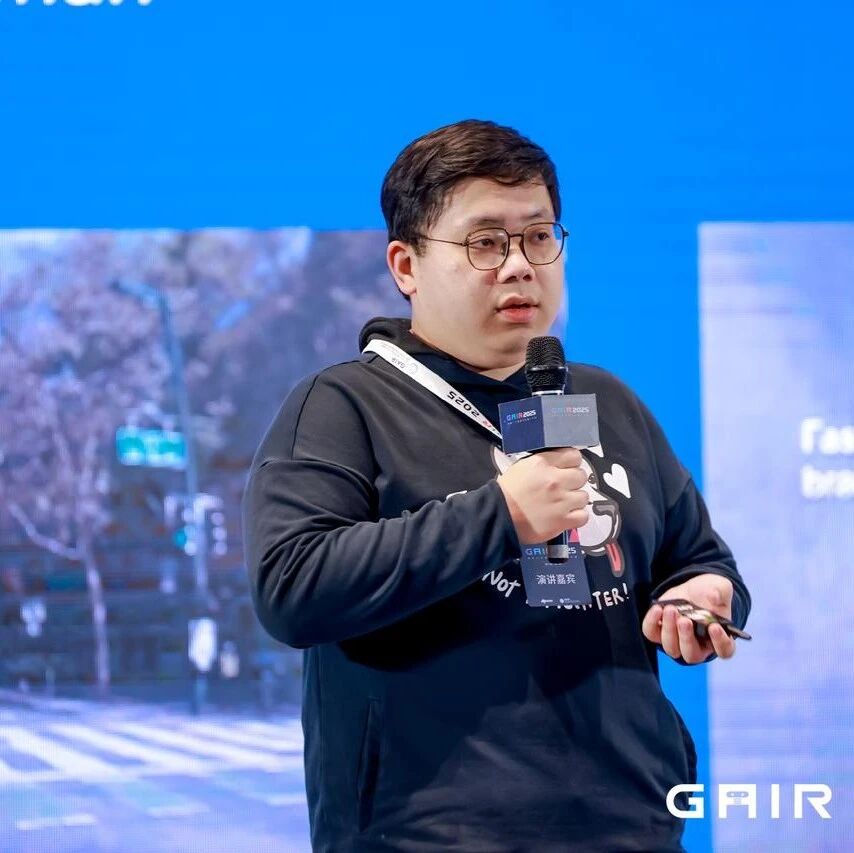
" 更优雅的感知,更长程的控制。 " 作者丨 梁丙鉴 编辑丨马晓宁 编者按:12月12日, 第八届 GAIR 全球人工智能与机器人大会 于深圳正式拉开帷幕。 本次大会为期两天,由GAIR研究院与雷峰网联合主办,高文院士任指导委员会主席,杨强院士与朱晓蕊教 授任大会主席。大会共开设三个主题论坛,聚焦大模型、具身智能、算力变革、强化学习与世界模型等多 个议题,描绘AI最前沿的探索群像,折射学界与产业界共建的智能未来。 作为 AI 产学研投界标杆盛会,GAIR自2016年创办以来,始终坚守 "传承+创新" 内核,是 AI 学界思想 接力的阵地、技术交流的平台,更是中国 AI 四十年发展的精神家园。过去四年大模型驱动 AI 产业加速变 革,岁末年初 GAIR 如约而至,以高质量观点碰撞,为行业与大众呈现AI时代的前沿洞见。 在12月13日的"数据&一脑多形"专场,上海人工智能实验室青年科学家王靖博进行了以《从虚拟走向现 实,构建通用人形机器人控制与交互策略》为主题的演讲。 长期以来,人形机器人的研究是否必要一直存在着争议。演讲伊始,王靖博博士就对此做出了回应。他指 出,由人类搭建的真实生活环境,也面向人类的各种需求, ...
快手直播间出现大量涉黄内容,快手回应:遭到黑灰产攻击;吉利汽车宣布完成极氪私有化;Waymo无人车闯祸了!路口集体趴窝导致堵车
雷峰网· 2025-12-23 00:34
Key Points - Waymo's autonomous vehicles experienced a significant malfunction, causing traffic congestion in San Francisco due to a power outage affecting traffic lights, leading to passengers being trapped for extended periods [4][5] - Light sail technology company, a Xiaomi-affiliated startup, is set to launch the world's first AI headphones with a camera, aiming to enhance human-computer interaction [8][9] - Kuaishou faced a major issue with explicit content appearing in live streams, which the platform attributed to a black market attack, and has reported the incident to authorities [10] - BYD confirmed salary increases for its R&D personnel, with adjustments targeting engineers in key areas such as battery materials and autonomous driving algorithms [12] - Geely announced the completion of the privatization of its electric vehicle brand, Zeekr, which will now be a wholly-owned subsidiary [15] - Tencent has hired a key talent from ByteDance's AI team, indicating a strategic move to bolster its capabilities in artificial intelligence [18] - Polestar, supported by Geely, secured a $600 million loan to stabilize its operations amid financial challenges, with plans for new model launches [31] - Honor's executive highlighted the ongoing cost pressures in the electronics industry, indicating that price increases for smartphones are inevitable [32] - Noitom Robotics completed a Pre-A+ funding round, raising several hundred million yuan to enhance its data solutions for humanoid robots [29][30] - The German railway company has ordered 200 electric buses from BYD, sparking controversy over local manufacturing preferences [48] - Nvidia's $5 billion investment in Intel aims to reshape the chip industry, focusing on developing customized CPUs and integrating GPU technologies [49][51]

独家丨OpenAI、Meta都在押注的摄像头AI耳机,被这家中国明星创业公司抢先发布
雷峰网· 2025-12-22 05:52
Core Viewpoint - Guangfan Technology, an AI startup, is set to launch the world's first AI headphones with a camera, potentially revolutionizing the industry and achieving a valuation of 1 billion yuan [1][3]. Group 1: Company Overview - Guangfan Technology was founded in October 2024 by Dong Hongguang, a former Xiaomi employee, focusing on next-generation human-computer interaction through AI wearable hardware and general AI agents [1]. - The company has completed multiple rounds of financing within a year, reaching the "1 billion yuan club" in valuation [3]. Group 2: Product Launch - The upcoming product is an AI headphone that integrates a visual camera and multi-modal perception, marking a significant step in AI wearable technology [3][4]. - The pricing for the AI headphones has not been disclosed, but industry insiders predict it will be around 2,000 yuan [5][6]. Group 3: Market Context - The AI wearable hardware market is highly competitive, with both traditional giants and startups vying for dominance [8]. - There is an ongoing debate between AI glasses and AI headphones, with major companies like Google and Apple investing in AI glasses, while AI headphones are gaining traction due to their broader acceptance and functionality [9][10][12]. Group 4: Technological Innovation - The integration of a camera in AI headphones is seen as a necessary evolution to overcome market saturation in voice-only AI headphones, which often lack innovation [15][16]. - The camera's role is not just for photography but for environmental understanding and context collection, allowing users to interact with their surroundings more intuitively [17][19]. Group 5: Competitive Landscape - Major companies, including Apple and Meta, are also exploring camera-equipped AI headphones, indicating a shift towards multi-modal interaction in the industry [17][20]. - Guangfan Technology's background in operating systems and hardware gives it a competitive edge in this evolving market [20][21].