
China Unicom(600050)

Search documents
中国联通20250902
2025-09-02 14:41
Summary of China Unicom's Conference Call Company Overview - **Company**: China Unicom - **Period**: First half of 2025 Key Financial Metrics - **Total Revenue**: 2,002 billion CNY, a growth of 1.5% year-on-year [4] - **Main Business Revenue**: 1,784 billion CNY, maintaining a growth rate of 1.5% [4] - **Total Profit**: 177 billion CNY, an increase of 5.2% year-on-year [4] Revenue Structure - **Internet Communication Business**: - Revenue: 1,319 billion CNY, accounting for 74% of total revenue, with a growth of 0.4% [2][5] - Mobile and broadband users increased by 11.19 million, totaling 480 million users [7] - IoT connections reached 690 million, with 86 million in vehicle networking [7] - **Intelligent Network Business**: - Revenue: 454 billion CNY, representing 26% of total revenue, with a growth of 4.3% [2][5] - Cloud revenue: 376 billion CNY, a growth of 4.6% [2][8] - Data center revenue: 144 billion CNY, a growth of 9.4% [2][8] - AI-related revenue: 35 billion CNY, a significant increase of 290% [2][8] International Business Performance - **International Revenue**: 68 billion CNY, a growth of 11.1% year-on-year, benefiting from Chinese enterprises going abroad and foreign enterprises entering China [2][6] Capital Expenditure and Investment - **2025 Capital Expenditure Guidance**: 55 billion CNY, a double-digit decrease year-on-year [2][9] - **Actual Capital Expenditure in H1 2025**: 20.2 billion CNY, a decrease of 15% year-on-year [2][9] - **Focus Areas**: Investment in data center resources and AI computing power, with data center resource utilization improving to 73% [2][9] Dividend Policy - **Dividend Payout Ratio**: Increased by 5 percentage points to 60% in 2025, with a year-on-year growth of 16% in dividends [2][10] - **Future Dividend Plans**: Aiming to align dividend rates with industry peers, though short-term increases to 70% or 75% are unlikely [2][15][16] User Growth and Market Trends - **User Growth**: The growth of mobile and broadband users is becoming less indicative of overall performance; focus should be on integrated user ARPU [11] - **Industry Challenges**: The industry is facing macroeconomic pressures and increased competition, leading to a decline in growth rates compared to the previous year [12] Cash Flow and Financial Management - **Operating Cash Flow**: Strong performance attributed to improved accounts receivable management and project quality [13] - **Free Cash Flow**: Expected to remain stable at 20 billion CNY for the year [14] Technological Advancements and Future Plans - **AI Development**: Significant focus on AI, with revenue from AI-related services showing substantial growth [17] - **Data Services**: China Unicom has a competitive edge in data management and AI collaboration, enhancing service delivery in various sectors [18] - **eSIM Technology**: Plans to expand eSIM technology to mobile devices, pending final regulatory approvals [20] - **Satellite Internet**: Launched four low-orbit satellites in collaboration with Geely, focusing on IoT applications [3][20] Conclusion China Unicom demonstrates steady growth in its core business segments, with a strong emphasis on AI and data services. The company is strategically positioning itself for future technological advancements while managing capital expenditures and enhancing shareholder returns through increased dividends.

狂买49亿股!险资二季度重仓买了这些,投资者能“抄作业”吗
Bei Ke Cai Jing· 2025-09-02 14:24
Core Viewpoint - Insurance companies have significantly increased their equity investments, particularly in high-dividend stocks, as they seek to enhance returns amid a declining interest rate environment [3][5][10]. Group 1: Insurance Companies' Stock Holdings - As of the end of Q2, insurance companies held a total of 926.99 billion shares across 731 stocks, an increase of 49.24 billion shares from the previous quarter [2][6]. - The total balance of funds utilized by insurance companies exceeded 36 trillion yuan, marking a year-on-year growth of 17.4%, with stock investments reaching 3.07 trillion yuan, up by 640.6 billion yuan in the first half of the year [5][6]. - The top ten stocks heavily held by insurance companies include Minsheng Bank, Shanghai Pudong Development Bank, and China Unicom, with each holding over 10 billion shares [6]. Group 2: Investment Strategy and Market Outlook - Insurance companies are increasingly focusing on equity assets to match the duration of their liabilities and improve yield, especially as fixed-income returns have become insufficient [3][11][12]. - The majority of insurance institutions maintain an optimistic outlook for the A-share market in the second half of the year, particularly favoring stocks within the CSI 300 index [4][17]. - A survey indicated that stocks are the preferred investment asset for insurance institutions in the latter half of the year, followed by bonds and mutual funds [16]. Group 3: Sector Preferences and Future Investments - Insurance companies are particularly interested in sectors such as pharmaceuticals, electronics, banking, and communications, with a focus on high-dividend and innovative stocks [17]. - The trend of insurance companies increasing their equity investments is expected to continue, driven by the need for better returns and the potential for collaboration with banks through shareholding [12][13][14]. - Companies like China Life and Ping An have expressed confidence in the market, emphasizing the importance of high-dividend stocks in stabilizing overall investment returns [17].




中国联通(600050):自由现金流回升显著,中期派息提升亮眼
Changjiang Securities· 2025-09-02 09:45
Investment Rating - The investment rating for the company is "Buy" and is maintained [9]. Core Views - In Q2 2025, the company's revenue performance was mainly affected by non-core business, while profit showed steady growth. The business structure continues to optimize, with an expanding connectivity scale and strong momentum in computing power business. The company's accounts receivable and credit impairment growth have significantly narrowed, free cash flow has rebounded notably, and mid-term dividends have shown impressive growth. The company aims to achieve robust growth in operating revenue, profit, and return on equity for the full year 2025 [2][12]. Summary by Relevant Sections Financial Performance - In H1 2025, the company achieved operating revenue of 200.2 billion yuan, a year-on-year increase of 1.5%, and a net profit attributable to shareholders of 6.35 billion yuan, up 5.1% year-on-year. In Q2 2025, the company reported revenue of 96.8 billion yuan, a decline of 1.0% year-on-year, with service revenue of 87.5 billion yuan, up 1.0%, and sales of communication products down 16.5% to 9.4 billion yuan [6][12]. Business Structure and Growth - The business structure is continuously optimizing, with connectivity revenue reaching 131.9 billion yuan in H1 2025. The revenue from intelligent network services reached 45.4 billion yuan, accounting for 26% of total revenue. International business revenue grew by 11% to 6.8 billion yuan, and strategic emerging industries accounted for 86% of total revenue. The total number of connected users surpassed 1.2 billion, with net additions of over 11 million mobile and broadband users [12]. Computing Power Business - The computing power business is showing strong momentum, with the company's cloud revenue reaching 37.6 billion yuan, a year-on-year increase of 4.6%. The revenue from data center services (IDC) grew by 9.4% to 14.4 billion yuan, with a 60% year-on-year increase in signed contracts for AIDC. The data center capacity reached 2,650 MW, and the total computing power scale reached 30 EFLOPS [12]. Cash Flow and Dividends - As of H1 2025, the company's accounts receivable expanded to 71.5 billion yuan, with credit impairment losses of 8.08 billion yuan, both showing significantly narrowed growth. Free cash flow increased by 63.1% year-on-year, and the mid-term dividend per share was 0.2841 yuan, up 14.5% year-on-year, with a mid-term payout ratio of 60%, reflecting a notable performance [12]. Future Outlook - The company maintains its guidance for strong growth in operating revenue, profit, and return on equity for 2025. The projected net profit attributable to shareholders for 2025-2027 is 9.6 billion yuan, 10.1 billion yuan, and 10.7 billion yuan, corresponding to year-on-year growth rates of 6.4%, 5.6%, and 5.3%, respectively [12].
再创两项新高!超400家沪市公司拟年中分红
Zhong Guo Jing Ying Bao· 2025-09-02 09:40
Core Viewpoint - The introduction of the new "National Nine Articles" has led to an increase in the frequency and amount of interim dividends among listed companies in the Shanghai market, with a significant number of companies enhancing their dividend stability and predictability [1][2]. Group 1: Dividend Trends - As of August 30, 406 listed companies in the Shanghai market have announced their interim dividend plans, setting new records for both the number of companies and the total dividend amount [1]. - Among these companies, 233 have consistently paid interim dividends for two consecutive years, accounting for 58% of the total, with a combined dividend amount of 488.4 billion yuan, representing nearly 90% of this year's interim dividends [1]. - The total cash dividend amount has increased by 1.6% compared to the same period last year, indicating a stable upward trend in dividend payouts [1]. Group 2: High Dividend Characteristics - Among the 233 companies, 55 have cash dividends exceeding 500 million yuan, with 76% maintaining or increasing their dividend amounts compared to the previous period [2]. - The frequency of cash dividends has also increased, with 26 companies having distributed dividends in their last three reports, demonstrating a commitment to "multiple distributions" within a year [2]. Group 3: Record Dividend Rates - The average cash dividend payout ratio for the 2025 interim dividends is approximately 57.42%, a significant increase from 40.95% in 2024 [3]. - There are 14 companies with dividend payout ratios exceeding 100%, and over 50% of listed companies have payout ratios between 30% and 100% [3]. - Notably, 14 companies have interim dividends exceeding 10 billion yuan, with three major telecom operators planning a total interim dividend of over 74 billion yuan, including China Mobile's 54 billion yuan, the highest in the Shanghai market [3].


通信服务板块9月2日跌1.29%,润建股份领跌,主力资金净流出34.77亿元
Zheng Xing Xing Ye Ri Bao· 2025-09-02 09:09
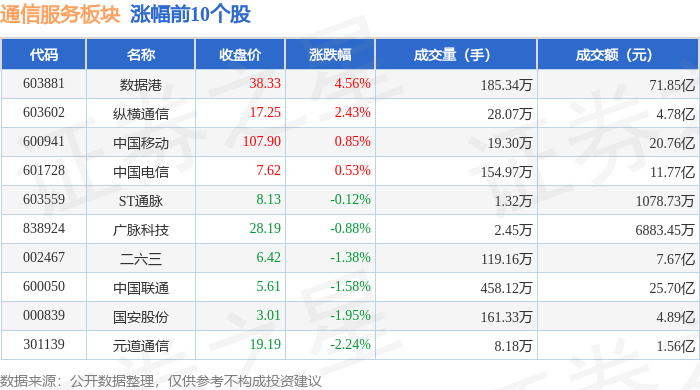
Market Overview - On September 2, the communication services sector declined by 1.29%, with Runjian Co., Ltd. leading the drop [1] - The Shanghai Composite Index closed at 3858.13, down 0.45%, while the Shenzhen Component Index closed at 12553.84, down 2.14% [1] Stock Performance - Data Port (603881) saw a closing price of 38.33, with an increase of 4.56% and a trading volume of 1.85 million shares, amounting to 7.185 billion yuan [1] - Runjian Co., Ltd. (002929) experienced a significant drop of 9.99%, closing at 50.98 with a trading volume of 310,400 shares and a transaction value of 1.63 billion yuan [2] - China Mobile (600941) closed at 107.90, up 0.85%, with a trading volume of 193,000 shares and a transaction value of 2.076 billion yuan [1] Capital Flow - The communication services sector saw a net outflow of 3.477 billion yuan from institutional investors, while retail investors contributed a net inflow of 2.371 billion yuan [2] - The net inflow from speculative funds was 1.106 billion yuan [2] Individual Stock Capital Flow - China Telecom (601728) had a net inflow of 1.53 billion yuan from institutional investors, accounting for 12.99% of its total [3] - China Mobile (600941) recorded a net inflow of 1.39 billion yuan from institutional investors, representing 6.69% of its total [3] - ST Tongmai (603559) experienced a net outflow of 1.405 million yuan from institutional investors, with a significant 26.61% net inflow from speculative funds [3]


天翼视联改制为股份公司,或成为电信运营商独立上市公司新案例
Sou Hu Cai Jing· 2025-09-02 04:44
Core Viewpoint - The three major telecommunications service providers in China, namely China Mobile, China Telecom, and China Unicom, have reported their performance for the first half of 2025, revealing a cumulative domestic telecom business revenue of 905.5 billion yuan, which represents a year-on-year growth of 1%. This growth rate is lower than the GDP growth rate of 5.3% during the same period and marks the lowest revenue growth in six years, particularly with China Mobile experiencing a year-on-year revenue decline, indicating significant growth pressure on the industry [1][1][1]. Industry Overview - The overall telecom industry is facing growth pressure, with traditional mobile data traffic revenue continuing to decline and the growth of strategic emerging businesses slowing down, failing to form a sufficient scale to support the industry [1][1][1]. - The industry is experiencing a dilemma of "increment without revenue," highlighting structural issues within the sector [1][1][1]. Competitive Landscape - The traditional business, exemplified by number portability, reflects intensified competition within the industry, commonly referred to as "involution" [1][1][1]. - As overall revenue growth faces significant challenges, the development of emerging businesses and the effectiveness of industry transformation have become focal points for major companies [1][1][1].

中期分红稳定性不断提升 近六成沪市公司连续两年派发“年中红包”
Zheng Quan Ri Bao Wang· 2025-09-01 14:06
Core Viewpoint - The introduction of the new "National Nine Articles" has led to an increase in the frequency and stability of interim dividends among listed companies in the Shanghai market, with a record number of companies announcing dividend plans in 2025 [1][3]. Group 1: Dividend Trends - As of August 30, 2025, 406 companies in the Shanghai market have announced interim dividend plans, setting new records for both the number of companies and the total dividend amount [1]. - Nearly 60% of these companies have consistently paid interim dividends for two consecutive years, with 233 companies accounting for 58% of the total, distributing a combined dividend of 488.4 billion yuan, which is nearly 90% of this year's interim dividends [2][3]. - The average cash dividend payout ratio for the 2025 interim reports is approximately 57.42%, a significant increase from 40.95% in 2024 [6]. Group 2: High Dividend Companies - Among the 233 companies, 55 have announced dividends exceeding 500 million yuan, with 76% maintaining or increasing their dividend amounts compared to the previous period [4]. - Notable companies with substantial interim dividends include China Mobile, which plans to distribute over 54 billion yuan, and China Telecom, which announced a dividend of 16.581 billion yuan, reflecting an 8% year-on-year increase [3][8]. Group 3: New Entrants to Dividend Payments - Of the 406 companies, 173 are making interim dividend payments for the first time since the introduction of the new policy, indicating a broadening of the dividend distribution landscape [5]. - Companies like Haier Smart Home and WuXi AppTec have initiated interim dividends, with Haier distributing over 2.5 billion yuan, representing 20.83% of its net profit [5]. Group 4: Exceptional Dividend Ratios - Fourteen companies have reported dividend payout ratios exceeding 100%, with over half of the listed companies having payout ratios between 30% and 100% [7]. - For instance, Henan Siwei Automation Equipment Co., Ltd. plans to distribute 8.01 billion yuan, which is 263.77% of its net profit for the period [7].



中期分红稳定性不断提升 逾230家沪市公司连续两年派发“年中红包”
Zheng Quan Shi Bao Wang· 2025-09-01 12:34
Core Viewpoint - The introduction of the new "National Nine Articles" has led to a significant increase in mid-term dividends among listed companies in the Shanghai market, enhancing the stability, sustainability, and predictability of dividend payouts [1][2]. Group 1: Dividend Distribution Trends - As of August 30, 406 listed companies in the Shanghai market have announced mid-term dividend plans, setting new records for both the number of companies and the total dividend amount [1]. - Among these, 233 companies have consistently paid mid-term dividends for two consecutive years, accounting for 58% of the total, with a combined dividend payout of 488.4 billion yuan, representing nearly 90% of this year's mid-term dividends [2]. - The total dividend amount from these 233 companies has increased by 1.6% year-on-year, indicating a stable upward trend in dividend payouts [2]. Group 2: High Dividend Payouts - 55 companies among the 233 have announced mid-term dividends exceeding 500 million yuan, with 76% maintaining or increasing their dividend amounts compared to the previous period [2]. - For instance, Shandong Gold and Zijin Mining reported significant growth in their mid-term dividends, with increases of 125% and 120% respectively [2]. - The trend of multiple dividend distributions within a year is also evident, with 26 companies having paid dividends in their last three reports, showcasing a commitment to shareholder returns [3]. Group 3: Expansion of Mid-term Dividends - The remaining 173 companies have initiated mid-term dividends for the first time following the new policy, contributing to the expansion of mid-term dividend distributions [4]. - Notable examples include Haier Smart Home, which implemented a mid-term dividend of over 2.5 billion yuan, and WuXi AppTec, which announced a mid-term dividend of approximately 1 billion yuan after a significant profit increase [4]. Group 4: Record Dividend Ratios - The average cash dividend ratio for mid-term dividends in 2025 is approximately 57.42%, a substantial increase from 40.95% in 2024 [5]. - 14 companies reported dividend ratios exceeding 100%, with over half of the listed companies having dividend ratios between 30% and 100% [5]. - Major companies like China Mobile, China Telecom, and China Unicom are set to distribute a combined total of over 74 billion yuan in mid-term dividends, with China Mobile alone contributing over 54 billion yuan [5].
“T+0”+分红+高股息,港股通央企红利ETF天弘(159281)明日上市交易
2 1 Shi Ji Jing Ji Bao Dao· 2025-09-01 05:29
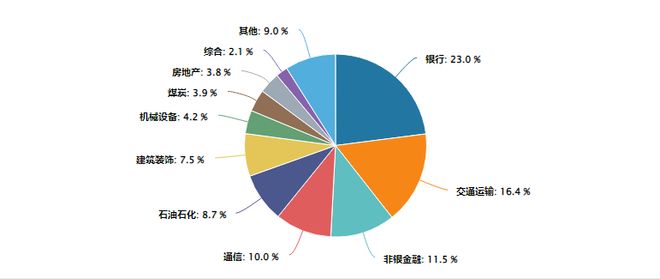
Core Viewpoint - The Hong Kong stock market is showing strength, particularly in cyclical sectors such as consumer discretionary, metals, pharmaceuticals, coal, and steel, with the launch of the Tianhong Central Enterprise Dividend ETF (159281) on September 2, 2023, which aims to track high dividend-yielding central enterprises [1] Group 1: ETF and Index Details - The Tianhong Central Enterprise Dividend ETF has an annual management fee of 0.5% and a custody fee of 0.1% [1] - The ETF closely tracks the Hong Kong Stock Connect Central Enterprise Dividend Index (931233), which selects stable dividend-paying companies controlled by central enterprises within the Stock Connect framework [1] - As of the end of Q2 2025, the index's sector distribution includes banking, transportation, non-bank financials, telecommunications, and oil and petrochemicals, with the top ten constituents accounting for 31% of the index [1] Group 2: Performance Metrics - The index has a dividend yield exceeding 7% as of the end of Q2 2025 [3] - Historical performance shows that the index achieved an annualized return of 14.27% over the past five years, with an annualized volatility of 22.02% as of July 9, 2025 [3] Group 3: Investment Outlook - The investment value of Hong Kong central enterprise dividends is expected to continue benefiting from inflows of southbound capital, structural market conditions, and a focus on investor returns through improved dividend policies [4] - The Hong Kong market is anticipated to rise further in the second half of the year, driven by three positive factors, including the AI cycle benefiting technology stocks and the low-interest-rate environment enhancing dividend attractiveness [4]

“AI驱动”潜力初现 通信行业景气度持续向好
Zheng Quan Ri Bao Wang· 2025-09-01 02:29
Core Viewpoint - The communication industry is experiencing a structural shift from traditional services to emerging businesses, driven by technological innovation and policy support [1][3]. Group 1: Industry Performance - A total of 125 listed companies in the communication sector reported a combined revenue of 13,220.65 billion yuan, representing a year-on-year growth of approximately 3% compared to 12,836.37 billion yuan [2]. - The combined net profit attributable to shareholders reached 1,374 billion yuan, an increase of 7.68% from 1,276 billion yuan in the same period last year [2]. - The industry is showing a structural opportunity, with communication equipment outperforming communication services, and emerging communication businesses surpassing traditional ones [2]. Group 2: Company Highlights - Among the listed companies, 10 had revenues exceeding 10 billion yuan, and 9 had net profits over 1 billion yuan [2]. - The top three companies by revenue and net profit are China Mobile, China Telecom, and China Unicom, while ZTE Corporation ranks fourth in revenue and fifth in net profit [2]. Group 3: Emerging Business Growth - The demand in the communication industry is shifting towards diversified and high-value experiences, with significant growth in IoT, cloud computing, satellite communication, and cybersecurity [3]. - The three major operators are maintaining stable performance, with increased capital expenditure in AI computing, despite overall capital spending being tightened [3]. Group 4: AI Integration - The communication sector is evolving from a "highway" for information transmission to a "smart neural network" supporting AI computing networks [4]. - In the first half of 2025, China Mobile's digital transformation revenue reached 1,569 billion yuan, a year-on-year increase of 6.6%, accounting for 33.6% of its main business revenue [4]. - China Telecom's smart revenue reached 63 billion yuan, growing by 8.4%, while satellite revenue increased by 20.5% and quantum revenue surged by 171.1% [4]. Group 5: Strategic Focus - ZTE Corporation is focusing on AI and ICT integration, with its revenue from AI-related products growing nearly 100% year-on-year, accounting for over 35% of its total revenue [5]. - The satellite internet industry is expected to improve as supportive policies are introduced and advancements in 6G technology continue [5]. - The industry is anticipated to enter a recovery phase in Q3 2025, driven by technological breakthroughs and new infrastructure investments [5].
