HP(HPQ)

Search documents
HP Reimagines the Future of Work
Globenewswire· 2026-03-24 13:30
Core Insights - HP Inc. announced new AI-powered devices and solutions aimed at enhancing productivity and collaboration in the workplace, emphasizing the importance of technology in simplifying work processes in an increasingly complex environment [2][3]. Group 1: AI and Productivity - The company highlighted that only 20% of workers have a healthy relationship with work, and 22% face monthly technology issues that disrupt focus, indicating a need for improved technology solutions [4]. - Employees with the right tools are twice as likely to feel positive about their work, with a reported 33-point improvement in overall experience scores. The deployment of AI PCs at HP led to a 16% increase in productivity [5]. Group 2: New Technologies and Features - HP introduced HP IQ, which combines local on-device intelligence and proximity-based connectivity to enhance employee productivity and collaboration across HP AI PCs and workplace devices [6][10]. - The HP NearSense feature facilitates friction-free collaboration by enabling devices to discover and connect with each other, simplifying task transitions [8]. Group 3: Security Innovations - HP announced the HP TPM Guard, the first hardware solution designed to prevent physical BitLocker bypass attacks, enhancing security across its portfolio [12][15]. - The new LaserJet Pro 4000/4100 Series and LaserJet Enterprise 5000/6000 Series incorporate quantum-resistant security features, aimed at protecting sensitive documents while improving printing efficiency [12][34]. Group 4: Product Line Expansion - HP expanded its commercial lineup to include both AMD and Intel options, catering to diverse roles and workflows within organizations [11]. - The new HP Z Workstations are designed to support complex AI workloads and enhance IT infrastructure for a hybrid work environment [17][22]. Group 5: Enhancements in User Experience - The Workforce Experience Platform (WXP) now includes AI-generated remediation paths and custom telemetry reporting, moving organizations towards proactive, AI-driven operations [19][23]. - HP's gaming division continues to innovate with new AI-powered capabilities in the HyperX OMEN series, enhancing user experience and performance [20][23].



HP Imagine 2026: HP Leads Security for the Future of Work with Launch of HP TPM Guard: New Protection Against Physical Access Attacks that Steal PC Data
Globenewswire· 2026-03-24 13:30
Core Insights - HP has launched HP TPM Guard, a hardware solution designed to prevent physical TPM bus attacks, marking a significant advancement in PC security by protecting against vulnerabilities that can bypass BitLocker encryption [2][4][20] - The company has also enhanced its HP Wolf Security portfolio, introducing new capabilities aimed at reducing operational overhead and cyber-risk for businesses [8][9] Group 1: HP TPM Guard - HP TPM Guard is the first hardware solution to stop physical TPM bus attacks, providing protection for business notebooks against physical-access attacks that can defeat BitLocker drive encryption [2][20] - The solution establishes an encrypted link between the Trusted Platform Module (TPM) and the CPU, making it inoperable if tampered with, thus closing a significant security gap in the industry [5][20] - HP anticipates that TPM Guard will be particularly relevant for regulated industries and organizations managing highly sensitive information, as it offers enhanced protection against physical attacks [6][20] Group 2: HP Wolf Security Enhancements - New capabilities in HP Wolf Security focus on increasing synergy with the Workforce Experience Platform (WXP) and enhancing security across the commercial PC portfolio [8][9] - HP is expanding quantum-resistant cryptography to a broader range of printers, addressing the potential threat posed by quantum computers to existing asymmetric cryptography [9][10] - The new HP LaserJet Enterprise 5000/6000 Series will feature automated guided redaction to help organizations comply with data protection regulations by removing sensitive information [10][14]

HP Imagine 2026: HP Introduces LaserJet Portfolio with Quantum-Resistant Security and Faster Document Digitization
Globenewswire· 2026-03-24 13:30
Core Insights - HP Inc. has launched a new LaserJet portfolio aimed at enhancing document management and security for businesses transitioning to hybrid work environments, featuring faster processing and AI-powered tools [2][14]. Group 1: Product Offerings - The new HP LaserJet Pro 4000/4100 Series and HP LaserJet Enterprise 5000/6000 Series are designed to bridge paper and digital workflows, simplify printer management, and support hybrid teams [2][3]. - The HP LaserJet Pro 4000/4100 Series is tailored for small to medium-sized businesses (SMBs) with limited IT support, offering professional-quality monochrome printing and enhanced security features [3][4]. - The HP LaserJet Enterprise 5000/6000 Series targets larger teams requiring high-speed printing and advanced document digitization capabilities [9][10]. Group 2: Performance and Efficiency - The HP LaserJet Pro 4000/4100 Series provides 50% faster document processing and up to 25% lower ongoing print costs compared to previous generations, utilizing the new TerraJet Toner technology [4][14]. - The Enterprise series boasts automatic two-sided scanning speeds of up to 200 images per minute (ipm) and print speeds of up to 57 pages per minute (ppm) [10][14]. Group 3: Security Features - The new printers include quantum-resistant security protections, making them the first in the SMB market to offer such features, alongside tamper-resistant toner chips and firmware [6][7]. - HP's security measures are designed to reduce cyberattack exposure by up to 80%, addressing the increasing security risks associated with complex print environments [14][35]. Group 4: AI Integration - HP is embedding AI into the printing and scanning workflows to enhance document quality, speed, and accuracy, thereby reducing manual processing time by up to 50% [14][38]. - The AI capabilities include automated document formatting, naming, and sharing, which streamline operations for both SMBs and larger enterprises [16][14]. Group 5: Market Demand and Trends - A significant portion of SMBs (78%) struggle with printer management, and 54% are accelerating their digitization efforts, indicating a strong market demand for efficient and automated printing solutions [3][8]. - Nearly half of organizations (47%) are increasing investments in modernizing print infrastructure to support evolving IT strategies and hybrid work [8].


HP Imagine 2026: HyperX Expands Player Potential for Competitive Play
Globenewswire· 2026-03-24 13:30
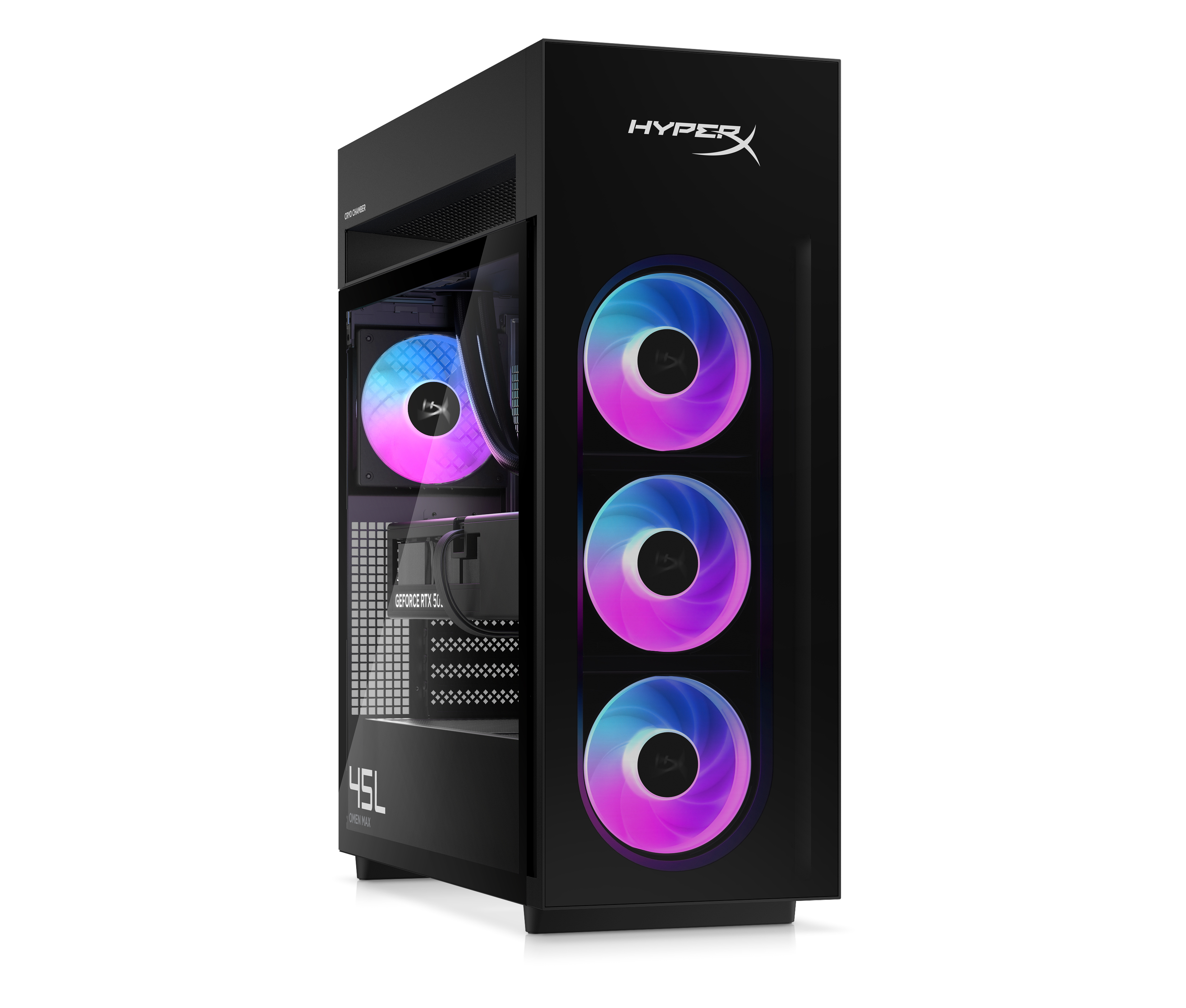
Core Insights - HP Inc. has unveiled its latest high-performance gaming desktops, the HyperX OMEN MAX 45L and HyperX OMEN 35L, at the HP Imagine 2026 event, emphasizing advancements in hardware and software for gamers [2][19] - The new offerings include expanded OMEN AI game support and enhanced capabilities in the OMEN Gaming Hub, aimed at improving gaming performance and user experience [2][19] Product Innovations - The HyperX OMEN MAX 45L is designed for extreme performance, featuring an Intel® Core™ Ultra 7 270K Plus processor, NVIDIA® GeForce RTX™ 5090 GPU, and up to 128 GB of DDR5 RAM, promising a 10% performance increase over the previous generation [6][20] - The HyperX OMEN 35L focuses on accessibility, providing reliable power and customization options for gamers looking to upgrade their systems over time [5][20] OMEN AI Enhancements - OMEN AI now supports popular titles like Minecraft, Roblox, and Marvel Rivals, offering one-click FPS optimization that can lead to performance improvements of up to 50% in Minecraft [11][12][21] - The AI continuously learns from gameplay sessions to refine system configurations, ensuring sustained optimized performance [12][21] OMEN Gaming Hub Developments - The OMEN Gaming Hub has been enhanced with new AI-powered tools through partnerships with HeyGen and Voicemod, allowing for content creation and personalized gaming experiences [15][22] - HeyGen enables users to create professional-quality videos and highlight clips, while Voicemod offers real-time voice transformation capabilities [18][22] Availability and Pricing - Both the HyperX OMEN MAX 45L and HyperX OMEN 35L are expected to be available on HP.com in May, with pricing details to be announced closer to the launch date [18]
HP Imagine 2026: HP Unveils a New Connectivity Experience Set to Advance Cross-Device Interoperability with HP NearSense
Globenewswire· 2026-03-24 13:30
Core Insights - HP Inc. has introduced HP NearSense, a new connectivity experience aimed at enhancing cross-device interoperability, allowing seamless transitions between devices and spaces for teams [1][4][6] - The collaboration with Google focuses on extending the Device-to-Device-Infrastructure (D2DI) technology to support consistent and secure connectivity across various operating systems and brands [1][6][9] Product Features - HP NearSense is designed to facilitate real-time handoffs and context sharing between nearby devices, thereby reducing friction in mixed-device environments [2][4][6] - The initial rollout of HP NearSense will occur on select HP AI PCs in Spring 2026, with plans for interoperability with Android devices later in the year [5][11] - Features include single-click meeting joins, secure file sharing without email or cloud reliance, and bi-directional file sharing between Android devices and HP PCs [7][8] Future Developments - HP plans to expand HP NearSense capabilities across its entire product portfolio, including video conferencing solutions, print devices, and peripherals, to enhance proximity-based experiences [7][10] - The technology aims to simplify device discovery in shared spaces and improve setup processes for peripherals, with ongoing enhancements through software updates [7][10] Industry Collaboration - The partnership with Google aims to remove barriers to interoperability, enabling a cohesive experience across HP and Android devices [9] - Qualcomm is also involved in the development of device-to-device interoperability, contributing to the evolution of cross-ecosystem experiences [10]


HP Imagine 2026: HP Enables People's Best Work in More Places Than Ever Before
Globenewswire· 2026-03-24 13:30
Core Insights - HP Inc. has launched the HP EliteBook 6 G2q Next Gen AI PC, which is designed to enhance productivity for hybrid workforces through advanced AI capabilities and always-connected experiences [1][16] - The new devices aim to support diverse workstyles and workflows, emphasizing the importance of local AI processing to improve performance and reduce latency [3][17] Product Features - The HP EliteBook 6 G2q offers up to 85 TOPS NPU AI performance and up to 28 hours of battery life, making it suitable for high-impact collaboration [5][6] - The device features a lightweight design that is 15% thinner than its predecessor, facilitating easier transitions between work locations [6] - Integrated security features include HP Wolf Pro Security Next Gen Antivirus and physical intrusion detection, enhancing data protection in modern IT environments [9][6] AI Integration - HP is introducing HP IQ, a new AI layer that utilizes a 20B-parameter model to enhance local intelligence and productivity across its devices [10][13] - The local-first design of HP IQ prioritizes data security by keeping sensitive information on-device, reducing exposure risks [10][17] Market Positioning - HP's expanded commercial lineup includes options powered by both AMD and Intel, catering to a wide range of organizational needs and ensuring flexibility in device selection [7][21] - The devices are designed to work seamlessly within the HP ecosystem, integrating hardware, connectivity, and services for improved work experiences [8] Availability and Pricing - The HP EliteBook 6 G2q is expected to be available on HP.com in July 2026, with pricing details to be announced closer to the release date [23]

HP Imagine 2026: HP Demonstrates Its Vision for a Connected, Intelligent Ecosystem Across Devices and Spaces with the Introduction of HP IQ
Globenewswire· 2026-03-24 13:30
Core Insights - HP Inc. has unveiled its vision for a connected ecosystem of intelligent devices aimed at enhancing productivity and collaboration in the workplace through HP IQ technology [1][2] Group 1: HP IQ Overview - HP IQ is designed to reduce digital friction and enhance employee productivity by integrating local, on-device AI and proximity-based connectivity [5][14] - The technology aims to transform HP devices into context-aware partners that assist employees in eliminating routine tasks and making informed decisions [2][5] Group 2: Features and Capabilities - Initial AI experiences powered by HP IQ will debut on the next generation of HP EliteBook X G2 PCs, with plans for additional capabilities to roll out to more HP devices later in 2026 [2][3] - HP NearSense, a new spatial intelligence feature, will facilitate seamless transitions between tasks and environments by enabling real-time sharing of context and capabilities across devices [4][5] Group 3: User Experience - HP IQ includes features such as Ask IQ for contextual answers, Analyze for file interaction, Notes & Knowledge for organizing information, and Meeting Agent for capturing ideas during meetings [6][8] - The Visor interface allows employees to access HP IQ capabilities through natural language interactions, enhancing user experience without requiring app switching [8][9] Group 4: Security and Management - HP IQ is built on a local, 20 billion-parameter model, prioritizing data security by keeping sensitive information on-device and routing select tasks to the cloud only when permitted [9][10] - The integration with HP Workforce Experience Platform (WXP) provides centralized visibility and governance for IT leaders, ensuring compliance and streamlined operations [10][11] Group 5: Availability and Future Plans - HP IQ will be introduced in Spring 2026 with early access on select HP AI PCs, expanding to additional devices in Summer 2026 and broader availability expected in the second half of 2026 [12][17]
HP Imagine 2026: HP Introduces LaserJet Portfolio with Quantum-Resistant Security and Faster Document Digitization
Globenewswire· 2026-03-24 13:30
Core Insights - HP Inc. has launched a new LaserJet portfolio aimed at enhancing document processing speed, security, and AI capabilities for hybrid work environments [2][16]. Group 1: Product Offerings - The new HP LaserJet Pro 4000/4100 Series and HP LaserJet Enterprise 5000/6000 Series are designed to improve the integration of paper and digital workflows, enhance security, and simplify printer management [2][3]. - The HP LaserJet Pro 4000/4100 Series is tailored for small to medium-sized businesses (SMBs) with limited IT support, offering professional-quality monochrome printing and built-in security features [4][5]. - The HP LaserJet Enterprise 5000/6000 Series targets larger teams and organizations, providing high-speed printing and advanced AI workflow tools [10][11]. Group 2: Market Demand and Trends - 78% of SMBs face challenges in printer management, and 54% of organizations are accelerating their digitization efforts [1][10]. - The urgency for modernizing print infrastructure is underscored by 47% of organizations increasing their investments in this area to support evolving IT strategies [10]. Group 3: Key Features and Benefits - The HP LaserJet Pro 4000/4100 Series offers the fastest automatic two-sided printing in its class and up to 25% lower ongoing print costs compared to previous generations [5][8]. - The Enterprise series features automatic two-sided scanning at speeds up to 200 images per minute (ipm) and print speeds up to 57 pages per minute (ppm) [12]. - Both series incorporate quantum-resistant security measures, including tamper-resistant toner chips and firmware protection, addressing rising security risks [9][17]. Group 4: AI Integration - HP is embedding AI into its printing and scanning workflows to enhance document quality, speed, and accuracy, thereby reducing manual processing time by up to 50% [19][40]. - The AI capabilities include automated document formatting, naming, and sharing, which streamline operations for both SMBs and larger enterprises [19][22]. Group 5: Sustainability Initiatives - The new printers are designed for energy efficiency, achieving certifications such as EPEAT Gold and ENERGY STAR, and utilizing recycled materials in toner cartridges [17][39]. - The next-generation TerraJet Toner technology is engineered for low-energy printing and enables more pages per cartridge, supporting sustainability goals [9][39].
HP Imagine 2026: HP Announces High-Performance PCs for the Most Demanding Local Compute and AI Workloads
Globenewswire· 2026-03-24 13:30
Core Insights - HP Inc. announced a new generation of HP Z Workstations and AI solutions aimed at providing high-performance computing while modernizing IT infrastructure for a hybrid future [1][2] Product Innovations - The HP Z8 Fury G6i workstation is designed for demanding compute and AI workloads, supporting up to four NVIDIA RTX PRO™ 6000 Blackwell Max-Q GPUs and next-generation Intel processors, making it suitable for advanced AI development and simulation workloads [3][19] - The HP Max Side Panel is introduced as an industry-first chassis expander that increases internal volume by 15%, allowing for the installation of larger graphics cards while maintaining thermal performance [4][21][26] - Updates to the mobile workstation portfolio include the HP ZBook X G2i and ZBook 8 G2i, which offer next-generation AI performance with options for AMD and Intel processors, integrated or discrete graphics, and improved portability [5][6][22] Performance Enhancements - The HP ZBook X is highlighted as the world's most powerful 16" mainstream mobile workstation, featuring powerful graphics and up to 128GB RAM, which helps eliminate bottlenecks during rendering [6][26] - Collaboration with industry leaders like Intel and Autodesk allows for faster design iterations, with the ZBook 8 G2i enabling mobile engineers to render designs 3.3 times faster [7][22] - HP Z Boost, a GPU sharing solution, enhances productivity by allowing workstations to share GPU resources, resulting in up to 5.7 times faster rendering in applications like Catia and Siemens NX [10][11] IT Solutions for Hybrid Environments - HP's Advanced Compute Solutions ecosystem supports hybrid AI strategies, balancing local and cloud compute resources, which allows IT leaders to manage performance, security, and cost effectively [12][23] - The HP ZGX Nano and upcoming ZGX Fury provide scalable, high-density local performance for AI inference and fine-tuning, integrating seamlessly into managed IT environments [12][23] Ecosystem and Management - HP's Z portfolio extends beyond workstations to include displays, peripherals, and collaboration solutions, designed to streamline high-performance workflows and simplify IT management [16] - The HP Workforce Experience platform offers IT managers comprehensive visibility into device performance and technology usage, enhancing overall management capabilities [16]
CFOs On the Move: Week ending March 20
Yahoo Finance· 2026-03-20 09:20
Executive Appointments - Jim Peters has been appointed as the chief financial officer of Brown-Forman, effective March 31, succeeding Leanne Cunningham who will retire on May 1 after over 30 years with the company [2] - Gabrielle Rabinovitch will join Wonder as finance chief on April 6, as the company prepares for an IPO [3] - Nitesh Sharan has been appointed as the new finance chief of Quantinuum, effective April 6 [4] - James Suh has been appointed CFO of Spurs Sports & Entertainment, previously serving as CFO for the Florida Panthers [5] - Sanjay Khetan has been promoted to CEO of Baked by Melissa, having previously served as CFO [6]