
Navitas Semiconductor (NVTS)

Search documents
1 Prediction for NVTS in 2026
The Motley Fool· 2026-02-02 04:00
Core Insights - Navitas Semiconductor is transitioning into higher-margin business lines, with significant benefits expected by 2026 [1][4] - The company has shifted focus from lower-margin mobile and consumer sectors to data center infrastructure and industrial electrification, which are projected to have substantial long-term growth potential [2][5] Financial Performance - In Q3 2025, Navitas reported revenue of $10.1 million, with an anticipated decline to $7 million in Q4 2025 [3] - The company's market capitalization stands at $2 billion, with a current stock price of $8.56, reflecting a 200% increase over the past year [3][6] Market Position and Strategy - The data center market is projected to reach a total addressable market of $1 trillion annually by 2030, indicating a lucrative opportunity for Navitas [2] - The company is streamlining its distribution network and reducing inventory as part of its strategic pivot, which has led to short-term revenue challenges [3] Future Outlook - There is optimism that the business transformation will yield positive results later in 2025, with expectations of outperforming peers in revenue growth and stock appreciation [4] - Navitas is well-positioned to collaborate with AI industry leaders, having already partnered with Nvidia and serving customers in the electric vehicle and PC manufacturing sectors [5][6] - Predictions indicate that Navitas will move beyond its transitional phase early in 2026, leading to accelerated revenue growth and strong returns for investors [7]



Navitas Semiconductor to Report Q4 and Full Year 2025 Financial Results on Tuesday, February 24, 2026
Globenewswire· 2026-01-28 13:04
Core Viewpoint - Navitas Semiconductor is set to report its fourth quarter and full year 2025 financial results on February 24, 2026, with a conference call scheduled to discuss these results and the company's business outlook [1]. Group 1: Financial Results Announcement - The financial results will be reported after market close on February 24, 2026 [1]. - A conference call will be hosted by the President and CEO, Chris Allexandre, and CFO, Todd Glickman at 2:00 p.m. Pacific Time [1]. Group 2: Conference Call Details - Analysts and investors can join the conference call using the toll-free dial-in numbers: 1-800-715-9871 or 1-646-307-1963, with Conference ID 4101022 [2]. - A live and archived audio webcast of the conference call will be available on the company's Investor Relations website [2]. Group 3: Company Overview - Navitas Semiconductor is a leader in next-generation power semiconductors, focusing on gallium nitride (GaN) and silicon carbide (SiC) technologies [3]. - The company has over 30 years of combined expertise in wide bandgap technologies and holds more than 300 patents issued or pending [3]. - Navitas is recognized as the world's first semiconductor company to achieve CarbonNeutral certification [3].

Better Artificial Intelligence Stock: SoundHound AI vs. Navitas Semiconductor
The Motley Fool· 2026-01-27 06:00
Core Insights - The booming AI sector presents investment opportunities, particularly in companies like SoundHound AI and Navitas Semiconductor, each representing different segments of the AI industry [1][2] SoundHound AI - SoundHound specializes in consumer-facing, voice-activated AI technology, allowing users to perform tasks through voice commands [2][3] - The company launched its Vision AI product in January, which enhances vehicle capabilities by integrating with cameras to interpret surroundings [4] - A partnership with Bridgepointe Technologies aims to expand SoundHound's market reach, with clients including Marriott and Toyota, potentially boosting sales [5] - Revenue for Q3 2025 reached a record $42 million, marking a 68% year-over-year increase, driven by expanding platform capabilities and acquisitions [6] - Despite revenue growth, operating costs surged by 243% year-over-year to $115.9 million, raising concerns about sustainability [6] - SoundHound forecasts full-year sales for 2025 between $165 million and $180 million, nearly doubling from $84.7 million in 2024 [7] Navitas Semiconductor - Navitas develops gallium nitride integrated circuits for power conversion, which are advantageous for AI data centers due to their energy efficiency [9][10] - The company shifted focus from consumer-related components, which previously accounted for 60% of revenue, to AI, resulting in a significant revenue decline [11] - In Q3 2025, Navitas reported revenue of $10.1 million, down from $21.7 million in 2024, and a net loss of $19.2 million [11][12] - Operating expenses were reduced to $23.2 million in Q3 from $37.6 million the previous year, but sales are expected to continue declining in Q4 2025 [12] - Navitas anticipates gradual revenue growth in 2026 as it focuses on AI, despite current challenges [12] Investment Considerations - Investing in SoundHound requires confidence in its ability to maintain sales growth while managing costs, whereas Navitas investors must believe in the success of its AI pivot [14] - Both companies are currently unprofitable, making valuation assessments based on forward price-to-sales (P/S) ratios relevant [15] - SoundHound's forward sales multiple is at a low point, while Navitas' is significantly higher, suggesting that SoundHound may be the more attractive investment at this time [17][18]

How Low Can Navitas Stock Go?
Forbes· 2026-01-26 16:00
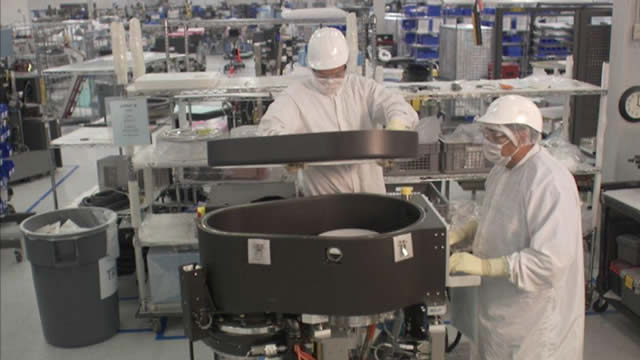
Core Viewpoint - Navitas Semiconductor (NVTS) shares have experienced a significant decline of 9.9% in a single day, raising concerns about potential revenue reductions from deprioritized low-power products and broader geopolitical market tensions [1] Company Overview - Navitas Semiconductor is valued at $2.2 billion, with revenues of $57 million, and is currently trading at $10.17 [3] - The company specializes in gallium nitride (GaN) power ICs and energy-efficient semiconductor technologies [3] Financial Performance - The last 12-month revenue growth for Navitas Semiconductor is at -38.1%, and the operating margin stands at -181.4% [9] - The company has a debt-to-equity ratio of 0.0 and a cash-to-assets ratio of 0.35 [9] - Currently, shares are trading at a P/E multiple of -17.3 and a P/EBIT multiple of -34.9 [9] Stock Performance and Valuation - The stock has historically provided a median return of 26.7% within a year after sharp declines since 2010 [9] - NVTS stock has plunged 84.0% from a peak of $20.16 on November 15, 2021, to $3.22 on December 27, 2022, compared to a peak-to-trough decline of 25.4% for the S&P 500 [10] - The highest price achieved since the decline is $17.10 on October 20, 2025, with the current trading price at $10.17 [10] Market Resilience - Concerns arise regarding the resilience of NVTS stock if the markets decline further, with potential additional drops of 20-30% to $7 [5] - The stock has significantly underperformed compared to the S&P 500 index during various economic downturns, both in terms of the magnitude of decline and speed of recovery [5]
Better AI Chip Stock: Nvidia vs. Navitas Semiconductor
Yahoo Finance· 2026-01-21 20:25
Group 1 - Nvidia and Navitas represent two distinct investment opportunities in the growing AI market, with Nvidia being the largest producer of data center GPUs and Navitas focusing on next-gen chips for AI and non-AI markets [1] - Over the past year, Nvidia's stock increased by nearly 30%, while Navitas' stock surged more than 165%, raising questions about Navitas' potential to continue outperforming Nvidia [2] - Nvidia has shifted its revenue focus from gaming GPUs to data center markets, with major AI companies like OpenAI, Microsoft, Meta, and Google relying on its GPUs for AI applications [3] Group 2 - Nvidia holds over 90% of the discrete GPU market and uses its proprietary CUDA platform to retain data center customers, creating a competitive advantage against cheaper alternatives like AMD [4] - Navitas manufactures gallium nitride (GaN) and silicon carbide (SiC) chips that are more efficient and suitable for various applications, including phone and laptop chargers, as well as data center servers [5] - Navitas expanded into the SiC market through its acquisition of GeneSiC in 2022, enhancing its presence in the growing EV and data center sectors [6] Group 3 - Nvidia's agreement to incorporate Navitas' GaN and SiC chips into its AI data centers will enhance Navitas' exposure to the AI market, although mass production of these chips is not expected until 2027 [7] - Nvidia's AI-driven business is performing strongly, and the partnership with Navitas could support long-term growth for Navitas [8]

Navitas 2.0: GaN And SiC Powerhouse Pivoting Into The AI Data Center Boom
Seeking Alpha· 2026-01-21 19:32
Core Insights - Navitas Semiconductor (NVTS) is strategically positioned to meet the increasing power demands of AI and the global push for energy efficiency, leading to a Strong Buy rating for the company [1] Company Analysis - The company is recognized for its strong financial profile and is analyzed through a quantamental approach, combining data-driven models with fundamental research [1] - The structured analysis process includes both top-down screening and bottom-up company-specific analysis, aiming to provide unique investment ideas accessible to both retail and professional investors [1] Market Position - Navitas Semiconductor is at the center of the growing energy efficiency market, which is crucial for supporting the expanding needs of AI technologies [1]

NVTS vs. ADI: Which Semiconductor Stock Should You Buy Right Now?
ZACKS· 2026-01-21 16:55
Core Insights - Navitas Semiconductor (NVTS) and Analog Devices (ADI) are positioned to benefit from the increasing demand for data centers, AI infrastructure, and energy-efficient technologies [1][3] Company Overview - Navitas Semiconductor specializes in Gallium nitride (GaN) and Silicon carbide (SiC) chips for next-generation AI data centers and energy systems [2] - Analog Devices manufactures a range of semiconductor devices, including analog, mixed signal, and digital signal processing integrated circuits [2] Growth Prospects - Both NVTS and ADI are expected to benefit from long-term growth in data centers and advanced technology infrastructure [3] - Navitas is focusing on high-power markets and has been included in NVIDIA's new 800-volt AI factory ecosystem, which enhances its market position [4] - ADI's data center segment has crossed a $1 billion annual run-rate, reflecting a year-over-year increase of over 50% for three consecutive quarters, driven by AI infrastructure spending [10][11] Financial Performance - In Q3 2025, Navitas reported revenues of approximately $10.1 million, down over 50% from the previous year due to weak demand in its mobile business [6] - For Q4 2025, Navitas projects revenues of around $7 million, indicating a further decline [7] - ADI expects revenues of $3.1 billion for Q1 2026, with a Zacks Consensus Estimate for fiscal 2026 revenues at $12.89 billion, indicating a year-over-year growth of 16.9% [14] Market Challenges - Navitas is deprioritizing its lower-margin mobile business, which negatively impacts its near-term revenue outlook [6][7] - ADI is experiencing strong demand for high-throughput connectivity and power delivery solutions, which are critical for AI data centers [12] Valuation and Investment Outlook - Analog Devices trades at a forward sales multiple of 11.28X, significantly lower than Navitas Semiconductor's 63.2X, making ADI more attractive for investors seeking stability [22] - In the past three months, ADI shares have increased by 23.1%, while NVTS shares have decreased by 27.1% [20] - The Zacks Consensus Estimate for NVTS's 2026 earnings is a loss of $0.19 per share, while ADI's is a profit of $10.01 per share, indicating a more favorable outlook for ADI [17][19] Conclusion - Currently, ADI is recommended as a buy due to its strong momentum in the data center business and favorable growth outlook, while NVTS is advised to hold due to its near-term uncertainties [23][24][25]

Navitas (NVTS) Loses 9.6% as Tariffs Rattle Global Markets
Yahoo Finance· 2026-01-21 07:54
Company Performance - Navitas Semiconductor Corp. (NASDAQ:NVTS) experienced a significant decline in share prices, dropping by 9.62% to close at $9.86 amid broader market downturns influenced by geopolitical tensions [1][4] - For the fourth quarter of 2025, Navitas expects revenues to be around $7 million, a substantial decrease from $18 million in the same period last year, reflecting a strategic shift to focus on higher power revenue and customers [5] Market Context - The decline in Navitas's stock price coincided with President Trump's threats to impose tariffs on eight European countries, which could escalate to 25% if negotiations fail [2] - The European Union has indicated plans to retaliate with $108 billion in tariffs on American goods, contributing to market uncertainties and investor caution [3] Strategic Direction - Navitas is deprioritizing low power segments and streamlining its distribution network while reducing channel inventory, which is expected to impact profit expectations from key customers like China Mobile [5]
Where Will Navitas Be in 5 Years
The Motley Fool· 2026-01-17 16:15
Core Viewpoint - Navitas Semiconductor is focusing on AI data centers and electric vehicle (EV) infrastructure, leveraging advanced GaN technology to enhance power efficiency, which could significantly impact its market position in the coming years [1] Group 1: Company Strategy - Navitas is pivoting towards AI and EV sectors, indicating a strategic shift to capitalize on emerging technologies [1] - The company is utilizing cutting-edge GaN technology, which is expected to redefine power efficiency in its applications [1] Group 2: Market Potential - The potential upside for Navitas is substantial, as the demand for AI and EV infrastructure continues to grow [1] - The next few years are critical for determining whether Navitas will emerge as a market leader or face challenges [1]

Navitas Semiconductor (NasdaqGM:NVTS) FY Conference Transcript
2026-01-14 20:17
Navitas Semiconductor Conference Call Summary Company Overview - **Company**: Navitas Semiconductor - **Founded**: 2014 - **Headquarters**: Torrance, California - **Industry**: Power Semiconductors, specializing in gallium nitride (GaN) and silicon carbide (SiC) technologies [2][4] Core Points and Arguments Market Transition and Customer Insights - **Customer Feedback**: Customers across various sectors (hyperscalers, GPU, computing, grid, and industrial) emphasize the need for high-density, high-efficiency power conversion technologies, indicating a shift driven by AI [5][6] - **Technology Demand**: There is a strong demand for GaN and high-voltage SiC technologies, with customers requesting rapid implementation due to the challenges of transitioning from silicon [6][7] Navitas 2.0 Strategy - **Focus Shift**: Navitas has pivoted away from consumer mobile markets to focus on high-power markets, including AI data centers, grid infrastructure, computing, and industrial applications [9][10] - **Technology Differentiation**: The company focuses on GaN (650V and mid-voltage) and high-voltage SiC (1.2kV and above), avoiding the crowded EV market [11][12] Market Size and Growth Projections - **Total Addressable Market (TAM)**: The SAM for Navitas under the 2.0 strategy is projected to grow to $3.5 billion by 2030, with significant contributions from AI data centers ($1.4 billion) and grid infrastructure ($1 billion) [18][19] - **SiC and GaN Split**: The market is expected to be evenly split between SiC and GaN, each contributing approximately $1.7 billion [18] Competitive Landscape - **SiC Market**: The SiC market is currently valued at $5-$6 billion, projected to reach $10 billion by 2030, with a focus on high-voltage applications [15] - **GaN Adoption Challenges**: GaN adoption has been slower due to its complexity compared to SiC, which is easier to implement [20][21] Data Center Applications - **Power Conversion Applications**: Navitas targets various applications within data centers, including AC to DC conversion and the emerging 800V HVDC architecture, which is primarily a GaN opportunity [24][29] - **Content per Megawatt**: Estimated GaN content is $10,000-$15,000 per megawatt, while SiC content is $20,000-$25,000, reflecting the higher complexity and integration of SiC in grid applications [34][36] Manufacturing Partnerships - **Foundry Relationships**: Navitas has partnerships with Powerchip for 100V GaN and GlobalFoundries for broader GaN production, transitioning from TSMC by mid-2027 [58][60] - **Supply Transition Strategy**: The company plans to maintain production with TSMC until mid-2027 while ramping up production with GlobalFoundries to ensure a smooth transition for customers [62][63] Other Important Insights - **Grid Infrastructure Opportunities**: The shift towards solid-state transformers and battery energy storage systems is driven by the need for more efficient and reliable grid solutions, particularly in the context of AI deployment [42][43] - **Performance Computing Market**: The high-performance computing segment is expected to grow significantly, with GaN technology playing a crucial role in powering high-end notebooks and workstations [53][54] - **Long-term Vision**: Navitas aims to leverage its expertise in GaN and SiC to address the evolving needs of the power semiconductor market, particularly in AI-driven applications and grid modernization [51][52]