TAL(TAL)

Search documents
港股开盘:恒指开盘跌0.25%,恒生科指跌0.19%,阿里巴巴跌1.8%
Jin Rong Jie· 2026-02-16 01:37
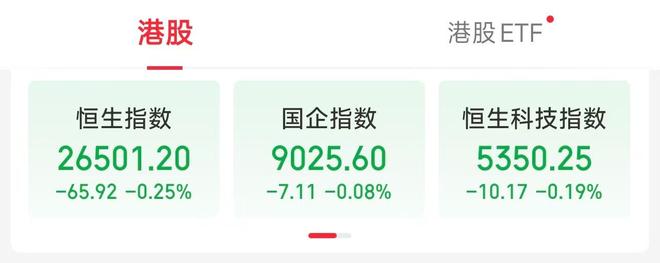
Market Overview - The Hang Seng Index opened down 0.25% at 26,501.2 points, while the Hang Seng Tech Index fell 0.19% to 5,350.25 points, and the National Enterprises Index decreased by 0.08% to 9,025.6 points [1] - Major tech stocks experienced declines, with Alibaba down 1.8%, Tencent down 0.38%, and JD.com down 0.85%. However, Netease saw an increase of 1.83% [3][4] Industry Insights - Huatai Securities reported that the Hong Kong market experienced fluctuations last week, driven by global "reflation" trades and upgrades in AI domestic applications, leading to rebounds in resource products and certain software sectors. However, concerns over the intensifying competition among e-commerce giants suppressed the performance of heavyweight stocks [3] - The market remains volatile, with key factors influencing it being US stock performance, consumer activity during the Spring Festival, and advancements in AI technology [3] Regulatory News - The State Administration for Market Regulation held discussions with major platform companies including Alibaba, Douyin, Baidu, Tencent, JD.com, Meituan, and Taobao, emphasizing compliance with various laws and regulations to enhance promotional practices [5] Company Developments - Qunhe Technology received approval from the China Securities Regulatory Commission for overseas issuance and listing, planning to issue up to approximately 312 million shares in Hong Kong, marking a significant step for the company [6] - China Merchants Energy signed shipbuilding contracts for one ethylene ship and eighteen oil tankers, totaling RMB 7.882 billion [7] - China Shenhua reported coal sales of 33.2 million tons in January, a year-on-year increase of 9.9%, and total electricity sales of 20.96 billion kWh, up 34.4% year-on-year [7] - China Southern Airlines saw a 1.1% decrease in passenger capacity and a 2.86% decline in passenger turnover in January, with a seat load factor of 83.26%, down 1.51 percentage points year-on-year [7] - China Eastern Airlines reported a 3.54% decrease in passenger capacity and a 1.03% decline in passenger turnover, with a seat load factor of 85.01%, up 2.16 percentage points year-on-year [7] - Huizhong Network completed the acquisition of a 25% stake in Jintongling, advancing its "production and sales integration" strategy [7] Performance Metrics - China General Nuclear Power completed 1,647.8 GWh of electricity generation in January, a year-on-year increase of 7.9% [8] - R&F Properties reported a contract sales revenue of approximately RMB 720 million in January, down 8.05% year-on-year [9] - Hopson Development Group recorded a contract sales amount of approximately RMB 591 million in January, a year-on-year increase of 24.95% [10] - Kaisa Group reported contract sales of RMB 325 million in January, down 35.3% year-on-year [11] - Jianye Real Estate reported contract sales of RMB 398 million in January, a year-on-year decrease of 31.1% [12] - Shanghai Fudan projected total revenue of approximately RMB 3.982 billion for 2025, a year-on-year increase of 10.92%, but a net profit decrease of 59.42% [12] - Ruian Real Estate issued a profit warning, expecting a net loss of between RMB 1.7 billion and 1.8 billion for the 2025 fiscal year [12]






2026年中国GenAI+教育行业发展报告
艾瑞咨询· 2026-02-14 00:08
Core Insights - The article emphasizes that 2025 will be a pivotal year for smart education in China, driven by advancements in Generative AI (GenAI) technologies, which are set to transform educational productivity and personalized learning experiences [1][7]. - The report highlights a 40/60 split in education, where 40% of tasks can be automated by technology, while 60% remains the domain of human educators, focusing on emotional engagement and complex problem-solving [2][5]. Group 1: Technological Impact on Education - GenAI technology is expected to bring significant changes in the education sector by transforming static information into dynamic, interactive learning experiences, enhancing teaching efficiency, and enabling personalized education [3][10]. - The report outlines that the Chinese AI industry is projected to grow at a compound annual growth rate (CAGR) of 32.1% from 2025 to 2029, reaching a market size of over 1 trillion yuan by 2029 [7]. Group 2: Market Dynamics and Procurement Trends - The budget for educational digitalization in China is expected to grow steadily, reaching approximately 551.5 billion yuan in 2025 and 680.2 billion yuan by 2028, with GenAI-related procurement demand increasing significantly in schools [10][18]. - In the C-end education market, the total scale is projected to reach 1.3 trillion yuan in 2025, with GenAI products covering 15-20% of adult education and 10-15% of K12 education [15][18]. Group 3: User Engagement and Adoption - By the end of 2025, the user base for Generative AI in China is expected to reach 602 million, a 141.7% increase from 2024, with a penetration rate of 42.8% among young and highly educated individuals [12][13]. - Parents are increasingly using GenAI applications for assisting their children with homework, with 57.3% of parents reporting usage in tutoring scenarios [12][44]. Group 4: Educational Institutions' Procurement Characteristics - In ordinary universities, GenAI-related projects account for about 27% of procurement needs, with a focus on smart teaching and campus management [21][24]. - Vocational colleges show a higher proportion of GenAI projects at 35%, emphasizing the need for technology to reduce teacher workload and enhance personalized teaching [27][30]. Group 5: Future Projections and Trends - The total scale of GenAI+ educational products and services is expected to reach 8.91 billion yuan by 2028, with a CAGR of 37% from 2025 [18][19]. - The report indicates that the value of GenAI technology in educational services is projected to increase, with an average of 20% of service costs attributed to technology capabilities [19][40].



月活破1.2亿!AI教育频繁出错,学生被错误答案误导谁来负责?
Sou Hu Cai Jing· 2026-02-13 10:53
Core Insights - The education sector is experiencing renewed interest from major tech companies, with ByteDance and Alibaba launching AI-driven educational tools to capture market share [1][2] - The AI education market in China has seen significant growth, with monthly active users of AI education apps surpassing 120 million, a 340% year-on-year increase as of Q3 2025 [1] - The competition is primarily between tech giants leveraging their existing user bases and traditional education companies with established research capabilities [2] Group 1: Market Dynamics - The AI education landscape is dominated by three main players: tech giants like ByteDance and Alibaba focusing on rapid iteration and user acquisition, traditional education firms like Yuanfudao and Zuoyebang enhancing their services with AI, and smaller startups targeting niche markets [2] - Major companies are pursuing three business lines: AI problem-solving tools, AI teaching assistants for schools, and AI-driven personalized learning, with varying degrees of market maturity and profitability [3][4] Group 2: Competitive Advantages - Major tech companies benefit from the reuse of large model technologies, existing user traffic, and lower development costs due to economies of scale [4] - However, their fast-paced, traffic-driven strategies may conflict with the slower, more methodical nature of the education sector, potentially hindering long-term success [4] Group 3: Product Differentiation - There are notable differences in user experience among AI education products, with tech giants offering integrated AI assistants that streamline user interaction, while traditional education apps maintain a more segmented approach [6][7] - The interaction styles of AI explanations vary significantly, with tech companies focusing on real-time analysis and engagement, contrasting with traditional firms that rely on pre-existing content and less interactive formats [10][12] Group 4: Challenges and Future Outlook - Major tech companies face challenges in educational content development due to a lack of deep educational research compared to traditional players, which may affect the quality and trustworthiness of their offerings [14] - The sustainability of the business model for tech giants remains uncertain, as they currently offer AI features for free without clear monetization strategies, raising questions about long-term profitability [15][16] - Future opportunities may lie in targeting specific segments such as B2B solutions for schools and adult education, where demand is stable and user willingness to pay is higher [16]

小摩:对中国股市看法正面 首选腾讯控股(00700)等
智通财经网· 2026-02-11 03:36
Group 1 - Morgan Stanley maintains a positive outlook on the Chinese stock market, emphasizing the need for more refined stock selection [1] - The preferred sectors during the Lunar New Year period include high-end liquor, quality protein (new dairy products and black-haired cattle), key condiments, gold, and the tourism industry [1] - Historical data indicates that the appreciation of the RMB against the USD will boost returns in the Chinese stock market, with cyclical or growth stocks typically outperforming defensive stocks [1] Group 2 - The top stock picks include Tencent Holdings (00700), Lao Poo Gold (06181), MGM China (02282), TAL Education (TAL.US), Trip.com (09961, TCOM.US), Haitian Flavoring (03288, 603288.SH), Kweichow Moutai (600519.SH), Mengniu Dairy (02319), and Wuliangye (000858.SZ) [1]



小摩:对中国股市看法正面 首选腾讯控股等
Zhi Tong Cai Jing· 2026-02-11 03:35
Core Viewpoint - Morgan Stanley reaffirms its bullish trading strategy on the Chinese consumer market ahead of the Lunar New Year (February 15 to 23), favoring high-end liquor, premium protein (new dairy products and black-haired cattle), key condiments, gold, and the tourism industry [1] Group 1: Market Strategy - Historical data indicates that the appreciation of the RMB against the USD will boost returns in the Chinese stock market, with cyclical or growth stocks typically outperforming defensive stocks [1] - Morgan Stanley maintains a positive outlook on the Chinese stock market but emphasizes the need for more refined stock selection [1] Group 2: Preferred Stocks - The preferred stocks include Tencent Holdings (00700), Lao Poo Gold (06181), MGM China (02282), TAL Education (TAL.US), Trip.com (09961, TCOM.US), Haitian Flavoring (603288) (03288, 603288.SH), Kweichow Moutai (600519) (600519.SH), Mengniu Dairy (02319), and Wuliangye (000858) (000858.SZ) [1]
小摩:维持对中国股市正面看法,首选腾讯、老铺黄金、贵州茅台等
Ge Long Hui A P P· 2026-02-10 03:27
Group 1 - Morgan Stanley reaffirms its bullish strategy on the Chinese consumer market ahead of the Lunar New Year, focusing on high-end liquor, premium protein (new dairy products and black-haired cattle), key condiments, gold, and the tourism industry [1] - Historical data indicates that the appreciation of the RMB against the USD will enhance returns in the Chinese stock market, with cyclical or growth stocks typically outperforming defensive stocks [1] - Morgan Stanley maintains a positive outlook on the Chinese stock market but emphasizes the need for more refined stock selection, highlighting preferred stocks such as Tencent, Lao Pu Gold, MGM China, TAL Education, Trip.com, Haitian Flavoring, Kweichow Moutai, Mengniu, and Wuliangye [1]

2026,巨头大战AI教育
3 6 Ke· 2026-02-10 01:14
Core Insights - The education sector is experiencing renewed interest from major tech companies, with ByteDance and Alibaba launching AI-driven educational tools to capture market share [1][2] - The AI education market in China has seen significant growth, with monthly active users of AI education applications surpassing 120 million, a 340% year-on-year increase [1] - The competition is primarily between tech giants leveraging their traffic and technology and traditional education players focusing on content and educational services [1][2] Group 1: Market Dynamics - Major tech companies are entering the education market due to clear demand and vast market potential, utilizing large model technology to reduce development costs and time [5][6] - The AI education landscape is divided into three main factions: tech giants focusing on rapid iteration and scenario validation, traditional education companies enhancing content with AI, and small startups targeting niche markets [1][2] - The monetization paths in the education market vary, with AI problem-solving tools being a low-barrier entry point for attracting users [2] Group 2: Business Models - The AI teaching assistant model for B-end clients is clearer in terms of commercial pathways, but its implementation is slower than expected [4] - The primary focus of major companies is on AI teaching, which requires a deep integration of technology and educational research, yet conversion rates and willingness to pay remain challenges [4][6] - The profitability of AI education products from major tech companies is uncertain, as they often prioritize data and traffic over direct revenue generation [6][20] Group 3: Product Differentiation - There are significant differences in the AI capabilities of various educational applications, with major tech companies offering integrated AI assistants while traditional players maintain a more segmented approach [7][14] - User experience varies greatly, with tech giants emphasizing seamless interaction and traditional companies relying on established educational methodologies [7][14] - The core functionalities of leading applications are similar, but the underlying technology and user engagement strategies differ significantly [6][7] Group 4: Challenges and Opportunities - Major tech companies face challenges in educational research, as their data often lacks the systematic organization and validation found in traditional education firms [17] - The phenomenon of "AI hallucination," where AI provides incorrect answers, poses a risk to user trust and product reliability [18][20] - The future of the education sector may lie in niche markets such as B/G-end solutions for schools and adult education, where demand is stable and payment structures are clearer [21][22]

——海外消费周报(20260130-20260205):港股医药 2025 年报业绩前瞻:商业化销售放量叠加授权收入,部分公司有望迎来盈利拐点-20260208
Shenwan Hongyuan Securities· 2026-02-08 13:37
Investment Rating - The report indicates a positive outlook for the pharmaceutical sector, particularly for innovative drugs and companies expected to reach profitability in 2025 [1][9][15]. Core Insights - The innovative drug sector is anticipated to see significant growth due to the commercialization of core products and contributions from business development (BD) revenues, with companies like BeiGene, Innovent Biologics, and others expected to achieve profitability [1][9]. - The Pharma sub-sector is projected to experience a revenue growth rate of 15-20% in 2025, with notable companies such as Hansoh Pharmaceutical and China Biologic Products leading this growth [2][10]. - The CXO sector is also expected to report strong performance, with companies like WuXi AppTec forecasting substantial revenue and profit increases [3][11]. - The medical services sector is currently valued at historical lows, with a projected revenue growth of 13% for Genscript Biotech, highlighting the importance of monitoring industry changes [4][12]. Summary by Sections Innovative Drugs - Companies expected to achieve profitability in 2025 include BeiGene, Innovent Biologics, and others, driven by increased commercialization and BD revenues [1][9]. Pharma - Revenue growth of 15-20% is expected for leading companies such as Hansoh Pharmaceutical and China Biologic Products, with a significant boost anticipated for 3SBio due to a major BD deal with Pfizer [2][10]. CXO - WuXi AppTec is projected to achieve approximately 454.56 billion RMB in revenue, reflecting a year-on-year growth of about 15.84%, with adjusted net profits expected to rise significantly [3][11]. Medical Services - Genscript Biotech is expected to see a revenue increase of 13% in 2025, emphasizing the need to focus on overseas business expansion and AI integration in traditional medicine [4][12].

Wall Street Analysts Believe TAL Education (TAL) Could Rally 27.27%: Here's is How to Trade
ZACKS· 2026-02-04 15:56
Core Viewpoint - TAL Education (TAL) shares have increased by 8.2% over the past four weeks, closing at $12.25, with a mean price target of $15.59 indicating a potential upside of 27.3% [1] Price Targets and Analyst Estimates - The mean estimate consists of seven short-term price targets with a standard deviation of $2.15, where the lowest estimate is $11.54 (5.8% decline) and the highest is $18.00 (46.9% increase) [2] - A low standard deviation suggests a high degree of agreement among analysts regarding the stock's price movement [2][9] Earnings Estimates and Analyst Sentiment - Analysts are optimistic about TAL's earnings prospects, as indicated by a strong consensus in revising EPS estimates higher, which correlates with potential stock price increases [11] - Over the last 30 days, the Zacks Consensus Estimate for the current year has risen by 74%, with three estimates moving higher and no negative revisions [12] Zacks Rank and Investment Potential - TAL holds a Zacks Rank 1 (Strong Buy), placing it in the top 5% of over 4,000 ranked stocks based on earnings estimate factors, indicating strong potential for upside [13] Conclusion on Price Targets - While the consensus price target may not be a reliable measure of TAL's potential gains, the implied direction of price movement appears to be a useful guide [14]

纳指低开,AMD大跌13%,中国金龙指数大跌
Mei Ri Jing Ji Xin Wen· 2026-02-04 15:19
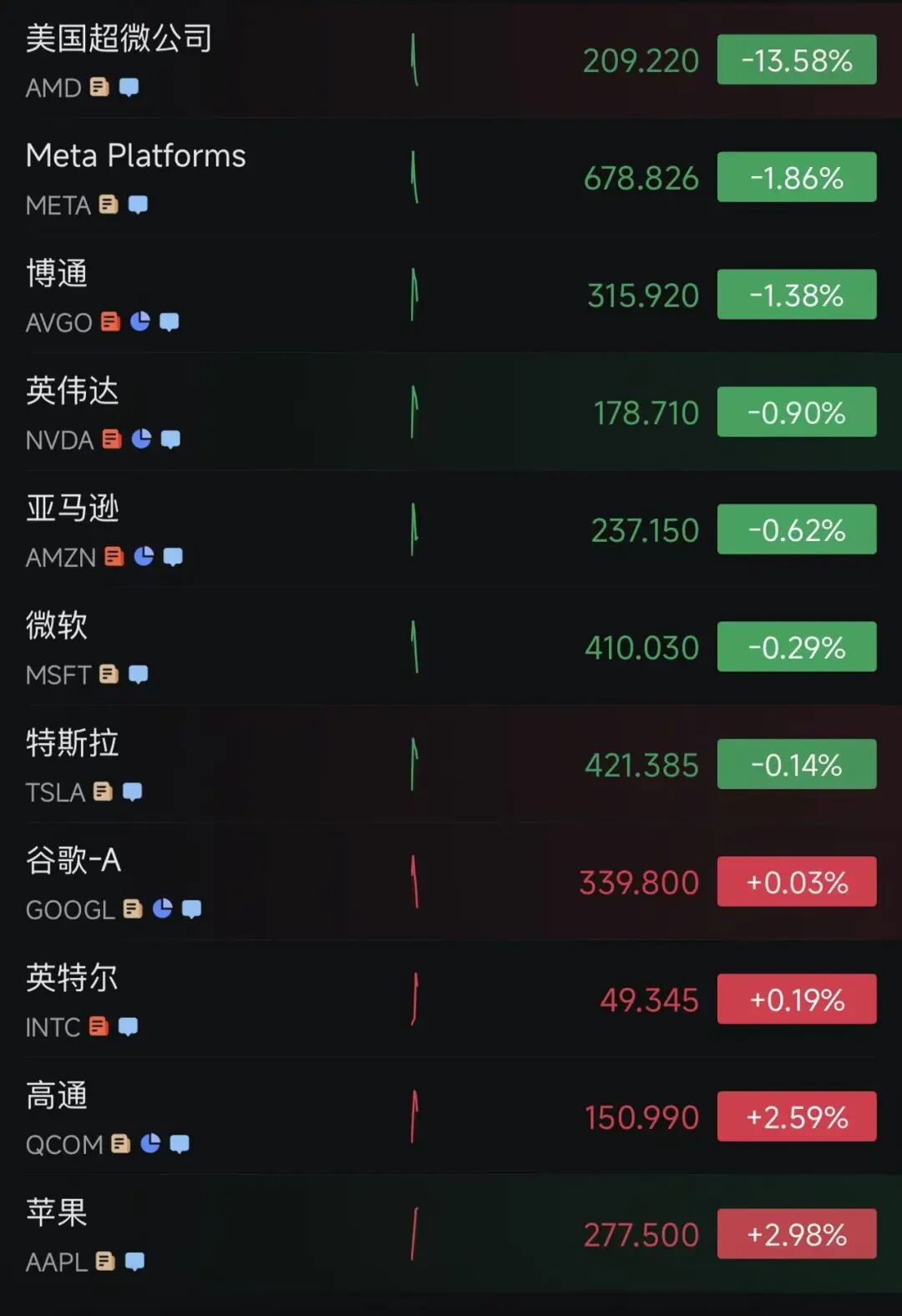
Market Overview - The U.S. stock market opened mixed on February 4, with the Nasdaq down 0.87%, the Dow Jones up 0.21%, and the S&P 500 down 0.29% [1] - Major tech stocks mostly declined, with AMD dropping over 13% due to Q1 guidance falling short of some analysts' expectations [1][2] - Other notable declines included Meta down 1.86%, Nvidia down 0.9%, Amazon down 0.62%, and Microsoft down 0.29% [1] Company Performance - AMD's stock price fell to $209.22, reflecting a decrease of 13.58% [2] - Meta Platforms reported a stock price of $678.83, down 1.86% [2] - Nvidia's stock price was $178.71, down 0.90% [2] - Amazon's stock price was $237.15, down 0.62% [2] - Microsoft reported a stock price of $410.03, down 0.29% [2] - Tesla's stock price decreased by 0.14% to $421.39 [2] - Intel's stock price increased by 0.19% to $49.35, while Qualcomm rose by 2.59% to $150.99, and Apple increased by 2.98% to $XXX [2] Chinese Stocks - The Nasdaq Golden Dragon China Index fell over 2%, closing at 7457.16 points [3] - Notable declines among popular Chinese stocks included Kingsoft Cloud down 7.39%, NetEase down 6.93%, and Bilibili down 6.12% [3][4] - Baidu and Futu Holdings both dropped over 4.7%, while Tencent Music fell over 4.2% [3] Commodity Market - On February 4, spot gold rose by 0.93% to $4987.59, while spot silver increased by over 4.1%, reaching $89.57 per ounce [5][6] - Brent crude oil rose by 0.07% to $67.38 per barrel, while WTI crude oil fell to $63.19 per barrel, down 0.03% [6] Employment Data - In January, the U.S. ADP employment numbers increased by 22,000, which was below the forecast of 45,000 and the previous value of 41,000 [8]