蜜雪冰城

Search documents
蜜雪冰城重新调整第二曲线,幸运咖进攻一线城市
晚点LatePost· 2025-07-24 14:20
Core Viewpoint - Luckin Coffee, a sub-brand of Mixue Ice Cream, aims to open 10,000 stores by the end of the year, despite facing challenges in expansion and competition in the coffee market [2][15]. Expansion Strategy - Luckin Coffee plans to focus on one province at a time for market entry, using successful provinces like Shandong to drive growth in neighboring areas [3]. - The new CEO, Pan Guofei, emphasizes a slower, more strategic approach to expansion, contrasting with the rapid growth of competitors like Luckin Coffee and Kudi [3][12]. - The brand has seen an increase in store count, surpassing 7,000 locations, with daily average sales reaching 5,700 yuan in July [3]. Market Positioning - Luckin Coffee positions itself as a high-quality yet affordable option, with a price point of 5.9 yuan for an Americano, significantly lower than competitors [6][8]. - The brand utilizes a semi-automatic coffee machine to enhance flavor while keeping equipment costs low, which requires more skilled operation [5][7]. Supply Chain and Cost Management - Since being fully acquired by Mixue Group in 2019, Luckin Coffee has integrated into its supply chain, benefiting from economies of scale with over 46,000 stores [8][9]. - The cost of coffee beans for franchisees is kept low, allowing for a 50% gross margin on a 5.9 yuan Americano [8]. - The supply chain's robustness has helped the brand withstand price fluctuations in raw materials without raising prices [9][12]. Training and Operations - A dedicated market management team of 400 and a training team of 100 have been established to support franchise operations and ensure quality [4][6]. - Franchisees and baristas must undergo training at the Luckin Coffee Academy to ensure consistent product quality and operational standards [6]. Competitive Landscape - The coffee market is highly competitive, with brands like Starbucks, Luckin, and Kudi rapidly expanding their footprints [13][15]. - Luckin Coffee aims to differentiate itself by leveraging its supply chain and focusing on affordability, while also adapting to consumer preferences shaped by the competitive landscape [14][15].

融中朱闪:新形势下市场化力量如何助力科创投资
Sou Hu Cai Jing· 2025-07-24 11:40
Core Insights - The article discusses the increasing role of state-owned capital investment funds in driving innovation and industrial development in China, highlighting the emergence of "patient capital" and "bold capital" as key trends in the investment landscape [2][4] - It emphasizes the importance of a collaborative ecosystem involving various financial entities, including market-oriented funds, insurance capital, and public funds, to support the growth of emerging industries [2][3] Fundraising - In the first half of 2025, state-owned capital accounted for 73.95% of the total contributions in newly established funds, indicating a dominant position in fundraising [6] - The introduction of technology innovation bonds (科创债) has provided a new funding source for private equity investment, with 27 institutions issuing bonds totaling 15.35 billion yuan by June 30, 2025 [7] Investment Trends - The hottest investment sectors in early 2025 were artificial intelligence and humanoid robots, driven by significant financing events and high valuations [8] - The consumer and healthcare sectors showed signs of recovery, supported by favorable government policies, with the Hang Seng Medical Index and Consumer Index rising by 47.89% and 20% respectively [8] Exit Strategies - A-share IPOs saw a slight recovery in 2025, but the numbers remained low compared to previous years, while Hong Kong IPOs surged to 107.1 billion HKD, marking a 718% year-on-year increase [9] - The article discusses the increasing involvement of state-owned capital in S funds to facilitate a healthy investment-exit cycle, despite challenges in valuation and transaction processes [9] Market Dynamics - The article outlines the need for market-oriented state-owned limited partners (LPs) to balance the current LP structure, which is heavily skewed towards state-owned entities [10] - It highlights the importance of transforming financial investments into industrial investments, emphasizing collaboration with leading enterprises and building industry ecosystems [11][12] Early-Stage Investment - Early-stage investments are characterized by high risk and require specialized expertise, making them suitable for market-oriented institutions [16] - State-owned capital can play a supportive role in policy guidance and infrastructure for early-stage investments [17] M&A Opportunities - The article notes a significant increase in major asset restructuring plans involving listed companies, with a 121.74% year-on-year growth in 2025 [18] - Mergers and acquisitions are seen as a strategic tool for market-oriented investment institutions to transition from financial to industrial investments [18] Hong Kong Capital Market - The Hong Kong capital market is highlighted as a bridge for international investment, with a record influx of funds reaching 506 billion USD by April 2025 [19] - The article emphasizes Hong Kong's flexible listing standards and favorable tax environment, making it an attractive destination for companies seeking to expand internationally [22][23]

搭乘KKV出海“顺风车”:100+中国品牌杀入东南亚黄金商圈“C位”!
华尔街见闻· 2025-07-24 04:14
Core Viewpoint - A new retail force from China is quietly rising in the Southeast Asian market, with brands like KKV and Pop Mart gaining popularity among young consumers [1][4][20]. Group 1: Expansion Strategy - KKV has opened over 50 stores in five Southeast Asian countries, including Singapore, Vietnam, the Philippines, Thailand, and Malaysia, positioning itself as a pioneer in overseas expansion [4][16]. - The company plans to open 19 new stores in 2024 across four countries, with a target of nearly 50 stores by mid-2025 and over 150 stores by 2025 [18][16]. - KKV employs a "high-profile" market entry strategy, focusing on prime locations in major shopping districts to attract young consumers [17][23]. Group 2: Market Reception - KKV's flagship store in Singapore has attracted significant attention, with long queues of local youth eager to experience the brand [2][8]. - The brand's products, including beauty, snacks, and fashion accessories, have gained popularity on social media, with over 20 million views for its store openings [10][11]. - Local influencers and consumers are actively sharing their shopping experiences, contributing to KKV's strong sales performance [11][24]. Group 3: Brand Collaboration and Support - KKV is facilitating the entry of various Chinese brands into Southeast Asia, providing support in logistics, certification, and market entry strategies [26][27]. - Brands like Banmu Huatian have successfully entered the Southeast Asian market through KKV, achieving sales that exceed domestic counterparts by 20% [24][28]. - KKV's model is seen as a potential new paradigm for the internationalization of Chinese brands, enabling collective overseas expansion [28]. Group 4: Local Adaptation and Data Utilization - KKV adapts its product offerings based on local consumer preferences, utilizing data analytics for rapid iteration and optimization [46][47]. - The company has established partnerships with local retail giants, enhancing its market presence and operational efficiency [45][46]. - KKV's approach includes a focus on creating engaging shopping experiences that resonate with local youth, leveraging social media for brand visibility [30][29]. Group 5: Future Outlook - KKV aims to expand its store network significantly, with projections of reaching 1,000 overseas stores by 2027-2028, contributing to a substantial portion of the group's revenue [42][37]. - The company's success in Southeast Asia is expected to pave the way for further international expansion into markets like the Middle East and Europe [37][48]. - KKV's growth strategy reflects a broader trend among Chinese brands recognizing the importance of international markets for long-term growth [48].

昔日奶茶排队王,年轻人不想陪它演戏了
36氪· 2025-07-24 00:00
Core Viewpoint - The article discusses the decline of the tea brand Cha Yan Yue Se, which was once a top player in the tea beverage market, highlighting its struggles to maintain popularity and adapt to changing consumer preferences [1][3][36]. Group 1: Market Position and Competition - Cha Yan Yue Se was once a standout brand in the tea beverage market, known for its unique offerings and poetic branding, but has recently lost its competitive edge as new brands emerge [5][8][36]. - The brand's expansion efforts have been slow, with only a few new stores opened outside its home base, allowing competitors like Ba Wang Cha Ji to gain ground in key markets [21][25]. - Despite still being a part of local culture, the brand's popularity has waned, with many consumers no longer willing to wait in long lines for its products [14][40]. Group 2: Consumer Experience and Brand Perception - Consumers have expressed frustration with the lengthy ordering process and the brand's insistence on in-store experiences, which contrasts with the growing trend of online ordering and quick service [31][42]. - The brand's previous charm and novelty have diminished, leading to negative perceptions and complaints about its service and product offerings [19][28][36]. - Cha Yan Yue Se's attempts to innovate and expand its product line have not resonated well with loyal customers, who feel that the quality of beloved items has declined [19][36]. Group 3: Financial Performance and Growth Strategy - In 2023, Cha Yan Yue Se reported a net profit of approximately 5 billion yuan, which is competitive compared to other brands in the industry, despite its declining market presence [13]. - The company plans to open 268 new stores in 2024, marking a significant increase in its expansion efforts, particularly in new first-tier cities [25][27]. - The brand's recent foray into online sales of snacks and merchandise indicates a shift in strategy, but it has not generated the same buzz as its earlier initiatives [27][36].
2025 AI主战场,连锁门店“变形记”
3 6 Ke· 2025-07-23 12:11
Core Insights - The article emphasizes that AI must be effectively implemented in business operations to have a future, highlighting the shift of AI applications from traditional sectors to retail chains, particularly fast-food and beverage outlets [1][3]. Group 1: AI Implementation in Retail - Fast-food chains like McDonald's and KFC are leading the AI competition, with innovations such as KFC's "Car Speed Pickup 2.0" and McDonald's conversational AI "P.AI" enhancing customer experience [1][3]. - Chinese snack chain, Juewei Duck Neck, has introduced three AI systems to engage both store managers and consumers, while beverage brands like Luckin Coffee and Starbucks are also integrating AI for operational efficiency [3][4]. - AI is being utilized in various operational aspects of retail, including food safety monitoring, personalized marketing, and customer service enhancements, significantly improving quality control and customer satisfaction [4][6]. Group 2: Challenges and Opportunities - Retail chains face intense competition and pressure to innovate due to changing consumer habits and declining foot traffic, necessitating the adoption of AI to survive and thrive in a low-margin environment [9][11]. - The integration of AI in retail is driven by the need for improved efficiency in supply chain management and customer engagement, as traditional methods are no longer sufficient [11][13]. - The successful implementation of AI relies on the foundational data infrastructure that many retail brands have developed over the years, allowing them to leverage AI capabilities effectively [13][14]. Group 3: Future of AI in Retail - The shift towards AI in retail is characterized by a lower barrier to entry for smaller businesses, thanks to cloud-based AI services that simplify the integration process [16][19]. - Retail chains are becoming the primary battleground for AI applications, as they generate vast amounts of data that can enhance AI algorithms and improve customer interactions [17][19]. - The focus on practical applications of AI in retail emphasizes the importance of understanding business needs and ensuring that AI solutions are user-friendly and effective in addressing real-world challenges [20][21].






22.8元的农夫山泉冰块,是不是智商税?
3 6 Ke· 2025-07-23 07:03
Core Insights - The ice cup business has emerged as a lucrative market, driven by high demand and innovative marketing strategies, with prices significantly higher than traditional ice products [1][4][20] - The production of industrial ice involves advanced technology, ensuring higher quality and longer-lasting ice compared to homemade versions, which justifies the premium pricing [12][15][19] - The rise of social media and DIY drink trends among young consumers has contributed to the popularity of ice cups, making them a trendy choice for refreshing beverages [4][9][20] Industry Overview - The ice cup market has seen a remarkable growth rate, with sales increasing over 300% for two consecutive years, particularly in first-tier cities where per capita annual consumption reaches 48 cups [10][20] - Major players in the ice cup market include traditional ice manufacturers, instant retail platforms like Hema and Meituan, and beverage giants such as Nongfu Spring and Yili, each adopting different business models [21][24] - The production and packaging of ice cups require specialized materials and technology, leading to higher costs, which are passed on to consumers [16][19] Consumer Behavior - Consumers are willing to pay a premium for convenience and quality, with many preferring to buy ice cups rather than making ice at home due to issues like odor and preparation time [9][12] - The trend of customizing drinks with ice cups has become popular, with consumers experimenting with various combinations, enhancing the social aspect of beverage consumption [4][9] Market Dynamics - The ice cup market is characterized by a mix of established players and new entrants, with a growing number of companies looking to capitalize on the trend [10][21] - The demand for ice cups is expected to continue rising, with projections indicating that the instant retail sales scale for ice products could exceed 63 billion yuan by 2026 [10][20]

外卖大战:残暴的开始必将以残暴结束
创业邦· 2025-07-23 03:13
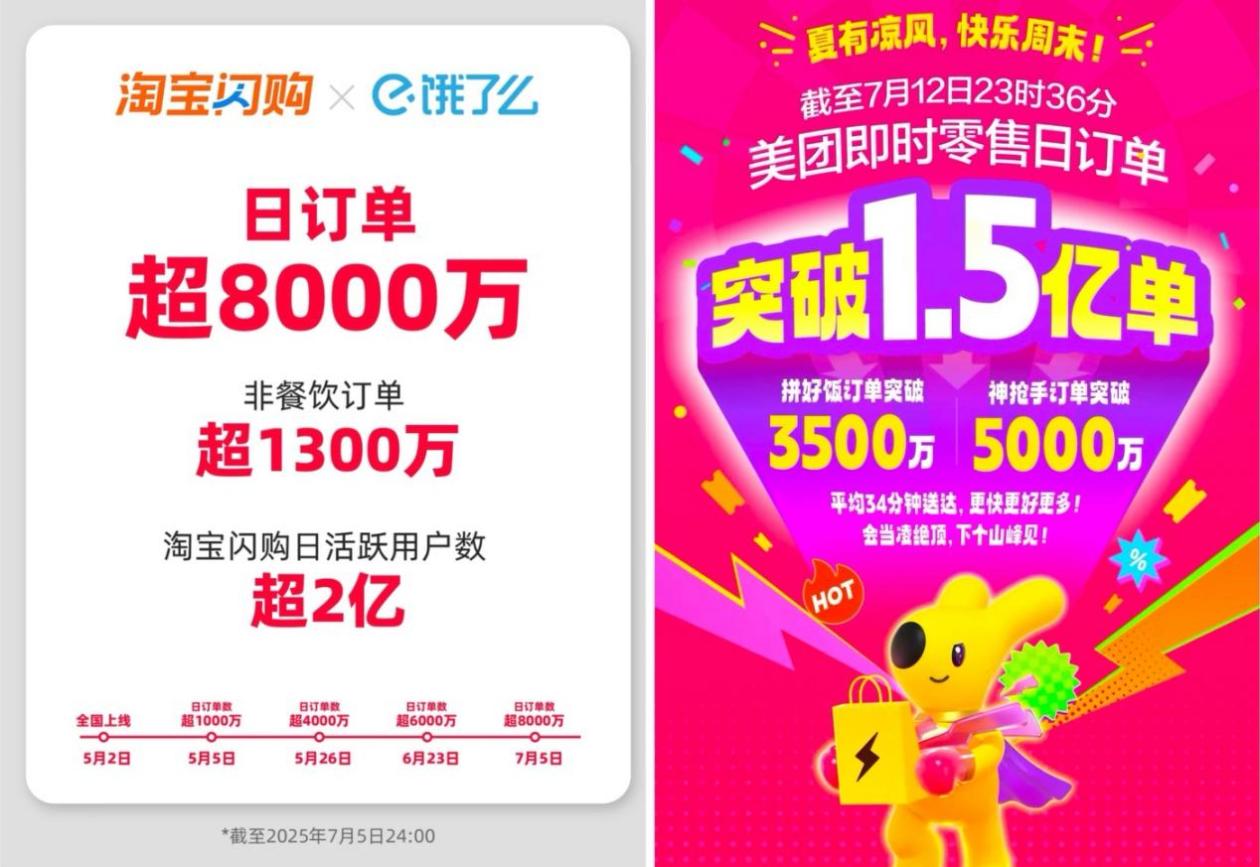
Core Viewpoint - The article discusses the intense competition in the food delivery market in China, particularly focusing on the aggressive subsidy strategies employed by major players like Meituan, Alibaba, and JD.com, and the implications of these strategies on market dynamics and consumer behavior [4][10][12]. Summary by Sections Market Dynamics - The food delivery market in China is experiencing a significant increase in order volume, with a record of 200 million orders on July 5, driven by substantial subsidies from major companies [4][10]. - Meituan, Alibaba, and JD.com are collectively burning through approximately 20 billion RMB monthly in subsidies, despite the average daily order volume being less than 100 million [4][10]. Company Strategies - Alibaba's delayed entry into the subsidy war is attributed to internal organizational adjustments and the need to consolidate its resources before launching a competitive response [6][7]. - The timeline of Alibaba's strategic moves includes integrating its food delivery service Ele.me into its e-commerce division and announcing a 50 billion RMB subsidy plan [8][10]. Competitive Landscape - The competition is characterized by a focus on resource allocation and execution rather than ethical considerations, with companies prioritizing market share over profitability [12][20]. - Meituan's strategic response to the competition includes a focus on maintaining high operational efficiency, which is seen as a critical factor in its market leadership [22]. Financial Implications - The intense competition has led to stock price declines for all major players, with JD.com down 20%, Meituan down 10.3%, and Alibaba down 16% since the onset of the subsidy war [16][18]. - The article highlights the fragile profitability model of the food delivery business, which relies heavily on subsidies to attract customers and maintain market share [21][22]. Future Outlook - The article suggests that the food delivery market may face a reckoning as companies struggle to balance aggressive growth strategies with sustainable profitability [19][22]. - The potential for new entrants like Pinduoduo and Douyin to disrupt the market is acknowledged, indicating that the competitive landscape may continue to evolve rapidly [22].



佳禾食品净利润再度大降:连续多年增收不增利 如何摆脱负循环?
Xin Lang Zheng Quan· 2025-07-22 08:35
Core Viewpoint - Jiahe Foods is facing significant challenges due to a decline in its core business of powdered oil, particularly in the context of the "0 powdered oil" movement among beverage brands, leading to a substantial drop in revenue and profit margins [2][3][6]. Investment Activities - Jiahe Foods announced that its wholly-owned subsidiary, Koge Foods, will invest 7 million yuan in the Gongqingcheng Jincheng Fund, accounting for 12.94% of the total subscription amount [1]. Financial Performance - In the first half of 2025, Jiahe Foods expects a net profit attributable to shareholders of between 10.55 million yuan and 15.83 million yuan, representing a year-on-year decline of 77.21% to 84.80% [1]. - For 2024, Jiahe Foods reported a revenue decline of 18.68% to 2.311 billion yuan and a net profit drop of 67.43% [2]. - The company's gross margin fell from 24.46% to 16.09% and net margin from 11.52% to 3.72% from 2020 to 2024, primarily due to rising raw material costs [6]. Market Trends - The "0 powdered oil" movement reflects consumer concerns about the health risks associated with powdered oil, leading to a significant revenue drop from chain channels by 42.35% [2][3]. - The saturation of beverage stores and the shift in the tea beverage industry towards product quality over price have further reduced demand for powdered oil [3]. Business Diversification - Jiahe Foods is attempting to diversify its revenue streams by expanding into the coffee market, with plans to produce various coffee products, including roasted coffee beans and ready-to-drink coffee [4][5]. - The coffee production capacity is projected to reach 16,000 tons of roasted coffee beans and 10,000 tons of ready-to-drink coffee, but the current coffee business revenue remains relatively small at 278 million yuan for 2024 [5]. Operational Challenges - The company has experienced a continuous decline in net profit since 2020, with a significant drop in 2024, raising concerns about financial sustainability [6][7]. - The increase in operational costs due to the expansion into coffee and rising raw material prices has further pressured net profit margins [6][7].

连锁茶饮的外卖战争“大逃杀”
Hua Er Jie Jian Wen· 2025-07-22 02:39
Group 1 - The large subsidies on food delivery platforms have not disappeared despite regulatory discussions, indicating ongoing competitive practices among major players like Ele.me, Meituan, and JD [1] - The food delivery battle is shifting from short-term bursts to a more normalized cyclical competition, with low-priced tea drinks becoming a key tool for platforms to boost order volumes [2][4] - The expectation of a "win-win-win" scenario for platforms, merchants, and consumers has not been realized, raising questions about the role of chain tea brands in this competitive landscape [3] Group 2 - Merchants face opaque cost structures behind discount orders, with platform subsidies often tied to merchant concessions, leading to increased operational costs [5][6] - The "explosive red envelope" subsidy model requires merchants to bear a minimum cost per order, complicating their financial outcomes [6][7] - The current phase of the food delivery competition has intensified, with platforms directly targeting each other to suppress competitors like Taobao Flash Sale [8] Group 3 - The surge in low-priced orders is squeezing normal product sales, leading to a decline in actual revenue for merchants despite high order volumes [16][12] - Merchants are increasingly reliant on external platforms, which may undermine their offline business efficiency and raise operational costs [31] - The average price of tea drinks has dropped significantly, with industry profit margins declining from 21.4% in 2023 to an estimated 14.7% in 2024 [29] Group 4 - The competitive landscape is marked by a high store opening and closing ratio, indicating a challenging environment for new tea brands [30] - The reliance on platform subsidies may provide temporary relief for merchants but could lead to long-term sustainability issues once subsidies are reduced [32] - The ongoing price competition is reshaping consumer perceptions, with lower price points becoming the new norm in the market [33]
外卖内卷,私域深耕:第三方即配或成餐饮商家“博弈牌”
Huan Qiu Wang· 2025-07-21 11:31
Core Viewpoint - The recent discussions by the Market Supervision Administration with major platforms like Ele.me, Meituan, and JD.com signal a regulatory intervention aimed at curbing aggressive promotional behaviors in the food delivery sector, promoting a healthier ecosystem for consumers, merchants, delivery riders, and platform companies [1] Group 1: Market Dynamics - The food delivery war has intensified, with platforms offering significant discounts and promotions, leading to a surge in order volumes [2][4] - During the first weekend of July, Taobao Flash Sale recorded over 80 million daily orders, while Meituan surpassed 120 million, indicating a total daily order volume of around 200 million [2] - The order volume spike has benefited large chain restaurants, with brands like Nayuki's Tea and Tim's Coffee experiencing substantial increases in delivery orders [4] Group 2: Merchant Challenges - The influx of orders has created operational challenges for many merchants, particularly small and medium-sized businesses, leading to staff shortages and increased pressure to fulfill orders [8][9] - Merchants are facing a "losing balance" situation, where the costs associated with promotional discounts are shared between platforms and merchants, often leading to unsustainable pricing models [9][11] - The competitive environment has intensified price wars, resulting in declining average transaction values for well-known brands [9][10] Group 3: Capital Market Response - The capital markets reacted positively to the benefits brought by the food delivery war, with stocks in the new tea beverage sector seeing collective gains following the promotional weekends [8] - Notable stock movements included a 2.17% increase for Gu Ming and a 0.74% rise for Mixue Group, reflecting investor optimism in the sector [8] Group 4: Strategic Shifts for Merchants - Merchants are beginning to explore alternative strategies to reduce dependency on platforms, such as building private domains and utilizing third-party delivery services [15][19] - Successful examples include Luckin Coffee, which has effectively developed its private domain strategy, reducing reliance on external platforms and enhancing customer loyalty [19][20] - The emergence of third-party delivery platforms like SF Express has provided merchants with flexible and cost-effective delivery solutions, allowing them to regain some control over pricing and operations [19][22]