
小米

Search documents
双11,天猫“战报”来了!
Zhong Guo Ji Jin Bao· 2025-11-15 04:24
Core Insights - Tmall achieved its best growth in four years during the "Double 11" shopping festival in 2025, with significant increases in brand sales and consumer engagement [1][2]. Group 1: Sales Performance - Nearly 600 brands achieved over 100 million yuan in sales, with 34,091 brands doubling their sales year-on-year, and 18,048 brands increasing sales by over three times [1][2]. - Major brands such as Apple, Haier, and Xiaomi each surpassed 1 billion yuan in sales [1]. - The integration of AI "Smart Benefit Engine" led to an 86% increase in daily average order users [2]. Group 2: Consumer Engagement - The number of 88VIP members reached a new high, with daily average order purchasers increasing by 31% [3]. - The introduction of new products saw 14,246 items achieving over 1 million yuan in sales, with 30% of products exceeding 100 million yuan being new releases [3]. Group 3: Strategic Initiatives - Tmall's "扶优" strategy focuses on supporting high-quality consumers and original brands, directing resources and discounts towards these groups [11]. - The platform has optimized its operational framework, enhancing algorithms and product capabilities to improve user experience [10]. - Flash sales have become a new growth engine, with approximately 37,000 brands and 400,000 stores participating, facilitating a deep integration of online and offline sales [10].


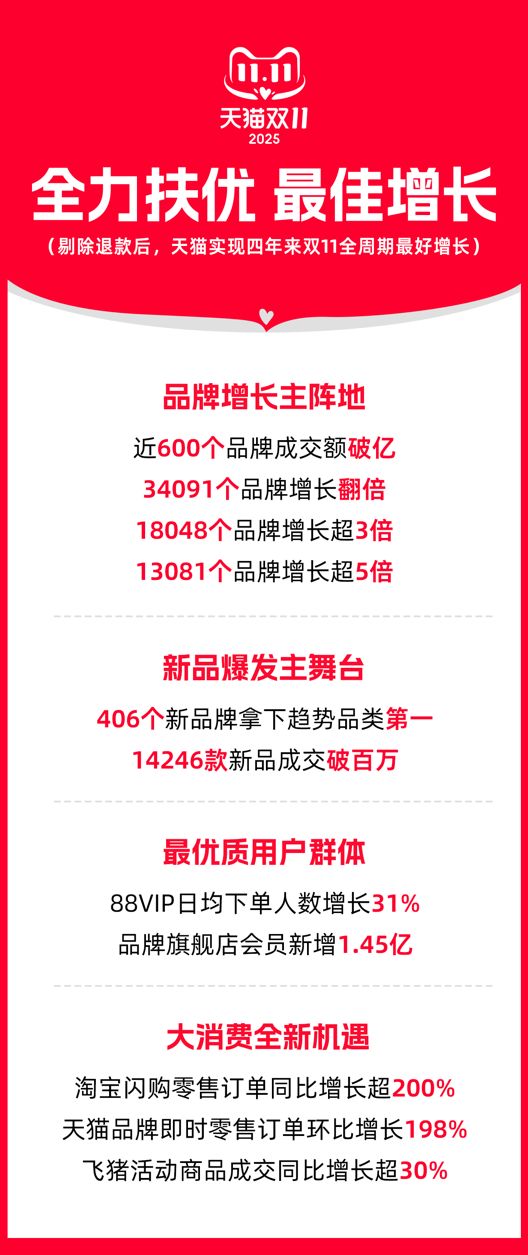
天猫实现四年来“双11”最好增长
Zhong Guo Ji Jin Bao· 2025-11-15 04:17
Core Insights - Tmall achieved its best growth in four years during the 2025 "Double 11" shopping festival, with nearly 600 brands surpassing 100 million yuan in sales and over 34,000 brands experiencing year-on-year growth [1][2] Group 1: Sales Performance - Tmall's "Double 11" saw significant sales growth, with 34,091 brands doubling their sales compared to last year, and 18,048 brands increasing sales by over three times [1][2] - Notable brands such as Apple, Haier, and Xiaomi each surpassed 1 billion yuan in sales during the event [1] - The integration of AI technology led to an 86% increase in daily average order users, showcasing the impact of AI on consumer engagement [2][3] Group 2: Brand and Consumer Engagement - The event provided a platform for new brands, with 406 new brands ranking first in trending categories, and 26 new brands achieving over 100 million yuan in sales [2][3] - The number of 88VIP members reached a new high, with daily average order users increasing by 31% year-on-year [3] Group 3: Strategic Initiatives - Tmall's strategy focused on supporting high-quality brands and original merchants, with significant resources allocated to enhance brand growth [2][11] - The "Flash Sale" business has become a new growth engine, with approximately 37,000 brands and 400,000 stores participating, indicating a shift in user demographics towards younger and higher-income consumers [10][11] - Tmall's "扶优" (supporting excellence) strategy targets high-quality consumers and merchants, aiming for long-term healthy development of the platform [11]
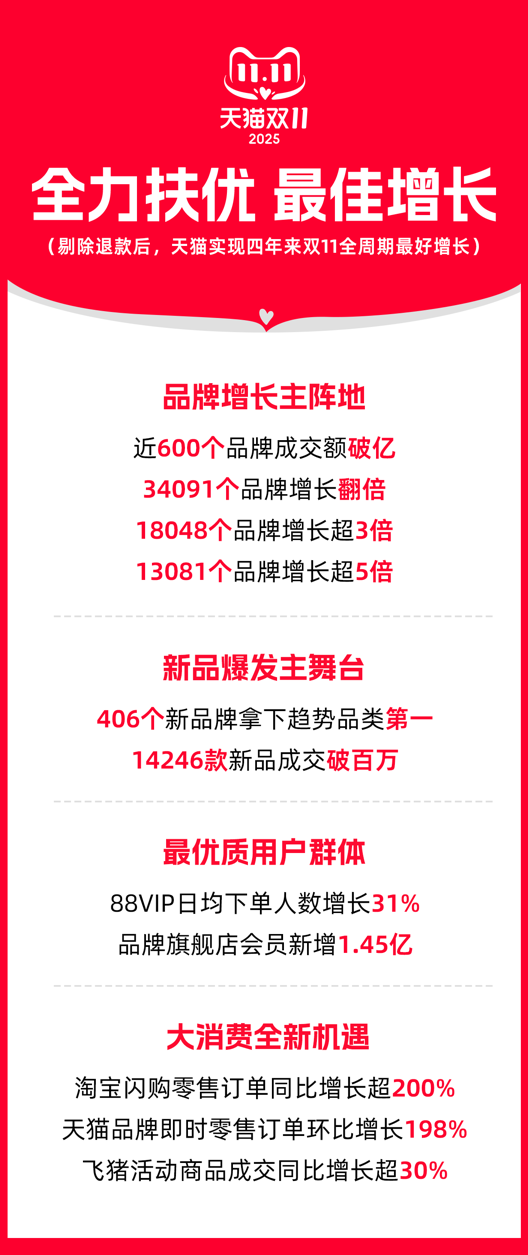
双11,天猫“战报”来了!
中国基金报· 2025-11-15 04:12
Core Viewpoint - Tmall achieved its best growth in four years during the "Double 11" shopping festival, with significant increases in brand sales and consumer engagement [2][4]. Group 1: Sales Performance - Nearly 600 brands achieved sales exceeding 100 million yuan, with 34,091 brands seeing year-on-year growth [2]. - 18,048 brands experienced over 300% growth, while 13,081 brands saw over 500% growth compared to the previous year [2]. - Major brands like Apple, Haier, and Xiaomi each surpassed 1 billion yuan in sales [2]. Group 2: Strategic Initiatives - Tmall implemented its largest consumer investment in history, which contributed to the record growth [4]. - The introduction of the AI "Smart Benefit Engine" led to an 86% increase in daily order users [4]. - Tmall's strategy focused on supporting high-quality brands and original merchants, enhancing brand growth [4][12]. Group 3: New Brand Development - 406 new brands ranked first in trending categories, with 26 new brands achieving over 100 million yuan in sales [5]. - 14,246 new products sold over 1 million yuan, with 30% of products exceeding 100 million yuan being new releases [6]. Group 4: Consumer Engagement - The 88VIP membership program reached new heights, with daily order purchase numbers increasing by 31% year-on-year [6]. - The number of new members in brand flagship stores increased by 145 million [6]. Group 5: Business Model Evolution - Tmall's platform optimization included comprehensive upgrades in algorithms, product capabilities, and operational methods [11]. - The flash sale business has become a new growth engine, integrating offline stores with Tmall's online platform [12]. - Tmall's "Support Quality" strategy targets high-quality consumers and original merchants, focusing resources on these groups for sustainable growth [12].
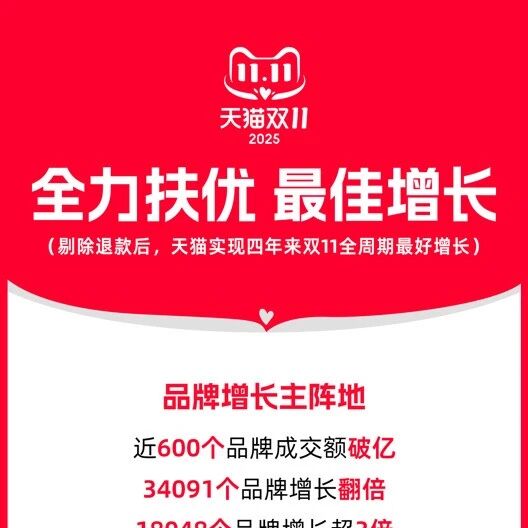
近600品牌成交破亿,天猫双11实现四年来最好增长
Sou Hu Cai Jing· 2025-11-15 04:10
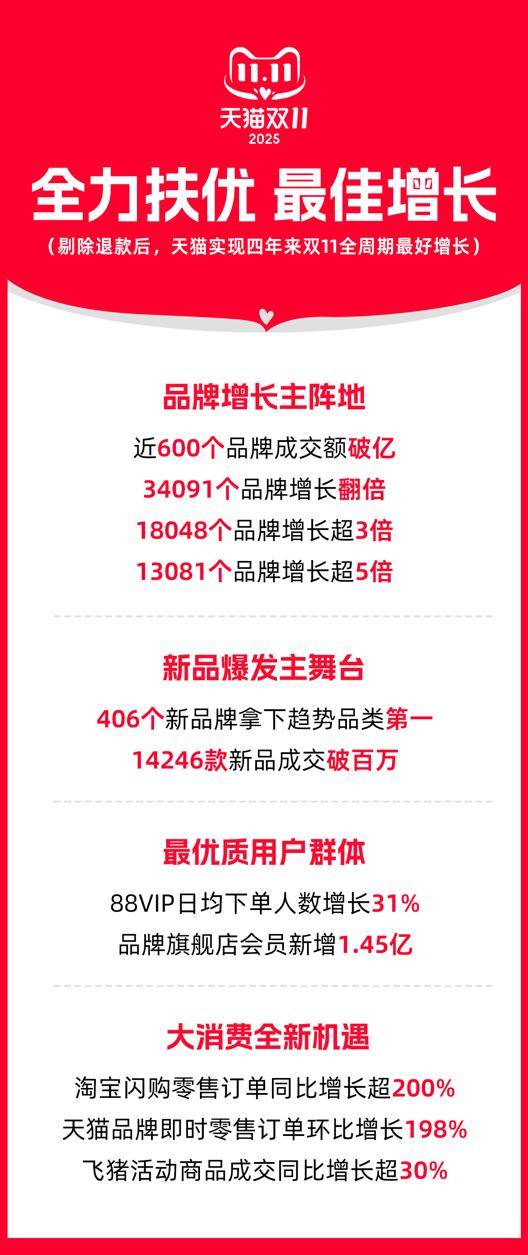
Core Insights - Tmall's Double 11 event in 2025 achieved its best growth in four years, driven by strong consumer investment and support for quality brands and original merchants [1][6] Group 1: Sales Performance - Nearly 600 brands achieved over 100 million in sales, with 34,091 brands doubling their sales compared to last year [1] - 18,048 brands saw sales growth exceeding three times, while 13,081 brands experienced growth over five times compared to the previous year [1] - Major brands like Apple, Haier, Midea, Xiaomi, and Nike each surpassed 1 billion in sales [1] Group 2: New Brands and Products - 406 new brands topped trend categories, with 26 new brands achieving over 100 million in sales and 188 new brands exceeding 10 million [5] - 14,246 new products sold over 1 million, with 30% of products that surpassed 100 million in sales being new [5] - Notable new products included iPhone 17 Pro Max and OPPO Find X9 Pro, which debuted during this year's event [5] Group 3: Consumer Engagement - Tmall's 88VIP membership reached a new high, with daily order numbers increasing by 31% year-on-year [5] - The integration of AI "Smart Benefit Engine" led to an 86% increase in daily order users [6] - Tmall's Double 11 is recognized as the most significant growth opportunity for quality brand merchants throughout the year [6]
董宇辉就口语多个语法错误致歉;ChatGPT在四地试点社交群聊功能;理想汽车针对2起质量事故处理18人丨邦早报
创业邦· 2025-11-15 01:09
Group 1 - Dong Yuhui apologized for multiple grammatical errors in his English speech during a recent event, which sparked criticism from the founder of Crazy English, Li Yang [3] - Tesla is reportedly developing support for Apple's CarPlay, a highly requested feature among customers, and has begun internal testing [5] - Apple has launched the iPhone Pocket, available in two versions, with market prices showing a premium of up to 500 yuan [6] Group 2 - HeSai Technology has secured partnerships with Xiaomi and Li Auto for the full range of their models, with plans for 100% laser radar standardization by 2026 [8] - Li Auto has initiated internal accountability measures regarding two quality incidents, resulting in the processing of 18 employees [8] - OpenAI has launched a group chat feature for ChatGPT, allowing up to 20 users to interact simultaneously, marking a significant step in social AI interaction [8] Group 3 - K-Scale Labs, a robotics startup, has shut down due to depleted funds, with only $400,000 remaining in cash reserves [10] - Musk denied reports of xAI raising $15 billion in funding, calling the information "false" [10] - Starbucks is facing a significant strike from over 1,000 union baristas across the U.S., demanding collective bargaining on wages and benefits [14] Group 4 - Faraday Future reported its highest cash balance in two years and over 11,000 pre-orders for its FX Super One vehicle [21] - Paramount, Comcast, and Netflix are preparing bids for Warner Bros. Discovery, with a deadline for initial offers set for November 20 [21] - VOLANT completed a multi-billion B+ round financing to accelerate the certification and production of its eVTOL aircraft [22] Group 5 - Huawei announced the WATCH Ultimate 2 smartwatch, which features underwater communication technology [23] - The Beijing Humanoid Robot Innovation Center has open-sourced its latest VLM model, Pelican-VL 1.0, which outperforms similar models [25] - Xiaomi has published a patent for a vehicle speed warning system to enhance driving safety [25] Group 6 - IDC predicts that AI will contribute nearly $22.3 trillion to the global economy by 2030, accounting for 3.7% of global GDP [27] - The global electronic sensor market is expected to reach $41.2 billion by 2032, growing at a CAGR of 6.65% from 2025 to 2032 [27]



客厅里的智能战争
经济观察报· 2025-11-14 15:08
Core Viewpoint - The competition in the home appliance market is intensifying as traditional companies like Midea, Gree, Haier, and Hisense seek new growth through AI technology, product line expansion, and internationalization, while tech companies like Huawei and Xiaomi leverage their established smart ecosystem advantages to increase competition [2][3]. Group 1: Market Dynamics - Traditional home appliance companies are exploring new growth points through AI technology and expanding product lines [2][3]. - Tech companies are intensifying competition in the home appliance market by leveraging their smart ecosystem advantages [2][3]. - The shift towards a fully smart home environment is becoming evident, with consumers increasingly interested in integrated smart solutions [12]. Group 2: Consumer Behavior - Consumers are showing a preference for smart appliances, with features like AI voice control being particularly appealing to families with children and elderly members [6]. - There is a noticeable shift in consumer purchasing habits, with many moving from foreign brands to domestic brands due to the increasing expectations for smart features [6][7]. - Consumers are facing challenges with compatibility between different brands' smart systems, which complicates the integration of smart home devices [7]. Group 3: Technological Advancements - Home appliances are evolving from "single product intelligence" to "whole home intelligence," with systems like Midea's "Xiao Mei AI" integrating various smart functions [9][10]. - The interaction between vehicles and home systems is being developed, allowing for seamless integration and control of home environments from vehicles [11]. - The trend towards smart home integration is expected to continue, with significant growth projected in the smart home market over the next few years [12]. Group 4: Industry Trends - Major players in the home appliance sector, including Gree, Midea, Haier, and Hisense, are adapting to the blurred lines between home appliances and broader home ecosystems [14]. - The retail landscape is shifting, with smart home products being prominently displayed alongside traditional appliances to attract consumer interest [14]. - The release of technological potential in the home appliance sector is expected to reshape global competition, allowing Chinese companies to gain a more advantageous position in the market [15].




平替时代:一家车企、一个行业如何被自己的成功困住
创业邦· 2025-11-14 10:24
Core Insights - Li Auto has maintained its position as the leading new energy vehicle manufacturer since the success of its large SUV L9 in 2022, being one of the few profitable companies in the sector alongside Seres [5][7] - Recently, competitors like Xpeng have surpassed Li Auto in market capitalization, while NIO's stock has risen significantly despite substantial losses, indicating a shift in market dynamics [5][7] - In October, Li Auto's sales ranked seventh among new energy vehicle manufacturers, trailing behind several competitors [5][7] Pricing Strategy and Market Position - Following the underperformance of high-priced models MEGA and i8, Li Auto has shifted its strategy to lower pricing, exemplified by the i6, which has a price reduction of nearly 100,000 yuan compared to the i8 [8] - The i6 has quickly secured 80,000 orders, but its gross margin is around 10%, indicating minimal profit [8] - Li Auto's previous pricing strategy aimed for a 20% gross margin to fund R&D, but the competitive landscape has forced a reevaluation of this approach [8][9] Competitive Landscape - The success of new energy vehicles often hinges on their ability to serve as "value alternatives" to traditional models, a strategy that has been effectively employed by brands like BYD and Tesla [9][11] - The market has seen a trend where new energy vehicles are priced competitively against traditional fuel vehicles, leading to increased sales and market share for brands that adopt this strategy [11][12] - As competition intensifies, brands are increasingly focusing on price as the primary differentiator, with many models now offering similar features at lower costs [8][9][22] Technological Advancements and Consumer Expectations - The rapid advancement of battery technology and electric vehicle performance has led to a convergence in product offerings, making it challenging for brands to maintain distinct competitive advantages [25][26] - The focus has shifted towards enhancing user experience through technology, with features like advanced driver assistance systems becoming critical selling points [28][29] - As the market matures, the emphasis on high-quality materials and luxury features has become standard across many brands, further blurring the lines between competitors [26][28] Market Dynamics and Future Outlook - The automotive industry is characterized by a relentless cycle of competition, where companies continuously seek to outdo each other in terms of pricing and features [38][42] - The shift towards electric vehicles has altered the competitive landscape, with traditional automakers adapting to the new market realities and re-entering the fray with more competitive offerings [48] - The ongoing price wars and the need for efficiency and scale will likely continue to shape the strategies of automotive companies in the coming years [38][42]





【新华财经调查】退出、重整、出海 合资车企路在何方?
Xin Hua Cai Jing· 2025-11-14 09:30
Core Insights - The domestic automotive market in China is undergoing structural adjustments, with a rapid increase in the penetration rate of new energy vehicles (NEVs), leading to the strong rise of domestic brands. In contrast, joint venture brands are facing challenges, with their market share dropping from 61.6% in 2020 to less than one-third by 2024 [1][2]. Market Share Decline - In the "golden September and silver October" period, many domestic brands like Xpeng, Xiaomi, and NIO achieved record sales, while joint venture brands struggled. For instance, FAW Toyota's sales in October were 71,407 units, a slight decline from 76,000 units year-on-year, and SAIC Volkswagen's sales fell by 17.47% to 94,000 units [2]. - Data from the China Automobile Dealers Association indicates that from January to September this year, domestic brand passenger car sales reached nearly 11.01 million units, 1.83 times that of all joint venture brands combined. The gap is expected to widen, with a projected ratio of 1.53 in 2024 [2]. Challenges for Joint Venture Brands - Industry insiders believe that the failure to adapt to the new trends of electrification and intelligence in the automotive sector is a primary reason for joint venture brands falling behind. The shift towards NEVs began after the 2012 release of the Energy-Saving and New Energy Vehicle Industry Development Plan, which allowed domestic NEVs to gradually change the market landscape [3]. - Compared to traditional fuel vehicles, NEVs are more environmentally friendly and better suited for intelligent development. The pace of model upgrades has accelerated significantly, from years to months, but many joint venture brands have not adapted quickly enough, primarily focusing on fuel vehicles and lagging in model updates [3]. Strategic Adjustments - Joint venture brands are exploring various strategies to adapt, including accelerating electrification and intelligence transitions. For example, Buick's new electric vehicle, the Electra L7, has garnered attention for its advanced features. Additionally, partnerships like that of Volkswagen and Xpeng aim to enhance vehicle intelligence [4]. - Some joint venture brands are shifting their focus from "in China, for China" to "in China, for the world," indicating a strategic pivot towards international markets [4]. Export Strategies - Companies like Light Beam Automotive are focusing on exports, with nearly 80% of their production aimed at international markets. This strategy has led to profitability in the same year of production, emphasizing quality over quantity [5]. - Yueda Kia has also adjusted its strategy to prioritize exports, achieving a 5.2% year-on-year sales increase from January to October 2023, with a total of 210,282 units sold [5]. International Market Challenges - Despite a significant increase in vehicle exports, the revenue growth has not matched the volume increase, leading to a situation where many companies experience "increased revenue without increased profit" [7]. - The overseas market is becoming increasingly competitive, with a notable oversupply in regions like Thailand, where multiple brands have established production facilities, leading to potential market saturation [7]. - Joint venture brands face additional challenges due to external factors and trade disputes, complicating their international expansion efforts [7]. Overall Industry Outlook - The automotive industry requires a combination of domestic supply chain advantages and international brand strength to navigate the current landscape. This dual approach can help joint venture brands leverage both markets effectively [6]. - There is a consensus among industry insiders that both joint venture and domestic brands need to adhere to industry regulations and maintain healthy competition to enhance the international image of Chinese manufacturing [8].
港股速报 | 港股全天走弱 南向资金回流抄底 创新药概念逆势走强
Mei Ri Jing Ji Xin Wen· 2025-11-14 08:42
Market Overview - The Hong Kong stock market experienced a decline today, with the Hang Seng Index closing at 26,572.46 points, down 500.57 points, representing a drop of 1.85% [2] - The Hang Seng Technology Index also fell, closing at 5,812.80 points, down 168.50 points, a decrease of 2.82% [5] Sector Performance - Technology stocks faced widespread declines, with Baidu Group-SW (09888.HK) dropping over 7%, JD Group-SW (09618.HK) down over 6%, and Alibaba-W (09988.HK) falling over 4% [5] - The lithium battery sector saw significant losses, with Tianqi Lithium (09696.HK) down over 4% and Ganfeng Lithium (01772.HK) down over 3% [5] - Chinese brokerage stocks weakened, with CITIC Securities (06030.HK) declining over 4% [5] - Conversely, the innovative drug sector saw gains, with Gilead Sciences-B (01672.HK) rising over 15%. The innovative drug sector reported a 36% year-on-year revenue growth in Q3, with continued quarter-on-quarter growth [5] Capital Flow - After a small net sell-off of southbound funds yesterday, there was a return of capital today, with a cumulative net purchase of Hong Kong stocks reaching 12.8 billion HKD by the end of the trading day [6] Future Outlook - Western Securities noted that the reopening of the U.S. government and the return of liquidity from the Federal Reserve could lead to a significant reversal of previous pessimistic trading assumptions. This may provide a larger rebound space for risk assets that had previously declined due to tightened liquidity [8] - The report suggests that the Hong Kong market, particularly the Hang Seng Technology Index, may benefit from this shift in liquidity, potentially leading to a strong rebound [8] - The current effective investment strategy is to maintain a positive yet cautious approach, focusing on balanced allocation and avoiding chasing high prices, while being vigilant about external factors such as U.S. Federal Reserve policies and U.S.-China relations [8]
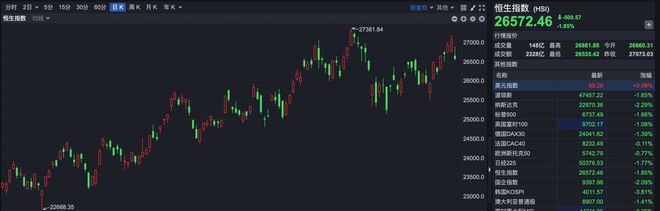
港股再度承压,机构:美元流动性或转宽,重点关注调整至半年线附近的恒生科技
Mei Ri Jing Ji Xin Wen· 2025-11-14 05:37
Core Viewpoint - The Hong Kong stock market indices experienced a decline, with the Hang Seng Tech Index dropping over 2%, while the Hang Seng Tech Index ETF (513180) followed suit, indicating a bearish trend in the tech sector [1] Group 1: Market Performance - The Hang Seng Tech Index ETF (513180) saw a significant drop, with major holdings like Baidu Group and JD Group experiencing declines of over 7% and nearly 6% respectively, while JD Health rose over 6% [1] - The overall market sentiment is influenced by the U.S. government's renewed spending and the return of liquidity, which is expected to reverse previous pessimistic trading assumptions [1] Group 2: Future Outlook - Analysts from Western Securities suggest that the return of liquidity in the U.S. could lead to a rebound in risk assets, particularly benefiting the Hong Kong market and the Hang Seng Tech Index [1] - The Hang Seng Tech Index ETF (513180) includes 30 leading tech stocks in Hong Kong, focusing on the AI industry chain, with companies like Alibaba, Tencent, and BYD positioned as potential leaders in China's tech sector [1]