腾讯

Search documents
连续23日狂买!54亿元涌入恒生科技指数ETF(513180),恒生互联网ETF(513330)净流入超33亿,均居同标的第一
Ge Long Hui· 2025-12-02 06:35
Group 1 - Hong Kong stocks experienced a slight decline, with the Hang Seng Internet ETF down 0.75% and the Hang Seng Technology Index ETF down 0.66% [1] - The recent rebound in Hong Kong stocks was influenced by the anticipation of a Federal Reserve interest rate cut, but external disturbances are expected due to hawkish comments from the Bank of Japan [1] - Major companies are increasingly focusing on AI, with Alibaba launching its first AI glasses "Quark" and updating its image generation and editing model Qwen-Image, while Kuaishou's Keling AI released a new product "Keling O1" [1] Group 2 - The Hang Seng Internet ETF has a weight of over 80% in leading internet stocks, with an AI application content exceeding 90% [2] - The latest scale of the Hang Seng Internet ETF is 357 billion yuan, making it the largest in its category, with key constituents including Alibaba, Tencent, NetEase, JD.com, and Baidu [2]
500亿存储器牛股年涨超370%
2 1 Shi Ji Jing Ji Bao Dao· 2025-12-02 06:11
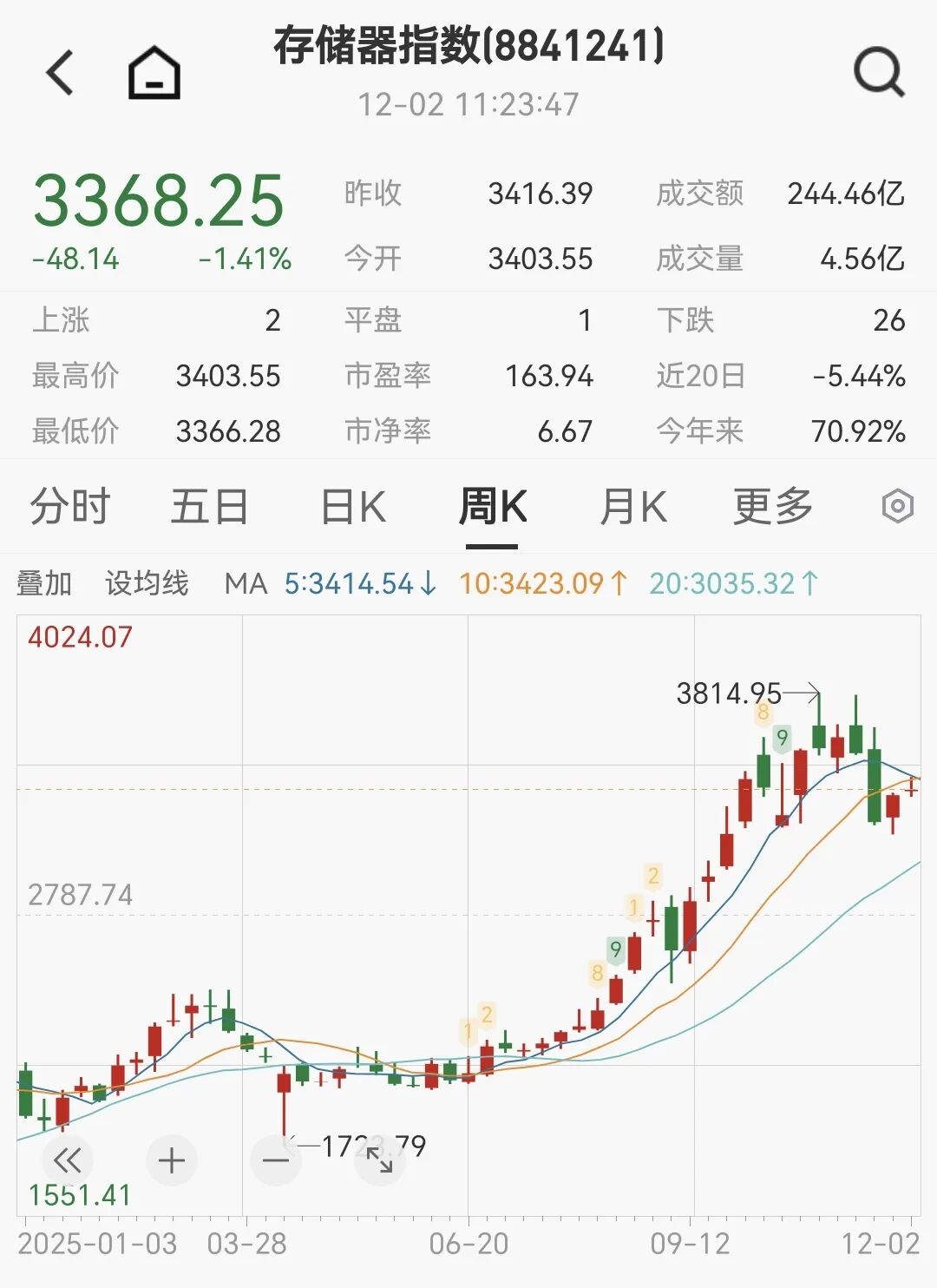
Core Viewpoint - The storage market experienced a significant downturn in late November due to concerns over the AI bubble, but has shown signs of recovery as of December 1, with a notable increase in the storage index and individual company performances [1][2]. Market Performance - As of December 1, the storage index (8841241.WI) closed at 3416.39 points, marking a daily increase of 1.99% and a consecutive four-day rise [2]. - Year-to-date, the storage sector has seen a remarkable increase of 97.7% in market capitalization weighted average, with leading companies like Dongxin Co. (688110.SH), Demingli (001309.SZ), and Jiangbolong (301308.SZ) achieving gains of 382.73%, 244.60%, and 189.63% respectively [2]. Industry Dynamics - The market's volatility is attributed to concerns over the mismatch between accelerated capital expenditures and delayed revenue recovery in the AI sector, although analysts argue that fears of an AI bubble are unfounded [5]. - The demand for high-bandwidth memory (HBM) is surging, driven by major companies like NVIDIA and OpenAI securing significant contracts, which has led to a squeeze on consumer-grade NAND Flash and DRAM production [5][6]. Structural Changes - The semiconductor industry is undergoing a strategic shift, with companies like SK Hynix expanding production to meet the demands of large tech firms, indicating a focus on high-margin products [6]. - The storage industry is experiencing a supply-demand imbalance, with prices for DDR4 memory doubling and supply constraints affecting DDR5 and SSD pricing [7]. Regional Development - Guangdong province is solidifying its dominant position in the storage and AI hardware industry, with a significant number of storage index component companies based in the region [9]. - The industrial layout in Guangdong is evolving towards a multi-polar development model, with companies like Jiangbolong expanding their manufacturing bases beyond Shenzhen to optimize costs and leverage regional advantages [9][10]. Market Demand - The demand for storage is expected to remain robust, driven by increasing requirements in mobile devices and data centers, with projections indicating that relief from supply constraints may not occur until late 2026 [7][8]. - Major tech firms in Guangdong, including Huawei and OPPO, contribute to a diverse market demand that supports the region's supply chain advantages [11][12]. Conclusion - The storage industry is poised for a prolonged upward cycle driven by AI advancements and regional industrial collaboration, with Guangdong's strategic advantages providing a solid foundation for companies to navigate market fluctuations [12][13].


500亿存储器牛股年涨超370%
21世纪经济报道· 2025-12-02 06:06
不过,据南方财经记者观察,在经历"寒潮"之后,该板块已呈现回暖趋势。 记者丨 朱治宣 孙静芳 实习生钟宸 存储器市场在11月中下旬突遇"寒潮",作为AI浪潮下的受益板块之一,存储器概念此前的上涨态势随着AI泡沫论等担忧受到剧烈影响,11月底 的板块骤降反映出市场的敏感性。 | 3368.25 昨收 3416.39 成交额 244.46亿 -48.14 -1.41% | 今开 | | | --- | --- | --- | | 上涨 == 2 | 平盘 1 - 下跌 = 26 | | | 最高价 3403.55 | 市盈率 | | | 3366.28 | | 最低价 | | 分时 五日 日K 周K 月K 更多 ◎ | | | | 叠加 设均线 MA 5:3414.54↓ 10:3423.09↑ 20:3035.32↑ | | | | 4024.07 | | | | 3814.95 > 1 | | | 截至12月1日,万得存储器指数(8841241.WI)收盘报3416.39点,当日涨幅达1.99%,已连续四个交易日上涨。存储器板块年初至今涨幅达到 97.7%(流通市值加权平均),东芯股份(688110.SH)、 ...

国家层面连续释放强力促消费信号,聚焦港股消费ETF(513230)布局机遇
Mei Ri Jing Ji Xin Wen· 2025-12-02 05:53
市场层面显现积极回暖信号,为板块注入动能。海南离岛免税新政首周销售额同比增长35%,显示高端 消费需求强劲。海通国际指出,自2025年第三季度起,中国及亚太市场复苏正从头部向更广范围扩散, 目前多数可选消费子板块的2025年预期市盈率(PE)低于过去五年平均水平,板块整体估值处于历史 相对低位。"需求回暖"与"低估值"并存,中长期配置价值凸显。 12月2日午盘,港股消费板块窄幅震荡,港股消费ETF(513230)现小幅微涨,持仓股中,巨子生物、 波司登、中国旺旺、百威亚太等涨幅居前,小鹏汽车-W、美团-W、同程旅行、中国儒意等跌幅靠前。 近期,国家层面连续释放强力促消费信号,支持方式与内涵显著升级。11月20日,财政部、商务部联合 推出消费新业态、新模式、新场景城市试点,中央财政提供约170亿元补助。核心思路从直接补贴需求 的"输血",转向承担优化供给结构的外部成本,鼓励地方与企业共同打造首发经济、多元消费场景及IP 跨界等新生态,推动消费向"质量跃升"转型。11月27日,在扩大免签、优化离境退税等政策助力 下,"中国游"、"中国购"热度不减。1-9月离境退税销售额同比翻倍。商务部明确将继续深化国际消费 中心 ...
消费蓝图已绘就,万亿消费赛道或迎爆发,聚焦港股消费ETF(513230)布局机遇
Mei Ri Jing Ji Xin Wen· 2025-12-02 03:27
Group 1 - The Hong Kong consumer sector showed a fluctuating upward trend, with the Hong Kong Consumer ETF (513230) rising nearly 1% at one point and currently up about 0.5% [1] - Key stocks in the ETF include BYD, Galaxy Entertainment, Sands China, and Anta Sports, which saw significant gains, while stocks like Xpeng Motors, Laopu Gold, Meituan, and Bilibili experienced declines [1] - A joint implementation plan was released by six departments, including the Ministry of Industry and Information Technology and the National Development and Reform Commission, aimed at enhancing the adaptability of supply and demand in the consumer sector [1] Group 2 - The plan outlines a target to cultivate three trillion-level consumption sectors and ten hundred-billion-level consumption hotspots by 2027, focusing on areas such as elderly products, smart connected vehicles, and consumer electronics [1] - The ten hundred-billion-level consumption hotspots include baby products, smart wearable devices, cosmetics, fitness equipment, outdoor products, pet food, civilian drones, trendy toys, jewelry, and domestic fashion [1] - Guojin Securities predicts that by 2030, a high-quality development pattern of positive interaction between supply and consumption will be established, with consumption's contribution to economic growth steadily increasing [2] Group 3 - The implementation plan emphasizes four main directions: promoting new technologies like AI in the consumer goods industry, accelerating the development of emerging consumption driven by emotional value, supporting domestic brands in international expansion, and encouraging new business models such as live e-commerce [2] - The consumer sector is evolving towards technological integration, emotional connection, global expansion, and channel innovation, presenting significant structural opportunities [2] - The Consumer ETF (513230) tracks the CSI Hong Kong Stock Connect Consumer Theme Index, encompassing a wide range of sectors in Hong Kong's consumer market, including leading new consumption companies and major internet e-commerce players [2]
QuestMobile2025新中产人群洞察报告:2.78亿新中产消费能力、消费意愿齐升,三大动能推动高质量发展
QuestMobile· 2025-12-02 02:02
Core Insights - The new middle-class population in China is projected to reach 278 million by October 2025, with a year-on-year increase of 3 million, indicating a stable growth trend in quantity while high-value users are expanding rapidly [5][11][66] Group 1: Demographics and Consumption Trends - The new middle-class demographic is characterized by a stable growth in quantity and an increase in high-value consumers, with a notable rise in high consumption power and willingness [11][20] - The age structure of users is shifting, with the core group aged 31-40 reaching 164 million monthly active users, showing a year-on-year growth of 0.5% in sectors like automotive, real estate, and fresh e-commerce [5][48] - The younger demographic aged 25-30 is also growing, with 114 million monthly active users, reflecting a year-on-year increase of 2.1% in interest-based and emotional consumption [5][48] Group 2: Urban Concentration and User Preferences - Major cities like Beijing, Shanghai, Guangzhou, and Shenzhen continue to attract new middle-class users, with Beijing showing the strongest appeal, increasing by 1% year-on-year [5][13] - The preference for quality and practicality is evident, with a significant rise in the use of mid-range devices priced between 2000 to 2999 yuan, which now accounts for 28.5% of the user base, up by 6.3% [5][26] Group 3: Online Behavior and App Usage - The online behavior of the new middle-class is shifting towards practicality and quality, with platforms like Taobao and JD seeing user growth of 3.1% and 11.8% respectively [5][24] - The demand for quality fresh produce and membership stores is surging, with user growth for platforms like Hema and Sam's Club increasing by 44.8% and 38.9% year-on-year [6][34] - The gaming preferences of the new middle-class show a dual focus on casual and competitive gaming, with shooting and MOBA games dominating user engagement [44] Group 4: Health and Lifestyle - There is a growing emphasis on health management, with fitness and dietary management apps experiencing rapid growth, indicating a trend towards health-conscious consumption [36][16] - The travel and leisure sectors are also seeing increased demand, with platforms like Ctrip and Qunar benefiting from the rising interest in outdoor and international travel [38][40] Group 5: Media Consumption and Content Preferences - The new middle-class shows a strong preference for quality content, with platforms like Tencent Video, Mango TV, and iQIYI leading in user engagement [43] - Podcasting is emerging as an effective channel for brands to connect with the middle-class demographic, leveraging deep content and emotional connections [46]

全球产业趋势跟踪周报:谷歌TPU挑战英伟达,中国商业航天产业加速-20251201
CMS· 2025-12-01 14:34
Core Insights - Google TPU is challenging Nvidia's dominance in the AI chip market, with expectations of sales exceeding one million units following the release of Gemini 3, which showcases significant advancements in performance and capabilities [3][15][21] - The Chinese commercial aerospace industry is accelerating its development, with the National Space Administration's action plan aiming for high-quality growth and integration into the national aerospace development framework by 2027 [3][38][39] Industry Trends Google TPU vs Nvidia - The release of Gemini 3 marks a pivotal moment for Google TPU, transitioning from a backend computational tool to a prominent player in AI training, leveraging high-bandwidth and high-performance TPU clusters [3][16] - The Gemini 3 model, trained on Google’s TPU, has achieved record scores in various benchmarks, indicating a substantial leap in capabilities compared to previous models [15][16] - Meta is reportedly negotiating with Google to deploy TPU chips in its data centers starting in 2027, which could significantly impact Nvidia's market share in AI training [21][33] Chinese Commercial Aerospace - The establishment of a dedicated Commercial Space Administration by the National Space Administration signifies a strategic move to enhance the management and development of the commercial aerospace sector [39] - The action plan released on November 25 outlines goals for the commercial aerospace industry, including enhancing innovation, resource utilization, and overall industry scale by 2027 [38][39] - The Ministry of Industry and Information Technology is conducting commercial trials for satellite IoT services, aiming to improve market supply and service capabilities in various sectors [38][39]


深儋合作,何以跑出“相向发展”新速度?
2 1 Shi Ji Jing Ji Bao Dao· 2025-12-01 13:19
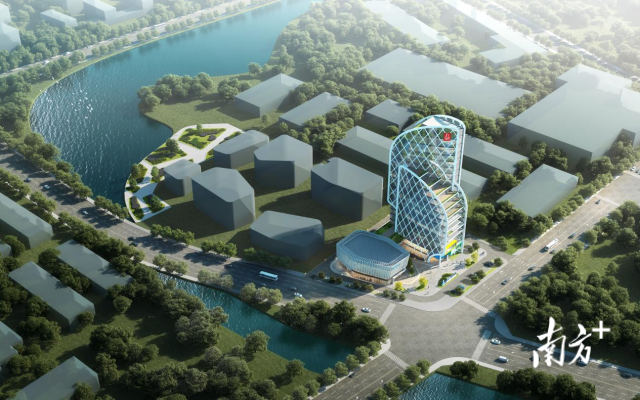
中心效果图。受访者供图 深儋科创 近日,粤琼两地相继召开重要会议,共同就深化区域合作作出战略部署。广东省委常委会召开会议,指 出要强化粤港澳大湾区与海南自由贸易港联动发展,深化产业合作,进一步推动广东与海南相向而行。 紧接着,中共海南省委八届八次全会于11月29日至30日举行,会议强调要深化广东海南相向发展,加强 同粤港澳大湾区联动,打造跨区域创新链产业链价值链。 在这一政策导向下,作为琼粤合作的"前沿阵地",儋州工业园正以深儋合作为突破口,积极打造成为落 实"推动广东海南相向发展"战略的实践标杆。 五年蝶变 儋州工业园内,百米高度的深儋科创中心在阳光下熠熠生辉。这座形似扬帆巨轮的建筑正在进行最后的 装饰装修施工,预计年底前可投入使用,项目设计融合了儋州盐田文化底蕴与深圳创新精神,象征着两 地合作的深度与高度。在园区另一边,东华儋州智能制造产业园里,首台搭载华为鲲鹏处理器的"东华 鹏霄"国产化电脑已下线,年生产能力可达8万台。 从"荒地"到"科创门户"的跨越 五年前的儋州工业园还是另一番景象。2020年以前,园区企业绝大多数处于停产状态,产业以饲料加工 为主,基础设施薄弱、产业发展动能不足。"当时从白马井高铁 ...
算力狂飙下的“新蓝海”:AIDC储能赛道爆发
Zhong Guo Jing Ying Bao· 2025-12-01 10:57
Core Insights - The explosive growth of AI computing power is driving the demand for energy storage in AI Data Centers (AIDC), marking a significant shift in the energy landscape [1][3][5] - AIDC energy storage is expected to transition from demand explosion to large-scale deployment by 2025, becoming a key driver for the energy storage market [2][5] Industry Growth - Global data center energy storage capacity is projected to increase from 4 GWh in 2020 to 16.5 GWh in 2024, with a compound annual growth rate (CAGR) of 43.0%, and further to 209.4 GWh by 2030, with a CAGR of 52.7% from 2024 to 2030 [1] - In China, energy storage capacity is expected to grow from 2.9 GWh in 2020 to 8 GWh in 2024, with a CAGR of 29.2%, and to 101.6 GWh by 2030, with a CAGR of 52.8% from 2024 to 2030 [1] Technological Advancements - AIDC requires high reliability and stability in power supply, leading to advancements in energy storage technology towards high power and reliability [2][4] - The role of energy storage is evolving from a backup power source to a core infrastructure component for AIDC [5][6] Market Dynamics - Major tech companies like Google, Meta, Microsoft, and Amazon are increasing capital expenditures focused on AIDC infrastructure, while domestic giants like Alibaba and Tencent are also ramping up investments [3][6] - The demand for energy storage in AIDC is characterized as rigid, driven by the high energy consumption and reliability requirements of AI computing [5][6] Competitive Landscape - Companies such as Ningde Times, Sunshine Power, and Haibo Si Chuang are accelerating their investments in AIDC energy storage, recognizing it as a significant growth driver [6][9] - The market is currently dominated by lead-acid batteries, but lithium batteries are expected to capture a larger market share by 2030, with projections of 73.5% for lithium and 14.5% for lead-acid in China [7] Policy Support - The Chinese government is actively promoting the integration of new energy storage solutions for data centers, emphasizing the need for reliable power supply and energy quality [5][8] - Policies are being established to support the green transformation of AIDC, further enhancing the role of energy storage in stabilizing power supply [4][5] International Expansion - Companies are looking to expand into international markets, with North America, Southeast Asia, Europe, the Middle East, and Australia identified as key target regions for AIDC energy storage solutions [9] - The demand for AIDC energy storage is particularly strong in regions with less stable power supply, highlighting the global opportunity for energy storage solutions [9]


IDG、阳光保险、腾讯投资的「轻松健康集团」通过聆讯,冲刺香港IPO
Xin Lang Cai Jing· 2025-12-01 10:49
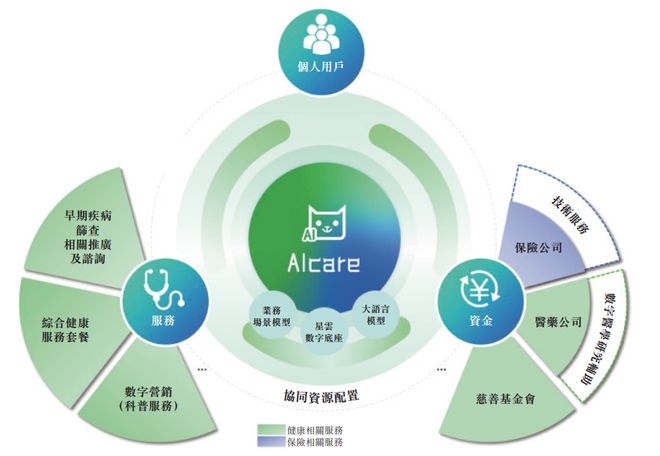
Core Viewpoint - QingSong Health Corporation is preparing for an IPO on the Hong Kong Stock Exchange, aiming to leverage its position as a leading provider of integrated health services and health insurance solutions in China [1][2]. Company Overview - QingSong Health Corporation is ranked 10th in China's digital integrated health services and health insurance market based on revenue for 2024, and 7th in the digital health services market [1][8]. - The company offers a variety of health-related services, including digital marketing, digital medical research support, comprehensive health service packages, and early disease screening promotion and consulting services [1][3]. Financial Performance - For the fiscal year ending December 31, 2024, the company's revenue was approximately RMB 9.45 billion, with a net profit of about RMB 0.1 billion [1][5]. - The revenue for the first half of 2025 was RMB 6.56 billion, with a net profit of RMB 0.86 billion [1][5]. - The company has shown a compound annual growth rate (CAGR) of 54.95% in revenue from 2022 to 2025 [5]. User and Insurance Metrics - As of June 30, 2025, the company had 168.4 million registered users, with annualized premium income from sold insurance products totaling RMB 4.93 billion [2]. - The annualized premium income from sold insurance products has decreased from RMB 13 billion in 2022 to RMB 4.93 billion in 2025 [2]. Market Context - The market for digital integrated health services and health insurance in China is projected to grow from RMB 727 billion in 2020 to RMB 2,365 billion in 2024, with a CAGR of 34.3% [7]. - The market is expected to reach RMB 7,485 billion by 2029, with a projected CAGR of 25.9% from 2024 to 2029 [7]. Competitive Landscape - Comparable companies in the industry include Ping An Good Doctor, Health 160, and Health Road, with varying market capitalizations and financial metrics [11]. - QingSong Health Corporation's recent fiscal year revenue of RMB 9.45 billion positions it competitively within this landscape [11]. Management Structure - The board of directors consists of eight members, including two executive directors, three non-executive directors, and three independent non-executive directors [12]. Shareholder Structure - Major shareholders include Yang through various entities controlling 38.94% of voting rights, IDG China with 12.89%, and Sunshine Insurance with 10.56% [14]. Financing History - The company has undergone seven financing rounds, with the most recent raising approximately $75 million in December 2019 [15].