Samsung

Search documents
NEO Battery Materials to Showcase High-Performance Battery Solutions at Humanoid Robot International Conference
Globenewswire· 2025-09-03 12:00
Core Insights - NEO Battery Materials Ltd. is participating as a Silver Sponsor at the 24th International Conference on Humanoid Robots, showcasing its high-performance battery solutions for robotics applications [1][4][7] - The conference, Humanoids 2025, focuses on advancements in humanoid robotics, including mechatronics and AI integration, attracting a diverse audience from academia and industry [2][4] - NEO aims to introduce its proprietary battery technologies for co-development and commercial integration with robotics researchers and manufacturers, emphasizing the need for compact, lightweight, and high-capacity batteries [3][7] Company Overview - NEO Battery Materials is a Canadian company specializing in silicon anode materials for lithium-ion batteries, targeting electric vehicles, electronics, and energy storage systems [5] - The company utilizes a patent-protected, low-cost manufacturing process to produce batteries that offer longer run times and ultra-fast charging capabilities compared to existing technologies [5] - NEO aspires to become a leading global producer of silicon anode materials within the electric vehicle and energy storage sectors [5]


The U.S. makes it harder for TSMC, SK Hynix and Samsung to produce chips in China
CNBC· 2025-09-03 08:35
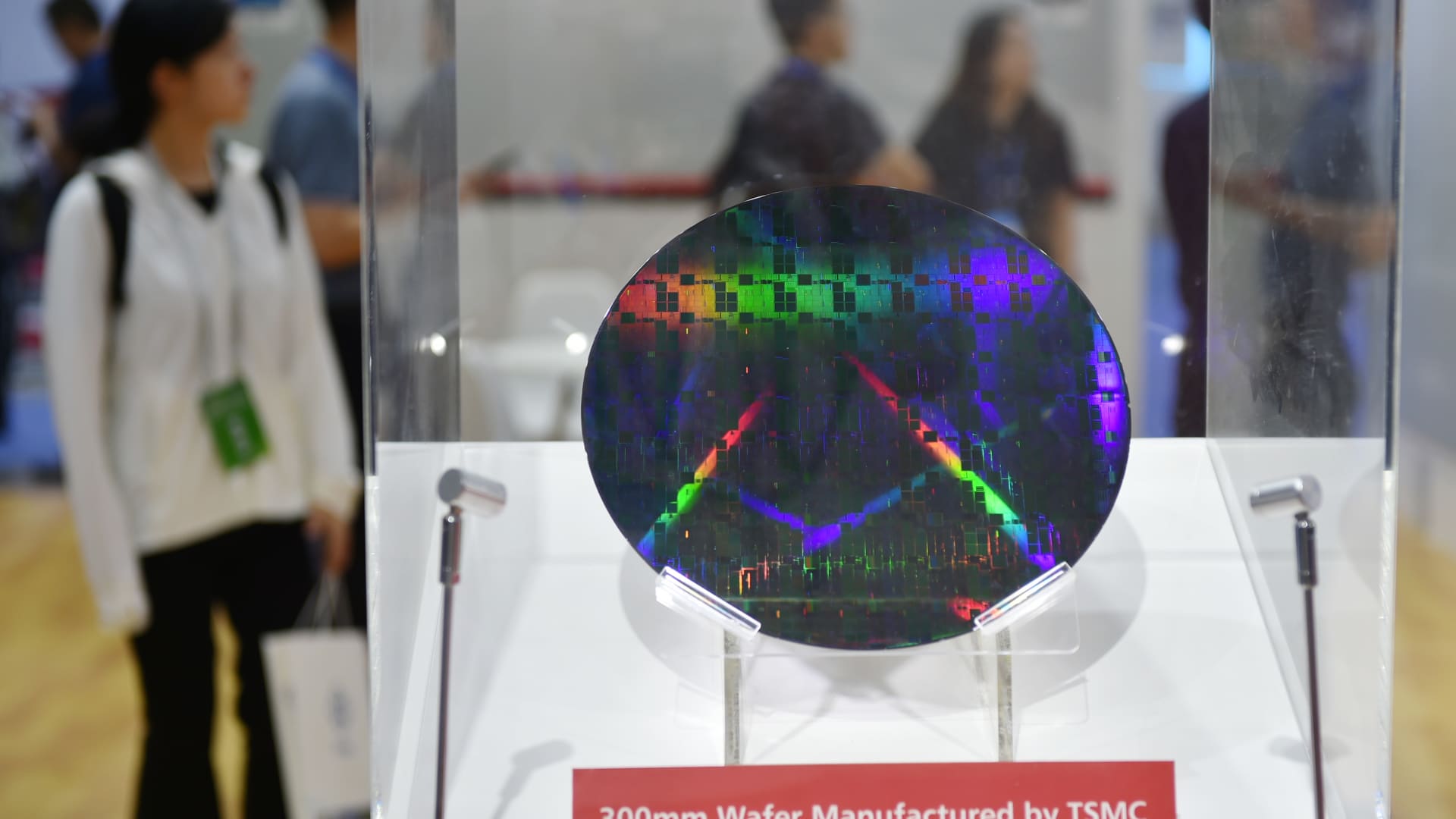
Core Viewpoint - The U.S. has revoked the validated end user (VEU) status for Taiwan Semiconductor Manufacturing Co. (TSMC) and other foreign semiconductor manufacturers, impacting their ability to export key chipmaking equipment and technology to China, particularly TSMC's facility in Nanjing [1][2][4]. Group 1: Policy Changes - The revocation of VEU status will take effect on December 31, requiring TSMC to obtain U.S. export licenses for shipments of American-origin chipmaking tools to its Nanjing facility [2]. - The U.S. Department of Commerce is closing the "Biden-era loophole" for all foreign semiconductor manufacturers, allowing former VEU participants to operate existing facilities in China but prohibiting capacity expansion or technology upgrades [4]. Group 2: Impact on Companies - TSMC has stated its commitment to ensuring the uninterrupted operation of its Nanjing facility while evaluating the situation and communicating with the U.S. government [3]. - The Nanjing facility contributes less than 3% of TSMC's total revenue and represents a minor share of its global capacity, suggesting that the financial impact on TSMC should be minor [6]. Group 3: Industry Context - The policy changes reflect a broader U.S. initiative to tighten control over semiconductor equipment and technology exports to China, thereby strengthening U.S. influence over chip production in the region [5]. - South Korean memory chipmakers SK Hynix and Samsung also had their VEU privileges revoked, indicating a wider impact on foreign semiconductor manufacturers operating in China [3].

Putin, Kim Attend Xi's Military Parade | The Asia Trade, 9/2/25
Bloomberg Television· 2025-09-03 04:01
THIS IS "THE ASIA TRADE. " PAUL: ASIAN STOCKS SET TO MIRROR A WEEK WALL STREET SESSION. U.S. TRADERS STARTED IN ON A SOUR NIGHT -- A SOUR NOTE. THE U.S. REVOKES TSMC'S AUTHORIZATION TO SHIP A CENTRAL GEAR TO ITS CHIP-MAKING BASE WHICH FOLLOWS EARLIER ACTIONS AGAINST SAMSUNG AND SK HYNIX. STEPHEN: CHINA HOSTS A MILITARY PARADE MARKING THE 80TH ANNIVERSARY OF THE END OF WORLD WAR II WITH NEW WEAPONRY AND DIPLOMATIC CLOUT ON DISPLAY. PAUL: LET US LOOK OUT HOW MARKETS ARE TRACKING AHEAD OF THIS WEDNESDAY SESSIO ...
亚太股票策略-人工智能时代下的亚太股市新投资范式-Equity Strategy - Asia Pacific-APAC equities a new investment paradigm in the age of AI
2025-09-03 01:22
Summary of Key Points from the Conference Call Industry Overview - The conference call focuses on the **Asia Pacific (APAC) equity markets** and the transformative impact of **Artificial Intelligence (AI)** on these markets [1][16][106]. Core Insights and Arguments - **AI's Impact on APAC Markets**: AI is reshaping the APAC equity landscape, influencing economic and geopolitical standings of nations and individual companies [1][16]. - **AI Readiness Among Economies**: The US leads in AI innovation, but China is well-positioned with strong policy support, robust research, and manufacturing capabilities. Japan excels in semi materials and robotics, while India has a vast IT talent pool [2][55][106]. - **Investment Projections**: The global AI market is expected to grow from over **USD 300 billion in 2025** to nearly **USD 1.2 trillion by 2030**, with APAC potentially accounting for **USD 1 trillion** of this investment [4][21]. - **Sector Growth Forecasts**: Taiwan's AI foundry, Korea's High Bandwidth Memory (HBM), and China's AI chips and software sectors are projected to grow at **20-50% per annum**. In contrast, China's semi equipment and India's IT services may experience muted growth [4][21][47]. - **Geopolitical Dynamics**: AI could alter geopolitical influence by fostering regional economic integration, although political divisions may lead to technological fragmentation [3][106]. Important but Overlooked Content - **AI's Role in Economic Growth**: AI may decouple economic growth from labor force constraints, allowing countries like China, Japan, and Korea to achieve higher-than-expected GDP growth despite aging populations [26][107][108]. - **Public Acceptance of AI**: Surveys indicate that countries like India and China have higher public acceptance and trust in AI compared to developed nations like the US and Japan [67][69]. - **AI Startups and Unicorns**: The US leads in AI startups and unicorns, with over **55%** of new AI startups globally. China's new AI startups have slowed significantly, indicating a potential decline in private investment [77][78]. - **AI Research and Patents**: China leads in AI research publications and patents, producing **23%** of global AI journal publications and **70%** of AI patents granted in 2023 [82][83]. Conclusion - The APAC region is poised for significant growth in AI-related sectors, driven by strong government policies, technological advancements, and a robust talent pool. However, challenges such as public acceptance, investment fluctuations, and geopolitical tensions may impact the trajectory of AI development and its economic implications in the region [4][106][107].


US Pulls TSMC’s Waiver for China Chip Supply Shipments
Bloomberg Television· 2025-09-02 23:09
Some see perhaps falling another victim to this. This morning, we're learning that the US pulled their waivers for China's shipments of chip supplies. What's happening.Okay, so breaking news story. This relates to Tsmc's validated end user agreement which allows them to move gear to that mainland China facility in Yanjing. Basically, it's the same move that we saw from the United States last week, Friday, with Samsung and SK Hynix, where essentially any supplier associated with that facility in China has to ...
Google avoids break up, faces new oversight in search antitrust trial
TechCrunch· 2025-09-02 20:45
Core Viewpoint - A federal judge has ordered changes to Google's business practices to prevent anticompetitive behavior, but has not mandated a breakup of its search business [1][4]. Group 1: Court Orders and Remedies - U.S. District Court Judge Amit P. Mehta has outlined remedies that will prevent Google from entering exclusive deals that tie the distribution of its services to other apps or revenue arrangements [2]. - Google is required to share certain search index and user-interaction data with "qualified competitors" and must offer search and search ad syndication services at standard rates [3][4]. - A technical committee will be established to enforce the final judgment, which will last for six years and take effect 60 days after entry [4]. Group 2: DOJ's Position and Proposals - The Department of Justice (DOJ) had advocated for stronger penalties, including the divestiture of Google's Chrome browser and possibly Android, as well as ending agreements with major partners [5]. - The DOJ also requested that Google share its search index, user-side data, and ads data with competitors under privacy-protected terms [6]. Group 3: Market Context and Implications - Google has maintained approximately 90% market share in the traditional search market for the last decade and argues that the government's proposals could stifle innovation and jeopardize user privacy [8]. - Judge Mehta's decision may influence a separate antitrust trial related to Google's advertising technology business, with a remedies trial scheduled for late September [11]. - The ongoing legal proceedings may extend until late 2027 or early 2028, as appeals and potential escalations to the Supreme Court are anticipated [13].


Corning Rises 43.6% Year to Date: Reason to Buy the Stock?
ZACKS· 2025-09-02 18:51
Core Insights - Corning Incorporated (GLW) has outperformed the communications components industry with a growth of 43.6% compared to the industry's 31.3% [1] - Despite this, GLW has underperformed against competitors like CommScope and Amphenol, which saw gains of 205.4% and 55% respectively over the past year [2] Company Performance - Corning's strength lies in its focus on innovation across five market segments: Mobile Consumer Electronics, Optical Communications, Automotive, Life Sciences, and Display [3] - The restructuring of its operating structure has improved efficiency and allowed for asset reuse across different market ecosystems [3] Revenue Growth - The Optical Communication segment generated $1.56 billion in revenues, a 41% year-over-year increase, surpassing estimates [5] - Specialty Materials revenue reached $545 million, up 9% year-over-year, driven by demand in the premium smartphone segment [6] New Initiatives - The Solar Market Access Platform is expected to generate $2.5 billion in revenues by 2028, reflecting strong market traction [4] - Corning has secured a $2.5 billion investment from Apple for cover glass production, enhancing growth prospects in the Specialty Materials segment [9] Strategic Collaborations - A multi-year collaboration with Broadcom aims to develop next-generation co-packaged optics infrastructure for data centers, addressing AI workload demands [10] Estimate Revisions - Earnings estimates for Corning for 2025 and 2026 have seen upward revisions over the past 60 days, indicating positive market sentiment [11] Valuation Metrics - Corning's shares are currently trading at a price/earnings ratio of 24.6, which is lower than the industry average of 28.1, suggesting an attractive valuation [12] Overall Outlook - Corning is benefiting from strong demand in Optical Communications and Specialty Materials, along with collaborations with major tech companies [14] - The positive estimate revisions and attractive valuation position Corning as a favorable investment option [14][15]


Tesla's Dojo, a timeline
TechCrunch· 2025-09-02 16:39
Core Viewpoint - Tesla aims to transition from being solely an automaker to an AI company, focusing on achieving full self-driving capabilities through advanced computing power and data processing [1][2]. Development of Dojo - Dojo was introduced as a custom-built supercomputer designed to train Tesla's Full Self-Driving (FSD) neural networks, which at the time required human oversight despite some automated capabilities [2][3]. - The timeline of Dojo's development includes its first mention in 2019, with Musk highlighting its potential to process vast amounts of video data for training AI [4][5][8]. - By 2021, Tesla officially announced Dojo, introducing its D1 chip and outlining plans for a supercomputer capable of significant AI training [9][10]. Progress and Challenges - Throughout 2022 and 2023, Tesla reported progress on Dojo, including the installation of its first cabinet and plans for a full Exapod cluster by early 2023 [10][12]. - Musk indicated that Dojo could significantly reduce training costs and potentially become a sellable service, similar to Amazon Web Services [11][12]. - However, by mid-2023, Tesla faced challenges with Nvidia hardware supply, prompting a renewed focus on Dojo to ensure adequate training capabilities [16]. Transition to Cortex - In 2024, Tesla began transitioning from Dojo to a new supercomputer called Cortex, which utilizes Nvidia GPUs and aims to enhance AI training for FSD [18][19]. - The Cortex supercomputer was reported to consist of approximately 50,000 H100 Nvidia GPUs, facilitating improvements in FSD performance [19][20]. - By early 2025, the Dojo project was officially shut down, with Tesla consolidating its resources towards the development of the AI6 chip, which is intended to serve multiple AI applications [22][23]. Future Directions - Tesla's future plans include scaling AI capabilities with the AI6 chip, which is designed for both inference and training, indicating a strategic shift in its AI development approach [22][23]. - The company aims to maintain a competitive edge in AI by focusing on integrated chip designs rather than dividing resources across different projects [23].



Tesla Dojo: the rise and fall of Elon Musk's AI supercomputer
TechCrunch· 2025-09-02 16:18
Core Insights - Tesla has decided to shut down its Dojo AI supercomputer project and disband the associated team, marking a significant shift in its AI strategy [2][10][44] - The decision comes after years of hype and promises from CEO Elon Musk regarding Dojo's potential to revolutionize Tesla's self-driving capabilities and AI initiatives [2][12][13] - The company is now pivoting towards partnerships for chip development, particularly focusing on its new AI6 chips from Samsung, which are intended to support various AI applications [11][31] Group 1: Dojo's Development and Shutdown - Dojo was designed as a custom-built supercomputer to train Tesla's Full Self-Driving (FSD) neural networks, aiming to achieve full autonomy and support the robotaxi initiative [3][4][18] - Despite initial ambitions, Tesla failed to effectively link its self-driving advancements to Dojo, leading to a lack of focus on the project in recent communications [5][8] - The shutdown of Dojo was announced shortly after Tesla signed a $16.5 billion deal for next-generation AI6 chips, indicating a strategic shift away from self-reliant hardware [11][12] Group 2: Implications for Tesla's AI Strategy - The closure of Dojo has sparked mixed reactions, with some viewing it as a failure of Musk's promises, while others see it as a necessary pivot towards a more sustainable AI strategy [8][9] - Analysts have noted that losing key talent from the Dojo team could hinder future AI projects, especially given the specialized nature of the technology [10] - Tesla's future AI efforts will now rely more on partnerships with established chip manufacturers like Nvidia and AMD, moving away from its previous goal of self-sufficiency in chip production [31][32] Group 3: Financial and Market Impact - The initial projections for Dojo included significant financial commitments, such as a $500 million investment for a supercomputer at the Buffalo gigafactory, which will now not be allocated to Dojo [39][44] - Analysts had previously estimated that Dojo could potentially add $500 billion to Tesla's market value by creating new revenue streams through AI and robotaxi services [35] - The shift in strategy may impact investor sentiment, as the ambitious goals set for Dojo were not met, leading to questions about Tesla's long-term AI vision [38][40]
Chip Giant TSMC Shares Drop 2% After US Revokes Waiver For China Shipments
Forbes· 2025-09-02 15:35
Core Insights - The U.S. has revoked the validated end user (VEU) status for Taiwan Semiconductor Manufacturing Company (TSMC), impacting its ability to ship to its China-based facilities freely, leading to a drop in TSMC's shares by over 2% [1][2] - This decision follows similar actions taken against other semiconductor companies, including Samsung, SK Hynix, and Intel, indicating a broader trend in U.S. export controls on semiconductor technology [5][6] Company Impact - TSMC's production may be disrupted as suppliers will now need to apply for export licenses for each shipment of manufacturing gear, spare parts, or chemicals [3] - The company is currently evaluating the situation and is in communication with the U.S. government regarding the implications of this revocation [3] Market Position - TSMC is the world's largest semiconductor firm by market value, with a market capitalization of $1.1 trillion, ranking it as the ninth-largest company globally [5] - The company has seen significant growth due to the semiconductor and AI sectors, producing chips for major clients like Nvidia, Apple, and AMD [5] Historical Context - The revocation of TSMC's VEU status aligns with the U.S. government's tightening of export controls on semiconductor shipments to China, which has been a trend throughout the year [6] - Previous actions included a temporary ban on Nvidia's H20 processors to China, highlighting ongoing national security concerns related to semiconductor technology [6]