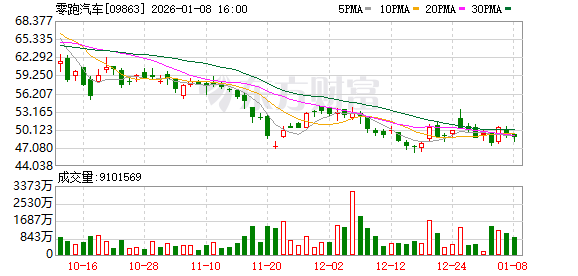
零跑汽车

Search documents
记者手记:从两个“百万”看中国新能源汽车产业的量质齐升
Xin Hua Wang· 2026-01-09 02:10
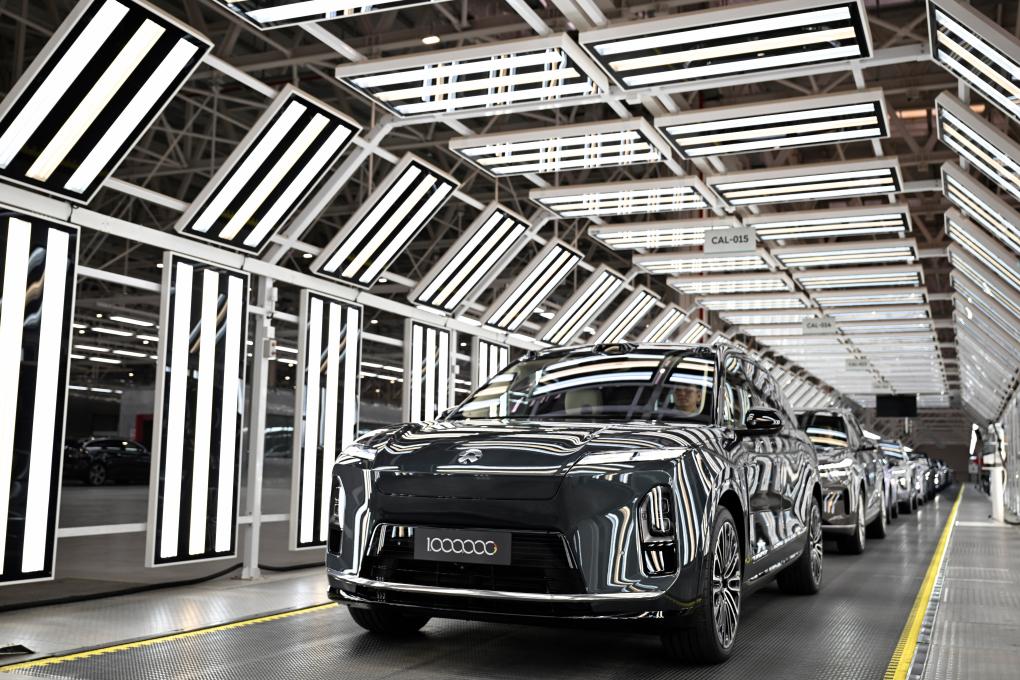
Group 1 - The core message highlights the dual breakthroughs in scale and brand for China's new energy vehicle (NEV) industry, marked by the production of the one-millionth vehicle by companies like NIO, Leap Motor, and Xpeng [1][3] - The NIO ES8, as the one-millionth vehicle, symbolizes the significant progress made in the NEV sector, showcasing a shift from traditional fuel vehicles to electric and intelligent models [3] - The collaboration between Huawei and JAC Motors to produce the high-end S800 model, priced over 1 million yuan, signifies a breakthrough in the luxury electric vehicle market, indicating a trend towards high-end positioning in the NEV industry [1][5] Group 2 - The data from the China Association of Automobile Manufacturers shows strong performance in NEV production and sales, with 14.907 million units produced and 14.78 million units sold from January to November 2025, reflecting year-on-year growth of 31.4% and 31.2% respectively [5] - The emergence of new players like NIO, Li Auto, and Xpeng is seen as a transformative force in the automotive industry, redefining business models and user relationships through a focus on experience and data [3] - The S800's launch represents a new collaborative model in the automotive industry, where technology companies provide the technical foundation, allowing traditional manufacturers to focus on production and integration [5]


零跑汽车在金华新设汽车零部件公司
Zheng Quan Shi Bao Wang· 2026-01-09 01:58
Group 1 - The core point of the article is the establishment of Jinhua Lingda Automotive Parts Co., Ltd., which is fully owned by Leap Motor through indirect shareholding [1] - The registered capital of the new company is 25 million yuan, indicating a significant investment in the automotive parts sector [1] - The business scope of the company includes manufacturing and research of automotive parts, retail of automotive components, manufacturing of electronic components and electromechanical equipment, and solar power technology services [1]

造车“新势力”如何跑出“加速度” ——零跑汽车创始人朱江明访谈
Bei Jing Ri Bao Ke Hu Duan· 2026-01-09 01:40
Core Viewpoint - The rapid development of China's new energy vehicle (NEV) industry has positioned it as a global leader in production and sales for ten consecutive years, with Leap Motor emerging as a significant player in this sector [1]. Group 1: Industry Challenges and Strategies - Entering the automotive industry posed significant challenges due to intense market competition, high capital requirements, and the need for advanced technology [2]. - The NEV sector faced a downturn in 2019, prompting companies to reassess their strategies and focus on cost reduction and mass-market positioning to overcome difficulties [3]. - Competing in a crowded market requires companies to enhance their internal capabilities and focus on product quality and pricing [4]. Group 2: Pricing and Profitability - Companies must avoid selling vehicles at a loss and should maintain a profit margin to ensure sustainability [5]. - A market-driven approach is essential for fostering competition and improving product quality while benefiting consumers [5]. Group 3: Technological Development - Leap Motor emphasizes the importance of self-research and development (R&D) to gain a competitive edge, particularly in core components [7][8]. - The company has focused on building a solid technological foundation over its first five years, which has enabled it to scale production and enhance its competitive position [9]. Group 4: Future Market Trends - The market share of NEVs in China is expected to rise to 80% to 90% within the next 3 to 5 years, driven by economic advantages and technological advancements [10]. - The industry is transitioning from policy-driven growth to market-driven dynamics, with a strong emphasis on electric and intelligent vehicles [10]. Group 5: Safety and Quality Assurance - Safety remains a top priority, with advancements in battery technology leading to improved safety standards comparable to traditional vehicles [11]. - Continuous monitoring and improvement of safety measures are essential for maintaining consumer trust [11]. Group 6: Talent and Workforce Development - Leap Motor maintains a high proportion of engineers, focusing on efficiency and stability within teams to drive innovation [12]. - The company employs an "end-to-end" management approach to enhance productivity and streamline processes [13]. Group 7: Global Expansion Strategy - Collaborating with multinational automotive manufacturers is a strategic move to establish a presence in overseas markets and leverage existing distribution channels [16]. - The company aims to balance the benefits of partnerships with maintaining brand autonomy as it expands internationally [17]. - Leap Motor plans to localize its production and design to cater to global markets while solidifying its position in China [18].
国海证券晨会纪要-20260109
Guohai Securities· 2026-01-09 01:31
Group 1: Fixed Income Analysis - The report analyzes the recent increase in borrowing of local government bonds and provides insights into the reasons behind this trend and future market outlook [3][4] - As of January 6, the net borrowing volume of local government bonds has increased, with the top five being Henan, Jiangxi, Shandong, Hunan, and Hebei, all with a 30-year maturity [5] - Institutions are primarily borrowing local bonds to take long positions on the spread between local government bonds and national bonds, with the spread reaching a relative low of 14.8 basis points on December 29, 2025 [5][6] Group 2: Great Wall Motors Analysis - Great Wall Motors reported a total sales volume of 1.324 million vehicles in 2025, marking a year-on-year increase of 7.3%, achieving a record high for the company [7][8] - The WEY brand saw significant growth, with a year-on-year increase of 86.3%, while the Haval brand maintained a steady performance with a 7.4% increase [8][9] - The company aims to continue its high-end upgrade strategy with the launch of new models and expects to maintain strong sales momentum in 2026 [9][10] Group 3: Leap Motor Analysis - Leap Motor achieved a total delivery of 597,000 vehicles in 2025, a year-on-year increase of 103.1%, and aims for a target of 1 million vehicles in 2026 [11][12] - The B and C series products have been well-received, contributing to the company's upward structural upgrade, with new models expected to enhance the product lineup [12] - The company has expanded its overseas presence, achieving over 60,000 deliveries in international markets, and plans to accelerate local production in 2026 [12][13] Group 4: Leshushih Analysis - Leshushih has established itself as a leading player in the African hygiene products market, focusing on local manufacturing and a strong distribution network [14][15] - The African market for baby diapers and sanitary products is projected to grow from $3.8 billion in 2024 to $5.6 billion by 2029, driven by increasing penetration and a young population [15][16] - The company has built a robust local supply chain and brand recognition, holding significant market shares in key product categories [16][17] Group 5: AI and Manufacturing Policy - The report discusses the recent policy initiative aimed at integrating AI into manufacturing, with goals to develop industrial intelligence and enhance software capabilities by 2027 [18][19] - The initiative aims to create 1,000 industrial intelligent entities and promote the application of AI across various manufacturing processes, potentially increasing efficiency and reducing costs [19][20] - The industrial software market in China is expected to exceed 500 billion yuan by 2029, driven by the ongoing digital transformation and policy support [21][22]

汽车早餐 | 四部门联合召开动力和储能电池行业座谈会;吉利获L3级自动驾驶道路测试牌照;广汽国际与Grab达成战略合作
Zhong Guo Qi Che Bao Wang· 2026-01-09 01:21
Group 1: Battery Industry - A joint meeting was held by four government departments to discuss the regulation of the power and energy storage battery industry, involving 16 companies including major players like CATL and BYD [2] Group 2: Automotive Industry - The Ministry of Industry and Information Technology is soliciting public opinions on seven proposed mandatory national standards for intelligent connected vehicles, including safety requirements for automatic parking systems [3] - Geely has obtained a Level 3 autonomous driving road test license for its Zeekr 9X model in Hangzhou [9] - Xpeng Motors' CEO predicts that 2026 will mark the true beginning of autonomous driving in China and the U.S., with the company's second-generation VLA achieving Level 4 autonomous driving capabilities [11] - Dongfeng Motor is in discussions to produce passenger vehicles in Turkey, with plans to start production within the year [12] Group 3: Strategic Partnerships and Investments - GAC International has formed a strategic partnership with Grab to collaborate on delivering 20,000 high-performance electric vehicles in Southeast Asia over the next two years [10] - Intramco, a company under Xincheng Capital, has partnered with Leap Motor to supply charging products for its future electric vehicles produced in Europe [14] - Faraday Future aims to achieve positive cash flow and a gross margin of 20% within three years, as announced during its shareholder day event [15] Group 4: Technology and Innovation - Hyundai's stock price surged following the announcement of increased investments in robotics and artificial intelligence, alongside a meeting between its chairman and NVIDIA's CEO [6] - Elon Musk's AI startup xAI completed a $20 billion funding round, exceeding its initial target of $15 billion, with investors including NVIDIA and Cisco [7] Group 5: Economic Cooperation - The Ministry of Commerce is accelerating negotiations for the second phase of the China-South Korea Free Trade Agreement, focusing on enhancing economic cooperation and exploring new areas such as high-end manufacturing and green industries [4] - Guangzhou's government has released a plan to cultivate strategic industries, including artificial intelligence and new energy storage, as part of its advanced manufacturing strategy [5]



一句话就够了
Xin Lang Cai Jing· 2026-01-09 01:04
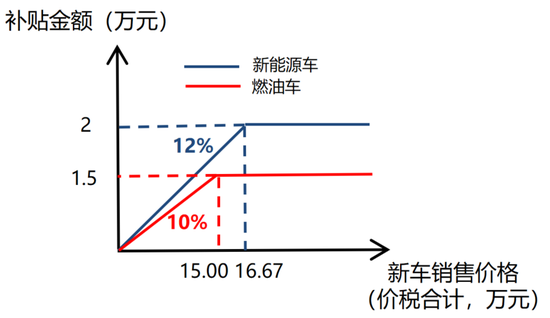
Group 1 - The new subsidy policy for the automotive sector has been released, with the most beneficial price range being 150,000 to 200,000 yuan [1][14] - The policy is divided into two categories: scrapping and replacement, with different subsidy rates for purchasing new energy and fuel vehicles [2][15] - For scrapping, the subsidy for new energy vehicles is 12% with a maximum of 20,000 yuan, while for fuel vehicles, it is 10% with a maximum of 15,000 yuan [2][15] Group 2 - The replacement subsidy for new energy vehicles is 8% with a maximum of 15,000 yuan, and for fuel vehicles, it is 6% with a maximum of 13,000 yuan [5][17] - The optimal price range to maximize subsidies is between 150,000 and 220,000 yuan, regardless of whether the vehicle is scrapped or replaced [7][20] - The 2026 policy differs from the 2025 policy in that subsidies are now based on a percentage of the new vehicle price rather than a fixed amount, encouraging purchases of mid to high-end vehicles [8][21] Group 3 - The overall subsidy amount may decrease, but the structural change in the price range will lead to higher profit margins for manufacturers, promoting high-quality development [10][23] - Companies focusing on the 150,000 to 200,000 yuan price range, such as BYD, Geely, Changan, and Great Wall, as well as new players like Xpeng, Li Auto, and NIO, are expected to benefit [10][23] - The sales performance of new energy vehicle brands in 2025 shows that Leap Motor is on track to meet its target of 500,000 units, while others like Xpeng and Li Auto are around 400,000 units [11][24] Group 4 - The new subsidy policy is expected to have a significant impact on the automotive industry, with a focus on the 150,000 to 200,000 yuan price range being the most advantageous [9][22] - The ETF tracking automotive stocks listed in Hong Kong, which includes major companies mentioned, is suggested as a way to monitor investment opportunities in the sector [12][25] - The performance of key automotive stocks in the ETF indicates positive trends, with significant weightings in companies like Xpeng and BYD [13][26]
掘金CES 2026:AI全域渗透加速,应用端投资机会将至?
智通财经网· 2026-01-09 00:55
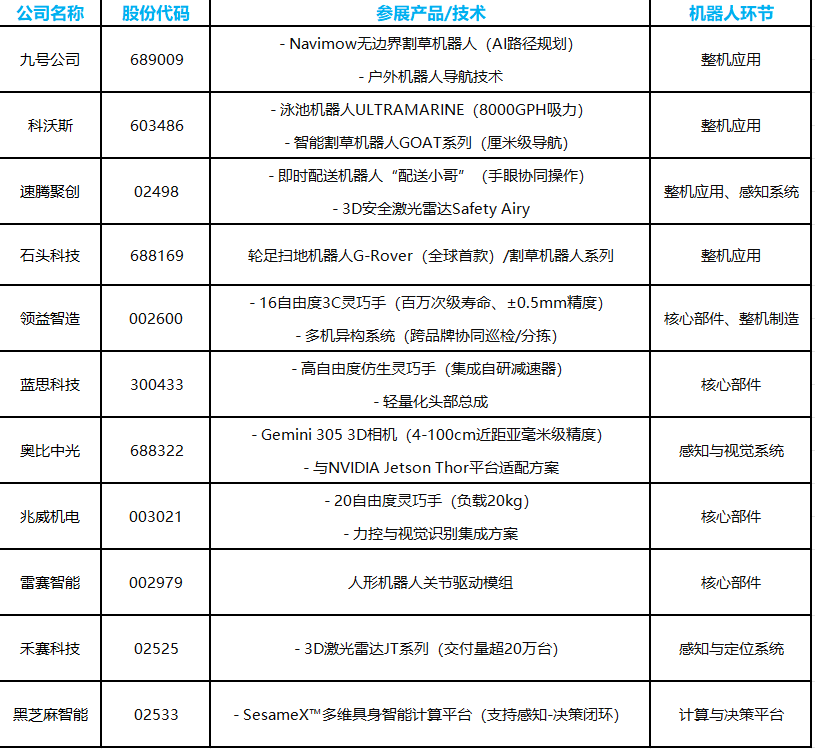
Group 1: CES 2026 Overview - CES 2026, known as the "Spring Festival Gala" of the tech industry, commenced on January 6 in Las Vegas, focusing on "defining the physical boundaries of AI" [1] - The event featured 207 Chinese companies across various cutting-edge fields, including AI, smart wearables, and smart home technologies, showcasing over 120 small and medium-sized tech firms [1] - The technologies presented by leading Chinese companies reflect the country's technological strengths and outline key directions for global industry evolution [1] Group 2: Robotics and AI Technologies - AI and robotics technologies were a major highlight at CES 2026, with global leaders showcasing various robots and core components [2] - NVIDIA's CEO announced that the robotics sector has entered its "ChatGPT moment," introducing world models to enhance robots' understanding of physical properties and spatial relationships [2] - Chinese companies, including Yushu Technology and Fourier, presented a wide range of innovative products, covering industrial applications, daily life, medical assistance, and emergency rescue [2][3] Group 3: Key Exhibitors and Innovations - Notable exhibitors included Ninebot, Ecovacs, and SUTENG, showcasing advanced robotic solutions such as AI path-planning lawn mowers and delivery robots capable of complex tasks [4][5] - Companies like Lingyi Zhi Zao and Zhaowei Electric displayed high-freedom dexterous hands and collaborative systems, indicating significant advancements in robotics [5] - The emergence of a cohesive display of robotics indicates a breakthrough in China's robotics industry, transitioning from fragmented to integrated solutions [5] Group 4: Automotive Innovations - The automotive sector at CES 2026 emphasized the transformation of vehicles into "smart partners" with emotional resonance and autonomous capabilities [6] - NVIDIA introduced the world's first open-source autonomous driving model, aiming to address challenges in extreme weather and construction detours [6] - Chinese automakers, including Great Wall Motors and Geely, showcased innovative models and technologies, highlighting the integration of smart features and collaboration with supply chain partners [6][7] Group 5: Wearable Devices and AI Glasses - Wearable devices, particularly AI glasses, gained significant attention at CES 2026, with over 60% of the showcased products coming from Chinese brands [10][11] - Innovations included independent communication-capable AR glasses and various health monitoring devices, indicating a shift towards mass production and consumer adoption [10][11] - The advancements in display and optical technologies for AI glasses reflect a robust ecosystem supporting the transition from concept to widespread use [12][13] Group 6: Industry Trends and Future Outlook - The CES 2026 event signaled a clear shift in AI's role from mere technology demonstration to deep integration within industry value chains [14] - The trend of AI becoming a physical entity is accelerating, with applications in robotics, smart driving, and wearable devices becoming observable realities [14] - Investors are encouraged to focus on the transition from technology validation to commercial scale, marking a critical window for capturing scene-based opportunities in 2026 [14]



中信证券:2026年关注乘用车行业出海、高端化
Zheng Quan Shi Bao Wang· 2026-01-09 00:32
Core Insights - The article reviews the performance of the passenger car industry in 2025, highlighting growth driven by the trade-in policy in the domestic market [1] - Traditional domestic brands, particularly Geely, showed the best performance, while five new forces exceeded sales of 400,000 units, with Leap Motor becoming the annual sales champion among new forces [1] - Significant growth was observed for companies like Xiaomi, Xpeng, and Leap Motor, all recording over 100% growth [1] - The importance of traditional domestic brands in overseas markets has become more pronounced, with Chery, BYD, and SAIC each exporting over 1 million vehicles [1] - Looking ahead to 2026, the outlook for overseas markets is optimistic, with leading companies expected to achieve growth in volume and profit through new product introductions, overseas factories, and external collaborations [1] - Despite intense competition in the domestic market, the trend towards high-end domestic brands remains noteworthy [1]

零跑朱江明称大众赛道是红海,练内功激发潜力
Xin Lang Ke Ji· 2026-01-09 00:18
Group 1 - The core viewpoint is that the automotive market is highly competitive, described as a "red ocean," where companies must focus on internal capabilities to unleash their potential [1] - The founder of Leap Motor, Zhu Jiangming, emphasizes the importance of having the right attitude in market competition, which involves diligently perfecting products, quality, and pricing [1]
练好内功 才能把潜力激发出来——零跑汽车创始人朱江明访谈(与企业家谈“新”)
Ren Min Ri Bao· 2026-01-08 22:40
Core Viewpoint - The rapid development of China's new energy vehicle (NEV) industry has positioned it as a global leader in production and sales for ten consecutive years, with Leap Motor emerging as a significant player in this sector [2]. Group 1: Industry Challenges and Strategies - Entering the automotive industry posed significant challenges due to intense market competition, high capital requirements, and the need for advanced technology integration [3]. - The NEV sector has faced ups and downs, particularly in 2019 when the market cooled, prompting companies to reassess their strategies and focus on cost reduction and mass-market positioning [4]. - Competing in a "red ocean" market necessitates honing internal capabilities to enhance product quality and pricing strategies [5]. Group 2: Technological Development and Innovation - Companies must maintain profitability and avoid selling vehicles at a loss, emphasizing the importance of market-driven competition to improve product quality and reduce costs [7]. - Leap Motor prioritizes in-house research and development to gain control over core technologies, which is essential for long-term success in the NEV market [8][9]. - The company aims to leverage its technological foundation to innovate continuously, with a focus on quality, cost, and performance improvements [10]. Group 3: Market Outlook and Safety Concerns - The NEV market in China is expected to accelerate, with sales potentially reaching 80% to 90% of the total market share within the next 3 to 5 years [11]. - Safety concerns regarding NEVs are being addressed through advancements in battery technology, aiming to meet or exceed the safety standards of traditional fuel vehicles [12]. Group 4: Human Resources and Corporate Culture - Leap Motor maintains a high proportion of engineers within its workforce, emphasizing the importance of stability and efficiency in its teams [13]. - The company employs an "end-to-end" management approach to enhance creativity and productivity among engineers, supported by equity incentives to foster a sense of ownership [14]. Group 5: Global Expansion and Brand Strategy - The company adopts a collaborative approach with multinational manufacturers to facilitate its global expansion, leveraging established distribution channels for efficient market entry [16]. - Leap Motor aims to balance the benefits of partnerships with the need for brand autonomy, focusing on gradual brand recognition and trust-building in international markets [17]. - The company is committed to localizing its production and product design to cater to global markets while ensuring a strong foothold in the Chinese market [18].