江淮汽车

Search documents
人形机器人与具身智能标准委员会成立,自动驾驶加速迈向“量产应用”
Huaxin Securities· 2025-12-28 15:40
Investment Rating - The report maintains a "Recommended" rating for the automotive industry, indicating a positive outlook for investment opportunities [2][9]. Core Insights - The establishment of the "Humanoid Robot and Embodied Intelligence Standardization Committee" aims to accelerate the transition of humanoid robots from research to large-scale commercial applications, enhancing industry standards and reducing barriers between manufacturers [3]. - The humanoid robot sector is transitioning from technology development to large-scale commercialization and deep integration of industrial capital, presenting value reassessment opportunities for robot companies [6]. - The first batch of L3 autonomous vehicles has begun large-scale road testing, marking a significant step towards mass production applications in the automotive sector [7][8]. Summary by Sections Humanoid Robot Sector - The Huaxin Humanoid Robot Index increased by 5.17% this week, with a year-to-date return of 98.5% [18]. - Within the humanoid robot sector, components such as dexterous hands and actuators have shown strong performance, with increases of 9.7% and 3.7% respectively [21]. - Key stocks in the robot sector include Zhongjian Technology, which rose by 30.0%, and Zhongding Shares, which increased by 24.6% [25]. Automotive Sector - The CITIC Automotive Index rose by 2.7%, outperforming the broader market by 0.7% [34]. - The new energy vehicle index surged by 7.2%, indicating strong performance in the electric vehicle segment [37]. - Key companies in the automotive sector, such as Longji Machinery and Zhejiang Shibao, saw significant stock price increases of 33.7% and 33.3% respectively [43]. Company Announcements - UBTECH plans to acquire 43% of Fenglong Shares for approximately 1.665 billion yuan, marking a strategic move to gain control over the company [4]. - The establishment of the "Qingtian Rental" platform for robot leasing aims to make robot usage more accessible, with rental prices starting from 200 yuan [30]. - The release of a new six-dimensional force sensor by Fourier, priced below 5,000 yuan, aims to enhance production efficiency in humanoid robots [30].



解放/重汽/东风/潍柴等超20家企业“换帅”,对2026影响几何?| 头条
第一商用车网· 2025-12-28 12:05
Core Viewpoint - The commercial vehicle industry in 2025 has undergone significant leadership changes across major companies, indicating a strategic shift in management amidst intense market competition [1][46]. Group 1: Major Company Leadership Changes - FAW Jiefang appointed Li Sheng as the new chairman, replacing Wu Bilei, and also saw a significant marketing leadership change with Yu Guangjiang taking over as the head of the marketing headquarters [1][9]. - China National Heavy Duty Truck Group (CNHTC) saw multiple leadership adjustments, with Liu Hongyong becoming chairman and Liu Zhengtai appointed as president [9][10]. - Dongfeng Motor Corporation experienced a series of leadership changes, including Zhang Xiaofan becoming chairman and Liu Liceng taking over as general manager [15][16]. - Weichai Power's president, Li Pengcheng, resigned due to work changes [17]. - Anhui Jianghuai Automobile Group announced a new leadership team with Xiang Xingchu as chairman and Li Ming as general manager [18]. Group 2: Other Notable Changes - The China Ordnance Industry Group appointed Zhou Zhiping as chairman [20]. - Beiben Heavy Truck Group appointed Liu Xiaodong as general manager [23]. - Foton Motor renewed the contract of its general manager, Wu Xibin [23]. - Guangzhou Automobile Group saw Feng Xingya take over as chairman, succeeding Zeng Qinghong [25]. - Changan Automobile Group was established as a new central enterprise, with Zhu Huarong as chairman and Zhao Fei as vice chairman [28]. Group 3: International and Joint Ventures - Cummins China announced several managerial changes across its joint ventures, including new appointments for general managers in various subsidiaries [40]. - Volvo Group China appointed Francis Sum as president, overseeing strategic planning and operations [41]. - ZF Group announced a leadership change with Matthias Miedreich becoming the new chairman [42]. - MAN Truck & Bus appointed Andrew O'Brooks as the new president for Greater China [43].





汽车行业周报(20251222-20251228):多元催化有望带动板块预期修复,建议提前布局明年机会-20251228
Huachuang Securities· 2025-12-28 11:46
Investment Rating - The report maintains a "Buy" recommendation for the automotive sector, indicating a positive outlook for the upcoming year [1]. Core Insights - The automotive sector is expected to see a recovery in market expectations driven by three potential catalysts: the implementation of subsidy policies, better-than-expected export figures in Q1 (with November exports increasing by 45%), and stronger-than-expected retail sales post-Spring Festival [1]. - Retail sales for Q4 2025 have been revised downwards due to previous expectations of demand being pulled forward, with a forecast of a 14% decline in retail sales for Q4 2025, followed by a slight growth of 0.3% in 2025 [2]. - The report highlights the performance of key automotive companies, recommending Geely and JAC Motors due to their strong product cycles and potential for significant profit increases [5]. Data Tracking - In early December, discount rates slightly decreased, with an average discount amount of 22,156 yuan, reflecting a 0.4 percentage point decrease from the previous month [4]. - In October, wholesale vehicle sales reached 2.96 million units, a year-on-year increase of 7.5%, while retail sales fell by 9.2% year-on-year [4]. - The report provides detailed sales figures for new energy vehicle manufacturers, with BYD delivering 480,186 units in November, a 5.3% year-on-year decline but an 8.7% increase from the previous month [6]. Market Performance - The automotive sector index increased by 2.66% this week, ranking 12th out of 29 sectors [9]. - The report notes that the automotive sector's performance is improving, with a significant number of stocks showing positive growth [31]. - The average price-to-earnings (PE) ratio for the automotive sector is reported at 33, indicating a relatively high valuation compared to historical averages [31].




计算机行业周报:一切仍然指向算力-20251228
SINOLINK SECURITIES· 2025-12-28 11:08
Investment Rating - The report indicates a positive outlook for the industry, suggesting a "Buy" rating based on expected growth exceeding the market by over 15% in the next 3-6 months [40]. Core Insights - The competition in large models is intensifying, with significant advancements in capabilities, particularly with Google's Gemini 3 and OpenAI's GPT-5.2, which highlight the potential economic value of large models [1][14]. - The demand for AI applications is accelerating, particularly in inference, as evidenced by the rapid increase in token usage for ByteDance's Doubao AI assistant [2][30]. - The "14th Five-Year Plan" emphasizes the development of strategic emerging industries and future industries, indicating a clear direction for investment in AI and computing infrastructure [3][35]. Summary by Sections Large Model Competition - Major models are continuously iterating, with Gemini 3 showing significant improvements in reasoning and multimodal capabilities, achieving scores of 37.5% and 45.8% in key benchmarks [11][12]. - The transition to the Blackwell architecture is expected to enhance model training capabilities significantly by 2026, indicating that the progress in model capabilities is not yet at a bottleneck [24][26]. Acceleration of AI Application - ByteDance's Doubao AI assistant has transformed mobile interaction, with daily token usage skyrocketing from 16.4 trillion to over 50 trillion in less than a year, reflecting a robust growth in inference demand [2][30]. - NVIDIA's collaboration with Groq, a startup specializing in inference technology, signifies a strategic move towards enhancing inference capabilities, with Groq's LPU architecture designed for high efficiency and low latency [31][34]. Strategic Planning and Industry Layout - The "14th Five-Year Plan" outlines support for strategic emerging industries, including aerospace, quantum technology, and AI, while promoting the construction of new infrastructure for computing power [3][35]. - The report highlights the importance of building a robust ecosystem for emerging industries, focusing on innovation and the application of new technologies [35]. Related Investment Targets - Key investment targets in computing power include companies like Cambricon, Hygon, and Semiconductor Manufacturing International Corporation, while AI agents include major players like Google, Alibaba, and Tencent [4][36]. - The report also identifies potential investments in autonomous driving and military AI sectors, with companies such as Xpeng Motors and Tsinghua Tongfang listed as notable players [5][38].




夯实数据根基,释放要素活力 江淮汽车数据资产管理获阶段进展
Zhong Guo Jin Rong Xin Xi Wang· 2025-12-28 02:53
Core Insights - The article discusses the significance of data as a key production factor driving industrial upgrades and transformations in the context of the booming digital economy. It highlights the pilot program for data asset management initiated by the Ministry of Finance, with Anhui Province being one of the first selected pilot regions [1]. Group 1: Company Initiatives - Anhui Jianghuai Automobile Group Co., Ltd. (Jiangqi Group) has actively responded to the policy by launching a data asset management pilot project in early 2025, successfully completing the initial phase of work verification [1]. - A summary meeting was held by Jiangqi Group to discuss the data asset project, attended by representatives from various organizations, focusing on the path to data assetization [1]. Group 2: Collaboration and Development - Jiangqi Group collaborated with the China Economic Information Agency to explore key aspects of data asset management, including resource inventory, management system construction, and digital talent development [2]. - The project aims to transform data from a "resource" into an "asset," with a focus on creating a data service system driven by strategic orientation and business needs [2]. Group 3: Talent and Organizational Capacity - The pilot project emphasizes the importance of talent and organizational capability development, providing systematic training to enhance understanding and collaboration across various departments [3]. - Jiangqi Group aims to further improve its data asset management system and deepen the application of data elements across the entire value chain, including R&D innovation and customer service [3].
一场正在发生的迁移:AI如何穿过产业深水区
36氪· 2025-12-27 13:06
Core Insights - The emergence of generative AI marks a shift from digital technology as merely a "connecting tool" to a core component in judgment, decision-making, and action within organizations [3] - Companies now face the critical question of how to effectively integrate AI to create real value rather than merely adopting it as a trend [3][12] Group 1: Industry Transformation - Digital transformation has historically focused on "connection," with a race to establish networks and data integration across various sectors [2] - The introduction of AI challenges traditional notions of efficiency, emphasizing the need for stability, risk control, and long-term certainty in complex systems [5][13] - AI's true value is becoming evident in industries with low penetration and minimal tolerance for error, such as manufacturing and agriculture [6][10] Group 2: AI in Manufacturing - In manufacturing, the example of Jianghuai Zunji Super Factory illustrates how AI can manage increasing complexity and maintain quality standards through digital twin technology and flexible production [8][9] - AI acts as a stabilizer in manufacturing systems, helping to ensure consistent decision-making amidst rising complexity [9] Group 3: AI in Agriculture - In agriculture, COFCO's smart farming initiatives address systemic risks by transforming traditional practices into a continuously monitored and predictable system [10][12] - AI enables proactive risk management, shifting from reactive to preventive measures in large-scale farming operations [12] Group 4: Challenges in AI Integration - The integration of AI into industries is not merely about technological advancement but requires clear pathways for implementation [15][23] - High-complexity sectors like healthcare and education face unique challenges that necessitate tailored approaches rather than generic solutions [16][21] Group 5: Pathways to Successful AI Deployment - Huawei's ACT framework emphasizes assessing high-value scenarios, calibrating industry data, and deploying AI at scale, positioning AI as a structural variable rather than an add-on [24][25] - This cautious approach is essential in complex industries to ensure that AI is effectively embedded within existing industry logic [25] Group 6: Infrastructure and Ecosystem Development - The acceleration of industry digitalization is linked to advancements in foundational technologies such as wireless communication and data networks [27][28] - Huawei's focus on enhancing computing, networking, and storage capabilities aims to create a robust infrastructure that supports widespread AI adoption [29][30] Group 7: Bridging the Gap for SMEs - Huawei's solutions for small and medium enterprises (SMEs) aim to lower the barriers to AI adoption by providing pre-integrated, validated solutions that reduce the complexity and cost of implementation [30][31] - This approach transforms AI from a high-barrier investment into a replicable and affordable capability for various industries [31][32] Group 8: Long-term Vision for AI Integration - The transition to AI as a foundational capability requires a continuous and methodical approach, emphasizing the importance of replicable certainty in an uncertain environment [32][33] - Huawei's role in facilitating this transition reflects a broader responsibility to guide industries through the complexities of AI integration [33]

2025年11月中国货车进出口数量分别为0.03万辆和8.62万辆
Chan Ye Xin Xi Wang· 2025-12-27 03:09
Group 1 - The core viewpoint of the article highlights the significant decline in China's truck imports and a notable increase in truck exports as of November 2025 [1] - In November 2025, China's truck import quantity was 0.03 thousand units, representing a year-on-year decrease of 23.5%, while the import value was $0.17 million, down 43% year-on-year [1] - Conversely, truck exports reached 86.2 thousand units in November 2025, showing a year-on-year growth of 58.1%, with an export value of $15.07 million, up 51.1% year-on-year [1] Group 2 - The article references a report by Zhiyan Consulting titled "2026-2032 China Truck Industry Market Special Research and Investment Prospects," indicating ongoing research and analysis in the industry [1] - The data presented is sourced from Chinese customs, emphasizing the reliability of the statistics regarding import and export trends in the truck sector [1] - Zhiyan Consulting is described as a leading industry consulting firm in China, providing comprehensive industry research reports and tailored consulting services to support investment decisions [1]

最快“百万级”交付破万 尊界跑出现象级“加速度”
Xin Lang Cai Jing· 2025-12-26 10:51
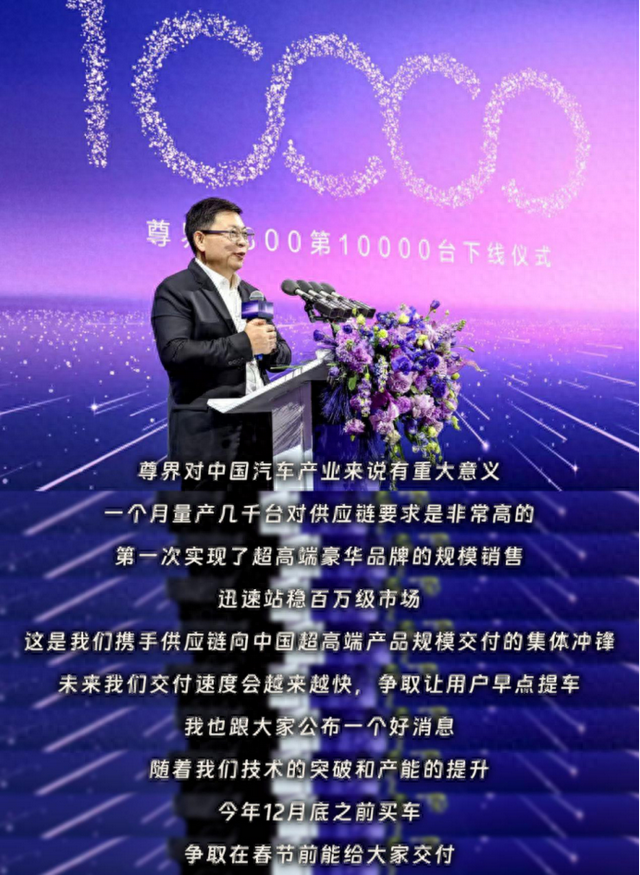
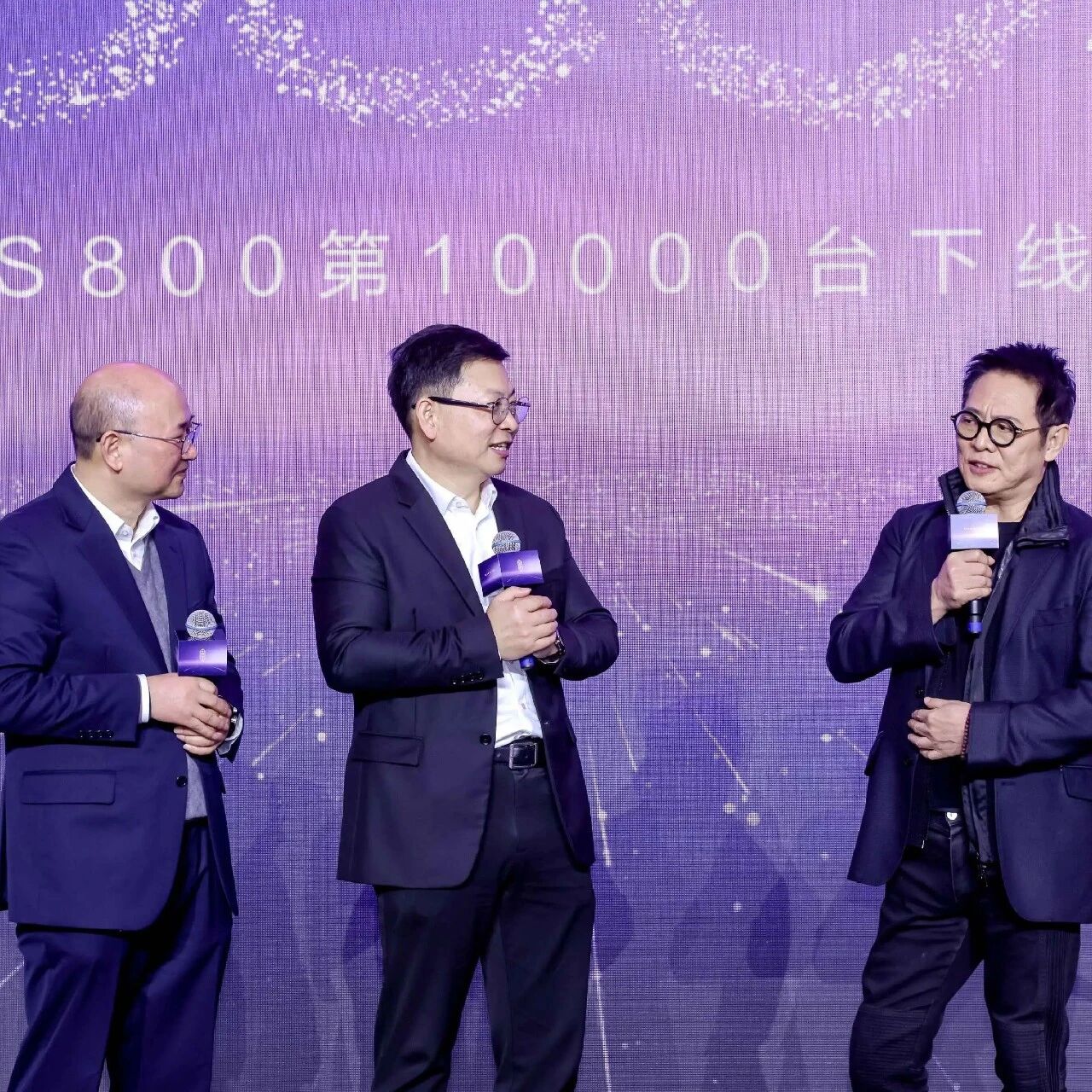
Core Insights - The launch of the ZunJie S800 marks a significant milestone in the Chinese automotive industry, achieving over 10,000 deliveries and setting a new record for luxury car delivery speed [1][2][3] - The ZunJie S800 has transformed consumer perceptions of ultra-luxury vehicles in China, creating a new market dynamic referred to as the "ZunJie Effect" [2][8] - The collaboration between Huawei and Anhui Jianghuai Automobile Group has matured, enhancing their strategic partnership and contributing to the success of the ZunJie S800 [11][14] Company Performance - The ZunJie S800 was launched at a price range of 708,000 to 1,018,000 yuan, and within 175 days, it achieved 18,000 pre-orders, with over 2,145 units delivered in November alone [3][10] - The vehicle's monthly delivery target is set to accelerate to 4,000 units, with expectations for timely deliveries before the Spring Festival for orders placed by December 31 [3] - The ZunJie S800 has outperformed competitors in the ultra-luxury segment, with sales of 4,872 units from August to October 2025, surpassing the combined sales of Porsche Panamera and BMW 7 Series [10] Market Dynamics - The ZunJie S800's rapid success indicates a shift in consumer priorities from brand prestige to product quality, design, and overall experience in the ultra-luxury car market [8][10] - The vehicle's appeal is bolstered by its innovative features, including the first autonomous intelligent digital chassis and advanced safety technologies [12][14] - The ZunJie S800 has gained traction among high-net-worth individuals, including celebrities and business leaders, enhancing its brand recognition and market presence [6][14] Future Outlook - The partnership between Huawei and Jianghuai is expected to drive further advancements in the ZunJie brand, with projections for Jianghuai's revenue to reach 51.56 billion yuan by 2025 [14] - The ZunJie S800 is positioned to redefine the luxury car market in China, emphasizing technological equality and a focus on consumer experience [14]
最快“百万级”交付破万 尊界跑出现象级“加速度”
财联社· 2025-12-26 10:16
Core Viewpoint - The launch and rapid success of the ZunJie S800 marks a significant milestone in the Chinese automotive industry, reshaping consumer perceptions of ultra-luxury vehicles and creating a new market dynamic known as the "ZunJie Effect" [2][7][12]. Group 1: ZunJie S800 Performance and Milestones - The ZunJie S800 has achieved over 10,000 deliveries, setting a new record for luxury vehicle delivery speed in China [1]. - Since its launch, the ZunJie S800 has seen significant sales growth, with 18,000 units ordered within 175 days and a monthly delivery target of 4,000 units [3][15]. - The vehicle's pricing ranges from 708,000 to 1,018,000 yuan, positioning it as a competitive option in the ultra-luxury segment [3]. Group 2: Consumer Reception and Market Impact - The ZunJie S800 has garnered positive consumer feedback, with many buyers appreciating its design, technology, and overall experience compared to traditional luxury brands [4][6]. - The vehicle has attracted high-profile endorsements from celebrities and business leaders, further enhancing its market presence [6]. - The ZunJie S800's sales performance has outpaced competitors, with 4,872 units sold between August and October 2025, surpassing the combined sales of Porsche Panamera and BMW 7 Series [11]. Group 3: Strategic Partnerships and Technological Advancements - The collaboration between Huawei and Jianghuai Automobile has matured, leading to a strategic partnership that enhances the ZunJie S800's market positioning [12]. - The vehicle features advanced technology, including the Tuling Longxing platform and a comprehensive safety system, showcasing significant innovation in the automotive sector [12][13]. - Recent OTA upgrades have added new functionalities, improving user experience and safety features [13]. Group 4: Future Outlook and Financial Projections - Jianghuai Automobile is committed to the ZunJie project, with plans to leverage its brand momentum for future sales growth [15]. - Financial forecasts predict revenue growth for Jianghuai Automobile, with expected revenues of 515.6 billion, 669.5 billion, and 879.5 billion yuan from 2025 to 2027 [15]. - The success of the ZunJie S800 is seen as a transformative event in the luxury car market, challenging traditional notions of luxury and brand prestige [15].
星闪的2025:终端破亿,国标发布,一场无线短距通信的产业级跃迁
36氪· 2025-12-26 09:55
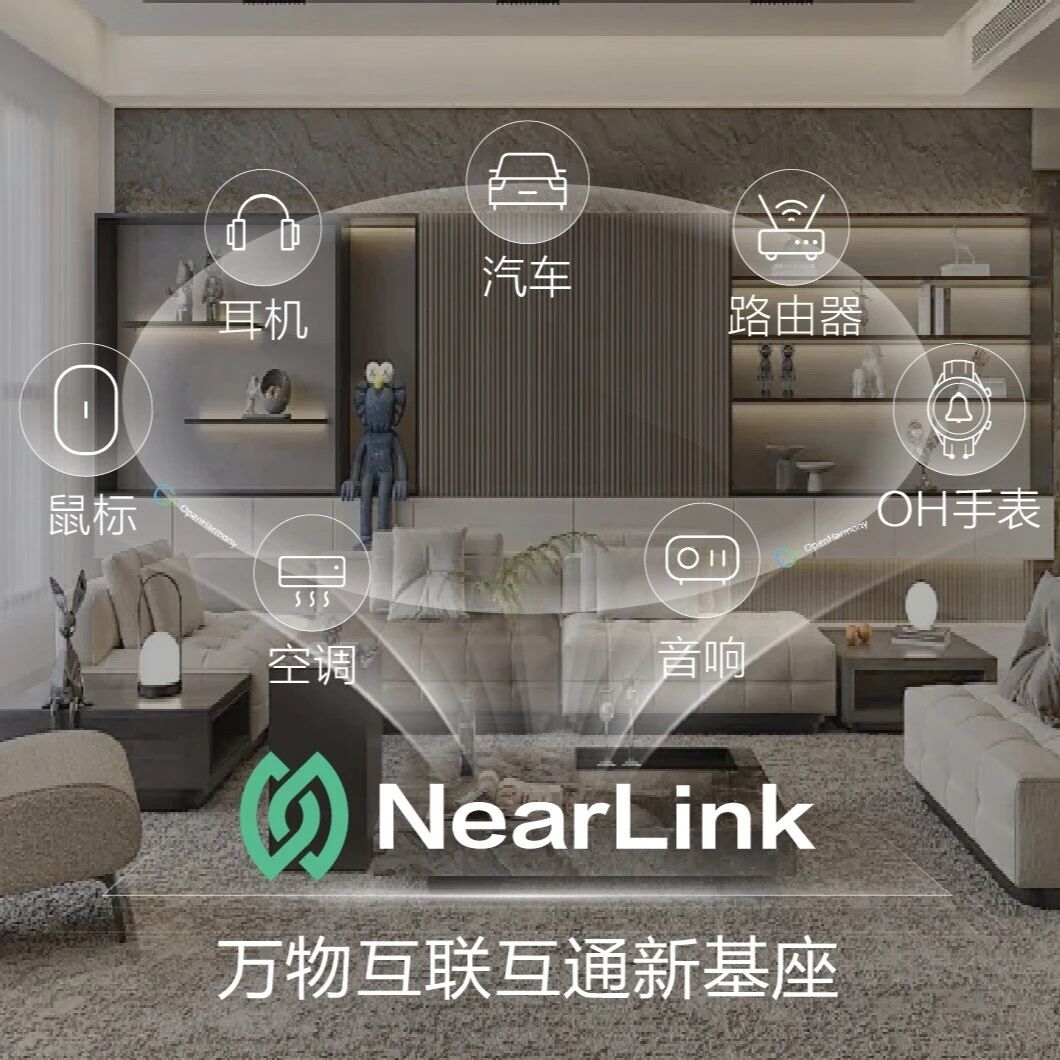
Core Viewpoint - The article emphasizes that transformative technologies, like the new wireless short-range communication technology "Star Flash," often become essential infrastructure that is taken for granted rather than being constantly highlighted as groundbreaking innovations [1][3]. Group 1: Technology Evolution - The development of Star Flash follows a clear industrial evolution path, marked by the establishment of the International Star Flash Alliance in September 2020, its commercial launch in 2023, and the release of the Star Flash 2.0 standard in March 2025 [5]. - Star Flash's approach is characterized by a "slow start, heavy standards, and later explosion" strategy, allowing it to bridge gaps between devices and systems in the AI-driven digital transformation wave [5][12]. Group 2: Standardization and Industry Consensus - The competition in wireless short-range communication is fundamentally a competition at the standards level, focusing on how devices can collaborate under a unified set of rules [7][9]. - The release of the Star Flash 2.0 standard signifies a critical industrial leap, integrating key capabilities into a standardized framework that can be reused across various scenarios [16][17]. Group 3: Ecosystem Development - As of 2025, Star Flash has crossed the critical threshold of 100 million devices, indicating its transition from a validated technology solution to a widely adopted connectivity foundation across multiple sectors [21][22]. - The Star Flash ecosystem has attracted over 1,200 partners since the establishment of the International Star Flash Alliance, forming a complete collaborative network that includes chips, modules, terminals, and applications [19]. Group 4: Application Scenarios - In smart home scenarios, Star Flash enhances the integration of appliances, enabling precise control and interaction, as demonstrated by products like the Haier air conditioner that utilizes Star Flash's capabilities for improved user experience [23]. - In the consumer electronics sector, Star Flash 2.0 provides a stable wireless audio experience, allowing high bitrate and low-latency audio transmission, as seen in products like Huawei's FreeBuds Pro 5 [25]. - In the automotive industry, Star Flash is reshaping core interaction scenarios, with over 50 vehicle models adopting the Star Flash digital key technology, showcasing its broad applicability [29]. Group 5: Future Prospects - The combination of Star Flash and open-source HarmonyOS is seen as a critical step towards building a new generation of interconnected systems, enhancing both connectivity and system-level collaboration [35][37]. - The integration of Star Flash with HarmonyOS allows for seamless interaction across diverse devices, paving the way for a more interconnected and intelligent ecosystem [38].