泸州老窖

Search documents
一杯浓香 开启生活美学进化论
Xin Hua Cai Jing· 2026-01-06 07:51
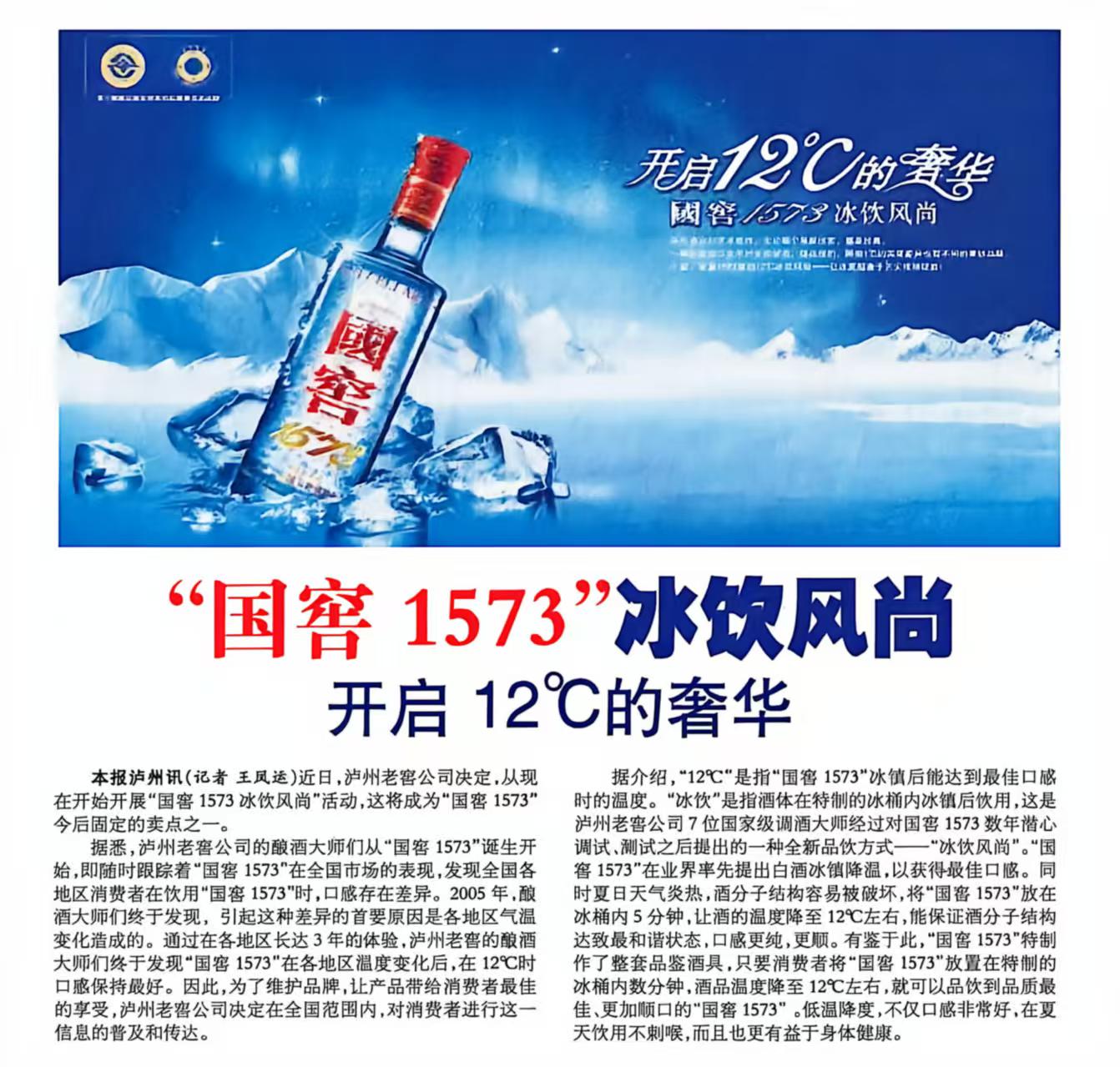
Core Viewpoint - The article highlights the innovative approach of Luzhou Laojiao in promoting its product, Guojiao 1573, through the introduction of the "ice drinking" trend, which caters to modern consumer preferences and enhances the brand's appeal among younger demographics [2][5][6]. Group 1: Historical Context and Innovation - The series "Time Knows Taste Season 4" focuses on significant events in the history of Luzhou Laojiao, utilizing authentic historical materials from the National Library of China and the Luzhou Laojiao Museum [1]. - The introduction of the "ice drinking" concept in 2009 was a result of years of research by seven national-level bartenders, showcasing Luzhou Laojiao's forward-thinking vision and technical breakthroughs [2][5]. - The company has a long-standing technical foundation, having overcome challenges in low-alcohol liquor technology since the 1980s, which supports the feasibility of the "ice drinking" method [6]. Group 2: Consumer Engagement and Market Strategy - Luzhou Laojiao's "ice drinking" initiative aligns with the evolving expectations of younger consumers, who seek a more relaxed and engaging drinking experience, thus broadening the emotional connection with the product [7]. - The brand's innovative marketing strategy includes the "Ice·JOYS" series launched in 2018, which integrates music and art to elevate the drinking experience into a cultural lifestyle [7][8]. - The introduction of new product lines, such as the "black cap" light bottle and various fruit-flavored liquors, reflects the company's commitment to meeting the diverse preferences of modern consumers [8]. Group 3: Cultural and Experiential Marketing - Luzhou Laojiao has initiated cultural events like the "International Poetry and Wine Culture Conference" to position its products as vehicles for artistic and cross-cultural dialogue [9]. - The brand's participation in events like the 2025 Anaya Drama Festival showcases its strategy of embedding its products within contemporary cultural experiences, enhancing brand visibility and consumer engagement [9]. - The company's focus on emotional connections through product innovation and cultural experiences allows it to resonate with consumers, transforming traditional drinking into a modern lifestyle expression [9].


2026食饮年度策略:消费者大时代
GOLDEN SUN SECURITIES· 2026-01-06 06:35
Group 1 - The report suggests that the liquor industry is expected to experience a dual improvement in supply and demand in 2026, following a risk release in 2025, with a focus on short-term sales recovery and mid-term structural and dividend considerations [4][78] - The consumer market is stabilizing, with structural growth changes continuing, as evidenced by a 4% decline in the food and beverage sector in 2025, which underperformed the Shanghai and Shenzhen 300 index by 20% [15][18] - The report highlights a significant differentiation in performance among consumer goods, with health products and frozen food sectors showing increases of 18% and 15% respectively, while liquor and beer sectors faced declines of 7% and 9% [15][18] Group 2 - The liquor sector is characterized by a threefold bottoming out, with supply clearing and value becoming more apparent, as major brands like Moutai and Wuliangye stabilize prices and restore confidence in the market [52][78] - The beer and beverage sectors are expected to benefit from a recovery in dining, with a focus on leading brands that can outperform expectations in terms of volume and price [4][52] - The food sector is positioned for recovery and growth, with a focus on strong alpha stocks, particularly in the restaurant supply chain and snack categories, as demand begins to rebound [4][52] Group 3 - The report indicates that the high-end consumer segment is showing signs of recovery, with luxury retail sales improving and experience-based consumption leading the way [30][33] - The report notes that the overall retail landscape is evolving towards discount retail, quality retail, and instant retail, reflecting a shift in consumer preferences [40][46] - The report emphasizes the importance of product innovation and channel development in the liquor industry, with a focus on lower alcohol content and appealing to younger consumers [72]




酒价内参1月6日价格发布,洋河梦之蓝M6+上涨6元
Xin Lang Cai Jing· 2026-01-06 01:57
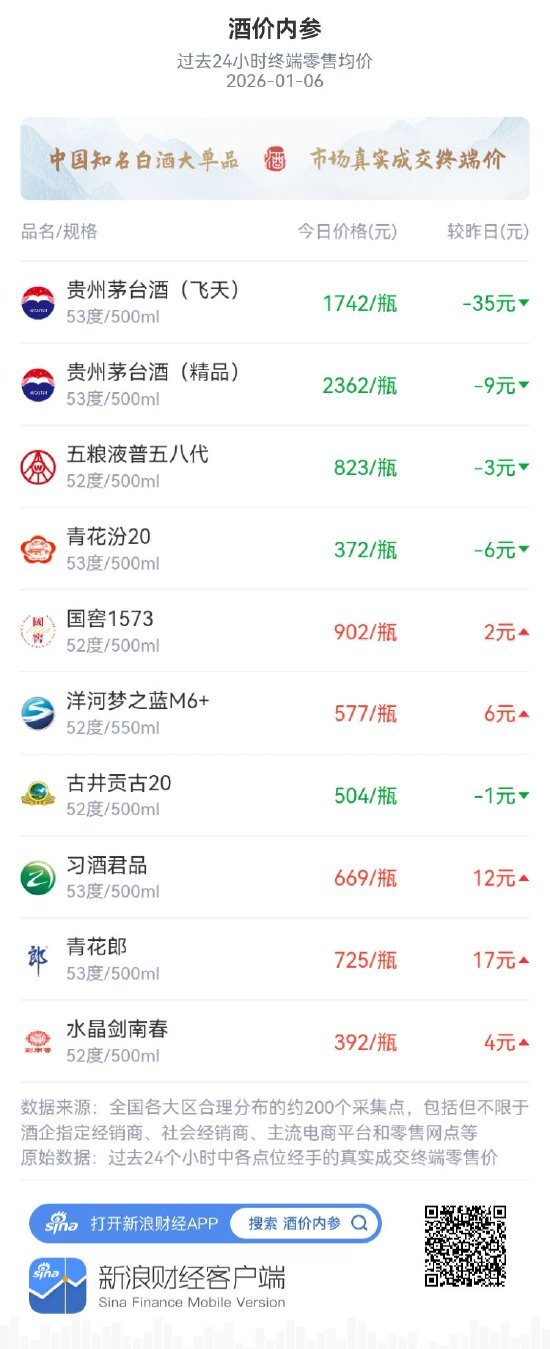
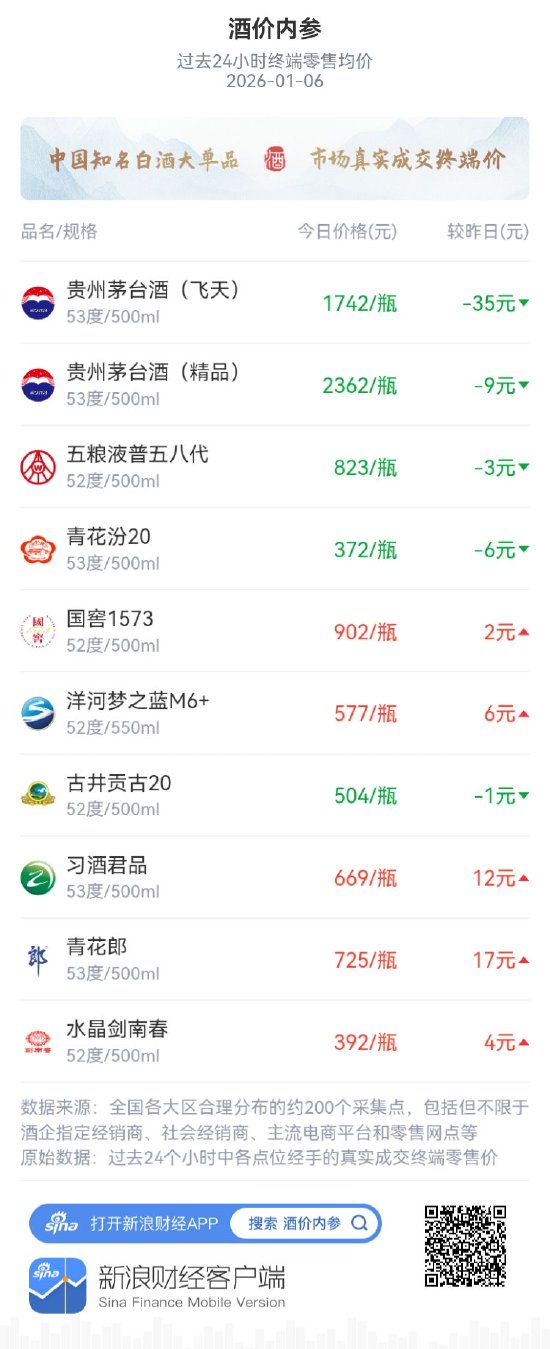
Core Insights - The core viewpoint of the article highlights a significant decline in the retail prices of major Chinese liquor brands, particularly in the white liquor market, with the average price of the top ten products reaching a new low since the "Double Twelve" shopping festival [1] Price Trends - The average retail price of the top ten Chinese liquor products on January 6 was 9068 yuan, down 13 yuan from the previous day, indicating a downward trend in pricing [1] - The market showed a notable divergence with five products increasing in price and five decreasing, reflecting pressure on core product prices [1] Price Increases - Key products that saw price increases include: - Qinghua Lang, which rose by 17 yuan per bottle - Xijiu Junpin, which increased by 12 yuan per bottle - Yanghe Dream Blue M6+, which went up by 6 yuan per bottle - Crystal Jian Nan Chun, which increased by 4 yuan per bottle - Guojiao 1573, which saw a slight increase of 2 yuan per bottle [1] Price Decreases - Products that experienced price declines include: - Feitian Moutai, which dropped significantly by 35 yuan per bottle due to the impact of the introduction of a lower-priced Moutai variant - Boutique Moutai, which fell by 9 yuan per bottle - Qinghua Fen 20, which decreased by 6 yuan per bottle - Wuliangye Pu 58, which saw a decline of 3 yuan per bottle - Gujing Gong Gu 20, which had a minor drop of 1 yuan per bottle [1][4][5] Data Collection Methodology - The data for the "Liquor Price Reference" is sourced from approximately 200 collection points across various regions, including designated distributors, social distributors, mainstream e-commerce platforms, and retail outlets, aiming to provide an objective and traceable overview of the market prices [2]



酒价内参1月6日价格发布,五粮液普五八代下跌3元
Xin Lang Cai Jing· 2026-01-06 01:45
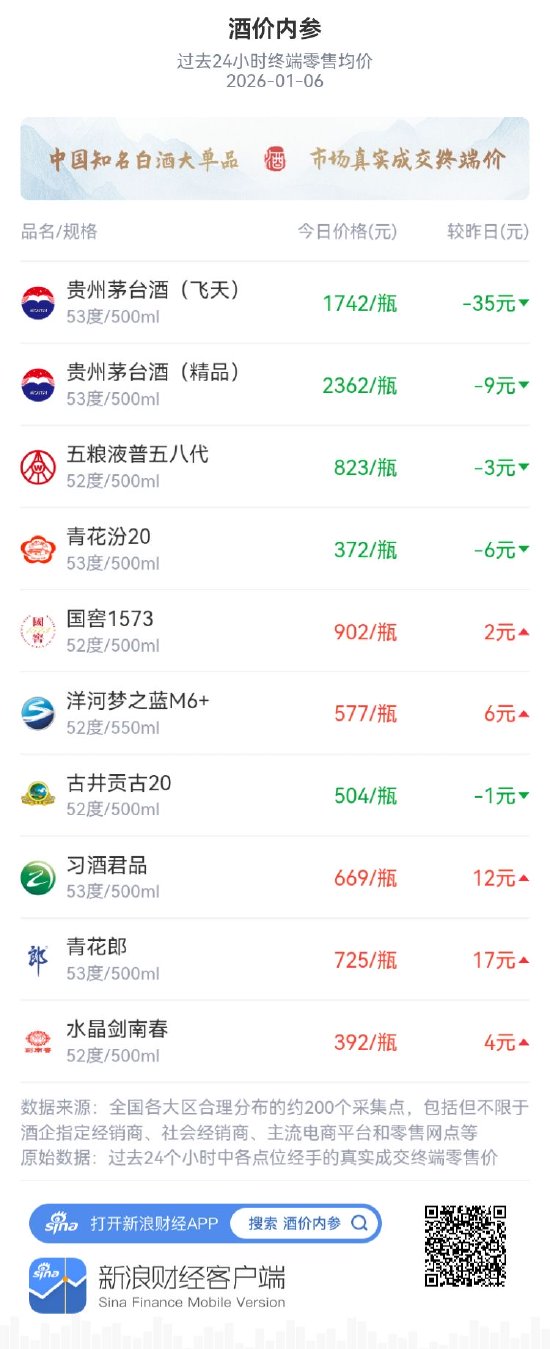
新浪财经"酒价内参"过去24小时中收集的数据显示,中国白酒市场十大单品的终端零售均价在1月6日未 能延续反弹,整体价格再度显著下行,创下双十二以来新低。如果十大单品各取一瓶整体打包售卖,今 日总售价为9068元,较昨日回落13元,价格中枢再度下探。 今日市场呈显著分化格局,五涨五跌,核心产品的价格压力突出。上涨产品方面,青花郎延续强势,环 比上涨17元/瓶,实现大幅二连阳领涨市场。习酒君品价格上涨12元/瓶,反弹力度较大。洋河梦之蓝 M6+价格上涨6元/瓶。水晶剑南春价格上涨4元/瓶。国窖1573价格上涨2元/瓶。下跌产品方面,受i茅台 推出平价茅台影响的逐渐传递,飞天茅台的价格回调幅度惊人,大幅下跌35元/瓶,对市场整体价格形 成明显影响。精品茅台价格下跌9元/瓶。青花汾20价格下跌6元/瓶。五粮液普五八代价格下跌3元/瓶。 古井贡古20价格小跌1元/瓶。 "酒价内参"的每日数据源自全国各大区均有合理分布的约200个采集点,包括但不限于酒企的指定经销 商、社会经销商、主流电商平台和零售网点等,原始取样数据为过去24个小时中各点位经手的真实成交 终端零售价格,力求为社会各界提供一份关于知名白酒市场价格的客观、 ...
酒价内参1月6日价格发布,青花汾20下跌6元
Xin Lang Cai Jing· 2026-01-06 01:42
Core Viewpoint - The Chinese liquor market is experiencing a significant price decline, with the average retail price of the top ten liquor products hitting a new low since the Double Twelve shopping festival, indicating a notable market correction [1]. Price Trends - The overall price of the top ten liquor products decreased to 9068 yuan, down 13 yuan from the previous day, reflecting a downward trend in the price center [1]. - The market shows a clear divergence, with five products increasing in price and five decreasing [1]. Price Increases - Qinghua Lang saw a strong performance with a price increase of 17 yuan per bottle, marking a significant two-day rise [1]. - Xijiu Junpin's price rose by 12 yuan per bottle, indicating a robust rebound [1]. - Yanghe Dream Blue M6+ increased by 6 yuan per bottle, while Shuijing Jian Nan Chun rose by 4 yuan per bottle [1]. - Guojiao 1573 experienced a slight increase of 2 yuan per bottle [1]. Price Decreases - The price of Feitian Moutai dropped significantly by 35 yuan per bottle, influenced by the introduction of a more affordable Moutai product [1]. - The price of Boutique Moutai fell by 9 yuan per bottle, and Qinghua Fen 20 decreased by 6 yuan per bottle [1]. - Wuliangye Pu 58th generation saw a decline of 3 yuan per bottle, while Gujing Gong Gu 20 dropped by 1 yuan per bottle [1]. Data Collection Methodology - The data is sourced from approximately 200 collection points across various regions, including designated distributors, social distributors, mainstream e-commerce platforms, and retail outlets, ensuring a comprehensive and objective representation of the liquor market prices [2].
酒价内参1月6日价格发布 市场深度分化整体价格回调
Xin Lang Cai Jing· 2026-01-06 01:22
Core Insights - The core viewpoint of the article highlights a significant decline in the retail prices of major Chinese liquor brands, with the overall price reaching a new low since the "Double Twelve" shopping festival [1][6]. Price Trends - The average retail price of the top ten liquor products in China on January 6 fell to 9068 yuan, a decrease of 13 yuan from the previous day, indicating a downward trend in price levels [1][6]. - The market exhibited a notable divergence, with five products increasing in price and five decreasing, reflecting significant pricing pressure on core products [7]. Price Changes of Key Products - The following products experienced price increases: - Qinghua Lang rose by 17 yuan per bottle - Xijiu Junpin increased by 12 yuan per bottle - Yanghe Dream Blue M6+ went up by 6 yuan per bottle - Shuijing Jianan Chun increased by 4 yuan per bottle - Guojiao 1573 saw a rise of 2 yuan per bottle [7]. - Conversely, the following products saw price declines: - Feitian Moutai dropped by 35 yuan per bottle, significantly impacting the overall market price - Boutique Moutai decreased by 9 yuan per bottle - Qinghua Fen 20 fell by 6 yuan per bottle - Wuliangye Pu 58th generation decreased by 3 yuan per bottle - Gujing Gong Gu 20 saw a minor drop of 1 yuan per bottle [7][9]. Data Collection Methodology - The daily data for the liquor price reference is sourced from approximately 200 collection points across various regions, including designated distributors, social distributors, mainstream e-commerce platforms, and retail outlets, aiming to provide objective and traceable market price data [2][7]. iMoutai App Launch - Starting January 6, iMoutai allows users to purchase two types of Guizhou Moutai products via its app, with options for selecting production dates, either past or future, enhancing consumer purchasing flexibility [2][7].
酒价内参1月6日价格发布,古井贡古20小跌1元
Xin Lang Cai Jing· 2026-01-06 01:22
Core Insights - The core viewpoint of the article highlights a significant decline in the retail prices of major Chinese liquor brands, with the average price of the top ten products reaching a new low since December 12, indicating ongoing market pressure [1][6]. Price Trends - The overall retail price of the top ten liquor products on January 6 is reported at 9068 yuan, a decrease of 13 yuan from the previous day, marking a downward trend in price levels [1][6]. - The market shows a notable divergence with five products increasing in price and five decreasing, reflecting varying pressures on core products [7]. Price Increases - Key products that saw price increases include: - Qinghua Lang, which rose by 17 yuan per bottle, continuing its strong performance [7]. - Xijiu Junpin, which increased by 12 yuan per bottle, showing significant rebound strength [7]. - Yanghe Dream Blue M6+ with a rise of 6 yuan per bottle [7]. - Shuijing Jian Nan Chun up by 4 yuan per bottle [7]. - Guojiao 1573, which increased by 2 yuan per bottle [7]. Price Decreases - Major products experiencing price declines include: - Feitian Moutai, which saw a dramatic drop of 35 yuan per bottle, significantly impacting the overall market price [7]. - Boutique Moutai down by 9 yuan per bottle [7]. - Qinghua Fen 20 decreased by 6 yuan per bottle [7]. - Wuliangye Pu 58th generation down by 3 yuan per bottle [7]. - Gujing Gong Gu 20 with a slight decrease of 1 yuan per bottle [7]. Data Collection Methodology - The daily data for the liquor price reference is sourced from approximately 200 collection points across various regions, including designated distributors, social distributors, mainstream e-commerce platforms, and retail outlets, aiming to provide objective and traceable market price data [2][7]. iMoutai App Update - Starting January 6, iMoutai allows users to purchase two types of Moutai products via its app, with options for selecting production dates, enhancing consumer access to the products [2][7].
小红日报 | 孚日股份涨停,“能追牛、能扛熊”的标普A股红利ETF华宝(562060)标的指数收涨0.89%三连阳
Xin Lang Cai Jing· 2026-01-06 01:07
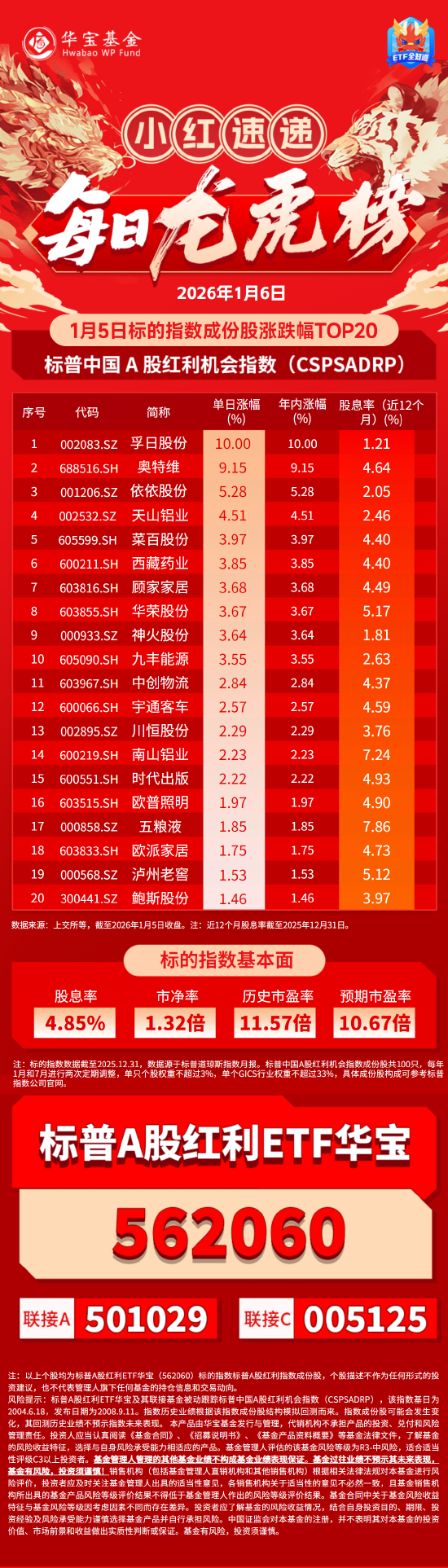
Group 1 - The article presents the top 20 stocks in the S&P China A-Share Dividend Opportunity Index (CSPSADRP) based on their daily and year-to-date performance as of January 5, 2026 [1][5]. - The stock with the highest daily increase is LuRi Co., Ltd. (002083.SZ), which rose by 10.00%, and it also has a year-to-date increase of 10.00% with a dividend yield of 1.21% [1][5]. - Other notable performers include Aotaiwei (688516.SH) with a daily increase of 9.15% and a year-to-date increase of 9.15%, and Yiyi Co., Ltd. (001206.SZ) with a daily increase of 5.28% and a year-to-date increase of 5.28% [1][5]. Group 2 - The list includes various sectors, with companies like Tianshan Aluminum (002532.SZ) and Kuka Home (603816.SH) showing daily increases of 4.51% and 3.68%, respectively [1][5]. - The dividend yields for these companies vary, with notable yields such as 7.86% for Wuliangye (000858.SZ) and 7.24% for Nanshan Aluminum (600219.SH) [1][5]. - The data is sourced from the Shanghai Stock Exchange and reflects the closing prices as of January 5, 2026, with dividend yields calculated for the past 12 months ending December 31, 2025 [1][5].


2025年第53周:酒行业周度市场观察
艾瑞咨询· 2026-01-06 00:03
Industry Environment - The liquor industry is undergoing a channel transformation, with traditional inventory strategies failing and instant retail emerging as a new opportunity. Leading companies like Moutai and Luzhou Laojiao are exploring online channels and new models such as "live streaming + instant fulfillment" [3] - The scattered liquor market is expected to grow from 80 billion yuan in 2024 to over 100 billion yuan in 2025, driven by companies like Gujing Gongjiu and Kuozi Jiao, which are targeting young consumers with experiential and diverse product offerings [5] - The competition in the liquor industry is shifting towards "value deepening," with companies focusing on product reconstruction and cultural resonance to meet the demands of younger and female consumers [6] Market Trends - The trend of low-alcohol liquor is gaining traction, with major brands like Wuliangye and Gujing Gongjiu launching new products to cater to younger consumers' preferences for lower alcohol content. The low-alcohol market is projected to reach 57 billion yuan by 2025 [7] - The white liquor market is experiencing a shift from "face consumption" to "substance consumption," with a focus on quality and experience rather than just brand prestige [9][14] - The scattered liquor market is becoming a new growth area, with brands leveraging community consumption and flexible pricing strategies to attract consumers [20][21] Sales and Marketing Strategies - Companies are increasingly focusing on enhancing bottle opening rates to address high inventory levels and declining consumption. Some brands have reported significant increases in opening rates through targeted marketing strategies [15] - The concept of "user co-creation" is emerging as a key strategy for brands to engage consumers and enhance brand loyalty, with companies like Wuliangye and Fenjiu exploring new ways to connect with their audience [16][17] - The wedding market is seeing a resurgence, with a 30% increase in wedding events in certain regions, although overall liquor consumption at these events is declining due to economic pressures [19] Brand Dynamics - Moutai is facing challenges with declining prices and inventory buildup, prompting the company to optimize its product structure and marketing strategies to attract younger consumers [12][14] - The introduction of new products and collaborations, such as the partnership between Water Well and actor Tony Leung, is aimed at enhancing brand image and connecting with consumers on an emotional level [26][34] - The rise of health-oriented products, particularly in the health liquor segment, is attracting younger female consumers, with brands like Jinjiu successfully tapping into this demographic [36] Future Outlook - The liquor industry is expected to continue evolving, with a focus on digital transformation and the integration of AI technologies to enhance operational efficiency and consumer engagement [37] - The scattered liquor market is projected to exceed 100 billion yuan, indicating a significant shift in consumer preferences towards more affordable and accessible options [20][21] - The industry is likely to see a continued emphasis on quality and value, as brands adapt to changing consumer demands and market conditions [22][29]



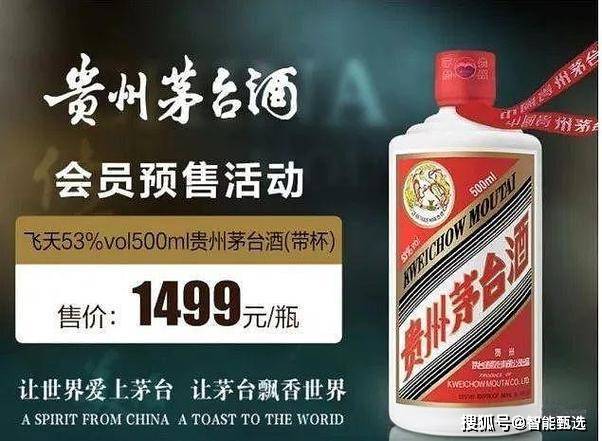
1499元飞天茅台“秒空”背后:消费者质疑与行业转型的双重变奏
Sou Hu Cai Jing· 2026-01-05 22:06
Core Viewpoint - The article highlights the ongoing transformation and challenges faced by the high-end liquor industry in China, particularly focusing on Kweichow Moutai's pricing strategies and market dynamics during a period of adjustment and reform [1][8]. Consumer Experience - The launch of Moutai's "i Moutai" app on January 1, 2026, resulted in a "秒空" (instant sell-out) phenomenon, with consumers facing difficulties in purchasing the product despite high demand, leading to suspicions of insufficient supply and "hunger marketing" tactics [2][3]. - A stark contrast was observed between online sales and offline promotions, with a local distributor selling out 1,000 cases in two hours, raising questions about the allocation of stock between online and offline channels [2][3]. Official Explanation - Moutai stated that daily supply is determined by balancing three goals: preventing speculation, matching supply with demand, and maintaining market stability. However, estimates suggest that actual supply may be less than 30% of reported figures [3]. - The company's strategy of "ambiguous supply" has been interpreted by some consumers as a form of "hunger marketing," as the limited availability may not meet actual consumer demand [3]. Grey Market Dynamics - Despite technological measures to curb speculation, such as real-name verification and dynamic codes, the black market has adapted quickly, with reports of resellers marking up prices by 200 yuan per bottle [3]. - The presence of a grey market, where resellers exploit loopholes, poses significant challenges to Moutai's supply-demand balance and pricing control [3]. Price Discrepancy - There has been a significant price gap between Moutai's official price of 1,499 yuan and the market price, which peaked above 3,000 yuan from 2020 to 2023, before declining to 2,600-2,800 yuan in 2024 [4][5]. - In January 2026, the wholesale price of Moutai fell to 1,490 yuan, marking the first time it dropped below the official price, which has contributed to a burgeoning grey market [5]. Channel Reform - Moutai has initiated aggressive reforms since 2025, shifting 80% of its distribution to direct sales channels and launching the "i Moutai" digital marketing platform to reduce reliance on traditional distributors [6]. - The upgrade of the "i Moutai" platform aims to streamline product offerings and combat the speculative practices of distributors, pushing the industry towards a service-oriented model [6]. Youth Strategy - The "i Moutai" app has attracted over 80 million registered users, with 41% aged between 25 and 35, indicating a shift towards a younger consumer base [7]. - Moutai's strategies, such as limited-time offers and point redemption, aim to engage younger consumers and reshape the brand's image away from being solely a "government wine" or "business wine" [7]. Industry Trends - Moutai's price adjustments reflect broader trends in the high-end liquor market, where major brands like Wuliangye and Luzhou Laojiao are also experiencing revenue and profit declines [8]. - The collective price reductions across the industry signify a return to consumer-centric pricing, moving away from the financial attributes that previously dominated the market [8]. Balancing Act - Moutai faces the challenge of balancing commercial interests with social responsibilities, as aggressive price suppression could harm distributor relationships while allowing high prices contradicts regulatory goals [9]. - The recent drop in wholesale prices has raised concerns about potential market instability, while the "秒空" phenomenon has led to accusations of artificially created scarcity [9]. Future Outlook - Analysts suggest that 2026 will be a pivotal year for the industry, with a focus on operational stability rather than aggressive channel expansion [10]. - The upcoming 2026 Spring Festival is seen as a critical observation point for Moutai's ability to meet genuine consumer demand and stabilize wholesale prices, which will indicate the success of its market transformation efforts [10].