
浦发银行

Search documents
中资离岸债风控双周报(12月15日至26日):一级市场发行趋缓 二级市场涨跌不一
Xin Hua Cai Jing· 2025-12-27 13:56
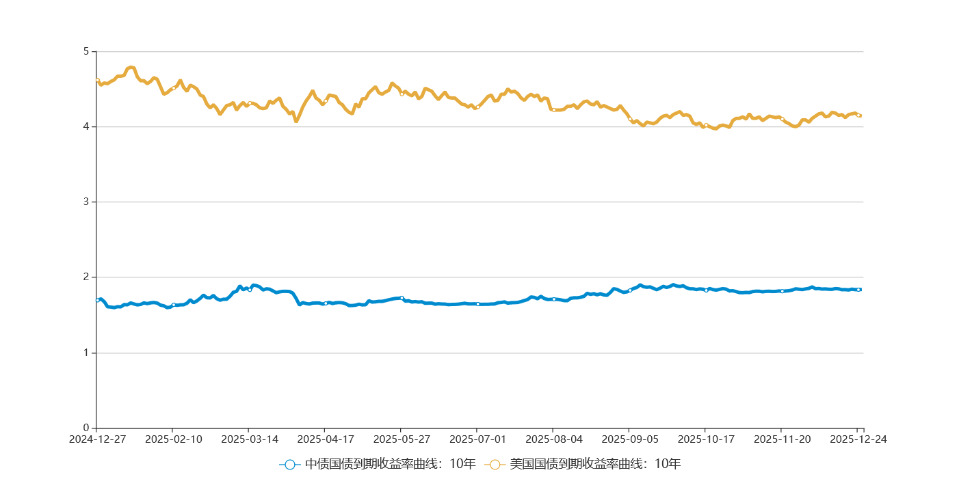
二级速览: 中资美元债二级市场涨跌不一,截至12月26日,Markit iBoxx中资美元债综合指数周度上行0.06%,报251.26;投资级美元债指数周度上涨0.08%, 报244.35;高收益美元债指数周度下跌0.14%,报 241.3。地产美元债指数周度涨0.12%,报178.37;城投美元债指数周度下跌0.01%,报153.9;金融 美元债指数周度下跌0.06%,报290.9。 基准利差: 截至12月26日,中美10年期基准国债利差缩小至229.47bp,较前一周缩小2.13bp。 评级异动: 近两周市场情况 一级市场: 据新华财经统计,近两周(12月15日至12月26日)共发行12笔中资离岸债券,其中包括6笔离岸人民币债券和6笔美元债券,发行规模分别为430.58 亿元人民币和2.96亿美元。近两周发行方式为直接发行的债券共9只,担保发行2只,"直接发行+担保"的1只。 在离岸人民币债券领域,近两周人民币债券单笔发行最大规模为10.5亿元人民币,由南安市发展投资集团有限公司发行。近两周人民币债券发行最 高票息为6.9%,由淄博高新国有资本投资有限公司发行。 在中资美元债券市场,近两周美元债券单笔最大 ...




江苏华海诚科新材料股份有限公司关于签订募集资金专户存储三方监管协议的公告
Shang Hai Zheng Quan Bao· 2025-12-26 20:28
Core Viewpoint - Jiangsu Huahai Chengke New Materials Co., Ltd. has signed a tripartite supervision agreement for the storage of raised funds, ensuring compliance with regulations and protecting investor rights [1][2][3] Fundraising Overview - The company has received approval from the China Securities Regulatory Commission to issue shares and convertible bonds to raise up to 800 million RMB, with a net amount of approximately 781.71 million RMB after deducting issuance costs [2][3] - A total of 9,618,852 shares were issued at a price of 83.17 RMB per share, with the funds received on December 10, 2025 [2][3] Fund Management and Supervision Agreement - The company has established special accounts for the raised funds with several banks, including Zheshang Bank and China Construction Bank, and signed a tripartite supervision agreement with its financial advisor, CITIC Securities [3][5] - The special accounts are designated solely for specific projects, including advanced packaging materials production lines, and cannot be used for other purposes [5][10] - The financial advisor is responsible for ongoing supervision of the fund usage, conducting at least biannual audits of the fund's storage and usage [7][12] Specific Account Details - The special accounts have been opened with various banks, and the balances were reported as zero as of early December 2025 [5][10][19] - The agreements stipulate that any withdrawals exceeding 50 million RMB or 20% of the net raised funds must be reported to the financial advisor [9][13] Compliance and Reporting - The agreements require monthly account statements to be provided to the company and the financial advisor, ensuring transparency in fund management [8][21] - Any violations of the agreements by any party will result in liability for damages, and the agreements will remain effective until all funds are disbursed and accounts are closed [10][27]

1年近400家银行机构退出市场
21世纪经济报道· 2025-12-26 14:52
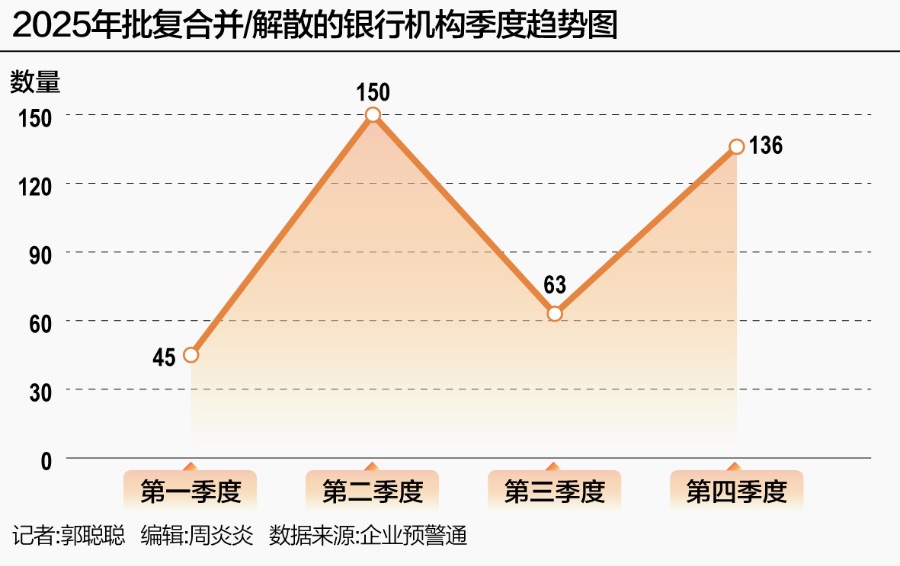
Core Viewpoint - The wave of mergers and restructuring among China's small and medium-sized banks has progressed with unexpected intensity and speed, focusing on financial risk prevention and high-quality industry development in 2025 [1][2]. Summary by Sections Mergers and Restructuring Overview - As of December 26, 2025, a total of 394 banking institutions have been approved for mergers or dissolutions, doubling the total from 2024 [1]. - Between 2024 and 2025, nearly 550 banking institutions were reduced through mergers and restructuring, surpassing the total from the previous seven years [1]. - The restructuring involved 28 provinces, with Inner Mongolia leading by integrating 139 institutions, followed by Shandong (33), Henan (26), and Sichuan (25) [1][9]. Characteristics of the Restructuring - The 2025 restructuring is characterized by two significant trends: the involvement of state-owned banks in "village-to-branch" transformations and the acceleration of provincial-level reforms in the rural credit system [2]. - This transformation is not merely a reduction in numbers but a comprehensive change across various types of institutions, moving towards a quality-driven development phase [2]. Regulatory and Policy Framework - The central financial work conference in 2024 emphasized the need to "properly handle risks in small financial institutions," placing them alongside local debts and real estate as key areas for financial risk prevention [4]. - The regulatory focus has been on risk prevention and resolution, with tailored reform plans developed for different regions [5]. Achievements and Progress - The reform efforts have led to a significant increase in the disposal of non-performing assets, with over a 40% increase compared to the previous five-year period [5]. - The number of high-risk small and medium-sized banks has significantly decreased, with some provinces achieving a "dynamic zero" for high-risk institutions [6]. Integration of Institutions - The integration process has seen state-owned banks actively participating in the restructuring of village banks, providing stronger support for their transformation [11]. - By the end of 2025, 231 village banks had merged or dissolved, with a notable acceleration in the second half of the year [12]. Future Outlook - The ongoing restructuring is expected to continue, with a focus on enhancing the quality and effectiveness of the integration process [17]. - The emphasis on "reducing quantity and improving quality" will remain a core theme in the upcoming years, as the industry transitions to a more stable and effective phase [17].


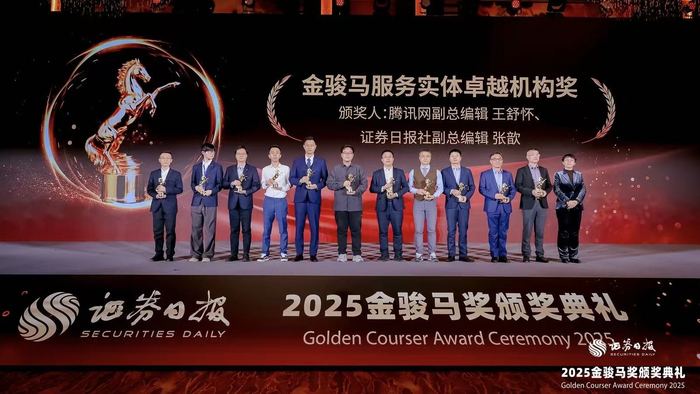
2025年度金骏马服务实体卓越机构奖
Zheng Quan Ri Bao Zhi Sheng· 2025-12-26 14:46
国泰海通 五矿证券 光大银行 华夏银行 建设银行 厦门银行 华龙证券 财达证券 国联民生 中金公司 人保资产 五矿信托 昆仑信托 中泰证券 山西证券 陕国投A 沪农商行 浦发银行 陆金所控股 宁波银行 重庆银行 ...
黄金跌价了,金条降价,25年12月24日国内黄金、足金、金条最新价
Sou Hu Cai Jing· 2025-12-26 13:15
Group 1 - The core viewpoint of the article highlights the significant increase in domestic gold prices, with the price per gram generally surpassing 1400 RMB, alongside a rise in platinum and palladium prices, prompting domestic exchanges to implement risk control measures. Analysts attribute this to factors such as easing inflation, expectations of interest rate cuts, geopolitical risks, and central bank gold purchases, with Goldman Sachs predicting gold prices could reach 4900 USD by 2026 [1] Group 2 - Recent retail gold prices in domestic stores have shown a notable decline, particularly in cities like Haikou and Shenzhen, where the price difference for the same gold purity can reach approximately 17 RMB per gram, leading to a potential price gap of over 500 RMB for a 30-gram gold ornament [1] - The lower gold prices in Shenzhen are primarily due to its proximity to a major gold distribution center, resulting in abundant supply and competition, which helps to lower retail prices. In contrast, Haikou relies on external sourcing, leading to higher logistics costs and a greater markup due to strong tourism demand [1] Group 3 - There is a significant disparity in processing fees across different regions, which can greatly affect the overall cost of purchasing gold. For instance, processing fees for hard gold in Shenzhen may be around 100 RMB per gram, while fees in Hainan could be considerably higher, impacting the investment efficiency for consumers [3] Group 4 - The current market has seen increased transparency in pricing across various channels, yet substantial regional price differences and brand premiums remain. Consumers are advised to consider cross-city purchases carefully, as travel expenses may offset any potential savings from price differences [5] - There are objective pricing differences among brands, with similar gold ornaments showing significant price variations across different brands and sales channels. Consumers are encouraged to clarify their needs, focusing on standard gold bars or low-premium channels for investment, while for jewelry purchases, they should compare gold prices, processing fees, weight, and buyback policies to avoid hidden costs [6]

银行业“瘦身”
Xin Lang Cai Jing· 2025-12-26 13:11
Core Insights - The wave of mergers and restructuring among China's small and medium-sized banks has progressed with unexpected intensity and speed, focusing on financial risk prevention and high-quality industry development in 2025 [1][19] - A total of 394 banking institutions were approved to exit the market through mergers and dissolutions by December 26, 2025, doubling the total from 2024 [1][19] - The restructuring involved 550 banking institutions over 2024 and 2025, surpassing the total from the previous seven years [1][19] Regional and Institutional Analysis - The restructuring covered 28 provinces, with Inner Mongolia leading by integrating 139 institutions, followed by Shandong (33), Henan (26), and Sichuan (25) [1][7][26] - Village banks were the primary focus of the restructuring, with 231 banks involved, followed by rural commercial banks (81) and rural credit cooperatives (71) [1][12][27] Characteristics of the Restructuring - The 2025 restructuring is characterized by two significant trends: the entry of state-owned banks into the "village to branch" transformation and the acceleration of provincial-level reforms in the rural credit system [1][11] - State-owned banks have begun acquiring city commercial banks, marking a new phase in the restructuring process [1][11] Policy and Regulatory Framework - The central government emphasized the need for a systematic approach to risk management in small and medium-sized banks, aligning with the broader economic strategy [3][21] - The "14th Five-Year Plan" has prioritized the resolution of financial risks, particularly in small financial institutions, as a core responsibility of regulatory bodies [3][22] Achievements and Future Outlook - Significant progress has been made in risk resolution, with over 40% more non-performing assets disposed of compared to the previous five-year period, and total capital and provisions exceeding 50 trillion yuan [4][23] - The restructuring is expected to continue into 2026, focusing on quality improvement and effective integration, with a clear directive from regulatory authorities [17][36]
深度|银行业“瘦身”
2 1 Shi Ji Jing Ji Bao Dao· 2025-12-26 13:02
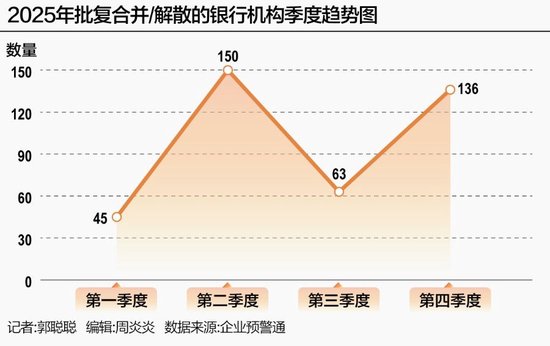
Core Insights - The wave of mergers and restructuring among China's small and medium-sized banks has progressed with unexpected intensity and speed, focusing on financial risk prevention and high-quality industry development as the core themes of the year [1][2]. Summary by Sections Mergers and Restructuring - As of December 26, 2025, a total of 394 banking institutions were approved to exit the market through mergers and dissolutions, doubling the total from 2024 [1][7]. - Between 2024 and 2025, nearly 550 banking institutions were reduced through mergers and restructuring, surpassing the total from the previous seven years [1]. - The restructuring involved 28 provinces, with Inner Mongolia leading by integrating 139 institutions, followed by Shandong (33), Henan (26), and others [1][9]. Characteristics of the Restructuring - The integration of small and medium-sized banks in 2025 is characterized by two significant trends: the involvement of state-owned banks in "village-to-branch" transformations and the acceleration of provincial-level reforms in the rural credit system [1][15]. - The core entities in the restructuring are village banks (231), followed by rural commercial banks (81) and rural credit cooperatives (71) [12]. Policy and Regulatory Framework - The central financial work conference in 2024 emphasized the need to "properly handle risks in small financial institutions," placing them alongside local debts and real estate as key areas for financial risk prevention [3]. - The regulatory focus during the "14th Five-Year Plan" period has been on risk prevention and resolution for small financial institutions, with a commitment to personalized reform strategies based on regional differences [4]. Achievements and Future Directions - Significant progress has been made in risk resolution, with over 40% more non-performing asset disposals compared to the previous five-year period, and the total capital and provisions in the industry exceeding 50 trillion yuan [5]. - The government work report for 2025 outlined a market-oriented and legal approach to risk resolution and transformation of local small financial institutions [5]. Service Upgrades and Market Dynamics - The restructuring is not merely a reduction in numbers but aims to enhance the quality and efficiency of financial services, particularly for rural and small enterprises [19][20]. - Merged institutions are expected to improve operational standards, risk resistance, and expand their service offerings through enhanced digital capabilities [19][20]. Long-term Outlook - The ongoing restructuring of small and medium-sized banks is anticipated to continue into 2026, with a focus on quality improvement and effective integration as the core theme [21].
中国银行业协会发布《中国银行业中间业务发展报告暨创新案例选编》
Xin Lang Cai Jing· 2025-12-26 12:21
Core Viewpoint - The report highlights the trends, characteristics, significant changes, and achievements in the development of intermediary business in China's banking sector, while also analyzing the challenges faced and forecasting future directions [1][5] Group 1: Service National Strategy and Improve Service Quality - Due to factors such as slowing economic growth and policy interest rate cuts, commercial banks are experiencing a continuous narrowing of net interest margins, necessitating a shift towards intermediary business with lighter capital and assets [2][6] - Commercial banks are actively serving key sectors like advanced manufacturing, strategic emerging industries, and the elderly care industry, while enhancing product innovation and accelerating business transformation [2][6] - The implementation of fee reduction policies aims to improve financial service quality and optimize customer financial experiences, thereby supporting high-quality economic development [2][6] Group 2: Strengthen Management Capabilities and Solidify Operational Foundation - Intermediary business is crucial for commercial banks to serve the real economy and promote their own high-quality development [7] - In the context of narrowing net interest margins and tightening capital constraints, banks are enhancing refined management and professional capabilities to achieve cost reduction and efficiency improvement [7] - The report emphasizes the need for product and service innovation, building a versatile talent pool, deepening technological empowerment, and strengthening compliance management to enhance value creation capabilities [7] Group 3: Learn from International Experience to Promote Transformation and Upgrading - The report reviews the overall development and structural characteristics of intermediary business in European and American banks over the past three years, comparing income structure, product service innovation, and management models [3][7] - By integrating China's national conditions and policy guidance, the report suggests adopting mature practices from international banks in terms of management philosophy, operational models, and technological innovation to facilitate the transformation and upgrading of intermediary business in China [3][7] Group 4: Select Excellent Cases to Showcase Good Practices - The report selects exemplary cases of intermediary business product innovation from various banks, including the China Development Bank, Agricultural Development Bank of China, and others, showcasing innovation models, service effectiveness, significance, and specific application scenarios [4][7] - This selection aims to demonstrate the innovative development of intermediary business in commercial banks and the effective practices in addressing key issues [4][7]

浦发银行披露关联交易:对信达资产集团等五家关联方核定综合授信额度
Xin Lang Cai Jing· 2025-12-26 10:39
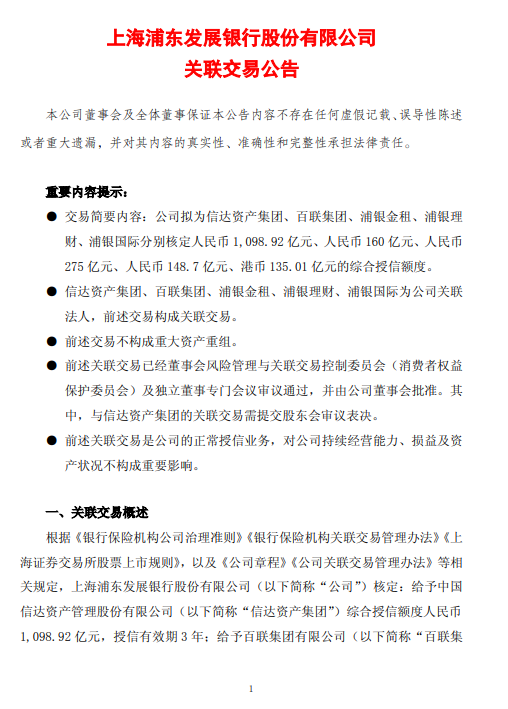
Core Viewpoint - Shanghai Pudong Development Bank has announced the approval of significant credit limits to several related parties, which constitutes major related transactions requiring board and shareholder approval due to the amounts exceeding certain thresholds of the bank's audited net assets [1][17]. Group 1: Credit Limits Approved - The bank has approved a comprehensive credit limit of RMB 1,098.92 billion to China Cinda Asset Management Co., Ltd. for a period of 3 years [1][16]. - A credit limit of RMB 160 billion has been granted to Bailian Group Co., Ltd. with a validity of 1 year [1][16]. - The bank has set a credit limit of RMB 275 billion for Pudong Financial Leasing Co., Ltd., expiring on November 17, 2026 [1][16]. - A credit limit of RMB 148.7 billion has been approved for Pudong Wealth Management Co., Ltd., with an expiration date of September 30, 2026 [1][16]. - A credit limit of HKD 135.01 billion has been allocated to Pudong International Holdings Co., Ltd., expiring on December 2, 2026 [1][16]. Group 2: Related Transactions and Approvals - The transactions are classified as major related transactions since the credit amounts exceed 1% of the bank's latest audited net assets of RMB 7,363.29 billion [1][17]. - The transaction with China Cinda Asset Management Co., Ltd. requires shareholder approval as it exceeds 5% of the bank's audited net assets [1][17]. - The board's risk management and related transaction control committee, along with independent directors, have reviewed and approved these transactions before submission to the board [2][17]. Group 3: Related Parties Overview - China Cinda Asset Management Co., Ltd. is a major shareholder and related party, involved in managing and disposing of non-performing assets [9][24]. - Bailian Group Co., Ltd. is also a major shareholder and related party, engaged in state asset management and investment development [10][25]. - Pudong Financial Leasing Co., Ltd. is a subsidiary of the bank, involved in financing leasing and investment activities [11][26]. - Pudong Wealth Management Co., Ltd. is a wholly-owned subsidiary, focusing on public and private wealth management services [12][27]. - Pudong International Holdings Co., Ltd. is another wholly-owned subsidiary, involved in various financial services [13][28].

浦发银行:对信达资产集团等五家关联方核定综合授信额度
Bei Jing Shang Bao· 2025-12-26 10:24
Core Viewpoint - Shanghai Pudong Development Bank (SPDB) has announced significant credit approvals to various entities, indicating a strategic move to enhance its lending portfolio and strengthen relationships with key partners [1][2] Group 1: Credit Approvals - SPDB has granted a comprehensive credit limit of RMB 109.89 billion to China Cinda Asset Management Co., Ltd. with a validity period of 3 years [1] - A credit limit of RMB 16 billion has been approved for Bailian Group Co., Ltd. with a validity period of 1 year [1] - SPDB has allocated RMB 27.5 billion to Pudong Development Bank Financial Leasing Co., Ltd., expiring on November 17, 2026 [1] - A credit limit of RMB 14.87 billion has been set for Pudong Development Bank Wealth Management Co., Ltd., expiring on September 30, 2026 [1] - SPDB has also approved a credit limit of HKD 13.501 billion for Pudong International Holdings Co., Ltd., with an expiration date of December 2, 2026 [1] Group 2: Regulatory Compliance - The credit transactions exceed 1% of SPDB's latest audited net assets of RMB 736.33 billion, categorizing them as significant related-party transactions [2] - The board's risk management and related-party transaction control committee, along with independent directors, reviewed the transactions before submission to the board for approval [2] - The transaction with China Cinda Asset Management, due to its size exceeding 5% of SPDB's net assets, requires shareholder approval [2]