去美元化

Search documents
时报观察丨贵金属狂飙背后的冷思考
Zheng Quan Shi Bao Wang· 2025-12-29 23:46
Group 1 - The CME Group announced an increase in margin requirements for metal futures, including gold, silver, platinum, and lithium, effective after the market close on Monday [1] - Gold futures margin increased by 10%, silver by approximately 13.6%, and platinum by about 23%, leading to a decline in international metal futures prices [1] - The increase in margin requirements is a response to significant price increases in silver and platinum futures, which saw maximum gains exceeding 40% within a month [1] Group 2 - Since 2018, there has been an ongoing process of de-dollarization, with a structural reorganization of the global currency system accelerating [2] - The rise in prices of precious metals and copper reflects not only competition for upstream raw materials but also a growing fear regarding the diminishing role of the dollar as a stable anchor [2] - The future of the global monetary system is expected to diversify, leading to the emergence of a new monetary order, although achieving this vision will not be immediate [2]
贵金属惊天反转
Xin Lang Cai Jing· 2025-12-29 23:44
Core Viewpoint - The precious metals market experienced a significant reversal, with silver futures dropping sharply after initially surpassing $80 per ounce, closing down nearly 7% near the $70 mark, while gold prices fell over 4% [3][12]. Market Analysis - The market adjustment was attributed to several factors, including technical indicator corrections, profit-taking by investors, and policy changes from exchanges [4][13]. - Following a 10% increase on the previous Friday, silver futures saw a dramatic decline of 15% from peak to trough, marking the largest intraday volatility since August 2020 [5][14]. - Analysts noted that the recent price movements deviated significantly from moving averages, indicating a need for market correction due to liquidity issues [5][14]. - The sharp price drop was also linked to profit-taking and year-end tax-related selling by investors, despite silver's year-to-date gain exceeding 140% [5][14]. Exchange Policy Impact - The Chicago Mercantile Exchange's (CME) announcement to raise margin requirements for various metal futures by over 10% was seen as a key factor in the market's downturn [7][15]. - The initial margin for silver futures expiring in March 2026 was increased to $25,000, which historically has led to significant price declines in the past [7][16]. Future Outlook - The surge in precious metals this year is supported by multiple factors, including the Federal Reserve's loose monetary policy, active gold purchases by central banks, and ongoing trends of "de-dollarization" [8][17]. - Silver is increasingly viewed as a safe-haven asset amid geopolitical tensions and rising U.S. fiscal deficits, with structural growth in demand driven by industrial applications, particularly in electric vehicles and solar panels [8][17]. - Institutions remain optimistic about the market outlook, with JPMorgan predicting gold prices could reach $5,000 by the end of 2026, and a significant increase in quarterly gold purchases by central banks and retail investors [9][18]. - A survey indicated that 57% of respondents expect silver prices to exceed $100 per ounce next year, with 27% anticipating prices between $80 and $100 per ounce by 2026 [9][18]. Supply and Demand Dynamics - The silver market is currently facing a severe supply shortage, compounded by high demand, which is expected to drive prices higher [10][19]. - Analysts emphasize that the current market has a significant amount of paper trading and positions that require adequate physical silver supply to fulfill, which is currently lacking [9][18].


贵金属惊天反转
第一财经· 2025-12-29 23:43
Core Viewpoint - The precious metals market experienced a significant reversal, with silver futures prices dropping sharply after reaching a record high, influenced by profit-taking, technical corrections, and changes in exchange policies [3][4][5]. Market Reaction - Silver futures initially surged over 10% before plummeting 15%, marking the largest daily volatility since August 2020 [5]. - Gold prices also fell over 4%, losing key support levels of $4500 and $4400 [3][6]. Factors Behind the Market Shift - Technical indicators showed a severe deviation from moving averages, prompting a need for correction [6]. - Profit-taking and year-end tax-related selling were identified as major factors suppressing silver's price after a 140% increase throughout the year [6][7]. - The Chicago Mercantile Exchange's decision to raise margin requirements for various metals, including silver, was seen as a critical trigger for the market drop [7]. Future Outlook - The precious metals market is supported by multiple factors, including the Federal Reserve's loose monetary policy and increasing demand for silver in industrial applications, particularly in electric vehicles and solar panels [9][10]. - Analysts remain optimistic about the market, with predictions of gold prices reaching $5000 by the end of 2026 and a significant increase in gold purchases by central banks and retail investors [11]. - A survey indicated that 57% of respondents expect silver prices to exceed $100 per ounce next year, with a substantial portion anticipating prices between $80 and $100 per ounce by 2026 [11][12].

时报观察:贵金属狂飙背后的冷思考
Xin Lang Cai Jing· 2025-12-29 23:38
炒股就看金麒麟分析师研报,权威,专业,及时,全面,助您挖掘潜力主题机会! 炒股就看金麒麟分析师研报,权威,专业,及时,全面,助您挖掘潜力主题机会! 12月29日,美国芝商所集团宣布全线上调包括金、银、钯金、锂等在内的金属期货交易保证金,并在当 地时间周一收盘后生效,其中,黄金期货保证金上调10%,白银期货上调约13.6%,铂金上调约23%。 此举引发国际金属期货价格出现多轮下跌,国际金价跌破每盎司4500美元整数关口,国内钯金和铂金主 力合约则以跌停价收盘。 此前,国内交易所也已多次提升贵金属保证金和涨跌停板幅度。国内外交易所的这一决定并不令人意 外。因为短短一个月内,白银、铂金等期货合约最大涨幅已超40%。这种涨幅下,大幅上调保证金将显 著提升市场投机交易成本。 历史上,交易所多次提高保证金比例,往往会推动前期巨幅上涨的品种出现大幅回调。最近的一次是 2011年银价飙升期间,芝商所曾在9天内5次上调白银保证金要求,迫使高杠杆的资金退出期货市场,白 银价格在数周内大跌近30%。 自2018年至今,随着美债美元体系的内在矛盾不断积累,世界正处于去美元化进程中,货币结构性重组 加速进行,美元债务持有人正希望出售持 ...
贵金属极端行情再度上演!获利回吐还是反转开始
Di Yi Cai Jing Zi Xun· 2025-12-29 22:52
周一,贵金属市场上演惊天反转行情。白银期货价格在隔夜交易中首次突破每盎司80美元后,收盘重挫 7%逼近70美元关口,与此同时,国际金价跌超4%,连续失守4500美元、4400美元两大关口。铂系金属 也未能幸免,伦敦金属交易所LME铂金期货跌13.8%,钯金期货跌幅一度接近17%。 市场分析认为,技术指标修复、投资者获利了结,交易所政策打压等因素是引发市场调整的主要原因。 多因素引发市场巨震 在上周五大涨10%后,白银期货周一亚市早盘连续突破 80、83美元关口,然而调整随后到来。从最高 点到最低点白银价格暴跌15%,创下了自2020年8月以来的最大日内波幅 ——当时白银曾单日暴跌 16.85%。 BK asset management策略师施罗斯伯格(Boris Schlossberg)在接受第一财经采访时表示,从技术指标 看,近期特别是上周的走势让价格进一步严重偏离均线,这与市场流动性有关,短期有修复需求,只是 缺乏催化剂。同时可以看到,可能存在部分资金在某些价位实施了程序性卖出指令,引发了踩踏。 第一财经记者汇总发现,机构和投资者依然普遍看好明年的市场行情。 摩根大通预测,到2026年底,现货黄金价格将升 ...
经济运行显韧性 人民币温和回升有支撑
Sou Hu Cai Jing· 2025-12-29 21:56
Core Viewpoint - The recent appreciation of the Renminbi (RMB) against the US dollar is primarily driven by short-term factors rather than indicating the start of a new appreciation cycle. The RMB is currently within a reasonable equilibrium range, supported by a trade surplus and stable economic fundamentals [1][3]. Group 1: RMB Exchange Rate Dynamics - The offshore RMB against the US dollar broke the 7.0 mark on December 25, reaching a high of 6.9985, the highest in 15 months, while the onshore RMB also strengthened to 7.0066, marking a new high since September 2024 [1]. - The RMB's recent strength is attributed to a weakening US dollar, which has declined nearly 10% this year due to various factors including trade tensions and uncertainties surrounding Federal Reserve interest rate policies [3]. - Analysts expect the RMB to continue a pattern of "two-way fluctuations and moderate recovery" in the coming year, influenced by the Fed's interest rate cuts and a potential narrowing of the interest rate differential between China and the US [2]. Group 2: Economic Fundamentals and Policy Support - China's trade surplus reached approximately $1.0758 trillion in the first eleven months of 2025, providing a solid foundation for the RMB's exchange rate stability [1]. - Policies aimed at stimulating consumption and expanding domestic demand are expected to support the RMB, with a focus on proactive fiscal and moderately accommodative monetary policies [4][5]. - The RMB is projected to fluctuate within the range of 6.8 to 7.2 against the US dollar in 2026, contingent on the performance of the US economy and inflation levels [5]. Group 3: Market Reactions and Corporate Strategies - A stable or appreciating RMB can enhance international capital confidence in Chinese assets, positively impacting financial market sentiment [6]. - However, the appreciation may increase operational pressures on export-oriented companies by reducing their price competitiveness, prompting a need for innovation and efficiency improvements [6]. - Companies are advised to adopt risk management strategies to hedge against exchange rate fluctuations, focusing on core business operations and securing trade profits [6].

贵金属狂飙背后的冷思考
Xin Lang Cai Jing· 2025-12-29 19:19
Group 1 - The CME Group announced an increase in margin requirements for metal futures, including gold, silver, palladium, and lithium, effective after the market close on Monday [1] - Gold futures margin increased by 10%, silver by approximately 13.6%, and platinum by about 23%, leading to a decline in international metal futures prices [1] - Domestic trading venues have also raised margin requirements and price fluctuation limits for precious metals, reflecting a response to significant price increases in the past month, with silver and platinum futures rising over 40% [1] Group 2 - Since 2018, the world has been undergoing a de-dollarization process, with structural reorganization of currency systems accelerating, as debt holders seek to exchange dollar-denominated debts for other wealth storage tools [2] - The surge in prices of precious metals and copper reflects not only competition for upstream raw materials but also a growing fear regarding the diminishing anchoring of the dollar [2] - The future of the global monetary system is expected to diversify, with a new monetary order emerging, although achieving this vision will not be immediate [2]

沪指九连阳 热门题材股持续升温
Shang Hai Zheng Quan Bao· 2025-12-29 19:06
Group 1 - The A-share market showed mixed performance on December 29, with the banking and oil sectors leading the gains, resulting in the Shanghai Composite Index closing at 3965.28 points, up 0.04%, marking a nine-day winning streak, the longest of the year [1] - The Shenzhen Component Index closed at 13537.10 points, down 0.49%, while the ChiNext Index fell 0.66% to 3222.61 points [1] - The total trading volume in the Shanghai and Shenzhen markets was 21.393 billion yuan, a decrease of 20.9 billion yuan compared to December 26 [1] Group 2 - The commercial aerospace sector experienced a surge, with leading stocks like Shenjian Co. hitting the limit-up for eight consecutive days, following the release of new listing rules by the Shanghai Stock Exchange aimed at promoting innovation in commercial aerospace [1] - The humanoid robot sector also saw significant gains, with stocks such as Buke Co. and Tianqi Co. reaching their daily limit [1] Group 3 - The precious metals sector experienced volatility, with the silver futures price reaching a historical high of 19998 yuan per kilogram before dropping to a low of 17500 yuan per kilogram, resulting in a daily fluctuation of 13.79% [4] - The Shanghai Futures Exchange implemented new risk control measures for silver futures, adjusting the price limit and margin requirements due to increased market volatility [4] Group 4 - Market sentiment remains high, with a potential for sector rotation as the commercial aerospace and precious metals sectors show contrasting trends [5] - Research indicates that the A-share market is experiencing frequent style and sector rotations, with a focus on technology growth driven by AI and commercial aerospace themes, suggesting a favorable outlook for the upcoming spring market [5]
如何布局跨年行情
2025-12-29 15:51
Summary of Key Points from Conference Call Records Industry and Company Overview - The conference call discusses the impact of AI on global markets, particularly in the US, China, Hong Kong, and other Asian markets, highlighting the significant role of the AI industry chain, including sectors like chips, storage, electricity, and non-ferrous metals in driving market growth [1][5]. Core Insights and Arguments Economic Performance - The US economy showed strong growth in Q3 2025, with a quarter-on-quarter annualized GDP growth of 4.3% and a nominal growth rate exceeding 8%, with AI contributing nearly 1% to GDP [1][6]. - Consumer resilience remains strong, but a weak job market poses risks, with unemployment potentially rising to 4.8%, raising recession concerns [1][6]. Market Dynamics - The AI sector has led to a revaluation of stocks, particularly in Hong Kong, although the Hang Seng Tech Index has corrected by 15%-20% from its peak, indicating short-term volatility risks [1][5]. - The US credit cycle is expected to recover by 2026, with potential overheating risks [1][6]. Policy Impacts - Trump's policies, particularly regarding tariffs, have influenced market sentiment and economic growth, with the effective tax rate being lower than initially feared, thus having a minimal impact on inflation [1][8]. - The upcoming midterm elections may affect policy execution, particularly if the Republican Party loses control of the House [1][8]. Federal Reserve Actions - The Federal Reserve's hesitant approach to interest rate cuts is seen as beneficial for sectors like real estate and manufacturing, with moderate cuts expected to stimulate demand without significantly impacting inflation [1][9]. - The new Fed chair's dovish stance may reflect in long-term rates, potentially boosting economic demand [1][9]. AI Bubble Concerns - While there are concerns about an AI bubble, current demand and investment levels do not yet reflect the extremes seen in past bubbles, suggesting that while expectations are high, they are not unsustainable at this point [1][7]. Additional Important Insights Currency and Trade - The Chinese market's growth has been primarily driven by valuation, with the tech hardware sector contributing significantly to profits. Future growth will depend on earnings rather than just valuation [1][13]. - The Chinese government is implementing supply-side policies to boost consumption, including removing restrictive measures and increasing the supply of quality goods and services [1][4][27]. Market Trends and Investment Strategies - The investment strategy for the upcoming year suggests a shift from valuation-driven to earnings-driven growth, with a focus on large-cap growth stocks and potential opportunities in cyclical sectors related to real estate [1][22][24]. - The liquidity situation in the US has improved due to the Fed's actions, which is expected to support the stock market [1][10]. Consumer Behavior and Economic Outlook - Consumer spending is expected to be affected by high base effects and declining purchasing power, with the real estate sector's downturn exacerbating consumption weakness [2][13][14]. - The outlook for the real estate market shows significant differentiation, with second-hand home prices declining while the high-end new home market remains active [1][14]. Global Investment Landscape - The global investment landscape in 2025 is expected to be bullish for most asset classes, with emerging markets like South Korea and China's ChiNext showing strong performance [3][5]. This summary encapsulates the key points discussed in the conference call, providing insights into economic performance, market dynamics, policy impacts, and future investment strategies across various sectors.
年终盘点之汇市:美元“单极”退潮,多极货币秩序浮现
智通财经网· 2025-12-29 15:17
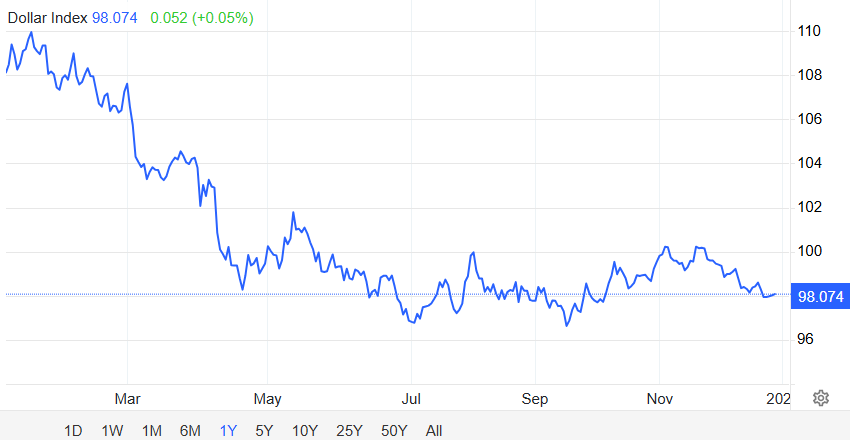
Group 1 - The US dollar index has been on a downward trend since the beginning of the year, reflecting changes in global investor attitudes towards dollar assets and the impact of US monetary policy [1][5][7] - The International Monetary Fund (IMF) reports that the dollar's share in global reserves has declined, dropping from 57.79% to 56.32% by the second quarter of 2025, marking a 30-year low [1][2] - The European Central Bank (ECB) and other global central banks are shifting towards independent monetary policies, leading to a diversified international monetary system [2][35] Group 2 - The euro has rebounded strongly, increasing by 13.5% over the year, driven by the weakening dollar and capital inflows [12][13] - The British pound has shown a "low open, high rise" trend, reaching a peak of 1.3743 against the dollar in July, supported by a stable UK economy and hawkish Bank of England policies [16][17] - The Japanese yen has experienced significant volatility, with a slight increase of 0.5% year-to-date, but facing depreciation pressures due to domestic political changes and fiscal risks [20][22][24] Group 3 - Resource currencies like the Australian dollar and Brazilian real have benefited from the weaker dollar, as it makes commodities cheaper for other currencies, boosting demand and export revenues [29][30] - The MSCI Emerging Markets Currency Index has risen over 6%, marking its best annual performance since 2017, with the Brazilian real gaining over 10% [31] - The weakening dollar has provided a significant boost to emerging market equities, while US stocks have remained strong, driven by AI themes despite concerns over US policies [33][34] Group 4 - The Federal Reserve has implemented three rate cuts in 2025, totaling 75 basis points, as it seeks to balance inflation control with employment stability [35][36] - The Bank of Japan has raised rates twice in 2025, marking a cautious approach amidst ongoing economic challenges, while the ECB has paused its rate cuts after a series of reductions earlier in the year [38][42] - The divergence in monetary policy paths among major central banks is expected to continue, with the Fed likely to cut rates once more in 2026, while the ECB may consider rate hikes depending on economic conditions [45][49]