人民币升值

Search documents
利率半月报(2026.3.16-2026.3.29):3月债市长短端行情分化-20260330
Hua Yuan Zheng Quan· 2026-03-30 11:22
Report Investment Rating - No industry investment rating is provided in the report [1] Core Viewpoints - In March, the bond market showed a divergence in short - and long - term trends. Short - term yields mostly declined, while long - term yields mostly rose. On March 27, the yields of 1 - year/3 - year/5 - year/10 - year/30 - year treasury bonds were 1.25%, 1.33%, 1.55%, 1.82%, and 2.35% respectively, down - 7.0BP/ - 5.2BP/+1.0BP/+4.2BP/+7.8BP compared to February 28 [2][80] - From January to February 2026, the total profit of industrial enterprises above designated size reached 1.02 trillion yuan, a year - on - year increase of 15.2%. The conflict between the US and Iran may narrow the decline of PPI, but due to international energy price fluctuations, enterprise profits in March may be under pressure [2][80] - The recent significant appreciation of the RMB is beneficial to the Chinese bond market. Currently, the long - bond positions of trading desks are still relatively small. The year - on - year recovery of PPI is a general market expectation, and the risk of long - term bonds may be low. It is recommended to seize trading opportunities [2][80] Summary by Directory 1. Macro News - From January to February 2026, the total profit of industrial enterprises above designated size was 1.02 trillion yuan, a year - on - year increase of 15.2%. The operating income was 20.84 trillion yuan, a year - on - year increase of 5.3%. The operating cost was 17.68 trillion yuan, a year - on - year increase of 5.0%. The operating income profit margin was 4.92%, a year - on - year increase of 0.43 percentage points [8] - In January - February 2026, both the general public budget revenue and expenditure increased year - on - year. The general public budget revenue was 4.4 trillion yuan, a year - on - year increase of 0.7%. Tax revenue was 3.6 trillion yuan, a year - on - year increase of 0.1%; non - tax revenue was 0.8 trillion yuan, a year - on - year increase of 3.4%. The general public budget expenditure was 4.7 trillion yuan, a year - on - year increase of 3.6% [10] 2. Mid - level High - frequency Data 2.1 Consumption - As of March 22, the daily average retail volume of passenger cars by manufacturers was 5.1 million vehicles, a year - on - year decrease of 7.0%, and the daily average wholesale volume was 6.2 million vehicles, a year - on - year decrease of 3.0% [17] - As of March 27, the total box office revenue of national movies in the past 7 days was 321.205 million yuan, a year - on - year increase of 35.1% [17] - As of March 20, the total retail volume of three major household appliances was 1.003 million units, a year - on - year decrease of 27.2%, and the total retail sales were 2.19 billion yuan, a year - on - year decrease of 28.9% [23] 2.2 Transportation - As of March 28, the average migration scale index in the past 7 days was 472.3, a year - on - year increase of 6.1% [27] - As of March 22, the number of civil aviation flights guaranteed in the current week was 1.23 million, a year - on - year increase of 3.4% [27] - As of March 27, the average daily passenger volume of the subway in first - tier cities in the past 7 days was 40.56 million person - times, a year - on - year increase of 0.6% [27] - As of March 22, the current - week express delivery collection volume was 3.85 billion pieces, a year - on - year increase of 4.4%, the delivery volume was 3.89 billion pieces, a year - on - year increase of 5.5%, the railway freight volume was 80.312 million tons, a year - on - year increase of 1.0%, and the highway truck traffic volume was 54.585 million vehicles, a year - on - year decrease of 0.1% [30] 2.3 Industry - As of March 27, the iron ore inventory in the current week was 176.668 million tons, a year - on - year increase of 17.9%, the rebar inventory was 6.428 million tons, a year - on - year increase of 5.4%, and the float glass enterprise inventory was 73.622 million tons, a year - on - year increase of 9.9% [32] - As of March 13, the daily coal consumption of key power plants in the current week was 4.85 million tons, a year - on - year decrease of 0.2% [35] - As of March 27, the apparent consumption of steel products in the current week was 8.88 million tons, a year - on - year decrease of 3.5%, the apparent consumption of rebar was 2.254 million tons, a year - on - year decrease of 8.1%, and the apparent consumption of wire rods was 0.92 million tons, a year - on - year decrease of 4.3% [35] - As of March 25, the blast furnace operating rate of major steel enterprises in the current week was 75.3%, a year - on - year decrease of 1.3 percentage points. As of March 26, the average asphalt operating rate was 15.0%, a year - on - year decrease of 8.0 percentage points, the soda ash operating rate was 82.0%, a year - on - year increase of 0.6 percentage points, and the PVC operating rate was 76.1%, a year - on - year decrease of 3.0 percentage points [43] 2.4 Real Estate - As of March 27, the total commercial housing transaction area in 30 large - and medium - sized cities in the past 7 days was 2.706 million square meters, a year - on - year decrease of 10.9% [44] 2.5 Prices - As of March 29, the average wholesale price of pork in the current week was 15.6 yuan/kg, a year - on - year decrease of 25.2%, and a decrease of 8.4% compared to four weeks ago [47] - As of March 27, the average wholesale price of vegetables was 4.8 yuan/kg, a year - on - year increase of 0.3%, and a decrease of 9.8% compared to four weeks ago. The average wholesale price of six key fruits was 7.8 yuan/kg, a year - on - year increase of 3.0%, and a decrease of 2.8% compared to four weeks ago [47] - As of March 27, the average price of thermal coal at northern ports was 755 yuan/ton, a year - on - year increase of 11.7%, and an increase of 3.9% compared to four weeks ago. The average spot price of WTI crude oil was 92.7 US dollars/barrel, a year - on - year increase of 34.0%, and an increase of 42.4% compared to four weeks ago [47] - As of March 27, the average spot price of rebar was 3184.4 yuan/ton, a year - on - year decrease of 0.6%, and an increase of 1.6% compared to four weeks ago. The average spot price of iron ore was 810.1 yuan/ton, a year - on - year increase of 1.6%, and an increase of 5.1% compared to four weeks ago. The average spot price of glass was 13.5 yuan/square meter, a year - on - year decrease of 10.8%, and an increase of 1.7% compared to four weeks ago [54] 3. Bond and Foreign Exchange Markets - On March 27, the overnight Shibor was 1.32%, unchanged from March 23 and down 0.30BP from March 16. R001 was 1.39%, down 0.90BP from March 23 and down 1.22BP from March 16; R007 was 1.51%, up 3.06BP from March 23 and down 0.53BP from March 16. DR001 was 1.32%, down 0.24BP from March 23 and down 0.38BP from March 16; DR007 was 1.44%, up 1.39BP from March 23 and down 1.25BP from March 16. IBO001 was 1.37%, up 0.03BP from March 23 and down 0.27BP from March 16; IBO007 was 1.47%, up 0.57BP from March 23 and down 0.97BP from March 16 [56] - The yields of most treasury bonds declined in the past week. On March 27, the yields of 1 - year/5 - year/10 - year/30 - year treasury bonds were 1.25%/1.55%/1.82%/2.35% respectively, down - 0.7BP/ - 1.0BP/ - 1.2BP/ - 3.7BP compared to March 20 and down - 2.7BP/ - 0.8BP/+0.3BP/ - 1.5BP compared to March 13. The yields to maturity of 1 - year/5 - year/10 - year/30 - year China Development Bank bonds were 1.46%/1.69%/1.96%/2.48% respectively, down - 1.3BP/ - 0.7BP/ - 1.1BP/ - 3.7BP compared to March 20 and down - 3.5BP/ - 2.9BP/ - 0.4BP/ - 2.1BP compared to March 13 [61] - On March 27, the yields to maturity of 1 - year/5 - year/10 - year local government bonds were 1.33%/1.69%/2.00% respectively, down - 4.5BP/ - 1.0BP/+1.7BP compared to March 20 and down - 1.5BP/+1.7BP/+1.7BP compared to March 13. The yields to maturity of AAA 1 - month/1 - year, AA+1 - month/1 - year inter - bank certificates of deposit were 1.43%/1.53%/1.45%/1.55% respectively, down - 3.0BP/+1.3BP/ - 3.0BP/+1.3BP compared to March 20 and down - 7.7BP/ - 0.4BP/ - 7.7BP/ - 0.4BP compared to March 13 [68] - As of March 27, 2026, the yields of 10 - year treasury bonds in the US, Japan, the UK, and Germany were 4.44%, 2.38%, 4.97%, and 3.18% respectively, up 16BP/13.5BP/21.4BP/17BP compared to March 13 [73] - On March 27, the central parity and spot exchange rate of the US dollar against the RMB were 6.91/6.91 respectively, up 243/288 pips compared to March 20 and up 134/75 pips compared to March 13 [76] 4. Institutional Behavior - The duration of medium - and long - term pure bond funds has decreased. On March 27, 2026, the median duration of medium - and long - term interest - rate bond funds was about 2.8 years, a decrease of about 0.48 years compared to March 13. The median duration of credit bond funds was about 1.7 years, a decrease of about 0.97 years compared to March 13 [77][78] 5. Investment Recommendations - In 2026, the total supply of the bond market is expected to be stable, and the supply - demand relationship in the bond market is expected to improve. It is predicted that the yield of 10 - year treasury bonds will fluctuate in the range of 1.6% - 1.9%, and the yield of 30 - year treasury bonds will fluctuate in the range of 1.9% - 2.4%. Currently, it is recommended to pay attention to the opportunities of 30 - year old treasury bonds, 10 - year China Development Bank bonds, and long - duration subordinated capital bonds [82] - The Fed's interest rate cut may be postponed to May 2026 or later. China's exports are resilient, and domestic policy rate cuts may be late, possibly in the middle of the year or later. It is expected that bond market investments may be relatively favorable in the second half of the year [82]
中金研究 | 本周精选:宏观、策略
中金点睛· 2026-03-21 01:10
Macroeconomy - The "14th Five-Year Plan" emphasizes responding to uncertainties with high-quality development, aiming for GDP growth within a reasonable range while focusing on structural optimization and quality improvement [4] - The plan highlights the importance of people's well-being, with social indicators taking precedence in the development goals [4] - The ongoing Middle East conflict is identified as a significant uncertainty affecting the global economy, with energy import dependence being a crucial variable [6] - The Chinese yuan has appreciated significantly against the US dollar, with a cumulative increase of 5.4% since July 2025, driven by strong external demand and a narrative of "de-dollarization" [8] Strategy - The "15th Five-Year Plan" outlines major strategic tasks and projects, building on the achievements of the "14th Five-Year Plan" and addressing complex changes in the development environment [4] - The plan consists of over 70,000 words, structured into 18 sections, 62 chapters, and 192 articles, indicating a comprehensive approach to future economic and social development [4] - The government work report emphasizes "future industries," marking the second time this focus has been included in the five-year plan, suggesting a long-term investment opportunity as the industry matures [11]


宏德股份分析师会议-20260317
Dong Jian Yan Bao· 2026-03-17 15:10
Report Summary 1. Report Industry Investment Rating No information provided. 2. Core Viewpoints - The company's gross profit margin in the first half of 2025 decreased due to factors such as a decline in the proportion of high - margin export sales, intense competition in the domestic wind power equipment manufacturing industry leading to lower product prices, and increased depreciation costs from new projects [22]. - The significant increase in the company's fixed - asset scale has brought cost pressure, and the company will increase market development efforts to reduce this pressure [22]. - When raw material prices rise, the company will negotiate price adjustments with customers to offset the negative impact [22][23]. - Exchange rate fluctuations may affect the company's exchange gains and losses, and the company will strengthen foreign exchange risk management [23]. - The company has advantages in technology R & D, production processes, and product quality [24]. 3. Summary by Directory 3.1. Research Basic Situation - Research object: Hongde Co., Ltd. - Industry: General equipment - Reception time: March 17, 2026 - Reception personnel: Board Secretary Li Linli and Securities Affairs Representative Yan Ruirui [17] 3.2. Detailed Research Institutions - Reception object type: Securities company (Southwest Securities) - Related personnel: Qi Xinlong [20] 3.3. Research Institution Proportion No information provided. 3.4. Main Content Data - **Gross profit margin decline in 2025 H1**: The decline was mainly due to a decrease in the proportion of high - margin export sales, intense competition in the domestic wind power equipment manufacturing industry, and increased depreciation costs from new projects [22]. - **Impact of increased fixed - asset depreciation**: As of September 30, 2025, the company's fixed - asset book value was 615.5577 million yuan, a 7.38% increase from the end of 2024. It will bring cost pressure, and the company will increase market development to reduce this pressure [22]. - **Impact of rising raw material prices**: The company will negotiate price adjustments with customers when raw material prices rise to offset the negative impact [22][23]. - **Exchange gains and losses due to RMB appreciation**: Normal exchange rate fluctuations have limited impact on export enterprises' exchange gains and losses, but large fluctuations will have an impact. The company will strengthen foreign exchange risk management [23]. - **Company's advantages**: In technology R & D, the company has made achievements in high - performance casting materials; in production processes, it has made progress in processing technologies for wind power spindles and bearing seats; in product quality, its products are highly reliable and stable, and it has won many awards [24].
宏德股份(301163) - 301163宏德股份投资者关系管理信息20260317
2026-03-17 08:51
Group 1: Financial Performance - The main reason for the decline in gross profit margin in the first half of 2025 is the decrease in the proportion of high-margin export sales, leading to a lower overall gross margin [2] - The company's fixed asset value as of September 30, 2025, is CNY 615.56 million, an increase of 7.38% compared to the end of 2024, which will increase depreciation costs and pressure on profitability [3] - The company plans to enhance market development efforts and improve capacity utilization to mitigate the impact of increased fixed asset depreciation on operating performance [3] Group 2: Market and Pricing Strategy - The company negotiates product prices with clients based on fluctuations in international raw material prices, and will adjust prices accordingly to offset the negative impact of rising raw material costs [3] - The appreciation of the RMB generally has a negative impact on domestic export businesses, but the company will strengthen foreign exchange risk management to enhance competitiveness and overall profitability [3] Group 3: Competitive Advantages - The company has established a research and development center focusing on high-performance casting materials, achieving significant advancements in the development of QT450-18 ductile iron and QT400-18LT low-temperature impact materials, which have been well-received by clients [3] - Progress has been made in the manufacturing processes for wind power main shafts and bearing seats, contributing to improved product quality, reduced production costs, and increased efficiency [3] - The reliability and stability of the company's products have earned widespread recognition, including awards such as the Siemens Energy Quality Award and the Most Promising Partner Award from Dongfang Electric [4]
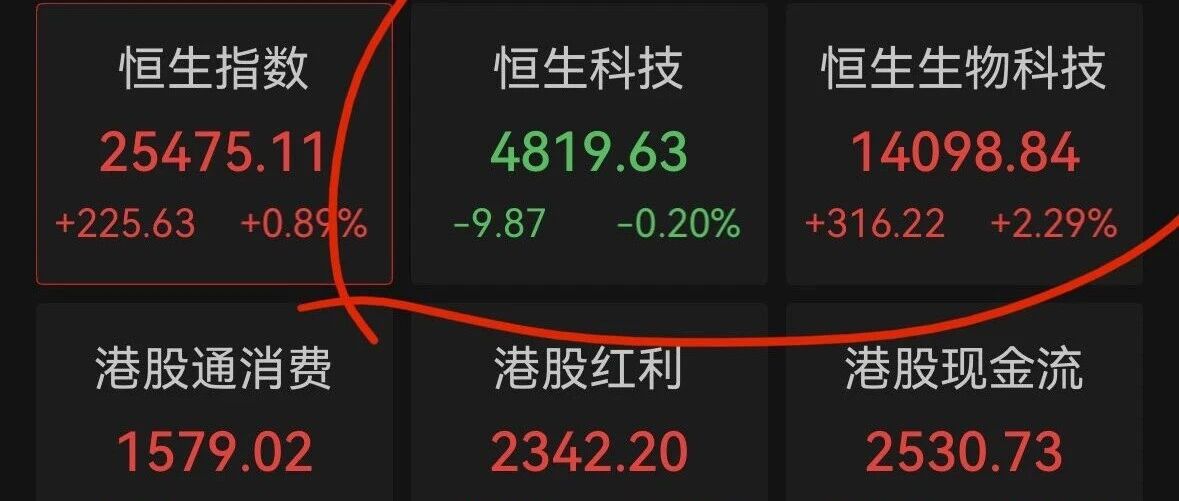
恒生科技 跌啥?
小熊跑的快· 2026-03-06 00:41
Group 1 - The article discusses the recent violent rebound of SaaS stocks in the US market and questions whether the Hang Seng Index will follow suit [1] - It highlights that the Hang Seng Technology Index has declined due to three main reasons, including discussions in the US about layoffs and unemployment caused by AI, which impacts consumer spending [2][3] - The article provides data indicating that actively managed equity funds have a 16.23% allocation to Hong Kong stocks, with technology stocks making up about 35% of that allocation [2] Group 2 - The article mentions that the US IGV index has experienced a more significant decline, suggesting a broader impact on software and internet sectors due to AI [3] - It notes the appreciation of the Renminbi and its potential effects on the market [3] - The article points out deflationary pressures affecting certain components within the automotive sector [3]
家电行业专题研究报告:从人民币升值看汇率波动的传导影响
Huachuang Securities· 2026-03-04 07:07
Investment Rating - The report maintains a "Buy" recommendation for the home appliance industry, focusing on the impact of RMB appreciation on exchange rate fluctuations [2]. Core Insights - The report explores the transmission mechanism of RMB appreciation on companies, detailing how exchange rate changes affect gross margins, exchange gains/losses, and derivative instruments. It highlights the potential impact on profitability for representative companies like Anker Innovations and Haier Smart Home [6][7]. Summary by Sections Industry Basic Data - The home appliance industry consists of 80 listed companies with a total market capitalization of 20,546.36 billion RMB and a circulating market value of 18,385.86 billion RMB [2]. Relative Index Performance - The absolute performance over the last month is -0.1%, while it has increased by 8.2% over six months and 12.4% over twelve months. Relative performance shows a decline of 2.0% over one month, 3.4% over six months, and 7.0% over twelve months [3]. Exchange Rate Impact Analysis - The report identifies three main areas affected by exchange rate fluctuations: gross margin, exchange gains/losses, and derivative instruments. RMB appreciation reduces the amount of foreign currency income recognized in RMB, impacting gross margins negatively. Companies with significant foreign currency net assets may experience exchange losses, affecting net profits [9][14]. Company-Specific Analysis - Anker Innovations benefits from its USD net asset expansion during appreciation cycles, while Haier Smart Home, despite historically having negative foreign currency net assets, has managed to reduce its debt levels and adapt its foreign exchange management to mitigate losses [18][22]. Future Outlook - The report suggests that the probability of a significant and sustained appreciation of the RMB against the USD is low. It notes that the recent trend of RMB appreciation has likely led to the release of previously accumulated foreign currency positions, widening the range of acceptable fluctuations in the exchange rate [6][17]. Investment Recommendations - The report recommends focusing on companies with strong operational certainty, such as Midea Group, Haier Smart Home, and Anker Innovations, as they have diversified foreign currency net assets and effective foreign exchange hedging strategies to manage risks [7][30].



观点全追踪(3月第2期):晨会精选-20260303
GF SECURITIES· 2026-03-02 23:30
Group 1: Market Strategy - The report highlights that the Hong Kong stock market is expected to underperform due to an upcoming peak in lock-up expirations, with significant unlocks in sectors such as non-ferrous metals, tea beverages, automotive, and pharmaceuticals, amounting to HKD 87.2 billion, which is higher than the previous peak at the end of last year [2] - The deadline for annual report disclosures for Hong Kong companies is approaching, which may exert downward pressure on performance, as companies with fiscal years aligned with the calendar year must announce preliminary results by March 31 [2] - Geopolitical tensions, particularly the escalation of military conflicts, are noted as a secondary factor affecting market sentiment, although the overall impact on the Hong Kong market may be limited due to a general strengthening of non-US assets [2] Group 2: Macroeconomic Insights - The report discusses the factors driving the appreciation of the Renminbi since 2026, identifying three key realities: a resurgence of de-dollarization narratives, a high proportion of trade surplus turning into income at approximately 77.6%, and a rebound in domestic Producer Price Index (PPI) alongside a strong stock market opening [2] - The report references a previous analysis that outlined four key reasons for the accelerated appreciation of the Renminbi, emphasizing the importance of the central parity signal and the release of foreign exchange settlements as ongoing factors [2]
债券研究周报:两会前,债市情绪转为谨慎-20260302
Guohai Securities· 2026-03-02 15:09
Report Industry Investment Rating No specific industry investment rating is provided in the report. Core Viewpoints - From February 24 to March 2, the bond market experienced a significant adjustment, causing the sentiment indices of both sellers and buyers to decline, with the buyer sentiment dropping more [4]. - The future developments of real estate and inflation need further observation. There are potential opportunities arising from expectation gaps, and the bond market may rise during the Two Sessions. It is advisable to make arrangements during market adjustments [4]. Summary by Relevant Catalog 1. Seller Market Sentiment 1.1 Seller Market Interest Rate Bond Sentiment Index: Declined from February 24 to March 2 - The unweighted sentiment index from February 24 to March 2 was 0.1429, a decrease of 0.18 compared to February 10 - 24. Some institutions' views turned neutral, and the overall view is neutral - bullish. Among 30 institutions, 5 are bullish, 22 are neutral, and 1 is bearish [12]. - 18% of institutions are bullish, believing there may be trend - following opportunities in the bond market in Q2, significant allocation may occur in March, and it's advisable to allocate during adjustments. The recent significant appreciation of the RMB is favorable to the Chinese bond market, and interest rate cuts can be expected in the next two to three months [12]. - 79% of institutions are neutral, stating that the stock - bond seesaw effect will strengthen in March, market sentiment is relatively cautious, the winning probability of the bond market will increase after the Two Sessions, but further interest rate decline requires central bank rate cuts. The 10 - year Treasury bond may fluctuate between 1.6% - 1.9% [12]. - 4% of institutions are bearish, suggesting that if inflation continues to rise, the capital trend may tighten, and the emergence of broad - money expectations in the market may be a selling point for bonds [12]. 1.2 Buyer Market Interest Rate Bond Sentiment Index: Declined from February 24 to March 2 - The unweighted sentiment index from February 24 to March 2 was - 0.046, a decrease of 0.23 compared to February 10 - 24. The sentiment index dropped significantly, and the overall view is neutral - bearish. Among 22 institutions, 5 are bullish, 11 are neutral, and 6 are bearish [13]. - 23% of institutions are bullish, believing that the reduction of US Treasury bond funds in the market is beneficial to Chinese bonds. The geopolitical event between the US and Iran has reduced market risk appetite, which is favorable to the bond market. Historically, the bond market mostly declines after the Two Sessions [13]. - 50% of institutions are neutral, stating that the yields of medium - and short - term bonds will remain low and fluctuate under the expectation of loose funds, while the yields of long - term bonds will fluctuate upward and still face adjustment pressure. The profit - taking sentiment in the market has eased, and interest rates have declined, but the volatile pattern may continue [13]. - 27% of institutions are bearish, believing that the bond market sentiment weakened significantly this week, bearish sentiment intensified, the trading volume and activity of the forfaiting market in March are expected to increase significantly compared to January - February, and market interest rates also have some upward space [13].
申万宏源证券晨会报告-20260302
Shenwan Hongyuan Securities· 2026-03-02 00:50
Core Insights - The report highlights a potential turning point in consumer behavior in China, suggesting that consumption may rise despite the ongoing downturn in the real estate sector, contrary to common market beliefs [9] - It emphasizes the U-shaped characteristic of consumer inclination around real estate turning points, indicating that consumer spending may improve before income does [9] - The report discusses the three effects of real estate industry changes on the economy: income effect, wealth effect, and crowding-out effect, with varying impacts at different development stages [9] Real Estate Sector Analysis - The report identifies that the first five years of the "post-real estate era" are dominated by the income effect, which negatively impacts consumer spending due to the downturn in real estate [9] - It notes that after the peak of the real estate cycle in 2020, disposable income growth and residential investment as a percentage of GDP have shown a downward trend, consistent with international patterns [9] - The report predicts that in the fifth to tenth years of the "post-real estate era," the crowding-out effect will weaken, leading to an improvement in consumer inclination and spending [9] Currency and Exchange Rate Insights - The report discusses the recent acceleration of the RMB appreciation since late January 2026, with the central bank's actions aimed at curbing this rapid rise [10][11] - It analyzes the potential impacts of the central bank's adjustments to the foreign exchange risk reserve ratio, suggesting that while it may stabilize the pace of appreciation, it is unlikely to change the overall trend [12] - The report anticipates that the RMB may experience short-term adjustments but could continue a steady appreciation in the medium to long term, driven by market forces [12] Transportation and Shipping Industry Insights - The report indicates that the current shipping market is experiencing an uptrend due to a broader energy chain cycle, with oil tankers and dry bulk shipping showing strong correlations [13][16] - It highlights the significant increase in VLCC (Very Large Crude Carrier) TCE (Time Charter Equivalent) rates, reaching $200,000 per day, driven by supply constraints and geopolitical tensions [16] - The report recommends specific shipping companies, such as China Shipping and ST Songfa, as potential investment opportunities due to the favorable market conditions [16]






热点思考 | 人民币升值,“休止” 还是 “变奏”?(申万宏观・赵伟团队)
申万宏源宏观· 2026-02-28 16:03
Core Viewpoint - The recent acceleration of the RMB appreciation since late January 2026 has prompted the central bank to lower the foreign exchange risk reserve ratio on February 27, aiming to curb the rapid appreciation and stimulate forward foreign exchange demand [2][6]. Group 1: Reasons for Recent RMB Appreciation - Since the beginning of 2026, the RMB has continued to strengthen, with a notable acceleration since late January, breaking the 6.83 mark against the USD and approaching 6.80 [3][6]. - The annualized appreciation rate of the RMB against the USD accelerated to 24.6% in February, a historically rare occurrence, driven by seasonal settlement and a weaker USD [3][6]. - There are signs of a "panic settlement" effect, with high trading volumes indicating that the settlement trend may continue despite seasonal declines [3][18]. Group 2: Central Bank's Intervention - The central bank's decision to lower the foreign exchange risk reserve ratio from 20% to 0% is intended to provide a policy signal and stimulate forward foreign exchange purchases to alleviate the rapid appreciation of the RMB [4][67]. - Historical instances of similar interventions in September 2017 and October 2020 show that while these measures can smooth out the pace of appreciation, they have limited impact on the overall trend [4][67]. - The effectiveness of the recent adjustment may be constrained by banks' willingness to pass on cost savings to enterprises and the actual changes in purchasing behavior influenced by exchange rate expectations [29][67]. Group 3: Future Exchange Rate Trends - In the short term, the central bank's actions may lead to a temporary adjustment in the exchange rate, with historical data indicating that similar past interventions resulted in short-term adjustments of 3.2% and 0.4% over 15 and 3 trading days, respectively [5][40]. - The medium-term outlook suggests that market forces will continue to dominate the exchange rate, with the potential for sustained appreciation due to a larger "waiting to settle" scale and healthier fundamental conditions compared to previous cycles [5][60]. - Factors such as potential USD rebounds and increased trade tensions may affect the pace of RMB appreciation but are unlikely to reverse the long-term trend of steady appreciation [5][60].