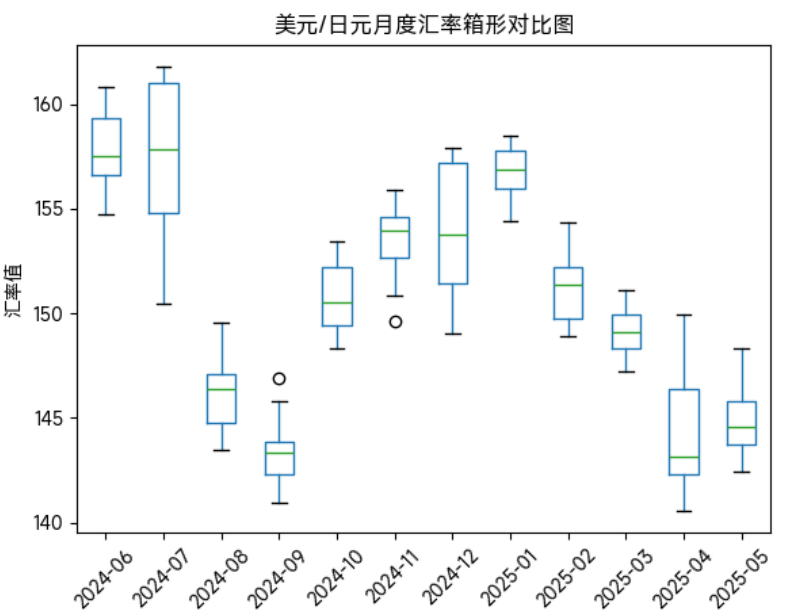
日本加息

Search documents
陶冬:日本加息不会触发东南亚危机
Di Yi Cai Jing· 2025-12-22 03:33
Group 1 - The core viewpoint of the article highlights the contrasting economic conditions in the US and Japan, with the US showing signs of weakening data and Japan raising interest rates, impacting risk assets globally [1][3] - The US inflation data for November shows a core CPI increase of 2.6%, the lowest since 2021, but the quality of the data is questioned due to incomplete statistics caused by government shutdowns [1][2] - The US labor market is showing signs of weakness, with November adding 6,900 jobs primarily in AI infrastructure, education, and healthcare, while the unemployment rate rises to 4.6% [2] Group 2 - The Bank of Japan raised interest rates to 0.75%, the highest level since 1995, indicating potential for further increases, but the market had already priced in this move [3] - The rise in Japanese bond yields above 2% raises concerns about potential global financial instability, although the current economic environment differs significantly from the 1997 Asian financial crisis [3][4] - The article suggests that the likelihood of a similar crisis occurring today is low due to improved structural conditions in Southeast Asia, including flexible exchange rate mechanisms and better foreign debt management [5]
和讯投顾魏玉根:周末五条重要消息或影响市场
Sou Hu Cai Jing· 2025-12-21 08:14
Group 1 - The Japanese interest rate hike has led to a rebound in the US market, positively impacting A-shares, particularly in the technology sector, with Nvidia rising nearly 4% and Micron increasing nearly 7% after a previous 10% rise [1] - The non-ferrous metals sector has seen significant gains, with silver reaching a new high of $64.7 per ounce, driven by supply-demand issues and expectations of two rate cuts by the Federal Reserve next year [1] - Lithium carbonate futures experienced a notable increase of over 4%, with leading companies in the sector, such as SQM and Albemarle, also seeing their stock prices rise, attributed to improved supply-demand dynamics and market sentiment [2] Group 2 - The consumer sector is showing strong performance, with a trend established and identified as a key focus for the coming year, supported by ongoing policy incentives [2] - The commercial aerospace sector remains active, with leading companies experiencing price increases and a rotation among stocks, indicating strong speculative interest in this area [2]
有色金属:行情延续,宏观情绪仍是主导 (1)
2025-12-15 01:55
Summary of Key Points from Conference Call Records Industry Overview: Non-Ferrous Metals - The non-ferrous metals market is significantly influenced by macroeconomic sentiment, with the Federal Reserve's easing policies being a key driver. Despite uncertainties in future interest rate cuts, a liquidity-rich environment is expected to support rising commodity prices, similar to the market performance from 2019 to 2021 [1][5] - Concerns regarding AI investments and interest rate hikes in Japan have emerged, but liquidity easing reduces de-leveraging risks, making the likelihood of a bubble burst low in the short term. If Japan's interest rates exceed expectations, it may create downward pressure, but any pullback could present a good investment opportunity due to supply-demand imbalances and demand recovery expected by 2026 [1][6] Precious Metals Market - Gold is not advisable to short due to geopolitical factors, weakening of the dollar credit system, and increased central bank purchases. Historically, gold experiences two phases of price increases during easing cycles, and it is expected to rise post-RMP implementation [1][7] - Silver may face short-term pullback pressure but is expected to maintain a long-term upward cycle due to supply shortages and its industrial properties. The market for silver has been in a state of shortage for the past few years, and its investment demand is likely to increase during economic recovery [1][8] Price Projections - Gold prices are projected to reach $4,800 by 2026, driven by liquidity easing and rising inflation. Companies like Lingbao Gold, through acquisitions, are expected to see their valuations rise to 15-20 times [1][9] - The copper market is currently experiencing weak supply and demand, with low inventories. High copper prices are suppressing demand, but liquidity easing is expected to mitigate negative impacts. The copper price is projected to be between $11,000 and $12,000 in the first half of 2026, making valuations of related A-share and H-share companies attractive [2][11] Aluminum Market - The aluminum market shows a favorable supply-demand balance, with profit margins exceeding 5,500 yuan per ton. The current valuation levels are considered attractive for investment, especially as the U.S. easing cycle lowers dividend yield requirements [4][12] Lithium Market - The lithium carbonate market is expected to experience a slight shortage in 2025, with a total supply of around 1.6 million tons. In 2026, a slight surplus is anticipated, with prices sensitive to rapid increases in supply. The price may reach between 90,000 to 100,000 yuan, but rapid price increases could stimulate supply and create pressure [13][14] Small Metals: Tungsten and Cobalt - Tungsten and cobalt are expected to maintain a trend of price increases due to ongoing shortages. Tungsten's price is unlikely to drop significantly due to its importance in technology and military applications, while cobalt prices may rise due to export quota issues from the Democratic Republic of Congo [15] Copper Foil and Aluminum Foil Processing Fees - Recent surveys indicate that processing fees for copper and aluminum foils in lithium battery materials have bottomed out and are beginning to recover. This sector is highlighted as an important area for investors, with overall supply-demand dynamics remaining balanced [16][17]
有色金属:行情延续,宏观情绪仍是主导
2025-12-15 01:55
Summary of Key Points from Conference Call Records Industry Overview: Non-Ferrous Metals - The non-ferrous metals market is significantly influenced by macroeconomic sentiment, with the Federal Reserve's easing policies being a key driver. Despite uncertainties in future interest rate cuts, a liquidity-rich environment is expected to support rising commodity prices, similar to the market performance from 2019 to 2021 [1][5] - Concerns regarding AI investments and interest rate hikes in Japan have emerged, but liquidity easing reduces de-leveraging risks, making the likelihood of a bubble burst low in the short term. If Japan's interest rates exceed expectations, it may create downward pressure, but any pullback could present a good investment opportunity due to supply-demand imbalances and demand recovery anticipated by 2026 [1][6] Precious Metals Market - Gold is not advisable to short due to geopolitical factors, weakening of the dollar credit system, and increased central bank purchases. Historically, gold tends to experience two phases of price increases during easing cycles, and it is expected to rise post-RMP implementation [1][7] - Silver may face short-term pullback pressure but is expected to maintain a long-term upward cycle due to supply shortages and its industrial properties. The market has shown a consistent shortfall in silver supply over the past few years [1][8] Price Projections - Gold prices are projected to reach $4,800 by 2026, benefiting from liquidity easing and rising inflation. Companies like Lingbao Gold, through acquisitions, are expected to see their valuations rise to 15-20 times [1][9] - The copper market is currently experiencing weak supply and demand, with low inventories. High copper prices are suppressing demand, but liquidity easing is expected to mitigate negative impacts, making any price corrections a good buying opportunity. The copper price is projected to be between $11,000 and $12,000 in the first half of 2026, with many A-share and H-share companies showing attractive valuations [2][11] Aluminum Market - The aluminum market is currently in a favorable supply-demand balance, with profit margins exceeding 5,500 yuan per ton. The U.S. interest rate cuts are expected to lower dividend yield requirements, making aluminum an attractive investment due to its cyclical and dividend growth attributes [4][12] Lithium Market - The lithium carbonate market is expected to experience a slight shortage in 2025, with a projected small surplus in 2026. The price sensitivity is high, and rapid price increases may stimulate supply. The overall economic environment and liquidity easing may push lithium prices higher in the first half of 2026 [4][14] Minor Metals: Tungsten and Cobalt - Tungsten and cobalt are expected to remain in a state of continuous shortage, with prices likely to trend upwards. Tungsten's significance in technology and military applications makes it less likely to drop to previous low levels, while cobalt's price is influenced by export quotas from the Democratic Republic of Congo [15] Copper and Aluminum Foil Processing Fees - Recent surveys indicate that processing fees for copper and aluminum foils in lithium battery materials have bottomed out and are beginning to recover. This sector is highlighted as an important area for investors, with overall supply-demand dynamics remaining balanced [16] This summary encapsulates the key insights and projections from the conference call records, providing a comprehensive overview of the non-ferrous metals industry and its various segments.
利空、暴跌!比特币闪崩、变盘点在哪里?山寨彻底没救了?
Sou Hu Cai Jing· 2025-12-06 05:47
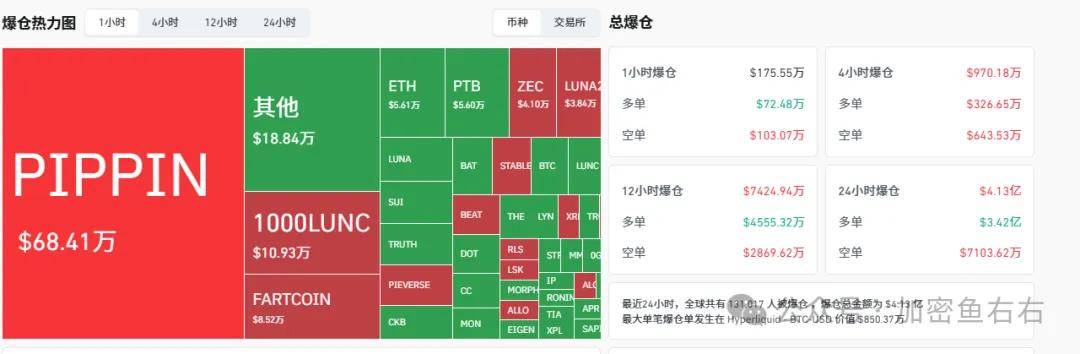
Group 1 - A total of 131,049 people were liquidated globally in the last 24 hours, with a total liquidation amount of $413 million [1] - Bitcoin (BTC) dropped to $88,000, while Ethereum (ETH) remained above $3,000, possibly due to rumors of Z's sell-off or contract harvesting [1] - The market is expected to experience a peak in liquidations and a potential bottoming opportunity in the coming weeks, particularly after the Federal Reserve's interest rate decisions [6] Group 2 - BTC is currently in a strong bearish trend, with potential support and short-term profit-taking levels around $87,200 to $85,300, while a bullish trend requires a breakout above $94,000 [2] - ETH is experiencing a short-term pullback but remains above $3,000, with key support levels at $2,969 and $2,780, indicating potential buying opportunities if these levels hold [4] - The market is advised to minimize operations with altcoins during unstable market conditions, as they tend to exhibit extreme volatility [7] Group 3 - The HYPE token has shown weakness prior to the release of its data, and despite a temporary increase, it is currently underperforming due to broader market weakness [10] - The LUNC token has seen speculative trading, but it is associated with high-risk profiles, often referred to as "doomsday vehicles" [8] - The overall market sentiment suggests a cautious approach, with a focus on executing stop-loss strategies and monitoring real-time market conditions for entry and exit points [11]

不到半月 日本再遭股债“双杀”
Zhong Guo Xin Wen Wang· 2025-12-01 17:17
Core Viewpoint - Japan's financial markets faced significant declines on December 1, with the Nikkei 225 index dropping by 1.89% and bond prices plummeting, indicating growing concerns over the government's fiscal policies and potential interest rate hikes [1][2]. Group 1: Stock Market Performance - The Nikkei 225 index opened high but fell sharply, with intraday losses exceeding 1,000 points, ultimately closing down by 1.89% [1]. - The market's decline is attributed to investor worries regarding the fiscal situation under Prime Minister Fumio Kishida's administration [1]. Group 2: Bond Market Dynamics - Japanese government bond prices experienced a significant drop, with the two-year bond yield rising by 2.5 basis points to 1.015%, the highest level since 2008 [1]. - The yield on the 10-year newly issued government bonds reached 1.840%, marking the highest level since June 2008 [1]. - The Ministry of Finance plans to increase the issuance of short-term bonds to support the economic stimulus plan, which may exert pressure on short-term sovereign bonds [1]. Group 3: Monetary Policy Outlook - There are indications that the Bank of Japan may consider interest rate hikes, as Governor Kazuo Ueda mentioned weighing the pros and cons of such a decision [1]. - Despite the cautious tone from the Bank of Japan, there is speculation that a rate hike could occur in December, while maintaining a generally accommodative monetary policy environment [1][2]. - The current fiscal expansion policies under Kishida's government raise concerns about potential inflation acceleration and a significant increase in mid-term government bond issuance, which could disrupt supply-demand balance [2].
日债遇冷?日本加息之途仍坎坷
2 1 Shi Ji Jing Ji Bao Dao· 2025-09-04 13:43
Core Viewpoint - The Japanese bond market is experiencing significant volatility, with long-term bond yields reaching historical highs due to signals of potential interest rate hikes from the Bank of Japan, raising concerns about fiscal deficits and default risks [1][4][8]. Group 1: Bond Market Dynamics - On September 3, the yield on Japan's 30-year government bonds hit a record high of 3.29%, while the 20-year bond yield reached 2.69%, the highest since 1999 [3]. - The auction of 700 billion yen in 30-year bonds on September 4 saw a bid-to-cover ratio of 3.31, the lowest since June and below the 12-month average of 3.38 [1]. - The volatility in Japan's bond market is not isolated, as it has implications for global bond markets, with U.S. and U.K. long-term bond yields also rising significantly [1][8]. Group 2: Economic Indicators and Expectations - Analysts suggest that the rise in long-term bond yields is primarily due to expectations of fiscal policy tightening and concerns over accumulating debt risks [4][9]. - Japan's economy has shown resilience, with positive growth driven by non-manufacturing sectors, particularly infrastructure [4]. - Despite the positive economic indicators, the Japanese government faces challenges with increasing trade deficits and a declining real wage trend, which could impact consumer spending [11][12]. Group 3: Central Bank Policy and Market Reactions - The Bank of Japan has not raised interest rates since January, and the persistent inflationary pressures are contributing to the high bond yields [4][5]. - Following the hawkish signals from the Bank of Japan, the stock market and currency experienced fluctuations, with the Nikkei 225 index dropping 0.88% on September 3 but rebounding by 1.53% the next day [6][7]. - The market's reaction to the interest rate signals indicates a complex interplay between economic recovery expectations and the potential for increased borrowing costs [7][10].
贝森特想要“美国降息、日本加息”,野村:有可能,但有前提
Hua Er Jie Jian Wen· 2025-08-18 01:08
Core Viewpoint - The U.S. Treasury Secretary's call for aggressive and contrasting monetary policies from the Federal Reserve and the Bank of Japan has caused significant market reactions, highlighting potential contradictions in current market narratives [1] Group 1: U.S. Monetary Policy - The U.S. Treasury Secretary advocates for the Federal Reserve to start cutting rates by 50 basis points in September, with a cumulative reduction of 150 to 175 basis points thereafter [1] - Current market expectations suggest that the Federal Reserve's target rate will not reach 3% until autumn next year, indicating a significant divergence from the Secretary's proposals [1] Group 2: Japanese Monetary Policy - The Secretary recommends that the Bank of Japan should raise interest rates to combat inflation and stabilize the yen [1] - The Japanese economy has shown resilience against U.S. tariffs, with a second-quarter GDP annualized growth rate of 1.0%, surpassing market expectations of 0.4% [3] Group 3: Market Reactions - The Japanese stock market experienced a significant surge, while the yen strengthened due to the dual expectations of U.S. rate cuts and Japanese rate hikes [1] - The market's response reflects a complex and divided sentiment regarding the implications of these contrasting monetary policies [1] Group 4: Feasibility and Risks - The feasibility of simultaneous U.S. rate cuts and Japanese rate hikes depends on key conditions, including the pace of U.S. rate cuts and the stability of Japan's economy and political landscape [2][3] - Political uncertainty in Japan, particularly the potential resignation of Prime Minister Kishida, poses a risk to the Bank of Japan's tightening expectations [4] Group 5: Macro Perspectives - A macro view suggests that the current interest rate scenario, with U.S. rates above 3% and Japanese rates below 1%, is "unnatural" and will likely require correction [6] - Two potential scenarios are identified: one where the Federal Reserve lags behind economic trends, necessitating aggressive rate cuts, and another where the Bank of Japan must accelerate rate hikes to keep pace with inflation [6][7]

日本通胀逼近2%目标 植田和男暗示继续加息可能性上升
Xin Hua Cai Jing· 2025-06-03 04:17
Economic Outlook - The Japanese economy is experiencing a moderate recovery, with improving corporate profits and stable business confidence, but signs of weakness are emerging, and economic growth is expected to slow down [3] - High uncertainty regarding trade policies, particularly U.S. tariff measures, poses a negative impact on Japan's economy, primarily affecting export companies and potentially weakening consumer confidence [3][8] Wage and Consumption - Actual wages in Japan are currently negative, significantly impacting consumption and the economy [7] - As real wages gradually improve, consumption is expected to maintain a moderate growth trend [6] Inflation and Prices - Japan's core inflation rate is slightly below the 2% target, with the gap between basic inflation and overall inflation expected to narrow [9] - Cost-push inflation is having a significant adverse effect on households, but pressures from rising import prices are anticipated to diminish [9] Monetary Policy - The Bank of Japan has no preset plans for interest rate hikes and will consider raising rates only when economic and price conditions align with expectations [11] - The central bank aims to achieve a 2% inflation target and will implement monetary policy based on price and economic developments [12] Currency and Bond Market - A strong yen negatively impacts export and manufacturing profits but improves household real income; stable exchange rates are crucial for market stability [14] - Long-term bond yield fluctuations can affect short- and medium-term yields, with domestic investors being the primary buyers of long-term Japanese government bonds [14] Recent Rate Decisions - The Bank of Japan raised the policy interest rate from 0.25% to 0.5% in January, marking the largest increase among three hikes since March and July 2024 [16] - The central bank remains optimistic about economic and inflation conditions, with a projected CPI inflation rate of 2.4% for FY2025, up by 0.5 percentage points [16]