
煤炭

Search documents
1月26日盘后播报
Sou Hu Cai Jing· 2026-01-26 11:30
Group 1: Market Overview - The stock market experienced adjustments, with the Shanghai Composite Index down 0.09% at 4132.61 points and the Shenzhen Component Index down 0.85% at 14316.64 points, amid geopolitical tensions leading to increased risk-averse trading [1] - The total trading volume across both markets remained high, exceeding 3.28 billion [1] Group 2: Livestock Industry - The Livestock ETF (159865) rose over 2%, with the national average price of live pigs increasing to approximately 13.02 yuan/kg as of January 25 [1] - The livestock sector has undergone significant capacity reduction after a deep adjustment in 2025, with current valuations still at relatively low historical levels [1] - The industry is transitioning from losses to slight profits, indicating a high safety margin and cost-effectiveness for investment [1] - The delayed effects of capacity reduction are expected to manifest gradually in 2026, with the industry's prosperity likely to spiral upward [1] - The sector is currently in a "bottoming" phase, suggesting that investors should consider the allocation value of the Livestock ETF (159865) and adopt a phased investment strategy [1] Group 3: Coal Industry - The coal sector performed well, with the Coal ETF (515220) rising approximately 2% due to strong cold air sweeping the nation and record-high winter electricity loads [2] - The investment logic in the coal sector is shifting from purely "cyclical speculation" to a dual drive of "dividends + growth" [2] - Supply constraints due to reduced capital expenditure under the "dual carbon" policy are expected to maintain a tight balance in supply and demand for the long term [2] - The coal industry's valuation remains at a relatively low historical level, with the China Securities Coal Index's dividend yield exceeding 6% over the past 12 months, making it attractive in the current low-interest market [2] - The Coal ETF (515220) is considered worthy of attention for investors seeking stable returns and defensive positions [2] Group 4: Precious Metals - COMEX gold prices surpassed 5000, with the Gold Fund ETF (518800) increasing by 2.61% and the Gold Stock ETF (517400) rising by 8.4% [3] - Continued purchases of gold by global central banks and the selling of U.S. Treasury bonds have heightened market risk aversion, increasing demand for precious metals [3] - Short-term outlook suggests that ongoing geopolitical conflicts will keep trading in the precious metals sector active, supporting gold prices [3] - The recent strength in gold prices may lead to short-term volatility risks after reaching new highs [3] - The long-term outlook remains supported by factors such as the Federal Reserve's interest rate cut cycle, increasing global uncertainties, and the trend of de-dollarization [3] - Investors are encouraged to continue monitoring investment opportunities in the Gold Fund ETF (518800) and Gold Stock ETF (517400) [3]
关注地方两会 | 河南将启动新一轮国资国企改革行动 加大战新产业等投资力度
Xin Lang Cai Jing· 2026-01-26 11:15
Core Viewpoint - In 2026, Henan Province aims to deepen reforms in key areas, with a focus on economic growth and structural adjustments in various sectors [2][3][14]. Economic Goals - The main expected targets for 2026 include an economic growth rate of around 5%, industrial added value growth of approximately 6.5%, fixed asset investment growth of about 5%, and retail sales growth of 5.5% [2][13]. - The province aims for a grain production of over 1.3 trillion jin, with a goal to achieve more growth compared to the previous year [2][13]. Reform Initiatives - A new round of state-owned enterprise reform will be initiated, focusing on strategic restructuring and professional integration [3][14]. - The government plans to enhance the investment in strategic emerging industries and the livelihood sector [3][14]. - There will be a comprehensive implementation of zero-based budgeting reforms and performance management mechanisms [3][14]. Employment and Social Policies - The urban unemployment rate is targeted to be around 5.5%, with over 1.1 million new urban jobs expected to be created [2][13]. - The government will implement policies to ensure the synchronization of resident income growth with economic growth [2][13]. Infrastructure and Investment Projects - Over 1,000 key provincial projects will be implemented, with an annual investment completion target of 1 trillion yuan [19]. - Major infrastructure projects include high-speed rail developments and enhancements in digital infrastructure [19][22]. Financial Strategies - The province plans to issue 132.7 billion yuan in local government special bonds to support project construction [8][18]. - There will be an increase in social financing scale by 1 trillion yuan, alongside efforts to manage local government financing platforms effectively [22]. Industry Development - The share of strategic emerging industries in industrial added value is expected to exceed 25% [8][18]. - The government will support the development of six major industrial clusters and 18 rural prosperity industrial chains [22].



2026年能源及相关行业发展展望:“十五五”规划下中美能源战略差异及投资机会
Guo Tai Jun An Qi Huo· 2026-01-26 11:14
Report Industry Investment Rating No relevant information provided. Core View of the Report - For China, the energy strategy is to clean up traditional energy and shift the development focus to non-fossil energy. It is recommended to overweight industries related to non-fossil energy substitution in China, such as non-ferrous metals and rare earths, and wait for the opportunity of coal's bottom - rebound [1]. - For the US, the energy strategy is to prioritize traditional energy and restrict the development of new energy. It is advisable to be cautiously bearish on crude oil and consider buying on dips to obtain geopolitical conflict premiums [1]. Summary by Relevant Content China's Energy Strategy Traditional Energy - **Coal**: In 2026, coal demand will peak and production will continue to decline, with a structural adjustment of the coal industry. The domestic coal consumption will remain at the peak of 4.8 - 5 billion tons during 2026 and the "14th Five - Year Plan" period. The state will control the scale of new coal - fired power plants, promote the upgrading and transformation of coal - fired power, and develop new coal chemical industry to improve coal utilization efficiency. The coal production growth rate may turn negative in 2026, and production will be concentrated in resource - rich areas [5][8]. - **Petroleum**: To reduce the dependence on oil imports (73.2% in 2025), China will encourage oil exploration and development in 2026, open up the market access for oil and gas exploration, and utilize deep - sea, deep - layer and unconventional oil and gas resources. The "14th Five - Year Plan" will continue to guide the exit of backward production capacity in the petrochemical industry to solve the over - capacity problem [10][11]. New Energy - China has introduced a series of fiscal policies to support new energy development, including tax incentives, subsidies, special funds, and financing support. With the support of the "14th Five - Year Plan", the substitution of new energy for fossil energy is sustainable. The key is to develop energy storage facilities to solve the intermittency and volatility of new energy power generation [12][14]. US Energy Strategy Traditional Energy - **Coal**: The US energy strategy prioritizes traditional energy, with a focus on expanding domestic development. The demand for coal for power generation may increase significantly due to the growth of data centers' power demand. The US government has strong policy support for the coal industry, including providing more mining land, tax incentives, etc. [18][19][23]. - **Petroleum**: The US has set a high production increase target for oil. Although shale oil production is expected to be stable in 2026, traditional oil production will continue to increase slightly. The overall oil price is expected to fluctuate widely between $50 - 60 per barrel in 2026 if geopolitical risks subside [23][24]. Restriction on New Energy and Electric Vehicles - The US restricts the development of electric vehicles and non - fossil energy. The cancellation of electric vehicle subsidies may reduce the demand and penetration rate of electric vehicles, increasing the demand for gasoline and coal - fired power. The "Great and Beautiful Act" and other policies also limit the development of non - fossil energy [26][29]. Analysis of Sino - US Energy Strategy Differences - **Objective Conditions**: The differences in Sino - US energy strategies mainly come from resource endowments. China aims for non - fossil energy substitution to achieve green development and carbon peak goals, while the US tends to increase production of fossil energy [30]. - **Import - Export Structure**: China is highly dependent on imported oil and gas, while the US is a major energy exporter. China will reduce its dependence on imported traditional energy, and the US will develop domestic oil resources [30]. - **Use of Traditional Fossil Energy**: In China, coal is used for power generation, coal chemical industry and steelmaking, while in the US, 90% of coal is used for power generation and export [32]. - **Power Grid Infrastructure**: China's power grid is state - led and unified, with advanced energy storage technology to support non - fossil energy substitution. The US power grid is market - driven, which amplifies the problems of non - fossil energy power generation [32][33]. Investment Recommendations - **Coking Coal Futures**: The transformation of coal chemical industry is expected to relieve the pressure of over - capacity of coking coal. The price is expected to bottom out in 2026Q4 - 2027. Pay attention to coking coal 202610 [34]. - **Crude Oil Futures**: The pattern of oversupply of oil may continue in 2026. With the decline of geopolitical risks, it is advisable to buy on dips [34]. - **Non - ferrous Metals ETF**: Non - ferrous metals are expected to continue to rise in 2026 due to the dual benefits of financial and industrial attributes. The Fed's expected interest rate cut and the demand from the "14th Five - Year Plan" for clean energy and power grid construction support the upward trend [35]. - **Rare Earth ETF**: Rare earths have strategic and industrial attributes, playing an important role in trade negotiations and new energy industries. It is recommended to maintain a certain degree of attention and allocation [35].
焦炭日报:短期延续反弹-20260126
Guan Tong Qi Huo· 2026-01-26 11:04
Group 1: Report Industry Investment Rating - The short - term outlook for the coke industry is a continuation of the rebound, and a low - buying strategy is recommended [2] Group 2: Core View of the Report - The supply - demand pattern of coke is affected by upstream coking coal costs, downstream steel demand, and macro - policy guidance. Currently, the comprehensive inventories of coking coal and coke are rising, and the overall supply - demand is weak. However, with a relatively stable downstream steel mill hot metal output, increasing coking losses, strong price - raising intentions of coking enterprises, and a warm macro - environment, the coke market is expected to continue to rebound in the short term [2] Group 3: Summary by Related Catalogs Market Analysis - As of January 23, due to the expanding losses, the production enthusiasm of some small and medium - sized enterprises declined. The coke inventory of independent coking enterprises decreased by 0.36 tons to 81.45 tons, while the comprehensive coke inventory increased by 15.14 tons to 1012.35 tons, with a year - on - year decline of nearly 4% [1] - The average profit per ton of coke for 30 independent coking plants nationwide was - 66 yuan/ton. The average profit of Shanxi quasi - first - grade coke was - 51 yuan/ton, Shandong quasi - first - grade coke was - 8 yuan/ton, Inner Mongolia second - grade coke was - 103 yuan/ton, and Hebei quasi - first - grade coke was - 11 yuan/ton [1] - Terminal demand remained in the off - season. Although the profits of steel mills rebounded slightly, the overall resumption of production enthusiasm on the supply side was still limited. The blast furnace operating rate of 247 steel mills decreased by 0.16 percentage points to 78.68%, a year - on - year increase of 0.7 percentage points. The profitability rate increased by 0.86 percentage points to 40.69% week - on - week. The blast furnace ironmaking capacity utilization rate slightly rebounded to 85.51%, and the daily average hot metal output increased slightly by 0.09 tons to 228.1 tons, a year - on - year increase of 2.65 tons [1] Upstream Coking Coal - This week, the coking coal inventory of coal mines increased slightly. The total coking coal inventory of independent coking enterprises was 1177.71 tons, the coking coal inventory of steel mills increased to 803.24 tons, and the inventory of imported coking coal at ports continued to increase to 562.99 tons. The comprehensive coking coal inventory increased to 2818.34 tons, still 15.87% lower year - on - year [2]
精耕细作强管理 提质增效促发展——保安煤业深耕经营管理赋能高质量发展
Sou Hu Cai Jing· 2026-01-26 10:53
近期,晋能控股集团阳泉公司保安煤业聚焦高质量发展目标,以"15字"30条经营管理措施为指引,在核 心工作突破、管理效能升级、降本增效落地等方面精准发力,通过制度完善、基础夯实、靶向施策,推 动经营管理工作迈上新台阶。 降本增效多点突破资源利用效能提升 在肯定成绩的同时,清醒认识到工作中存在的推进效率、预算管控精度等短板,已针对性制定整改措 施。下一步,企业将细化节点推进落实,严控项目全流程管理,加快关键环节落地;规范项目申报与预 算编制流程,明确列支范畴,提升资金使用效能。 公司紧扣降本增效核心目标,精准管控材料消耗全流程,通过优化管理流程、强化全员节约意识,严格 压缩非生产性支出。深入推进修旧利废工作,全面盘活闲置物资,实现从五小电器到大型设备配件的全 品类循环利用,资源循环利用水平持续提升。价审委高效履职,严格规范项目定价流程,通过比价议价 精准把控成本,成功实现"花小钱办大事"的管控目标。 展望未来,将持续深化"15字"30条经营管理措施落地,重点推进材料考核定额标准完善、碳排放管理体 系建设等关键工作,强化修旧利废、工程验收等核心环节管控,以更严标准、更实举措推动经营管理提 质增效,为企业长远发展注入 ...
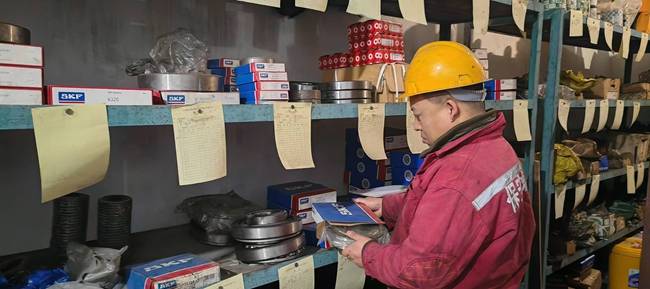
潞安化工:瓦斯变身效益源
Xin Hua Cai Jing· 2026-01-26 10:35
近年来,潞安化工集团坚持采煤采气一体化发展路径,深耕煤矿瓦斯综合开发利用,绿色发展动能不断 增强。 近年来,潞安化工集团坚持采煤采气一体化发展路径,深耕煤矿瓦斯综合开发利用。2023年以来,潞安 化工集团瓦斯发电13亿多千瓦时,减排二氧化碳1000多万吨。集团"双碳"目标下华北典型煤矿区甲烷开 采防灾减排一体化关键技术及应用项目,荣获2025年度山西省科学技术进步奖一等奖。 应抽尽抽 以用促抽 走进潞安化工集团余吾煤业公司北风井低浓度瓦斯氧化发电项目现场,机器轰鸣声不绝于耳。来自井下 的瓦斯正源源不断地输入机组,经高效转化,变为稳定的电能与热能,输送至千家万户的暖气管网,涌 向企业各生产车间。 "该项目于2024年11月正式并网发电,专门回收利用瓦斯泵站直接外排的甲烷体积浓度1%到10%的低浓 度瓦斯。"新元公司机电动力部副部长王博介绍,该项目日均发电11万千瓦时。 在充分利用低浓度瓦斯的同时,新元公司以智能瓦斯实验室为平台,联合科研院校破解多项难题,形成 了一批特色治理技术。 在智能瓦斯实验室内,工作人员张玉辉正利用高压容量法和瓦斯吸附装置测定煤样吸附常数。张玉辉介 绍,设备搭载自主开发的微机测试软件,可自 ...
兰花科创发预亏,预计2025年度归母净亏损4.4亿元至5.5亿元
Zhi Tong Cai Jing· 2026-01-26 10:18
Core Viewpoint - Lanhua Ketech (600123.SH) is expected to report a net loss attributable to shareholders of the parent company ranging from 440 million to 550 million yuan for the fiscal year 2025 due to various adverse factors [1] Group 1: Financial Performance - The company anticipates a significant net loss for 2025, estimated between 440 million and 550 million yuan [1] - The primary reason for the loss is the continuous decline in market prices for key products, including coal and chemical fertilizers, which has severely impacted the main business profits [1] Group 2: Operational Challenges - The company is undergoing capacity integration and upgrades in its coal chemical industry to promote energy conservation and environmental protection, leading to asset impairment provisions for some outdated facilities [1] - A significant decline in investment income is attributed to the suspension of operations at the company's equity investee, Yamei Danning Energy Company, which ceased operations in mid-May due to the expiration of its operating period [1]

【公募基金】“春季躁动”行情分化,逐步切换至绩优方向——公募基金指数跟踪周报(2026.01.19-2026.01.23)
华宝财富魔方· 2026-01-26 10:17
Key Points - The article discusses the recent performance of the equity market, highlighting a significant divergence in market trends due to regulatory policies and liquidity conditions. Major sectors like consumption, pharmaceuticals, and finance saw declines, while growth sectors, particularly commercial aerospace, gained attention after adjustments [3][7][9] - The earnings season is beginning, and the market may shift towards profit recovery and valuation repair. The ongoing anti-involution policies are leading to negative investment growth across various industries, indicating future supply contraction, while demand stabilizes under fiscal stimulus and economic recovery, benefiting leading companies in sectors like non-ferrous metals and chemicals [3][9] - The bond market experienced a rise in short-term yields and a decline in long-term yields, with the 1-year government bond yield increasing by 3.95 basis points to 1.28%, while the 10-year and 30-year yields decreased by 1.26 and 1.65 basis points, respectively. This shift is attributed to a "cooling" stock market prompting funds to seek refuge in bonds [4][10] - The China Securities Regulatory Commission released guidelines for public fund performance benchmarks, maintaining consistency with previous drafts and introducing specific adjustments regarding benchmark changes and reporting requirements [12] Equity Market Review - The Shanghai Composite Index rose by 0.84%, while the CSI 300 and ChiNext indices fell by 0.62% and 0.34%, respectively. The average daily trading volume in the A-share market decreased to 27.972 trillion yuan, indicating a reduction in market activity [7] - ETF funds experienced a net outflow, with the CSI 300 ETF seeing a reduction of 49.603 billion units. Other ETFs also faced significant outflows, reflecting a shift in investor sentiment and the effectiveness of regulatory measures aimed at attracting long-term capital [7][8] Bond Market Review - The bond market saw a narrowing of yield spreads, with the short-term funding environment remaining favorable. The People's Bank of China indicated potential for further monetary easing, which could support market sentiment [4][10] Public Fund Market Dynamics - The recent release of performance benchmark guidelines for public funds aims to standardize evaluation criteria and ensure consistency in fund management practices, reflecting a regulatory push towards greater transparency and accountability in the fund industry [12]

兰花科创(600123.SH)发预亏,预计2025年度归母净亏损4.4亿元至5.5亿元
智通财经网· 2026-01-26 10:16
Core Viewpoint - Lanhua Ketech (600123.SH) forecasts a net loss attributable to shareholders of the parent company between 440 million to 550 million yuan for the fiscal year 2025 due to various adverse factors [1] Group 1: Financial Performance - The company expects a significant net loss for 2025, estimated between 440 million to 550 million yuan [1] - The primary reason for the loss is the continuous decline in market prices for key products, including coal and chemical fertilizers, leading to a substantial reduction in main business profits [1] Group 2: Operational Challenges - The company is undergoing capacity integration and upgrades in its coal chemical industry to promote energy conservation and environmental protection, which has resulted in the need to recognize asset impairment for some outdated facilities [1] - A significant decrease in investment income is attributed to the suspension of operations at the company's associate, Yamei Danning Energy Company, which ceased operations in mid-May after its operating period expired [1]
煤炭行业税务合规报告(2026)
华税律师事务所· 2026-01-26 09:35
华税 HUA SHUI 煤炭行业 税务合规报告 2026 华税律师事务所 二〇二六年一月 "十四五"期间,我国能源结构不断优化,煤炭在能源供应体 系中的基础保障和系统调节作用持续发挥。在税收层面,煤炭从开采 到运输、销售、用煤等多个环节均存在不可忽视的税务合规问题。近 年来随着税收征管数字化、精准化效能的大幅提升,行业企业面临不 司程度的涉税行政、刑事风险,全面洞察行业征管动态、识别多税种 合规要点,成为行业企业持续发展的必然要求。 煤炭行业虚开、偷税风险高发,长期以来是税务稽查的重点领 域。在购销环节,因配额制的施行,煤炭不带票销售的现象十分普遍, 煤炭贸易企业在购入煤炭时无法取得发票进行增值税进项抵扣及所 得税税前扣除;而在运输环节,因实际承运的司机未向煤炭贸易企业 开具运输发票,导致其同样面临无票入账的问题。为应对上述困境、 确保持续经营,部分煤炭贸易企业或依赖地方财政奖补、或增加第三 方交易主体并自其处取得发票。而随着八部门联合打击涉税违法犯罪 机制深入推进以及对违规引税返税、搞"政策洼地"等行为的加力红 治,购销贸易模式调整所引发的模式合理性、发票合法性争议不断, 链条中多环节主体均面临不同程度的虚 ...