
Midstream Energy

Search documents
MPLX LP Reports Fourth-Quarter and Full-Year 2025 Results
Prnewswire· 2026-02-03 11:30
Core Insights - MPLX LP reported a fourth-quarter 2025 net income of $1,193 million, an increase from $1,099 million in the fourth quarter of 2024, with adjusted EBITDA rising to $1,804 million from $1,762 million in the same period [1][5]. Financial Performance - For Q4 2025, MPLX generated $1,496 million in net cash from operating activities, $1,417 million in distributable cash flow, and $1,567 million in adjusted free cash flow [2]. - The full year 2025 saw MPLX generate $5.9 billion in net cash from operating activities, $5.8 billion in distributable cash flow, and $1.0 billion in adjusted free cash flow, compared to $5.9 billion, $5.7 billion, and $3.9 billion in 2024 respectively [3]. - The company announced a distribution of $1.0765 per common unit for Q4 2025, resulting in a distribution coverage of 1.3x for the quarter [2][5]. Growth and Investments - In 2025, MPLX invested over $4 billion to grow its natural gas and NGL value chains and plans to execute growth anchored in the Permian and Marcellus basins in 2026 [4]. - The company is advancing its strategic initiatives to meet the growing demand for natural gas and NGLs, aiming for mid-single digit adjusted EBITDA growth [4]. Segment Performance - The Crude Oil and Products Logistics segment's adjusted EBITDA increased by $52 million in Q4 2025 compared to Q4 2024, driven by a FERC tariff ruling and higher rates [9]. - The Natural Gas and NGL Services segment's adjusted EBITDA decreased by $10 million in Q4 2025, primarily due to a reduction associated with the divestiture of non-core assets and lower natural gas liquids prices [11]. Capital Expenditure and Future Outlook - MPLX's capital spending outlook for 2026 is $2.7 billion, with $2.4 billion allocated for growth and $300 million for maintenance [13]. - The company is focusing on expanding its Permian to Gulf Coast integrated value chain and investing in processing capacity in response to producer demand [13]. Financial Position - As of December 31, 2025, MPLX had $2.1 billion in cash and a leverage ratio of 3.7x, with cash flows supporting a leverage range of 4.0x [18]. - The partnership repurchased $100 million of common units in Q4 2025, with approximately $1.1 billion remaining under its unit repurchase authorizations [19].



3 High-Yield Dividend Stocks to Power Your Income Stream in 2026
The Motley Fool· 2026-02-03 06:05
Core Viewpoint - The energy sector, particularly midstream businesses, offers high-yield investment opportunities for income-focused investors in 2026, despite the overall volatility of oil and natural gas commodities [1]. Industry Overview - The energy industry is divided into upstream, midstream, and downstream segments, with upstream and downstream being inherently volatile due to commodity price fluctuations. In contrast, midstream businesses, which own energy infrastructure assets, are more stable as they primarily charge fees for asset usage [2][3]. Midstream Business Characteristics - Midstream companies connect upstream producers to downstream processors and charge fees based on the volume of energy transported rather than commodity prices, leading to more consistent revenue streams [3]. High-Yield Midstream Options - Three notable midstream companies with attractive dividend yields are Enbridge, Enterprise Products Partners, and Energy Transfer, each offering different risk and yield profiles [4]. Enbridge (ENB) - Current Price: $48.28, Market Cap: $105 billion, Dividend Yield: 5.58%, has diversified operations including oil and natural gas pipelines and clean energy, and has increased its dividend for 30 consecutive years [5][6]. Enterprise Products Partners (EPD) - Current Price: $33.10, Market Cap: $72 billion, Dividend Yield: 6.57%, operates solely in oil and natural gas midstream assets, and has a history of conservative management with 27 years of annual dividend increases [7][8]. Energy Transfer (ET) - Current Price: $18.16, Market Cap: $62 billion, Dividend Yield: 7.25%, has the highest yield among the three but previously cut its distribution in 2020 to strengthen its balance sheet, with plans for gradual distribution growth of 3% to 5% annually [9][10].


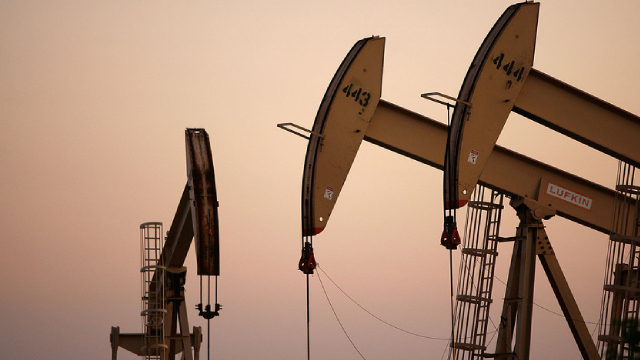
Better Dividend Stock: Energy Transfer vs. Enterprise Products Partners in 2026
The Motley Fool· 2026-02-03 03:05
Energy Transfer and Enterprise Products Partners have similar distribution growth rates, but one has a higher yield.Enterprise Products Partners (EPD 0.27%) and Energy Transfer (ET 1.68%) are two of the largest midstream businesses in North America. They provide services to energy companies, helping to move oil and natural gas around the world for a fee.While the energy sector is generally pretty volatile, these two master limited partnerships (MLPs) have reliable, cash-generating businesses to back their l ...

Kayne Anderson Energy Infrastructure Fund Provides Unaudited Balance Sheet Information and Announces Its Net Asset Value and Asset Coverage Ratios as of January 31, 2026
Globenewswire· 2026-02-02 23:50
Core Viewpoint - Kayne Anderson Energy Infrastructure Fund, Inc. reported its net asset value and asset coverage ratios as of January 31, 2026, highlighting strong financial metrics and a focus on energy infrastructure investments [1][2]. Financial Summary - As of January 31, 2026, the Company's net assets were $2.5 billion, with a net asset value per share of $14.55 [2]. - The asset coverage ratio for senior securities representing indebtedness was 658%, while the total leverage asset coverage ratio was 495% [2]. - Total assets amounted to $3.444 billion, with total liabilities at $364 million, resulting in net assets of $2.461 billion [3]. Investment Composition - The Company’s investments were primarily in Midstream Energy Companies (95%), with smaller allocations to Power Infrastructure Companies (4%) and Other (1%) [4]. - The ten largest holdings included significant investments in companies such as Enterprise Products Partners L.P. ($337.8 million), Energy Transfer LP ($337.1 million), and The Williams Companies, Inc. ($334.5 million) [4][5]. Company Overview - Kayne Anderson Energy Infrastructure Fund, Inc. is a non-diversified, closed-end management investment company registered under the Investment Company Act of 1940, focusing on high after-tax total returns through cash distributions to stockholders [6]. - The Company aims to invest at least 80% of its total assets in securities of Energy Infrastructure Companies [6].

Kayne Anderson Energy Infrastructure Fund Provides Unaudited Balance Sheet Information and Announces Its Net Asset Value and Asset Coverage Ratios as of January 31, 2026
Globenewswire· 2026-02-02 23:50
Core Insights - Kayne Anderson Energy Infrastructure Fund, Inc. reported its net assets as of January 31, 2026, totaling $2.5 billion, with a net asset value per share of $14.55 [2][6] - The asset coverage ratio under the Investment Company Act of 1940 was 658% for senior securities representing indebtedness and 495% for total leverage [2][6] Financial Summary - Total assets amounted to $3,444 million, with investments constituting $3,429.8 million, cash and cash equivalents at $2.7 million, and accrued income of $9.4 million [3] - Total liabilities were reported at $364 million, including a credit facility of $69 million, notes of $400 million, and a deferred tax liability of $347.3 million [3] Investment Composition - The Company had 169,126,038 common shares outstanding as of January 31, 2026 [4] - Long-term investments were primarily in Midstream Energy Companies (95%), with smaller allocations to Power Infrastructure Companies (4%) and Other (1%) [4] - The ten largest holdings included Enterprise Products Partners L.P., Energy Transfer LP, and The Williams Companies, each representing approximately 9.8% of long-term investments [4]

Summit Midstream Appoints Chris Tennant as Chief Commercial Officer
Prnewswire· 2026-02-02 21:15
Core Viewpoint - Summit Midstream Corporation has appointed Chris Tennant as Senior Vice President and Chief Commercial Officer to enhance its commercial strategy and long-term growth initiatives [1][4]. Group 1: Appointment Details - Chris Tennant's role will focus on overseeing Summit's commercial strategy, customer relationships, and long-term growth initiatives [1]. - His appointment is aimed at reinforcing Summit's commitment to disciplined growth and delivering long-term value for shareholders [1]. Group 2: Executive Background - Chris Tennant has over three decades of experience in the U.S. energy value chain, specializing in midstream strategy and commercial optimization [2]. - He previously served as Senior Vice President and Chief Commercial Officer Midstream at Matador Resources, where he developed midstream strategies and expanded third-party contracts [3]. - Prior to Matador, Chris spent 14 years at EnLink Midstream in various senior commercial leadership roles, focusing on commercial performance across multiple energy sectors [3]. Group 3: Company Overview - Summit Midstream Corporation is focused on developing, owning, and operating midstream energy infrastructure assets in key unconventional resource basins in the continental United States [4]. - The company provides gathering, processing, and transportation services for natural gas, crude oil, and produced water, primarily through long-term, fee-based agreements [4]. - Summit operates in five unconventional resource basins, including the Williston, Denver-Julesburg, Fort Worth, Arkoma, and Piceance Basins [4].


Hess Midstream Partners Q4 Earnings Call Highlights
Yahoo Finance· 2026-02-02 17:52
Core Insights - Hess Midstream reported a decrease in costs and expenses by approximately $7 million, attributed to lower allocations and seasonal maintenance activity, while the gross adjusted EBITDA margin remained strong at around 83% [1] - The company experienced a decline in total revenues by about $19 million, primarily due to severe winter weather and lower third-party volumes [1] - For full-year 2025, net income was approximately $685 million, with adjusted EBITDA increasing by about 9% from 2024 [2] Financial Performance - In Q4 2025, net income was $168 million, down from approximately $176 million in Q3, while adjusted EBITDA was $309 million compared to approximately $321 million in Q3 [2] - Full-year 2025 adjusted EBITDA was reported at $1,238 million, with average volumes for gas processing at 445 million cubic feet per day, crude terminaling at 129,000 barrels per day, and water gathering at 131,000 barrels per day [3] Capital Expenditures - The company is entering a period of significantly lower capital spending, with 2026 capital expenditures expected to be around $150 million, a reduction of approximately 40% compared to 2025 [5] - Q4 2025 capital expenditures were approximately $47 million, reflecting lower activity and completion of the compression buildout [6] - Future capital spending is projected to decline further to less than $75 million per year in 2027 and 2028 [7] Volume and Revenue Guidance - Management expects first-quarter 2026 volumes to be lower due to ongoing severe winter weather, but anticipates seasonal volume growth throughout the year [9] - For full-year 2026, net income guidance is set at $650 million to $700 million, with adjusted EBITDA expected to be flat at the midpoint compared to 2025 [11] - Approximately 95% of 2026 revenues are covered by minimum volume commitments (MVCs), providing significant revenue protection [11] Free Cash Flow and Shareholder Returns - The company targets a gross adjusted EBITDA margin of approximately 75% in 2026 and expects to generate adjusted free cash flow of $850 million to $900 million [12] - After funding a targeted 5% annual distribution growth, the company anticipates excess adjusted free cash flow of about $210 million for shareholder returns and debt repayment [12] - Long-term projections through 2028 indicate a 5% annualized growth in net income and adjusted EBITDA, supported by gas volume growth and lower operating costs [13] Operational Efficiency - Integration with Chevron has optimized midstream and upstream investments, reducing the need for overbuilding and capital expenditures [8] - The company is focused on maintaining a leverage ratio below 3x as EBITDA grows, with a conservative approach to funding shareholder returns from free cash flow [15]

Hess Midstream LP(HESM) - 2025 Q4 - Earnings Call Transcript
2026-02-02 16:02
Financial Data and Key Metrics Changes - For the full year 2025, the company reported net income of approximately $685 million and Adjusted EBITDA of $1,238 million, representing a growth of approximately 9% from 2024 [10] - In the fourth quarter, net income was $168 million compared to approximately $176 million in the third quarter, and Adjusted EBITDA was $309 million compared with approximately $321 million in the third quarter [10][11] - The gross Adjusted EBITDA margin for the fourth quarter was maintained at approximately 83%, above the target of 75% [11] Business Line Data and Key Metrics Changes - Fourth quarter gas processing volumes averaged 444 million cubic feet per day, crude terminaling volumes averaged 122,000 barrels of oil per day, and water gathering volumes averaged 124,000 barrels of water per day [5] - For the full year 2025, gas processing volumes averaged 445 million cubic feet per day, crude terminaling volumes averaged 129,000 barrels of oil per day, and water gathering volumes averaged 131,000 barrels of water per day [6] Market Data and Key Metrics Changes - The company expects lower volumes across its systems in the first quarter of 2026 due to severe winter weather, with a recovery anticipated as weather improves [7][41] - Approximately 95% of revenues are protected by minimum volume commitments (MVCs) for the full year 2026, providing a safety net against volume fluctuations [8][14] Company Strategy and Development Direction - The company plans to reduce capital spending significantly, expecting to spend approximately $150 million in 2026, a 40% reduction from 2025, and further decrease to less than $75 million per year in 2027 and 2028 [4][15] - The strategy includes a targeted 5% distribution growth per Class A share through 2028, supported by significant free cash flow generation [5][29] Management's Comments on Operating Environment and Future Outlook - Management highlighted that the severe winter weather has impacted operations but expects a recovery in production as conditions improve [41] - The company reiterated its guidance for net income and Adjusted EBITDA growth through 2028, driven by gas volume growth and lower capital expenditures [8][29] Other Important Information - The company had a drawn balance of $338 million on its revolving credit facility at year-end [12] - Adjusted free cash flow for the first quarter of 2026 is expected to increase relative to the fourth quarter of 2025 due to lower capital expenditures [12] Q&A Session Summary Question: Balance sheet and debt repayment strategy - Management indicated that a portion of free cash flow will be used for debt repayment, with a conservative financial strategy in line with volume profiles [17][19] Question: Third-party outlook and Chevron's production target - Management expects no change in third-party volumes, maintaining an average of 10% across oil and gas, and confirmed Chevron's target of 200,000 barrels of oil equivalent per day remains intact [21][23] Question: Growth drivers and cost-cutting impact - Future growth is driven by inflation escalators and reduced capital expenditures, with significant free cash flow generation expected [26][28] Question: Weather impact on production - Management noted that while severe weather has affected operations, a recovery is anticipated as conditions improve, with MVCs providing revenue protection [40][41] Question: Long-term leverage target - Management stated there is no specific leverage target, but expects natural deleveraging as EBITDA grows and debt levels remain stable [43][45]
Hess Midstream LP(HESM) - 2025 Q4 - Earnings Call Transcript
2026-02-02 16:02
Financial Data and Key Metrics Changes - For the full year 2025, the company reported a net income of approximately $685 million and adjusted EBITDA of $1,238 million, representing a growth of approximately 9% from 2024 [10] - In the fourth quarter, net income was $168 million compared to approximately $176 million in the third quarter, and adjusted EBITDA was $309 million compared with approximately $321 million in the third quarter, primarily due to lower revenues from severe winter weather [10][11] - The gross adjusted EBITDA margin for the fourth quarter was maintained at approximately 83%, above the target of 75% [11] Business Line Data and Key Metrics Changes - Fourth quarter gas processing volumes averaged 444 million cubic feet per day, crude terminaling volumes averaged 122,000 barrels of oil per day, and water gathering volumes averaged 124,000 barrels of water per day [5] - For the full year 2025, gas processing volumes averaged 445 million cubic feet per day, crude terminaling volumes averaged 129,000 barrels of oil per day, and water gathering volumes averaged 131,000 barrels of water per day [6] Market Data and Key Metrics Changes - The company expects lower volumes across its systems for the first quarter of 2026 due to severe winter weather, but anticipates growth in volumes throughout the rest of the year consistent with historical seasonal expectations [7][8] Company Strategy and Development Direction - The company plans to reduce capital spending significantly, expecting to spend approximately $150 million in 2026, a 40% reduction from 2025, and further decrease to less than $75 million per year in 2027 and 2028 [4][9] - The strategy includes leveraging historical investments to drive significant free cash flow generation, supporting a targeted 5% distribution growth per Class A share through 2028, along with potential share repurchases and debt repayment [5][9] Management's Comments on Operating Environment and Future Outlook - Management reiterated that approximately 95% of revenues are protected by minimum volume commitments (MVCs) for 2026, which provides a safety net against production fluctuations [8][14] - The company expects annualized net income and adjusted EBITDA growth of 5% and approximately 10% annualized adjusted free cash flow growth through 2028, supported by gas volume growth and lower operating and capital expenditures [8][15] Other Important Information - The company had a drawn balance of $338 million on its revolving credit facility at year-end [12] - Adjusted free cash flow for the first quarter of 2026 is expected to increase relative to the fourth quarter of 2025, as capital expenditures are projected to be lower [12] Q&A Session Summary Question: Balance sheet and debt repayment priorities - Management plans to use a portion of free cash flow after distributions to pay down debt, expecting to naturally deliver below 3x leverage in the next few years as EBITDA grows without increasing absolute debt levels [18][19] Question: Third-party outlook and Chevron's production target - Management expects no change to the third-party outlook, maintaining an average of 10% across oil and gas, and confirmed Chevron's target of 200,000 barrels of oil equivalent per day remains intact [21][23] Question: Growth drivers and cost-cutting contributions - Future EBITDA growth is driven by inflation escalators and gas growth, with free cash flow growth resulting from reduced capital expenditures as the infrastructure buildout is completed [27][29] Question: CapEx flexibility - The company expects capital expenditures to be lower than the previous year, with guidance of $150 million for 2026 and potentially less than $75 million in 2027 and 2028 [31][35] Question: Weather impact on production - Management noted that while severe cold weather has impacted production, they expect a recovery as weather improves, with a typical seasonal increase in volumes anticipated in the second and third quarters [40][41]
Hess Midstream LP(HESM) - 2025 Q4 - Earnings Call Transcript
2026-02-02 16:00
Financial Data and Key Metrics Changes - For the full year 2025, the company reported a net income of approximately $685 million and adjusted EBITDA of $1,238 million, representing a growth of approximately 9% from 2024 [10] - In Q4 2025, net income was $168 million, down from approximately $176 million in Q3 2025, while adjusted EBITDA was $309 million compared to approximately $321 million in Q3 2025 [10][11] - The company expects adjusted free cash flow in Q1 2026 to increase relative to Q4 2025, with projected capital expenditures lower than in the previous quarter [12] Business Line Data and Key Metrics Changes - Gas processing volumes for 2025 averaged 445 million cubic feet per day, crude terminaling volumes averaged 129,000 barrels of oil per day, and water gathering volumes averaged 131,000 barrels of water per day [6] - In Q4 2025, gas processing volumes averaged 444 million cubic feet per day, crude terminaling volumes averaged 122,000 barrels of oil per day, and water gathering volumes averaged 124,000 barrels of water per day [5] Market Data and Key Metrics Changes - The company anticipates lower volumes across its systems in Q1 2026 due to severe winter weather, but expects growth in volumes throughout the rest of 2026 consistent with historical seasonal expectations [6][12] - Approximately 95% of the company's revenues are protected by minimum volume commitments (MVCs) for the full year 2026, providing a stable revenue base [7][13] Company Strategy and Development Direction - The company plans to reduce capital spending significantly, expecting to spend approximately $150 million in 2026, a 40% reduction from 2025, and further decrease to less than $75 million per year in 2027 and 2028 [4][14] - The strategy includes a targeted 5% distribution growth per Class A share through 2028, supported by significant free cash flow generation and debt repayment [5][9] Management's Comments on Operating Environment and Future Outlook - Management highlighted that the severe winter weather impacted Q4 2025 performance but expects a recovery in production as weather conditions improve [40] - The company reiterated its long-term growth outlook, expecting approximately 10% annualized adjusted free cash flow growth through 2028, driven by gas volume growth and lower operating and capital expenditures [8][29] Other Important Information - The gross adjusted EBITDA margin for Q4 2025 was maintained at approximately 83%, above the target of 75%, indicating strong operating leverage [11] - The company had a drawn balance of $338 million on its revolving credit facility at year-end [12] Q&A Session Summary Question: Balance Sheet and Debt Repayment Strategy - Management confirmed plans to use a portion of free cash flow after distributions for debt repayment, expecting to naturally deliver below 3x leverage in the coming years as EBITDA grows [18][19] Question: Third-Party Outlook and Chevron's Production Target - Management indicated no change to the third-party outlook, expecting an average of 10% across oil and gas, and reaffirmed Chevron's target of 200,000 barrels of oil equivalent per day [21][23] Question: Growth Drivers and Cost-Cutting Impact - Management stated that growth in EBITDA is driven by inflation escalators and gas volume growth, with free cash flow growth supported by reduced capital expenditures [27][29] Question: Capital Expenditures Flexibility - Management expects capital expenditures to be lower than $150 million in 2026, with potential for further reductions in 2027 and 2028 [32][35] Question: Weather Impact on Production - Management noted that while severe weather has impacted production, they expect a recovery as conditions improve, with 95% of revenues protected by MVCs [40][41] Question: Long-Term Leverage Target - Management indicated there is no specific leverage target, but expects natural deleveraging as EBITDA grows and debt levels remain stable [43][44]