理想L6

Search documents
老汤哥发言印证着理想企业文化底色是堂堂正正做事
理想TOP2· 2026-03-27 08:36
Core Viewpoint - The article discusses the misleading narrative surrounding the safety of Li Auto vehicles, particularly focusing on consumer perceptions and the company's responses to safety concerns [2][9]. Group 1: Consumer Misleading and Safety Perception - On December 21, 2023, a significant public sentiment emerged regarding the safety of Li Auto vehicles, leading to consumer misconceptions about their safety [2][9]. - Li Auto's response included a demonstration on April 18, 2024, where the L6 model performed a dramatic safety test to counteract negative perceptions, which was deemed somewhat effective [3]. - The company acknowledged that such demonstrations, while effective, were misleading in terms of actual safety standards, as the underlying safety levels of their vehicles are high [3][4]. Group 2: Internal Reflections and Company Culture - The head of Li Auto's first product line expressed discomfort with the company's approach, stating, "We have become the people we do not like," indicating a conflict between personal values and corporate strategies [4]. - Li Auto's founder emphasizes the importance of integrity and creating products that the company can be proud of, which influences the company's public communications [5]. - The head of the first product line openly criticized the charging experience of the MEGA model, highlighting issues without attempting to cover them up, reflecting a culture of transparency [6]. Group 3: Technical Comparisons and Industry Standards - The article details a series of technical comparisons made by Li Auto to address safety concerns, including comparisons of suspension systems with competitors like BMW and Rolls-Royce [10]. - Li Auto's strategy includes addressing specific criticisms about their vehicle designs and materials, asserting that their use of materials is comparable to high-end brands [10].


理想汽车-W(02015.HK)年报点评:四季度业绩符合预期 期待销售体系优化叠加新车开启新周期
Ge Long Hui· 2026-03-27 05:24
Core Viewpoint - The company is experiencing a significant decline in revenue and net profit for 2025, with a projected revenue of 112.3 billion yuan, down 22.3% year-on-year, and a net profit of 1.1 billion yuan, down 85.8% year-on-year [1] Financial Performance - In Q4 2025, the company achieved sales of 109,000 vehicles, with an average selling price of approximately 250,000 yuan per vehicle. This represents a year-on-year decline of 31.2% but a quarter-on-quarter increase of 17.1% [1] - The revenue for Q4 2025 was 28.78 billion yuan, with vehicle sales revenue of 27.25 billion yuan, reflecting a year-on-year decrease of 36.1% but a quarter-on-quarter increase of 5.4% [1] - The gross margin for Q4 2025 was 17.8%, with a vehicle gross margin of 16.8%, showing a year-on-year decrease of 2.9 percentage points but a quarter-on-quarter increase of 1.3 percentage points [2] - The company reported a net profit (GAAP) of 0.1 billion yuan and a net profit (Non-GAAP) of 2.6 billion yuan for Q4 2025, which is a year-on-year decline of 93.5% [2] Future Outlook - For Q1 2026, the company expects delivery volumes to be between 85,000 and 90,000 vehicles, representing a year-on-year decrease of 8.5% to 3.1% [2] - Revenue for Q1 2026 is projected to be between 20.4 billion and 21.6 billion yuan, down 21.3% to 16.7% year-on-year, with an expected vehicle revenue of 240,000 yuan, a decrease of 26,000 yuan year-on-year [2] Product and Market Development - The company is expanding its product matrix, which includes a family tech flagship MPV, four models of the L series range-extended electric SUVs, and two models of the i series pure electric SUVs [3] - The company plans to launch a new generation of the L9 model in Q2 2026 and is continuously optimizing its channel structure, with 539 retail centers across 160 cities as of February 2026 [3] - The company has opened its first overseas authorized retail center in Tashkent, Uzbekistan, in October 2025, selling models such as the L9, L7, and L6 [3] Competitive Advantage - The company is expected to benefit from its leading smart driving technology and ongoing product iterations, which will enhance its overall sales potential [4] - Projections for net profit (GAAP) from 2026 to 2028 are 3.26 billion, 6.73 billion, and 13.62 billion yuan, respectively, with corresponding price-to-earnings ratios of 38.9X, 18.9X, and 9.3X [4]
忙活了十几年,新势力一共挣了16个亿
汽车商业评论· 2026-03-26 23:06
Core Insights - The article discusses the survival and profitability of four new car manufacturers in China: NIO, Li Auto, Xpeng, and Leap Motor, highlighting their financial performance and strategic adjustments over the years [3][5]. Financial Performance - In Q4 2025, NIO reported a net profit of 283 million RMB, marking its first profit in 11 years. Xpeng also achieved profitability with a net profit of 380 million RMB, while Leap Motor earned 540 million RMB for the entire year, becoming the second new force to achieve annual profitability after Li Auto [3]. - The four surviving companies collectively earned 1.6 billion RMB in 2025, a significant achievement after the failure of over a hundred new entrants and the expenditure of over a thousand billion RMB in investments [3]. Delivery and Revenue Metrics - The delivery volumes for 2025 were as follows: Xpeng delivered 326,000 vehicles, Li Auto 429,000, Leap Motor 406,300, and NIO 596,600 [4]. - Revenue figures for 2025 were reported as: Xpeng 87.49 billion RMB, Li Auto 76.72 billion RMB, Leap Motor 112.3 billion RMB, and NIO 64.73 billion RMB [4]. Strategic Adjustments - Li Auto is focusing on improving store quality rather than quantity, implementing a "store partner" mechanism to empower store managers with decision-making and profit-sharing capabilities [7][9]. - NIO is undergoing a cost-saving initiative, emphasizing efficiency and accountability in spending, with a focus on achieving profitability [11]. Technological Development - Xpeng is merging its autonomous driving and smart cockpit divisions to enhance research and development efficiency, aiming to produce the IRON robot by the end of 2026 [11]. - Leap Motor is planning to enhance its smart technology capabilities, having previously focused on survival rather than aggressive investment [12]. International Expansion - Xpeng has been the most proactive in international markets, with nearly 50% of its sales coming from Europe and plans to launch four new global products in 2026 [13][15]. - Leap Motor led in export volume among new forces in 2025, with 67,052 vehicles exported, aided by a partnership with Stellantis for localized manufacturing [16]. - NIO is taking a cautious approach to international expansion, focusing on establishing a strong foundation in China before pursuing overseas markets [18]. Embodied Intelligence - The new forces are considering entering the robotics sector, with Xpeng being the most aggressive in integrating automotive and robotics technology [21][23]. - Li Auto plans to invest significantly in AI and embodied intelligence, with a focus on self-developed chips and smart driving technologies [25][26].



理想汽车-W:年报点评:四季度业绩符合预期,期待销售体系优化叠加新车开启新周期-20260326
Changjiang Securities· 2026-03-26 02:45
Investment Rating - The investment rating for the company is "Buy" and is maintained [5]. Core Views - The company is expected to achieve sales of 406,000 units in 2025, representing a year-on-year decrease of 18.8%, with revenue projected at 112.3 billion yuan, down 22.3% year-on-year, and a net profit attributable to shareholders of 1.1 billion yuan, a significant decline of 85.8% year-on-year [3][7]. - The product advantages and brand design of the company are well recognized, with a clear future model planning and continuous optimization of the direct sales channel structure. The "dual-energy strategy" is anticipated to further enhance the company's competitive edge, indicating a broad future sales potential [7]. Summary by Relevant Sections Sales Performance - In Q4 2025, the company sold 109,000 units, a year-on-year decrease of 31.2% but a quarter-on-quarter increase of 17.1%. The average selling price per vehicle was approximately 250,000 yuan, down 19,000 yuan year-on-year and 28,000 yuan quarter-on-quarter [7]. - The revenue for Q4 2025 was 28.78 billion yuan, with vehicle sales revenue at 27.25 billion yuan, reflecting a year-on-year decline of 36.1% but a quarter-on-quarter increase of 5.4% [7]. Financial Metrics - The gross margin for Q4 2025 was 17.8%, with a vehicle gross margin of 16.8%, showing a year-on-year decrease of 2.9 percentage points but a quarter-on-quarter increase of 1.3 percentage points [7]. - The company reported a net profit attributable to shareholders (GAAP) of 10 million yuan for Q4 2025, with a non-GAAP net profit of 260 million yuan, reflecting a year-on-year decline of 93.5% but a quarter-on-quarter turnaround [7]. Future Outlook - For Q1 2026, the company anticipates delivery volumes between 85,000 to 90,000 units, representing a year-on-year decrease of 8.5% to 3.1%. Revenue is expected to be between 20.4 billion to 21.6 billion yuan, down 21.3% to 16.7% year-on-year [7]. - The company is expanding its product matrix, which includes a flagship family tech MPV and multiple SUV models. The launch of the new generation of the ideal L9 is planned for Q2 2026, aiming to broaden the user base and enhance sales potential [7].
理想汽车-W(02015):理想汽车年报点评:四季度业绩符合预期,期待销售体系优化叠加新车开启新周期
Changjiang Securities· 2026-03-26 00:32
Investment Rating - The investment rating for the company is "Buy" and is maintained [6][8]. Core Insights - In 2025, the company is expected to achieve sales of 406,000 units, a year-on-year decrease of 18.8%, with revenue projected at 112.3 billion yuan, down 22.3% year-on-year, and a net profit attributable to shareholders of 1.1 billion yuan, a significant decline of 85.8% year-on-year [2][4]. - The company's product advantages and brand design are well recognized, with a clear future model planning and ongoing optimization of the direct sales channel structure. The "dual-energy strategy" is expected to further enhance the company's competitive edge, indicating a broad future sales potential [2][6]. Summary by Sections Sales Performance - In Q4 2025, the company sold 109,000 units, representing a year-on-year decline of 31.2% but a quarter-on-quarter increase of 17.1%. The average selling price per vehicle was approximately 250,000 yuan [8]. - The revenue for Q4 2025 was 28.78 billion yuan, with vehicle sales revenue at 27.25 billion yuan, reflecting a year-on-year decrease of 36.1% but a quarter-on-quarter increase of 5.4% [8]. Financial Metrics - The gross margin for Q4 2025 was 17.8%, with a vehicle gross margin of 16.8%, showing a year-on-year decrease of 2.9 percentage points but a quarter-on-quarter increase of 1.3 percentage points [8]. - The company reported a net profit attributable to shareholders (GAAP) of 0.01 billion yuan for Q4 2025, with a non-GAAP net profit of 0.26 billion yuan, down 93.5% year-on-year [8]. Future Outlook - For Q1 2026, the company anticipates deliveries between 85,000 to 90,000 units, a year-on-year decrease of 8.5% to 3.1%, with expected revenue between 20.4 billion to 21.6 billion yuan, down 21.3% to 16.7% year-on-year [8]. - The company plans to launch a new generation of the Ideal L9 in Q2 2026 and continues to expand its product line to increase its user base and sales potential [6][8].
李想不再沉默:从股份回购到新品周期,理想的主动定价时刻
美股研究社· 2026-03-25 11:50
Core Viewpoint - The article argues that a company in a growth cycle, like Li Auto, engaging in a significant stock buyback is a proactive move to assert pricing power rather than a defensive strategy to stabilize stock prices [1][5]. Group 1: Buyback Strategy - Li Auto's decision to authorize a $1 billion stock buyback signals confidence in its valuation, suggesting that the current stock price does not reflect the company's potential [3][5]. - The buyback is framed as a narrative reconstruction, shifting from a passive response to market pressures to an active stance on pricing [5][8]. - This capital operation is seen as a hedge against cyclical fluctuations, aiming to lock in valuation bottoms ahead of expected liquidity improvements in the market [7][8]. Group 2: Product Cycle and Market Position - The timing of the buyback coincides with the end of an old product cycle and the upcoming launch of new products, which is expected to set the stage for future growth [9]. - The focus will shift to key variables such as the launch of the Li L6, which is crucial for penetrating the broader family user market [9][10]. - The company is also expected to address its pure electric vehicle strategy, particularly following the MEGA model's challenges, to ensure it can compete effectively in the evolving market landscape [10][11]. Group 3: Long-term Vision - Li Auto aims to transition from merely selling cars to becoming a high-frequency smart terminal, focusing on user experience and intelligent features [12][13]. - This strategic shift aligns with a broader vision of redefining its market position, similar to how Apple redefined its business model beyond just selling devices [13][14]. - The success of this strategy will depend on sustained improvements in customer loyalty and the company's ability to evolve into a platform-oriented technology company [14]. Group 4: Future Outlook - The effectiveness of the buyback will ultimately depend on the company's ability to translate this proactive move into tangible growth through product performance and market validation [16]. - The upcoming months will be critical in determining whether this buyback is a strategic advantage or merely a defensive measure [16].
【2025年四季报点评/理想汽车】业绩符合预期,构建具身智能完整AI系统
东吴汽车黄细里团队· 2026-03-19 14:15
Core Viewpoint - The article discusses the financial performance and strategic adjustments of Li Auto, highlighting short-term revenue pressures and ongoing organizational and technological innovations aimed at enhancing its core competitiveness in embodied intelligence [3][4][5]. Financial Performance - In Q4 2025, Li Auto achieved revenue of 28.78 billion yuan, with a year-over-year decline of 35.0% and a quarter-over-quarter increase of 5.2%. The automotive sales revenue was 27.25 billion yuan, down 36.1% year-over-year but up 5.4% quarter-over-quarter [3]. - The total vehicle deliveries in Q4 2025 reached 109,000 units, reflecting a year-over-year decrease of 31.2% but a quarter-over-quarter increase of 17.1%. The average selling price (ASP) per vehicle was 250,000 yuan, down 7.1% year-over-year and 10.1% quarter-over-quarter, primarily due to an increased sales proportion of lower-priced models [3]. - The net profit attributable to the parent company was 20 million yuan, returning to profitability quarter-over-quarter, while the Non-GAAP net profit was 270 million yuan, with a per-vehicle profit of 300 yuan, down 90% year-over-year due to changes in product structure [3]. Profitability and Cost Management - The company's gross margin in Q4 2025 was 17.8%, down 2.5 percentage points year-over-year but up 1.5 percentage points quarter-over-quarter. The gross margin for vehicle sales was 16.8%, down 2.9 percentage points year-over-year but up 1.3 percentage points quarter-over-quarter, mainly due to declining sales and an increased proportion of lower-priced models [4]. - In terms of cost control, the R&D expense ratio and SG&A expense ratio for Q4 2025 were 10.5% and 9.2%, respectively, with year-over-year increases of 5.0 and 2.2 percentage points, while remaining stable quarter-over-quarter [4]. Strategic Initiatives - The company is committed to deepening organizational innovation and technological self-research to solidify its core competitiveness in embodied intelligence. Key initiatives include a major restructuring of the R&D system by January 2026, integrating various functions into four major systems [5][6]. - The talent strategy involves promoting younger employees to key positions and implementing profit-sharing mechanisms, with a goal of seeing significant improvements by Q3 2026 [6]. - Technological advancements include breakthroughs in the M100 chip, which has improved operational parameters and computational capacity significantly, leading to cost reductions of over 1,000 yuan per vehicle [6]. Revenue and Profit Forecast - The company maintains a revenue forecast of 138.1 billion yuan for 2026, representing a year-over-year increase of 23%. However, the revenue forecast for 2027 has been revised down to 173.7 billion yuan from the previous 191.2 billion yuan, reflecting a year-over-year increase of 26% [7]. - The net profit forecasts for 2026 and 2027 have been adjusted down to 30 million yuan and 2.8 billion yuan, respectively, with the 2028 net profit forecast set at 5.3 billion yuan, indicating a year-over-year increase of 86% [7].

基于钱海见闻对理想门店合伙人计划风险视角进行多角度延展推理
理想TOP2· 2026-03-15 14:52
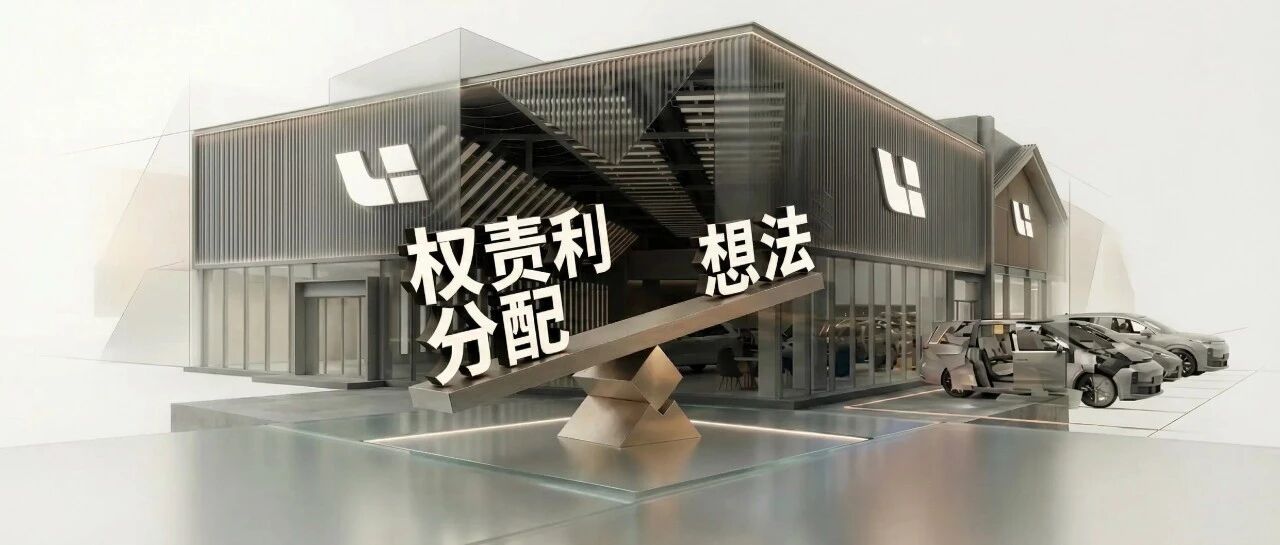
Core Viewpoint - The article presents a critical analysis of the Ideal Auto's store partner program, emphasizing the imbalance of power, responsibility, and benefits between store managers and the company [2][4][19]. Group 1: Risk Perspective - The essence of the channel is the distribution of rights, responsibilities, and benefits [2]. - The store manager's power and profit-sharing in the Ideal store partner program are significant, while their responsibilities are minimal, leading to an imbalance [3][4]. - The most suitable channel model for Ideal is a combination of direct sales and agency, especially in lower-tier cities where market conditions are less favorable [3]. Group 2: Critical Analysis - There is a lack of trust among store managers towards Ideal, with many feeling vulnerable and doubting the company's commitment to increasing their income [4]. - The distribution plan of the store partner program may lead to a reduction in monthly income by 15-50%, which could discourage store managers despite the potential for higher annual earnings [4][5]. - If store managers are allowed to independently allocate financial and insurance suppliers without a solid foundation of trust, there is a high probability that they may accept commissions, which could lead to conflicts of interest [6][19]. Group 3: Financial Insights - Ideal has maintained positive cash flow before Q4 2023, with only two quarters showing negative free cash flow, indicating a strong cash management strategy [12][14]. - The company has been able to receive full payment from customers before paying suppliers, allowing it to operate without straining its own funds [14]. - The operational model in China allows for rapid expansion without significant capital pressure, contrasting with the more asset-heavy model required for overseas operations [10][11][19]. Group 4: Future Considerations - If Ideal can build trust and collaboration with store managers, it may cultivate a dedicated workforce aligned with the company's culture and values, leading to improved sales performance [20]. - The success of the store partner program hinges on addressing the current trust issues and ensuring that store managers feel empowered and adequately compensated [19][20].
净利暴跌86%,李想要把“增程神话”换成AI+机器人
阿尔法工场研究院· 2026-03-13 08:04
Core Viewpoint - Li Auto is facing significant challenges as its competitive advantage in range-extended technology diminishes, leading to a sharp decline in profits and revenues, while the market becomes increasingly saturated with competitors and pure electric vehicles [2][3][7]. Financial Performance - In 2025, Li Auto reported a net profit of 1.139 billion yuan, a staggering decline of 85.8% year-on-year, with revenue dropping 22.3% to 112.3 billion yuan [2][3]. - The total vehicle deliveries for 2025 were 406,300 units, down 18.8% from the previous year, failing to meet both the initial target of 700,000 and the revised target of 640,000 [3][4]. - The gross margin for 2025 fell to 18.7%, down from 20.5% in 2024, with vehicle gross margin decreasing from 19.8% to 17.9% [4]. Market Competition - The range-extended vehicle market has become increasingly competitive, with multiple automakers introducing similar technologies, diminishing Li Auto's previous advantage [7][8]. - In 2025, the sales of pure electric vehicles reached 7.877 million units, a 24.4% increase year-on-year, while range-extended vehicle sales only grew by 6% to 1.235 million units [8][9]. Internal Challenges - Li Auto has experienced significant management turnover, with several key executives leaving the company, raising concerns about operational stability [5]. - A recall of 11,000 units due to safety issues has negatively impacted the brand's image and consumer trust, further complicating its recovery efforts [5][6]. Strategic Initiatives - To combat declining sales, Li Auto aims to achieve a sales target of 500,000 units in 2026, focusing on both range-extended and pure electric vehicles [9][10]. - The company plans to launch a new range-extended model, the Li L9 series, in the second quarter of 2026, featuring advanced charging technology and improved electric range [10]. - Li Auto is heavily investing in AI technology, with 50% of its 11.3 billion yuan R&D budget in 2025 allocated to AI, indicating a strategic pivot towards integrating AI into its vehicle offerings [10][11].
理想电话会全文&详解:今年是进化成“具身智能”企业的关键之年!
美股IPO· 2026-03-13 00:03
Core Viewpoint - The company aims to transition from an intelligent electric vehicle manufacturer to an artificial intelligence enterprise, with a focus on the new L9 flagship model and increased AI investment, targeting a 20% year-on-year sales growth in 2026 [1][3][4]. Financial Performance - In Q4 2025, the company's total revenue was 28.8 billion RMB, a 35% year-on-year decline, with vehicle sales revenue dropping 36.1% to 27.3 billion RMB [3][6][25]. - The operating loss for Q4 was 443 million RMB, compared to an operating profit of 3.7 billion RMB in the same period last year [3][28]. - The company expects Q1 2026 delivery volumes between 85,000 and 90,000 vehicles, with total revenue projected between 20.4 billion and 21.6 billion RMB, below market expectations [3][29]. Product Development - The new L9 series, set to launch in Q2 2026, will feature self-developed M100 chips and a fully controlled chassis, aimed at regaining market share in the high-end SUV segment [3][7][19]. - The L9 is positioned as a "embodied AI robot," with significant upgrades in perception, decision-making, and execution capabilities [7][19]. - The company plans to maintain a research and development budget of approximately 12 billion RMB in 2026, with about 50% allocated to AI-related projects [4][11][49]. AI Strategy - The company is increasing its investment in AI, with 50% of its R&D budget focused on AI projects, including self-developed chips and autonomous driving systems [4][11][21]. - The transition to an AI-focused business model is supported by a major restructuring of the R&D organization to enhance efficiency and innovation [11][21]. Sales and Marketing Strategy - The company is optimizing its sales network, focusing on high-quality locations and enhancing store operations through a "store partner" program that empowers store managers with decision-making authority [10][33]. - The company denies rumors of closing 100 stores, stating that adjustments are part of normal operational management [10][32]. Electric Vehicle Progress - The L6 electric model has resolved previous supply chain bottlenecks and is expected to maintain stable monthly sales of around 20,000 units [9][20]. - The L8 model has seen a significant increase in orders, with a nearly 180% rise in orders from January to March 2026, driven by positive user experiences [9][20].