earnings yield

Search documents
Fidelity National Information Services (FIS) Q4 Earnings Report 2025
Financial Modeling Prep· 2026-02-24 21:06
Core Insights - Fidelity National Information Services, Inc. (FIS) reported its Q4 2025 earnings, showing a slight miss in adjusted EPS but exceeding revenue expectations, indicating a mixed performance in the financial technology sector [2][5]. Financial Performance - For Q4, adjusted EPS was $1.68, slightly below the estimated $1.69, while revenue reached $2.81 billion, surpassing the expected $2.74 billion [2][5]. - Year-over-year, adjusted EPS improved from $1.40 to $1.68, reflecting a positive trend in profitability [3][5]. Valuation Metrics - The trailing price-to-earnings (P/E) ratio is approximately 67.12, indicating that investors are willing to pay a premium for FIS's earnings, while the adjusted P/E ratio is around 8.52 [3][5]. - The price-to-sales ratio stands at 2.34, suggesting that investors are paying $2.34 for every dollar of sales, reflecting the market's valuation of the company's revenue [4][5]. - The enterprise value to sales ratio is 3.46, and the enterprise value to operating cash flow ratio is 14.23, indicating a healthy cash flow generation relative to market value [4]. Financial Stability - FIS maintains a debt-to-equity ratio of 0.94, indicating a moderate level of debt compared to equity, which suggests financial stability [4]. - The current ratio of 0.53 may indicate potential liquidity challenges in meeting short-term obligations, highlighting the need for careful management of working capital [4].


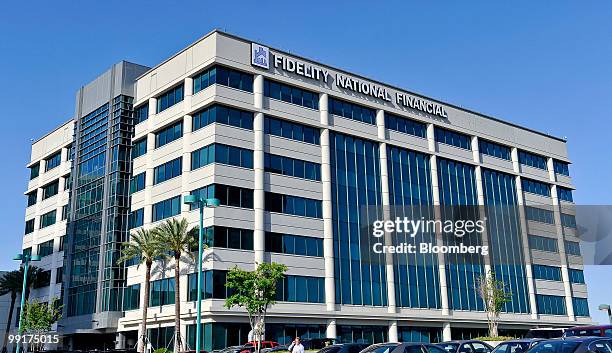
Charles Schwab Corporation (NYSE:SCHW) Financial Overview
Financial Modeling Prep· 2026-01-21 20:00
Core Viewpoint - Charles Schwab Corporation is a leading U.S. brokerage firm that offers a wide range of financial services and investment products, competing with major firms like Fidelity and E*TRADE [1] Financial Performance - On January 21, 2026, Schwab reported earnings per share (EPS) of $1.39, slightly below the estimated $1.40, with revenue of approximately $6.34 billion, just under the expected $6.38 billion [2][6] - In 2025, Schwab's net income for the fourth quarter reached $2.5 billion, driven by a surge in brokerage activity as individual investors engaged in stock and ETF trading at unprecedented levels [3][6] Market Position and Valuation - Schwab has a price-to-earnings (P/E) ratio of approximately 22.52, indicating investor confidence in its earnings potential, while the price-to-sales ratio is about 6.86 [4][6] - The enterprise value to operating cash flow ratio is notably negative at -243.46, suggesting challenges in cash flow generation [4] - The company's debt-to-equity ratio stands at 0.56, indicating a moderate level of debt compared to equity, while the current ratio of 0.50 may suggest potential liquidity concerns [5]

ABM Industries Incorporated (NYSE:ABM) Earnings Report Analysis
Financial Modeling Prep· 2025-12-18 07:00
Core Insights - ABM Industries Incorporated reported earnings per share (EPS) of $0.88, which was below the estimated $1.09, resulting in a negative surprise of 20% [2][6] - The company's revenue for the period was approximately $2.30 billion, exceeding the estimated $2.27 billion, and reflecting a year-over-year increase of 5.4% [3][6] Financial Performance - ABM's EPS decreased from $0.90 reported in the same quarter last year, indicating a trend of missing consensus EPS estimates, having exceeded them only once in the past four quarters [2] - The company has a price-to-earnings (P/E) ratio of approximately 18.27, and a price-to-sales ratio of about 0.35, reflecting market valuation metrics [4] - ABM's enterprise value to sales ratio is around 0.35, and its enterprise value to operating cash flow ratio is approximately 13.06 [4] Financial Health - The company maintains a low debt-to-equity ratio of 0.079, indicating conservative use of debt [5][6] - ABM's current ratio is approximately 1.48, suggesting a strong liquidity position to cover short-term liabilities [5][6] - The earnings yield is about 5.47%, making ABM an attractive option for investors seeking stable returns [5]

BNY Mellon Surpasses Earnings Estimates with Strong Financial Performance
Financial Modeling Prep· 2025-10-16 17:00
Core Insights - BNY Mellon reported an earnings per share (EPS) of $1.88, exceeding the estimated $1.77 and showing significant growth from the previous year's EPS of $1.52 [2][6] - The company achieved a revenue of approximately $5.07 billion, surpassing the estimated $4.97 billion, with a price-to-sales ratio of about 1.91 [3][6] - BNY Mellon's price-to-earnings (P/E) ratio is approximately 15.64, indicating favorable market valuation of its earnings, and an earnings yield of around 6.40% highlights its profitability [4][6] Financial Metrics - The debt-to-equity ratio of 1.17 suggests a higher level of debt relative to equity, indicating the company's financial leverage [5] - A current ratio of 0.49 reflects BNY Mellon's ability to cover short-term liabilities with short-term assets, which is crucial for its financial health [5]


RH's Financial Performance in Q2 Fiscal 2025 Raises Concerns
Financial Modeling Prep· 2025-09-12 03:00
Core Insights - RH reported earnings per share (EPS) of $2.93 for Q2 fiscal 2025, missing the Zacks Consensus Estimate of $3.19 by 8.15% [2][6] - Revenue for the quarter was approximately $899.2 million, slightly below the estimated $905.4 million, but an improvement from $829.66 million in the same quarter last year [3][6] Financial Performance - Year-over-year EPS growth was observed, increasing from $1.69 in the same quarter last year to $2.93 this year, indicating some growth despite missing expectations [2] - Over the past four quarters, RH has only surpassed consensus EPS and revenue estimates once, indicating ongoing challenges in meeting market expectations [3] Valuation Metrics - The company has a high price-to-earnings (P/E) ratio of 50.82, suggesting that investors are willing to pay a premium for its shares [4][6] - The price-to-sales ratio stands at 1.31, indicating that investors pay $1.31 for every dollar of sales [4] - The enterprise value to sales ratio is 2.50, reflecting the company's total valuation relative to its sales [4] Financial Structure - RH has a negative debt-to-equity ratio of -35.55, which may indicate significant liabilities [5] - The current ratio of 1.37 suggests a reasonable level of liquidity to cover short-term obligations [5] - The earnings yield is 1.97%, providing insight into potential returns on investment [5]


BDORY vs. SMFG: Which Stock Is the Better Value Option?
ZACKS· 2025-03-18 16:40
Core Insights - The article compares Banco Do Brasil SA (BDORY) and Sumitomo Mitsui (SMFG) to determine which stock offers better value for investors [1] Valuation Metrics - BDORY has a forward P/E ratio of 4.14, significantly lower than SMFG's forward P/E of 41.13 [5] - BDORY's PEG ratio is 1.47, while SMFG's PEG ratio is 2.42, indicating that BDORY may offer better value relative to its expected earnings growth [5] - BDORY's P/B ratio is 0.80, compared to SMFG's P/B of 1.04, suggesting that BDORY is undervalued in terms of market value versus book value [6] Zacks Rank and Value Grades - BDORY has a Zacks Rank of 1 (Strong Buy), while SMFG has a Zacks Rank of 2 (Buy), indicating a stronger earnings outlook for BDORY [3] - Based on various valuation metrics, BDORY holds a Value grade of B, whereas SMFG has a Value grade of D, further supporting the conclusion that BDORY is the more attractive option for value investors [6]