Workflow
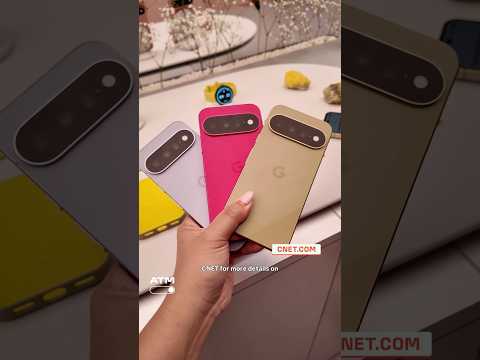
Pixel 10
icon
Search documents
AI Demand Picture: What GOOGL, AMZN Earnings Mean This Week
Youtube· 2026-02-02 14:17
Core Viewpoint - The tech sector is experiencing significant shifts, particularly with companies like Alphabet and Amazon focusing on AI and cloud services as key growth drivers [2][7]. Alphabet (Google) - Google is transitioning from a search-centric model to an AI orchestration layer, with success in the upcoming earnings report hinging on performance in the Google Cloud Platform, which has consistently shown growth above 30% [3][5]. - The integration of AI, particularly through the Gemini platform, is crucial for Google's overall strategy, impacting various products including Workspace and Pixel devices [4][5]. - The upcoming earnings report will be the first full quarter reflecting the new Pixel 10 range, which is expected to showcase the AI capabilities [4][6]. Amazon - Amazon's earnings report will be closely watched for capital expenditure (capex) trends, especially in relation to Amazon Web Services (AWS) [7][9]. - The market is interested in how AWS is managing its GPU resources, with current demand being met rather than building for future demand [9][10]. AMD and Nvidia - AMD had a strong performance last year, and there are expectations for continued momentum, with the market seeking a more balanced competitive landscape alongside Nvidia [12][13]. - The demand for inference workloads is anticipated to increase significantly, potentially by 10 times, which aligns with the broader shift in AI applications [14][15]. Qualcomm - Qualcomm is expanding its total addressable market (TAM) beyond high-end smartphones into industrial, edge, and automotive sectors, indicating strong growth potential [19][20]. - The upcoming earnings report is expected to reflect this expansion and the positive trajectory of Qualcomm's business strategy [21].
AI产业速递:谷歌正在进行哪些布局?
Changjiang Securities· 2026-01-14 15:16
Investment Rating - The investment rating for the industry is "Positive" and maintained [7] Core Insights - Google has established a comprehensive AI ecosystem, including TPU computing infrastructure, the Gemini multimodal model family, AI Studio, and the Vertex AI developer platform, which continuously empowers its AI layout and strengthens its data moat [2][10] - The acceleration of AI applications is moving towards realization, with a positive outlook on the performance of large model companies like Zhiyu and Minimax post-IPO. Key marginal factors include (1) model capability enhancement and release event catalysts; (2) advancement of business models (C-end traffic entry logic & B-end labor replacement logic). A paradigm shift in models by 2026 is expected to bring excess opportunities, with a long-term positive view on AI industry upgrade opportunities [2][10] Summary by Relevant Sections AI Applications - Google is actively expanding its AI strategy across various segments, focusing on providing infrastructure and open-source models in healthcare. Notable developments include the Vertex AI Search for Healthcare tool optimized for medical scenarios and partnerships like the one with Color Health for breast cancer screening assistance [10] AI for Science - Google has a significant advantage in AI for Science (AI4S) due to its extensive experience and capabilities in the field. The company has developed world-class scientific intelligence models and tools, applying AI across multiple scientific domains such as biology, meteorology, and physics [10] Edge Deployment - Google has a well-established edge deployment strategy, focusing on embodied intelligence, AI glasses, AI phones, Google TV, and Robotaxi services. The latest data shows significant growth in Robotaxi services, with a 80% increase in service volume compared to earlier months [10]
安卓将迎来AI推送管理,终于不用再被通知打扰了
3 6 Ke· 2026-01-04 02:35
Core Insights - Google has introduced a "Notification Organizer" feature for Pixel 9 and Pixel 10 series to address the issue of notification overload on Android devices [1][3] Group 1: Feature Overview - The "Notification Organizer" utilizes on-device AI to analyze the content of notifications rather than simply categorizing them by app, allowing for more nuanced organization [3][11] - This feature will help users prioritize notifications, distinguishing between important messages and less relevant advertisements [3][11] Group 2: Background and Context - Despite previous attempts to manage notifications in Android versions 8.0 through 11, users still face challenges with notification overload due to the increasing number of apps installed [4][6] - As of March 2024, the average Chinese internet user has installed 70 apps, contributing to the clutter in notification bars [4] Group 3: Industry Implications - The proliferation of apps and notifications is a deliberate strategy by internet companies to capture user attention, which has become a monetizable resource [9] - The competitive nature of the mobile internet market discourages developers from self-regulating notification practices, leading to a chaotic notification environment [11] Group 4: Technological Focus - The "Notification Organizer" represents a practical application of Google's focus on on-device AI capabilities, particularly with the Tensor G5 chip in the Pixel 10 series [13] - This feature aims to provide users with a tangible experience of AI's benefits in managing notifications, contrasting with other less practical AI features [13]
2025最大AI赢家的凡尔赛年度总结,哈萨比斯Jeff Dean联手执笔
量子位· 2025-12-24 00:42
Core Insights - The article emphasizes that 2025 marks a significant year for AI advancements, particularly in reasoning, collaboration, and scientific discovery, led by Google [1][3][9] Group 1: AI Development and Integration - Google has made substantial progress in reasoning, multi-modal understanding, model efficiency, and generative capabilities, significantly enhancing model performance [15][4] - The Gemini series, particularly Gemini 3 Pro, has set new standards in multi-modal reasoning and achieved top scores in various benchmark tests, including a 23.4% record in MathArena Apex [18][19] - AI has been deeply integrated into Google's core products, transforming from a tool to a practical asset for users [5][10][23] Group 2: Generative Media and Creative Tools - 2025 is highlighted as a transformative year for generative media, with AI providing unprecedented capabilities for video, image, audio, and virtual world generation [24][25] - Google has collaborated with creative professionals to develop tools like Flow and Music AI Sandbox, enhancing creative workflows [25][21] Group 3: Scientific and Mathematical Advancements - AI has significantly contributed to advancements in life sciences, health, natural sciences, and mathematics, empowering researchers with new tools and resources [27][28] - The AI system AlphaFold, which addresses protein folding, has been widely adopted by researchers globally, marking a milestone in scientific research [28] Group 4: Quantum Computing and Physical World Research - Google has made notable advancements in quantum computing and energy-efficient technologies, including the launch of a new TPU designed for the reasoning era [33][32] - The company has also made strides in robotics and visual understanding, integrating AI agents into both physical and virtual environments [33] Group 5: Addressing Global Challenges - Google's AI-driven scientific progress is being applied to tackle critical global challenges, including climate resilience, public health, and education [36][38] - The company has developed advanced forecasting models that enhance decision-making in various sectors, including weather prediction [36] Group 6: Responsibility and Safety - Google emphasizes the importance of combining research breakthroughs with responsibility and safety, continuously improving tools and frameworks to mitigate risks [42][43] - The Gemini 3 model is noted as the safest model to date, undergoing comprehensive safety assessments [44] Group 7: Collaboration and Open Ecosystem - Google advocates for cross-sector collaboration to responsibly advance AI, establishing partnerships with leading AI labs and educational institutions [46][45] - The company aims to continue promoting cutting-edge technology safely and responsibly for the benefit of humanity [47]
当AI手机开始“越权”:豆包的颠覆体验,动了谁的奶酪?
3 6 Ke· 2025-12-11 09:38
Core Insights - The article emphasizes the transformation of user experience in the smartphone industry, particularly with the introduction of AI-driven functionalities that enhance interaction and efficiency [1][10][18] Industry Trends - The report from the First New Voice Think Tank highlights a shift towards vertical and general AI agents, indicating a potential concentration of traffic entry points towards a few general agents [1] - The global penetration rate of AI smartphones is projected to reach 32% by 2025, indicating a significant growth trajectory for AI integration in mobile devices [15] Company Developments - The launch of the Doubao AI phone by ByteDance and ZTE has generated significant consumer interest, leading to a scarcity of the product and even price premiums in the second-hand market [1] - Despite initial success, the Doubao AI phone faced challenges with various applications from Alibaba and Tencent blocking access due to security concerns, highlighting a conflict between AI functionality and platform control [10][11] Technological Innovations - The Doubao AI phone introduces a new era of "one-click management," allowing users to execute complex tasks across multiple applications seamlessly, which marks a departure from traditional AI assistants [2][6] - The phone's ability to handle cross-application operations and its simplified interaction model represent significant advancements in user experience [3][5] User Experience Enhancements - The Doubao AI phone features a memory function that allows for highly personalized interactions, enabling users to store and retrieve information effortlessly [7][8] - The integration of memory with execution capabilities allows the AI to plan and execute tasks based on user history and preferences, enhancing the overall user experience [9][12] Competitive Landscape - The primary competition for the Doubao AI phone is not other smartphone manufacturers like Apple, but rather the established internet companies that control app ecosystems [10][11] - The article suggests that the future of smartphones will depend on the ability to integrate AI capabilities that enhance user experience while navigating the challenges posed by existing platform monopolies [13][18]
世纪破冰!iPhone和安卓手机互通
猿大侠· 2025-11-23 04:11
Core Viewpoint - Google and Apple have achieved cross-platform file sharing between their systems, allowing users to send files directly between iOS and Android devices, breaking down long-standing ecosystem barriers [1][2]. Group 1: Cross-Platform Functionality - The "Quick Share" feature from Google now supports file sharing with Apple's "AirDrop," enabling iPhone, iPad, and Mac users to send files to the latest Google Pixel devices [1]. - Users must adjust settings to enable visibility for file sharing, with Apple users needing to set "AirDrop" to "Everyone for 10 minutes" to receive files from Pixel devices [1][2]. - The notification and confirmation process for receiving files is consistent with the existing "AirDrop" experience, ensuring familiarity for users [1]. Group 2: Security Measures - Google emphasizes that the cross-platform sharing feature incorporates multiple layers of security to protect user privacy during file transfers [2]. - The transfer process utilizes a secure peer-to-peer connection, ensuring that data does not pass through any servers, thus enhancing security [2]. - Both devices display each other's names for user verification before file transfer begins, requiring consent from the receiving party to prevent unauthorized access [2]. Group 3: Future Developments - Currently, the feature only supports sharing when both devices are set to "Everyone for 10 minutes," but Google aims to collaborate with Apple to introduce a "Contacts Only" mode for more private sharing in the future [2].
端侧AI爆发?谷歌“开抄”苹果PCC私有云,国产手机也在疯狂学习
3 6 Ke· 2025-11-13 08:21
Core Insights - The discussion around "AI bubble theory" has gained traction among analysts, institutions, and even prominent figures like Sam Altman and Jeff Bezos, highlighting concerns over the rising capital and computational investments in AI without corresponding returns [1][2] - Apple, previously criticized for lagging in AI, is now being recognized for its cautious and steady approach, contrasting with competitors like Huawei, OPPO, and Google [1][2] Group 1: Google PAC Platform - Google announced its Private AI Compute (PAC) platform, aiming to create a private and useful AI, similar to Apple's Private Cloud Compute (PCC) introduced at WWDC24 [2][5] - PAC utilizes Google’s TPU and confidential computing infrastructure, ensuring that data remains encrypted and inaccessible even to Google’s engineers during processing [7][9] - The PAC platform enhances user experience on devices like Pixel 10 by providing contextual suggestions through features like Magic Cue, while maintaining privacy through hardware verification and task isolation [10][12] Group 2: Competitive Landscape - Other manufacturers, including OPPO and Huawei, are also developing their own end-cloud collaborative architectures to balance computational power and privacy [13][16] - OPPO has introduced a multi-tier model deployment strategy, including lightweight models on devices and larger models in the cloud, while also planning to create a private computing cloud in collaboration with public cloud services [15][16] - Huawei's HPIC platform extends privacy protection to the cloud, processing data without retaining original content, positioning it closer to Google's PAC in terms of capabilities [17][18] Group 3: Industry Trends - The trend towards "private AI" is becoming a standard in the industry, with major players recognizing the need for a balance between model performance and user privacy [19][20] - The shift initiated by Apple is influencing competitors, as they adapt their strategies to align with the emerging focus on privacy and secure AI processing [19][20]
Stay one step ahead with Magic Cue on #Pixel10
Google· 2025-10-13 16:19
Product Features - Pixel 10 introduces Magic Cue, leveraging Gemini Nano to enhance cross-app connectivity [1] - Magic Cue understands conversation context to provide relevant information seamlessly [1] - Users can easily access restaurant details from calendar invites [1] - Flight information can be accessed and shared with a single tap [1] - Photo sharing is simplified, eliminating the need for extensive searching [1] Technological Advancement - Gemini Nano powers Magic Cue, enabling contextual understanding [1] User Experience - Magic Cue aims to keep users one step ahead by anticipating their needs [1]
X @Ansem
Ansem 🧸💸· 2025-09-27 05:41
RT Zoomer 🧢 (@zoomyzoomm)Millionaire in Finance:- Patek on his wrist- Hot skinny blonde gf- Lives in NYC but holidays in France- iPhone 17 (orange)- Porsche 911 parked outside- Donates to charity (for the tax benefits)- Runs a twitter burner- Never fails to book Mykonos- Suit (no tie)Millionaire in Tech:- Lives in sf- Doesn't have a gf- Talks to AI at night- Makes $500k a year at FAANG- Fasts the entire day #biohacking- Has unlimited PTO (never takes it)- Pixel 10 (pre-release)- Doesn't own a car (die hard ...
POV: You’re using Pro Res Zoom on the new Pixel 10 Pro XL 📸
Google· 2025-09-17 17:43
Meet the brand new Google #Pixel10 Pro XL 🎨 UI & Design - Latest Android UI: Material 3 Expressive - New colors for the Pixel 10 - A brighter display on the Pixel 10 🚀 Performance & Hardware - The new Tensor G5 chip - Pixelsnap, a built-in magnetic system for Qi2 chargers and accessories - Up to 25W fast wireless charging on the Pixel 10 Pro XL 📸 Cameras - A 5x telephoto lens on the base Pixel 10 for the first time - Super Res Zoom up to 20x on the Pixel 10 - A new triple rear camera system on Pro models (5 ...