Black Hills (BKH)

Search documents
2 No-Brainer High-Yield Stocks to Buy With $500 Right Now
The Motley Fool· 2024-07-13 22:25
Enterprise Products Partners: The boring energy company To be fair, 7% is a huge yield, and investors will have to accept that the yield will make up the lion's share of their return. But add in distribution growth in the low to mid-single digits, which is reasonable to expect, and your return will get up to around the 10% you'd expect from the broader market pretty quickly. Black Hills is an out-of-favor Dividend King Do you have some money in your pocket, say $500 (or more), just waiting to be put to work ...


Black Hills Corp. to Power Meta's New Data Center in Wyoming with Innovative Energy Solutions and Mission-Critical Reliability
Newsfilter· 2024-07-11 20:15
Core Insights - Black Hills Corporation is partnering with Meta to provide power for a new data center in Cheyenne, Wyoming, leveraging its electric utility, Black Hills Energy [7] - The company has a capital-light service model that supports industrial and data center loads while minimizing risks for other customers [1] - The data center business currently contributes 5% to the company's earnings per share (EPS), with expectations to increase to approximately 10% over the next five years [1] Company Overview - Black Hills Corporation is a growth-oriented utility company based in Rapid City, South Dakota, serving 1.34 million natural gas and electric utility customers across eight states [1] - The company has been providing energy solutions for data centers in Wyoming for over a decade, emphasizing reliability and customized energy resources [7][8] Service Model - The Large Power Contract Service tariff, established in 2016, allows Black Hills Energy to meet specific energy requirements for qualifying data center customers [3] - This innovative service model is designed to support the expansion of data centers while aligning with sustainability objectives [7]
Black Hills Corporation: The Time To Buy This Dividend King Is Now
Seeking Alpha· 2024-07-11 11:30
A view of electric power lines. In dividend growth investing, I believe that finding companies to stand the test of time is key to success. This is what makes utilities one of my favorite sectors to cover. Demand for utility services like electricity, water, and natural gas, almost certainly isn't going to be going anywhere. To the contrary, it's difficult to imagine a reality in which customers don't consume more of these resources over time. That growing demand and the overall stability of regulated utili ...

Black Hills Corp. Schedules 2024 Second Quarter Earnings Release and Conference Call
GlobeNewswire News Room· 2024-07-10 20:15
Core Points - Black Hills Corp. will announce its 2024 second quarter earnings on July 31, 2024, after market close [1] - A live conference call and webcast will be held on August 1, 2024, at 11 a.m. EDT to discuss the financial results [1] Company Overview - Black Hills Corp. is a growth-oriented utility company based in Rapid City, South Dakota, serving 1.34 million natural gas and electric utility customers across eight states: Arkansas, Colorado, Iowa, Kansas, Montana, Nebraska, South Dakota, and Wyoming [5]

Black Hills Corp. Announces Investor Relations Transition
Newsfilter· 2024-07-09 20:15
Diaz has more than 20 years of combined investor relations and broad capital markets experience, including equity research and investment banking. He began his career on Wall Street as an investment banking associate at Prudential Securities in New York, with primary responsibility for valuation and financial modeling and analysis. He later served in both analytical and editorial capacities for sell-side equity research teams at Canadian investment banks CIBC World Markets and National Bank Financial in Tor ...
Black Hills Corp. Announces Investor Relations Transition
GlobeNewswire News Room· 2024-07-09 20:15
Core Points - Black Hills Corp. has appointed Salvador (Sal) Diaz as the new director of investor relations, effective immediately, replacing Jerome Nichols who is retiring after 20 years with the company [1] - Diaz has over 20 years of experience in investor relations and capital markets, having worked with various companies across multiple industries [2][3] - The company serves 1.34 million natural gas and electric utility customers across eight states in the U.S. [5] Group 1 - Diaz's previous roles include head of investor relations at a pre-IPO digital identity company and experience in investment banking and equity research [2][3] - He holds an MBA from The Wharton School, a graduate diploma in computer science from the University of Cambridge, and a degree in industrial engineering from the University of the Philippines [4] - Black Hills Corp. is focused on growth and aims to be the energy partner of choice, emphasizing customer service [5]

2 Incredibly Cheap High-Yield Utility Stocks to Buy Now
The Motley Fool· 2024-06-28 07:29
Group 1: Company Overview - Black Hills serves approximately 1.3 million customers across several states including Arkansas, Colorado, Iowa, Kansas, Montana, Nebraska, South Dakota, and Wyoming, primarily as a natural gas and electric utility [1] - The company has a higher leverage compared to its peers, making it more susceptible to the impacts of rising interest rates in the near term [1][3] - Despite the leverage concerns, Black Hills maintains a strong financial position with an investment-grade credit rating [3] Group 2: Investment Potential - Black Hills offers a substantial dividend yield of 4.9%, which is significantly above the average for utility companies, making it an attractive option for income-focused investors [3][6] - The company has a strong history of dividend increases, being classified as a Dividend King, and is expected to grow earnings by approximately 4% to 6% annually [4] - The population in the regions served by Black Hills is growing at nearly three times the national average, which supports future earnings growth [4] Group 3: Comparison with Dominion Energy - Dominion Energy is characterized as a turnaround play with higher risk, while Black Hills is viewed as a stable, albeit less exciting, utility investment [6][10] - Dominion's current dividend yield stands at 5.4%, reflecting its ongoing business changes and focus on balance sheet strengthening [8] - Both companies are trading at a discount compared to their sector, with the average yield in the utility sector around 3% [11]
Black Hills Corp. Highlights Advancements Toward a Cleaner Energy Future in Newly Released 2023 Sustainability Report
GlobeNewswire News Room· 2024-06-26 20:15
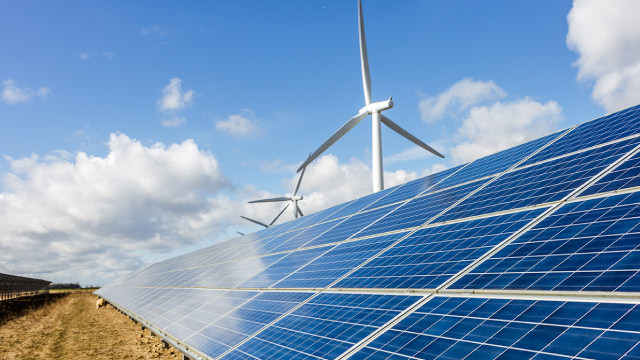
Core Viewpoint - Black Hills Corp. has released its 2023 Corporate Sustainability Report, showcasing its environmental, social, and governance impacts, along with progress on major projects and climate goals [1][2]. Sustainability Progress - The company achieved a 27% reduction in greenhouse gas emissions from its natural gas distribution system since 2022, moving towards its goal of net zero emissions by 2035 [2]. - Electric utility greenhouse gas emissions have decreased by nearly one third since 2005, with targets to reduce electric emissions intensity by 40% by 2030 and 70% by 2040 compared to 2005 levels [2]. Clean Energy Initiatives - The Colorado Clean Energy Plan aims to add 400 MW of renewable energy and battery storage, targeting an 89% reduction in GHG emissions by 2030 compared to 2005 [3]. - The company has expanded its renewable natural gas (RNG) presence and launched the Green Forward program for eligible customers [3]. - A partnership with Babcock & Wilcox, supported by a Wyoming Energy Authority grant, is focused on developing a pilot hydrogen plant to convert coal to clean hydrogen [3]. Community Engagement - In 2023, the company contributed $6.1 million to community support initiatives, including energy assistance, grants, scholarships, and tree planting [3]. - Employees donated $495,000 to over 45 United Way organizations, with a 25% match from the Black Hills Corp. Foundation [3]. Economic Impact - Black Hills Corp.'s direct economic impact in 2023 amounted to $1.35 billion, emphasizing its commitment to safety, reliability, and sustainability in utility systems [3].

Black Hills Corp. Highlights Advancements Toward a Cleaner Energy Future in Newly Released 2023 Sustainability Report
Newsfilter· 2024-06-26 20:15
Core Insights - Black Hills Corp. has made significant progress in sustainability, reporting a 27% reduction in greenhouse gas emissions from its natural gas distribution system since 2022, aiming for net zero emissions by 2035 [1][4] - The company has also reduced electric utility greenhouse gas emissions by nearly one third since 2005 and is on track to achieve a 40% reduction in electric emissions intensity by 2030 and 70% by 2040 compared to 2005 [1][5] Sustainability Initiatives - The Colorado Clean Energy Plan aims to add 400 MW of renewable energy and battery storage, targeting an 89% reduction in GHG emissions by 2030 compared to 2005 [5] - Black Hills Corp. has expanded its renewable natural gas (RNG) presence through infrastructure investments and a voluntary RNG and carbon offset program for eligible customers [5] - The company received a grant to partner on a pilot hydrogen plant project, converting coal to clean hydrogen at its Neil Simpson energy complex in Wyoming [5] Community Engagement - In 2023, Black Hills Corp. contributed $6.1 million to community support initiatives, including energy assistance, grants, scholarships, and tree planting [5] - Employees donated $495,000 to over 45 United Way organizations, with a 25% match from the Black Hills Corp. Foundation [5] Economic Impact - The company's direct economic impact in 2023 totaled $1.35 billion, reflecting its commitment to safety, reliability, and sustainability in utility systems [5][6]
Forget NextEra Energy. Buy This Magnificent Dividend King Instead
The Motley Fool· 2024-06-22 08:23
Group 1: Company Overview - NextEra Energy is recognized as one of the best-run utilities, combining a regulated utility (Florida Power & Light) with a renewable-power business for growth [2] - The company has a significant market capitalization of $150 billion, reflecting its popularity on Wall Street [6] - NextEra Energy offers a dividend yield of 2.8%, which is below the average utility yield of 3% [6] Group 2: Dividend and Growth Analysis - NextEra Energy has achieved a remarkable 10-year annualized dividend-increase rate of approximately 10%, which is exceptional for the utility sector [7] - For investors focused on dividend growth, NextEra Energy is a strong candidate, but those seeking higher immediate income may find better options elsewhere [7][10] Group 3: Comparison with Black Hills - Black Hills is highlighted as a Dividend King with a dividend yield of nearly 5%, significantly higher than NextEra Energy's yield [3][10] - Despite its smaller market cap of $3.6 billion, Black Hills has a growing customer base, expanding nearly three times faster than the U.S. population growth [4] - Black Hills faces challenges with a heavy debt load and rising interest rates, which have pressured its earnings and capital investment plans [9]