Cisco Systems(CSCO)

Search documents
OECD-Cisco research finds stark geographical and generational divides in AI uptake and digital well-being
Prnewswire· 2025-12-04 11:03
Core Insights - Generative AI is transitioning from novelty to a habitual part of life, with significant geographic and generational divides in adoption and trust levels [2][3][8] Adoption Trends - Young adults globally are the most active users of digital content, with those under 35 showing the highest engagement with social media and generative AI [3][6] - Emerging economies, particularly India, Brazil, Mexico, and South Africa, lead in AI adoption, exhibiting the highest usage rates and trust levels [3][8] - In contrast, European respondents show lower trust and higher uncertainty regarding AI [3][8] Digital Well-being Concerns - High recreational screen time, especially in emerging markets, correlates with decreased well-being and lower life satisfaction, indicating a need for a focus on digital well-being [4][8] - More than five hours of daily recreational screen time is linked to negative impacts on well-being [4] Generational Divides - Younger adults report that most of their social interactions occur online, with over 50% of under-35s actively using AI and over 75% finding it useful [6][7] - Adults over 45 are less likely to view AI as useful, with many expressing uncertainty due to a lack of familiarity [7][8] Call to Action - The research emphasizes the need for targeted actions to bridge the digital skills gap and foster digital literacy across all ages [10][9] - Cisco's initiatives aim to ensure that AI benefits all demographics, promoting a more inclusive digital future [9][10]



Cisco Systems, Inc. (CSCO) Presents at UBS Global Technology and AI Conference 2025 Transcript
Seeking Alpha· 2025-12-02 20:03
Group 1 - The company is responsible for Optical Systems and Optics, which includes traditional DWDM systems primarily sold to service providers and hyperscalers [1] - The Optical Systems business focuses on dense wavelength division multiplexing (DWDM) technology used for transmitting signals over fiber optic infrastructure [1] - Competitors in the Optical Systems domain include Ciena, Fujitsu, ADVA, Infinera, Huawei, and ZTE, indicating a fragmented market [1]

Cisco Systems (NasdaqGS:CSCO) 2025 Conference Transcript
2025-12-02 18:57
Summary of Cisco Systems Conference Call Company Overview - **Company**: Cisco Systems (NasdaqGS:CSCO) - **Date**: December 02, 2025 - **Key Speakers**: Bill Gartner (SVP and GM of Optical Systems and Optics Group), Sami Badri (Head of Investor Relations and Market Insights) Industry Insights - **Industry**: Optical Systems and Networking - **Key Competitors**: Ciena, Fujitsu, Adva, Infinera, Huawei, ZTE [2][8] Core Business Segments 1. **Optical Systems**: - Focus on DWDM systems for service providers and hyperscalers [2] - Includes chassis-based solutions with line cards and software [2] 2. **Optics Business**: - Short-distance transceivers for switches and routers [2] 3. **Acacia Technologies**: - Provides coherent technology for optical systems and DCO pluggables [3] Demand and Growth - **Hyperscaler Demand**: - Significant increase in demand for DCI optics from hyperscalers, leading to a revised forecast for FY26 [8][9] - FY25 saw $1 billion in AI infrastructure revenues, with expectations of $3 billion in FY26 [64][68] - **Scale Across vs. Traditional WAN**: - Scale across networks allow for direct connections between scale-out networks, bypassing WAN constraints [14][18] - This model is crucial for cost-effective scaling of AI infrastructure [14] Market Dynamics - **Optics vs. Switching**: - Current mix is approximately one-third optics and two-thirds switching, but this can fluctuate based on customer deployment cycles [21][24] - Transition from 400-Gig to 800-Gig optics is underway, with some customers skipping directly to 1.6T [29][30] - **Long Tail of Technology**: - Legacy technologies like 10-Gig still represent a significant portion of the optics business, indicating a slow adoption curve for new technologies [28] Competitive Positioning - **Pluggable Technology**: - Cisco is leading in the pluggable optics market, with a significant share among hyperscalers [75] - Competitors are beginning to adopt pluggable models, which Cisco views as a long-term trend [75] Financial Outlook - **Fiscal 2026 Drivers**: - AI infrastructure is the primary growth driver, alongside a campus refresh cycle [78][80] - The campus cycle is expected to provide steady growth over several years rather than a sharp spike [82] - **Supply Chain Management**: - Cisco is actively managing supply chain challenges, particularly with DRAM and other components, but does not foresee significant disruptions [55][58] Key Takeaways - Cisco is well-positioned to capitalize on the growing demand for AI infrastructure and optical networking solutions, with a strong focus on adapting to customer needs through a component business model [48][86] - The company emphasizes the importance of providing an open solution for AI infrastructure, contrasting with competitors that may offer more proprietary systems [86]
3 Dirt Cheap Dividend Stocks to Buy and Hold
The Motley Fool· 2025-12-02 15:00
Core Insights - The article highlights three overlooked companies that are experiencing growth and offer dividend payments, suggesting potential investment opportunities as they may gain more attention from investors. Group 1: Cisco Systems (CSCO) - Cisco has seen an 8% year-over-year revenue increase, with a significant focus on its AI segment, which reported orders of $1.3 billion, indicating strong growth potential [3][4]. - The stock is currently priced at $76.06, with a market cap of $300 billion and a P/E ratio approaching 30, suggesting it may be undervalued despite moderate revenue growth [5][6]. - Cisco's dividend yield is 2.14%, providing investors with cash flow while waiting for stock price appreciation driven by AI demand [7]. Group 2: Digital Realty Trust (DLR) - Digital Realty Trust, a REIT, serves over 5,000 customers and has experienced an 11% year-over-year revenue growth and a 32% increase in net income [8][9]. - Despite a 10% decline in stock price this year, the company is positioned to benefit from the expanding AI infrastructure market [10][11]. - The current stock price is $156.22, with a market cap of $54 billion and a dividend yield of 3.12%, offering solid returns while waiting for stock recovery [10][11]. Group 3: Charles Schwab (SCHW) - Charles Schwab has $11.6 trillion in assets under management, reflecting a 17% increase year-over-year, alongside a 30% rise in daily average trade volume [12][13]. - The company reported a 27% year-over-year revenue increase and a 67% surge in net income, indicating strong financial performance [13][14]. - The stock is currently priced at $93.01, with a market cap of $165 billion and a dividend yield of 1.17%, which has seen an 8% increase in its quarterly dividend this year [14][15].



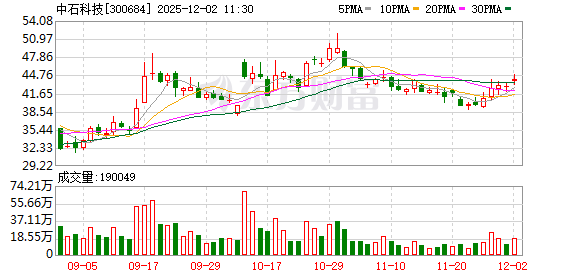
中石科技:长期服务于H客户、中兴、爱立信、诺基亚、思科、菲尼萨等头部通讯终端设备制造商
Mei Ri Jing Ji Xin Wen· 2025-12-02 04:02
Core Viewpoint - The company, Zhongshi Technology, confirmed its collaboration with major telecommunications equipment manufacturers, including ZTE, Ericsson, Nokia, Cisco, and Finisar, in the digital infrastructure sector [2]. Group 1 - The company provides key products in the digital infrastructure industry, such as thermal interface materials, heat pipes, uniform heat plates, thermal modules, EMI shielding materials, and environmental sealing materials [2]. - The company has a long-term service relationship with leading clients in the telecommunications sector [2].




Can IBM's Tie-Up With Cisco for Quantum Network Aid Its Shares?
ZACKS· 2025-12-01 16:41
Core Insights - IBM has partnered with Cisco to create a fault-tolerant quantum computing network by 2030, aiming to establish a quantum computing Internet that connects various quantum technologies [1][7] - IBM will develop a quantum networking unit (QNU) to link quantum computers to a quantum processing unit (QPU), while Cisco will create a high-speed software protocol for dynamic network reconfiguration [2][3] - The collaboration is expected to enhance the scalability of quantum networks, facilitating technological innovations in the quantum ecosystem [3] IBM's Quantum Computing Focus - IBM has previously partnered with AMD to develop scalable, open-source platforms for quantum-centric supercomputing, enhancing algorithm complexity in quantum hardware [4] - Recent updates to IBM's Qiskit software platform have improved accuracy by 24% at the scale of over 100 qubits, providing developers with enhanced control [5] Financial Performance - IBM's stock has increased by 35.7% over the past year, outperforming Amazon (10.7%) and Microsoft (14.1%), although the industry as a whole grew by 61.2% [6] - Earnings estimates for IBM for 2025 have risen by 7.1% to $11.39, and for 2026 by 8.8% to $12.23, indicating positive investor sentiment [8] Challenges and Strategic Adjustments - Despite growth in hybrid cloud and AI, IBM faces intense competition from AWS and Microsoft Azure, leading to margin pressures and declining profitability [10] - The company is implementing significant job cuts, with many positions being relocated to India to reduce operating costs [11][13] - High operating costs and competition are hindering IBM's growth, although the company maintains a focus on quantum computing and AI to drive value [15][16]


substack.com-泡沫的主要标志供给侧的贪婪 --- The Cardinal Sign of a Bubble Supply-Side Gluttony
2025-12-01 00:49
Summary of Key Points from the Conference Call Industry Overview - The discussion revolves around the concept of market bubbles, particularly focusing on the technology sector and historical parallels with the dot-com bubble of the late 1990s and early 2000s [6][7][24]. Core Insights and Arguments - **Innovation and Folly**: The U.S. is characterized by a culture of innovation that often leads to "creative destruction," where companies innovate themselves to failure, resulting in mass bankruptcies and job losses [3][5][6]. - **Historical Context**: The analysis begins with a retrospective on the "profitless dot-com" bubble of the 1990s, emphasizing that many misinterpret the nature of that era, which was driven more by infrastructure investment than by profitless companies [7][8][14]. - **Market Dynamics**: The NASDAQ index's performance during the late 1990s was largely influenced by profitable large-cap companies, contrary to the narrative that it was primarily driven by unprofitable dot-coms [10][14]. - **Investment Patterns**: A significant amount of capital was funneled into data transmission infrastructure, with companies like AT&T and MCI investing billions annually, which created an overbuilt supply without sufficient demand [17][21][20]. - **Current Trends**: The current AI boom is drawing parallels to past bubbles, with major companies like Microsoft, Google, and Nvidia committing substantial investments in AI infrastructure, raising concerns about sustainability and potential overvaluation [43][44][48]. Important but Overlooked Content - **Capital Cycle Theory**: The concept of Capital Cycle Theory is introduced, suggesting that stock market peaks often occur midway through investment booms, indicating a pattern that may repeat in the current market [50]. - **Stock-Based Compensation**: There is a notable increase in stock-based compensation today compared to 25 years ago, which may exacerbate the effects of market bubbles [30][31]. - **OpenAI's Financials**: OpenAI's commitment to $1.4 trillion in spending over the next eight years, with revenues and losses significantly lower than this figure, highlights the speculative nature of current investments in AI [45][46]. - **Nvidia's Role**: Nvidia is positioned as a central player in the current AI landscape, with its technology being critical across various applications, suggesting a potential for significant market influence [48][49]. Conclusion - The analysis emphasizes the cyclical nature of market bubbles, the importance of understanding historical precedents, and the potential risks associated with current investment trends in technology and AI sectors [50][51].



UBS Raises Cisco Systems (CSCO) Price Target After Strong Hyperscale Customer Growth
Yahoo Finance· 2025-11-29 18:09
Core Insights - Cisco Systems Inc. is recognized as a strong slow growth stock, with UBS raising its price target to $90 from $88 while maintaining a Buy rating following a quarterly earnings beat and improved forecast driven by demand from hyperscale customers and AI infrastructure investments [1][2] Financial Performance - Cisco reported earnings of $1 per share, surpassing its own projection of $0.97 to $0.99, primarily due to a 15% year-over-year increase in its Networking division [2] - The company aims for a long-term revenue growth target of 4%-6% for fiscal years 2026 and 2027, supported by the traction of its next-generation Campus solutions [2] Company Overview - Cisco Systems Inc. designs, manufactures, and sells networking hardware, software, and telecommunications equipment, providing essential infrastructure for businesses and communities in the digital age [3]
Nvidia: Just Like Cisco In 2000
Seeking Alpha· 2025-11-28 15:47
This account is managed by Noah's Arc Capital Management. Our goal is provide Wall Street level insights to main street investors. Our research focus is mainly on 20th century stocks (old economy) undergoing a 21st century transformation, but occasionally we'll write on companies that help transform 20th century firms as well. We look for innovations in a business model that will cause a stock to change dramatically.Analyst’s Disclosure:I/we have no stock, option or similar derivative position in any of the ...

Powering the quantum computing era - Europe looks to join the race
Youtube· 2025-11-28 15:41
Core Insights - The race for advancements in quantum computing is intensifying, with Infinian being a key player in Europe [1][2] - Quantum computing is expected to revolutionize various industries by solving complex problems that current computers cannot handle [5][10] Company Overview - Infinian has a long history in semiconductor development and is now focusing on quantum computing components [2] - The company aims to scale up quantum computing capabilities, particularly in terms of qubit count and fidelity [6][9] Quantum Computing Fundamentals - Quantum computing utilizes qubits, which can represent multiple states simultaneously, unlike classical bits [3] - This capability allows quantum computers to perform parallel calculations, making them efficient for solving mathematically hard problems [4] Industry Applications - Industries such as chemistry, drug discovery, life sciences, logistics, and financial services show significant interest in quantum computing applications [5] - The integration of quantum computing with AI is expected to enhance problem-solving capabilities across various sectors [6] Future Outlook - While quantum computing is still in its early stages, experts predict that practical applications may emerge by the end of the decade [10] - The technology poses potential challenges, particularly regarding encryption and security, as its computing power could undermine current protocols [8][9]