
uniQure

Search documents
uniQure N.V. - Special Call
Seeking Alpha· 2025-09-24 17:03
PresentationGood day, and welcome to the top line results for AMT-130 in Huntington's disease. [Operator Instructions] As a reminder, this call may be recorded. I would now like to turn the call over to Chiara Russo, Senior Director, Investor Relations.Chiara Russo Thank you. This morning, uniQure announced pivotal data on patients treated with our investigational gene therapy, AMT-130 in our ongoing Phase I/II clinical trials in Huntington's disease, taking place in the U.S., EU and the U.K. This 3-year u ...



QURE stock skyrockets 200% on ‘three' big news
Invezz· 2025-09-24 15:20
Uniqure (NASDAQ: QURE) shares opened nearly 200% up on Wednesday – marking one of the most dramatic single-day moves in biotech this year. The surge follows a trifecta of bullish development: a breakt... ...

uniQure Stock Doubles On Promising Data From Huntington's Disease Trial
Benzinga· 2025-09-24 14:23
uniQure N.V. QURE on Wednesday released topline data from the pivotal Phase 1/2 study of AMT-130 for Huntington’s disease.Huntington’s disease is an inherited condition in which nerve cells in the brain break down over time. The disease affects a person’s movements, thinking ability and mental health.The study met its prespecified primary endpoint, with high-dose AMT-130 demonstrating a statistically significant slowing of disease progression as measured by the composite Unified Huntington’s Disease Rating ...

uniQure (NasdaqGS:QURE) Update / Briefing Transcript
2025-09-24 13:32
Summary of uniQure's AMT-130 Conference Call Company and Industry - **Company**: uniQure - **Industry**: Gene therapy for Huntington's disease Key Points and Arguments Clinical Trial Results - **Pivotal Data Announcement**: uniQure announced pivotal data from the Phase I/II clinical trials of AMT-130 for Huntington's disease, showing a statistically significant 75% slowing of disease progression at 36 months as measured by the Composite Unified Huntington's Disease Rating Scale (CUHDRS) [4][18] - **Total Functional Capacity (TFC)**: The study also demonstrated a 60% reduction in disease progression on the TFC, a key measure of a patient's ability to live independently [14][19] - **Neurofilament Light Chain (NFL)**: CSF neurofilament light chain levels were below baseline at 36 months, indicating a reduction in neurodegeneration [16][19] Regulatory and Commercial Plans - **Biologics License Application (BLA)**: uniQure plans to submit a BLA for AMT-130 in the first quarter of 2026, with a request for priority review [5][18] - **FDA Engagement**: A pre-BLA meeting with the FDA is scheduled to discuss the data and the content of the BLA [18][34] Patient Population and Market Opportunity - **At-Risk Population**: Approximately 200,000 Americans are at risk for Huntington's disease, with about 100,000 being genetically identifiable [26] - **Diagnosed Patients**: There are around 40,000 symptomatic HD patients in the U.S., with about 20,000 currently diagnosed [26][27] - **Initial Treatable Patients**: An estimated 6,000 patients could be considered initially treatable at launch [27] Treatment Characteristics - **Durable Treatment**: AMT-130 is designed as a durable, once-administered treatment, which is crucial for a slowly progressing disease [6] - **Targeted Delivery**: The treatment allows for precision-based delivery to affected brain regions, maximizing therapeutic concentrations and minimizing systemic exposure [7] - **Mechanism of Action**: AMT-130 targets the first exon of the Huntington gene, suppressing both the full-length mutant protein and toxic splice isoforms [7] Safety Profile - **Well Tolerated**: AMT-130 has shown a manageable safety profile, with no new treatment-related serious adverse events reported since December 2022 [17][19] - **Common Adverse Events**: Most adverse events were related to study procedures, such as headache and procedural pain [17] Expert Perspectives - **Clinical Impact**: Dr. Sarah Tabrizi emphasized the potential of AMT-130 to significantly impact the quality of life for patients and families affected by Huntington's disease [24] - **Long-term Benefits**: The slowing of disease progression could allow patients to maintain independence and work longer, potentially preventing symptoms from occurring [41] Future Considerations - **Payer Engagement**: Early engagement with payers is critical to educate them on the value of AMT-130 and its impact on patients' lives [51] - **Labeling and Eligibility**: Discussions are ongoing regarding the potential labeling of AMT-130, including whether it will be restricted to symptomatic patients [80] Additional Important Content - **Statistical Analysis**: The study's primary analysis showed a 75% reduction in disease progression with a p-value of 0.003, indicating strong statistical significance [18] - **Longitudinal Data**: The data from the Enroll-HD study provided a robust external control for comparison, enhancing the credibility of the results [55] This summary encapsulates the critical findings and strategic plans discussed during the conference call regarding AMT-130 and its implications for Huntington's disease treatment.
uniQure (NasdaqGS:QURE) Earnings Call Presentation
2025-09-24 12:30
Pivotal Phase I/II AMT-130 Huntington's Disease Update September 24, 2025 Disclaimer This presentation contains forward-looking statements within the meaning of Section 27A of the Securities Act of 1933, as amended, and Section 21E of the Securities Exchange Act of 1934, as amended. All statements other than statements of historical fact are forward-looking statements, which are often indicated by terms such as "anticipate," "believe," "could," "estimate," "expect," "goal," "intend," "look forward to," "may ...
uniQure posts trial win for Huntington’s disease drug (QURE)
Seeking Alpha· 2025-09-24 11:37
uniQure (NASDAQ:QURE) announced on Wednesday that its one-time gene therapy AMT-130 reached the main goals in a pivotal Phase 2/3 trial for patients with Huntington’s disease, a rare neurodegenerative disorder. Citing topline data from the trial, the Dutch biotech noted that ...
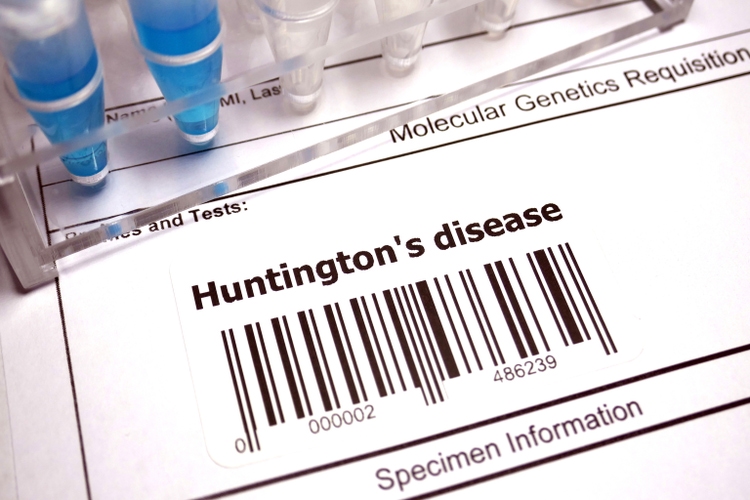
UniQure's brain disorder drug slows disease progression in trial
Reuters· 2025-09-24 11:28
UniQure's experimental gene therapy significantly slowed the progression of a brain disorder in an early-to-mid stage study, it said on Wednesday. ...

uniQure Announces Refinancing of Existing $50 Million Debt and Securing Up to an Additional $125 Million in Non-Dilutive Funding
Globenewswire· 2025-09-24 11:10
Core Viewpoint - uniQure N.V. has secured a $175 million non-dilutive senior secured term loan facility with Hercules Capital to enhance financial flexibility for the potential commercial launch of its investigational gene therapy AMT-130 for Huntington's disease [1][2]. Financial Details - The loan facility includes three tranches: a first tranche of $50 million to refinance existing debt, a second tranche of $100 million available upon achieving regulatory and financial milestones, and a third tranche of up to $25 million subject to Hercules' approval [3]. - The interest rate for all tranches is floating, set at the greater of 9.45% or the prime rate plus 2.45%, with a current floating rate of 9.70%, down from a previous rate of 11.95% [3]. Company Background - uniQure is a leader in gene therapy, focusing on transformative therapies for severe medical conditions, including Huntington's disease, refractory temporal lobe epilepsy, ALS, and Fabry disease [5]. - The company has achieved significant milestones, including the approval of its gene therapy for hemophilia B, marking a major advancement in genomic medicine [5]. Partner Information - Hercules Capital is a prominent specialty finance company that provides senior secured venture growth loans to high-growth, innovative companies in technology and life sciences, having committed over $22 billion to more than 680 companies since its inception [6].

uniQure Announces Positive Topline Results from Pivotal Phase I/II Study of AMT-130 in Patients with Huntington’s Disease
Globenewswire· 2025-09-24 11:05
Core Insights - uniQure N.V. announced positive topline data from the pivotal Phase I/II study of AMT-130 for Huntington's disease, demonstrating statistically significant slowing of disease progression [1][2][3] Study Results - The pivotal study met its primary endpoint, showing a 75% slowing of disease progression at 36 months as measured by the composite Unified Huntington's Disease Rating Scale (cUHDRS) compared to a matched external control [3][4] - High-dose AMT-130 also achieved a statistically significant 60% slowing of disease progression as measured by Total Functional Capacity (TFC), meeting a key secondary endpoint [4][6] - Favorable trends were observed in additional clinical measures, including an 88% slowing of disease progression as measured by the Symbol Digit Modalities Test (SDMT) [4][6] Safety Profile - AMT-130 was generally well-tolerated with a manageable safety profile, and no new drug-related serious adverse events were reported since December 2022 [8][9] - The most common adverse events were related to the administration procedure, all of which resolved [8] Regulatory Plans - uniQure plans to submit a Biologics License Application (BLA) in the first quarter of 2026, with a potential U.S. launch later that year pending approval [1][9] - AMT-130 has received Breakthrough Therapy designation and Regenerative Medicine Advanced Therapy (RMAT) designation from the FDA [9] Clinical Program Overview - The Phase I/II clinical program includes two multi-center, dose-escalating studies to explore the safety, tolerability, and exploratory efficacy signals of AMT-130 for Huntington's disease [11] - Data from the studies will be compared to a propensity score-matched external control derived from the Enroll-HD natural history dataset [11] Background on Huntington's Disease - Huntington's disease is a rare, inherited neurodegenerative disorder affecting approximately 75,000 people in the U.S., EU, and the UK, with no approved therapies currently available to slow its progression [15]
uniQure Announces Initial AMT-191 Phase I/IIa Data Showing Sustained Increases in α-Gal A Enzyme Activity in Patients with Fabry Disease
Globenewswire· 2025-09-05 11:05
Core Insights - The article discusses the promising initial results from the Phase I/IIa trial of AMT-191, a gene therapy for Fabry disease, highlighting significant increases in α-Gal A activity among patients [1][4][3] Company Overview - uniQure N.V. is a gene therapy company focused on developing transformative therapies for severe medical conditions, including Fabry disease [1][10] - The company has previously achieved a milestone with its gene therapy for hemophilia B, showcasing its commitment to advancing genomic medicine [10] Clinical Trial Details - The Phase I/IIa trial of AMT-191 includes multiple cohorts, with the first cohort (Cohort A) showing α-Gal A activity increases of 27- to 208-fold above normal levels [3][4] - All patients in the first cohort discontinued enzyme replacement therapy (ERT) and maintained stable plasma lyso-Gb3 levels [3][4] - A second cohort (Cohort B) has been enrolled with a lower dose, and no serious adverse events (SAEs) have been reported to date [5] Safety and Efficacy - Preliminary data indicate that AMT-191 has a manageable safety profile, with some SAEs observed that were unrelated to the treatment [4][5] - The trial aims to explore the safety, tolerability, and early efficacy of AMT-191, with updated results expected in the first half of 2026 [1][6] Disease Context - Fabry disease is a genetic disorder caused by α-Gal A enzyme deficiency, leading to harmful substrate accumulation affecting various organs [2][9] - The current standard treatment involves bi-weekly ERT, which has limitations in effectiveness [9] Regulatory Status - AMT-191 has received Orphan Drug and Fast Track designations from the U.S. FDA, indicating its potential significance in treating Fabry disease [7]