Sprint

Search documents
Cogent Communications (CCOI) Conference Transcript
2025-05-14 13:00
Summary of Cogent Communications Conference Call Industry Overview - The conference focused on the commercial fiber industry, particularly the impact of AI on demand and the competitive landscape within the sector [5][4]. Key Company Insights Cogent Communications (CCOI) - **Leadership**: Dave Schafer, founder and CEO, emphasized the importance of adapting to market changes driven by AI and hyperscalers [2][6]. - **Market Position**: Cogent has a diversified customer base, with hyperscalers currently representing a small but growing portion of revenue [6][7]. - **Total Addressable Market (TAM)**: The TAM for hyperscalers is estimated to be $15 billion, projected to grow to $40 billion to $50 billion in the coming years [7][8]. - **Capacity Demand**: There has been a significant increase in demand for dark fiber, with customers now seeking 400+ strand counts, indicating a long-term commitment to infrastructure [19][17]. Unity Group - **Leadership**: Kenny Gunderman, president and CEO, highlighted the importance of a diversified approach to customer segments, with a focus on long-term commitments from customers [2][6]. - **Market Dynamics**: Unity's core business is dark fiber, and they are seeing a shift from lit services to dark fiber as customers make longer-term network commitments [15][16]. Demand Insights - **AI-Driven Demand**: The demand for fiber has been significantly influenced by AI, with increased urgency in discussions around infrastructure build-out [5][8]. - **Non-AI Demand**: The overall demand for fiber remains solid, with growth expected in various segments, including fiber to the home and large enterprises [20][32]. - **Customer Segmentation**: Both companies emphasize the importance of being diversified across customer segments, with no single segment representing more than 20% of revenue [33][34]. Strategic Insights - **Business Models**: Cogent focuses on a narrow strategy targeting large office buildings and data centers, while Unity targets Tier 2 and Tier 3 markets to avoid intense competition [40][44]. - **Network Expansion**: Cogent prefers to acquire existing fiber assets rather than build new infrastructure, while Unity has engaged in significant build phases in less competitive markets [52][57]. - **Technology and Innovation**: Both companies recognize the importance of technological advancements in driving down costs and improving service delivery [66][73]. Competitive Landscape - **Market Dynamics**: The fiber market is characterized by competition among a few large players, with opportunities for insurgent companies to capture market share [70][69]. - **Pricing Pressure**: While there are concerns about price compression, both companies believe that quality of service and unique routes will remain critical competitive factors [71][74]. Conclusion - The conference highlighted the evolving landscape of the commercial fiber industry, driven by AI and changing customer demands. Both Cogent and Unity are adapting their strategies to capture growth opportunities while managing the challenges posed by competition and technological advancements.

Cogent Communications (CCOI) FY Conference Transcript
2025-05-13 16:30
Cogent Communications (CCOI) FY Conference Summary Company Overview - **Company**: Cogent Communications - **Industry**: Communications Sector - **Event Date**: May 13, 2025 Key Points Financial Performance and Growth Targets - Cogent reported mixed results for Q1, but increased long-term revenue growth target to **6% to 8%** and margin expansion target to **150 basis points** annually [5][10] - The company is nearing the end of revenue burn-off from the Sprint transaction, which had previously resulted in a **7.4%** compounded annual decline in revenues [6][8] - Historical organic revenue growth was **10.2%** over 18 years, but had decelerated to **2.1%** prior to the Sprint acquisition [7][8] - The demand for wavelengths, particularly driven by AI, is expected to enhance revenue growth [9][10] Revenue and Margin Insights - The acquisition of Sprint's network, which had a capital cost of **$20.5 billion**, is being repurposed for optical transport services [9] - The company has exceeded its margin expansion target, achieving over **300 basis points** annually since the acquisition [11] - Wavelength services are expected to have high contribution margins, with on-net services exceeding **90%** [39] Installation and Demand Challenges - The company faced challenges in installations due to customer readiness and backlog management, with a sequential growth of **18.2%** in orders but only **2.2%** in revenue [16][23] - Cogent aims to scale installations to **500 wavelengths per month**, with a current backlog of **3,443 wavelengths** [17][21] - The wavelength market is currently valued at **145,000 wavelengths**, dominated by two competitors with longer installation times [19] Market Position and Strategy - Cogent is the largest provider of internet traffic globally, carrying about **1.5 exabytes** daily, with a **25%** market share [22] - The company plans to achieve a similar market share in the wavelength business within three years [22] - The strategy includes leveraging existing customer relationships and credibility from the IP business to gain market share in wavelengths without aggressive pricing [27][28] EBITDA and Dividend Outlook - EBITDA for 2023 was projected to increase from **$260 million** to **$352 million**, with expectations for continued growth despite a headwind from T-Mobile payment reductions [36][38] - The company has returned approximately **$1.6 billion** to shareholders through dividends and buybacks, with a focus on reducing leverage before accelerating capital returns [42][45] Asset Monetization Opportunities - Cogent is exploring monetization of surplus assets, including data centers, IP address spaces, and excess fiber [46][50] - The company has identified **125 data centers** for conversion, with **1 million square feet** ready for use but not fully leased [49] - IP address spaces have potential market value between **$40 and $60** per address, with ongoing efforts to monetize these assets [50] Conclusion - Cogent Communications is positioned for growth in the wavelength market, leveraging its existing infrastructure and customer base while managing financial performance and asset monetization strategies. The company remains focused on improving installation capabilities and expanding its market share in a competitive landscape.
Cogent(CCOI) - 2025 Q1 - Earnings Call Presentation
2025-05-09 07:20
Company Overview - Cogent operates a global network carrying approximately 25% of all internet traffic[9] - The company serves three customer bases: Corporate (45% of revenues), Netcentric (37% of revenues), and Enterprise (18% of revenues)[9] - IP Services (DIA, VPN and Transit) account for 88% of Cogent's revenue[9] Growth and Market - Cogent is experiencing rapid growth in its wave network, as evidenced by the increase in wave service locations from 22 in Q2 2023 to 883 in Q1 2025[12] - The company's addressable market is growing, with on-net MTOB SqFt increasing from 597 million in Q1 2010 to 1015 million in Q1 2025[12] - Cogent purchased over $34 billion of original investment and $700 million in cash in exchange for $60 million[38] Financial Performance - In Q1 2025, On-Net Revenue was $1408 million, Off-Net Revenue was $1114 million, Wave Revenue was $71 million, and Non-Core Revenue was $44 million[54] - Q1 2025 total revenue was $247 million, a 21% increase year-over-year and a 72% increase quarter-over-quarter[54] - Non-GAAP Gross Margin reached 446% in Q1 2025[54] - EBITDA, as adjusted for Sprint acquisition costs and cash payments under IP Transit Services Agreement, was $688 million in Q1 2025, representing a 278% margin[54] Network and Infrastructure - Cogent's network is interconnected with 8240 access networks[29, 37] - The company owns 180 data centers with 26000 server racks in 205 million square feet of floor space offering 211 MW of power[33] - Cogent has 99000+ intercity fiber route miles and 32000+ metro fiber route miles[29]
Could This Bear Market Buy Help You Become a Millionaire?
The Motley Fool· 2025-04-07 08:10
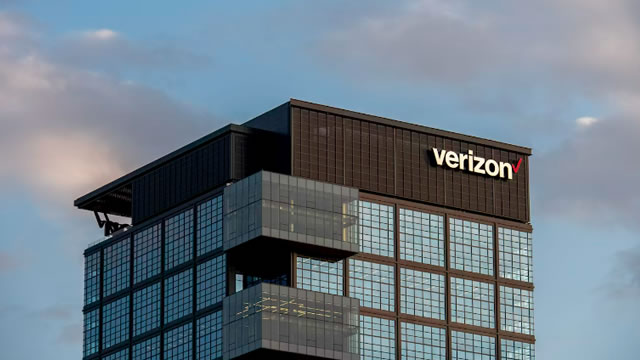
Core Viewpoint - Verizon Communications is viewed as a reliable defensive stock but has struggled to outperform the market, particularly during bull markets [1][2][12] Group 1: Performance and Market Comparison - Since the current bull market began on October 12, 2022, the S&P 500 has risen by 51%, while Verizon's stock has only increased by 28% [2] - In 2023, Verizon's stock rallied by 14% as the S&P 500 declined by 8%, indicating its defensive nature during economic uncertainty [2] - Over the past 20 years, Verizon's stock has only risen by 34%, with a $10,000 investment growing to $13,400, compared to an S&P 500 index fund that would have grown to approximately $43,140 [3][4] Group 2: Financial Metrics and Debt - Verizon's adjusted earnings per share (EPS) has had a compound annual growth rate (CAGR) of only 3% from 2004 to 2024 [4] - The company's year-end debt increased from $39.3 billion to $168.4 billion, primarily due to a $130 billion acquisition of Vodafone's stake in Verizon Wireless in 2014 [5] - Verizon expects its wireless revenue to grow by 2% to 2.8% in 2025, with adjusted EBITDA projected to grow by 1% to 3% [8] Group 3: Subscriber Growth and Market Strategy - In 2023, Verizon struggled to gain new wireless subscribers, attributing the slowdown to competition from AT&T, T-Mobile, and other smaller players [6] - In 2024, Verizon doubled its postpaid phone net additions, thanks to localized incentives, marketing campaigns, and a partnership with Walmart [7] - The wireless retail churn rate improved from 1.67% in 2023 to 1.62% in 2024, indicating better customer retention [7] Group 4: Future Outlook - Verizon's enterprise value is $329 billion, trading at 7 times this year's adjusted EBITDA, with a forward dividend yield of 6.1% [9] - If Verizon maintains a CAGR of 3% for adjusted EPS and EBITDA over the next 20 years, its stock could potentially rise by more than 90% to around $88 per share by 2045 [11] - Despite potential gains, Verizon is expected to underperform compared to the S&P 500, which has delivered an average annual return of over 10% since 1957 [11][12]