Tiffany

Search documents
黄金珠宝奢侈品运营情况更新 - 高端商圈运营专家交流
2025-03-09 13:19
Summary of Conference Call on Luxury Jewelry Industry Company and Industry Overview - The conference call primarily discusses the performance of the luxury jewelry brand "Lao Pu" and its position within the broader luxury goods market, particularly in the context of gold jewelry and other luxury brands [1][2]. Key Points and Arguments Sales Performance - Lao Pu's sales in January and February 2025 showed significant year-on-year growth, with some shopping districts experiencing increases of 55% to 65%, outperforming the overall market growth rate of 35% to 42% [3][4]. - However, due to base effect, the expected growth rate for March 2025 is projected to decline to 25% to 28% [4][7]. - The overall marketing expenses for the year are expected to decrease, with price increases contributing approximately 60% to 70% of the sales growth [4][7]. Competitive Landscape - Other brands like Chow Tai Fook and Chow Sang Sang have reported year-on-year declines in sales, while luxury brands such as Van Cleef & Arpels have seen growth due to inventory control strategies [4][5]. - Notably, brands like Cartier, Tiffany, and Bulgari have experienced varying degrees of sales decline, while LV benefited from collaborations and price increases [5][6]. Customer Demographics and Behavior - Lao Pu's core customer spending is concentrated between 8,000 to 16,000 RMB, with over 60% of customers falling within this range [4][9]. - The overlap of Lao Pu's customer base with international jewelry brands has increased from 16% in 2023 to nearly 38% in 2024, indicating a growing acceptance among high-spending consumers [10][11]. - The brand's customer base exhibits a tiered structure, with high-end consumers less affected by economic downturns compared to lower-tier consumers [12]. Expansion Plans - Lao Pu plans to open three new stores in cities such as Wuhan, Chengdu, and Qingdao, aiming to increase its total number of stores from 10 to 20-25 [13][20]. - The brand's current store leases typically last five years, making adjustments to existing locations more complex [14]. Market Positioning - Lao Pu's main competitors are domestic brands like Chow Tai Fook and Chow Sang Sang, but it struggles to capture market share from established high-end brands like Van Cleef & Arpels and Cartier [22]. - The brand's performance is notable given the overall market conditions, with Lao Pu ranking among the top 50 or 30 brands managed by the company [7]. Other Brands' Performance - Chow Sang Sang has over 30 stores and is still in a growth phase, but its core projects have low contribution ratios, resulting in a modest sales decline of 3% to 5% [24]. - The overall jewelry market is experiencing a downturn, with many brands facing sales declines due to high base effects from previous years [5][24]. Additional Important Insights - The luxury goods market has seen a shift in store location strategies, with brands reassessing their expansion plans and site selections post-2021 peak [16]. - Lao Pu's customer base is increasingly overlapping with mid-tier luxury brands rather than top-tier brands like Chanel or LV, indicating a shift in consumer preferences [19]. - The expected sales growth for the first quarter of 2025 is around 20%, which is considered a strong performance given the current market conditions [31]. This summary encapsulates the key insights from the conference call, highlighting the performance, competitive landscape, customer demographics, and future plans of Lao Pu within the luxury jewelry industry.
1折拿下香奈儿,奢侈品们不装了
36氪· 2025-03-01 14:20
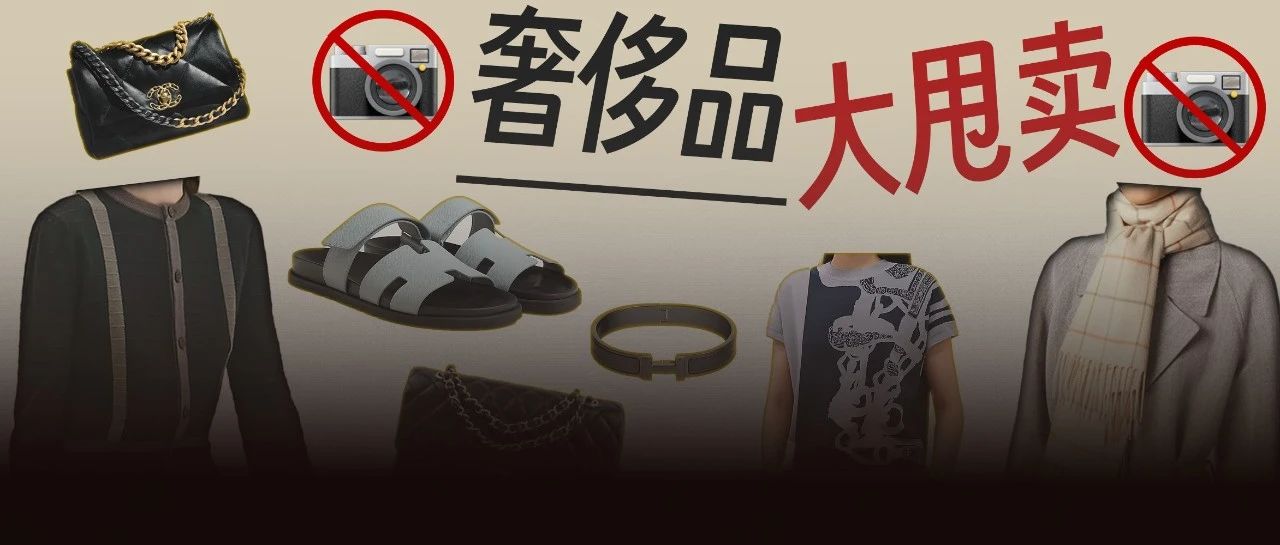
Core Viewpoint - The rise of luxury goods outlet sales in China reflects a shift in consumer behavior and brand strategies, with many luxury brands increasingly engaging in discount sales to manage inventory and respond to market pressures [4][14][36]. Group 1: Luxury Outlet Sales Dynamics - Luxury brands are discreetly organizing outlet sales, often with significant discounts, to clear inventory while maintaining brand image [4][10]. - Entry to these sales is typically invitation-only, requiring personal information registration, and strict rules are enforced during the events [5][6]. - Brands like Gucci and Tiffany have notably increased the frequency and depth of their discount events, with discounts reaching as low as 10% of original prices [19][20]. Group 2: Market Trends and Consumer Behavior - The discount retail economy is emerging in China, with the discount store market reaching 3.06 billion yuan in 2023, growing at 17.92% year-on-year [16]. - Consumers are becoming more price-sensitive, leading to a decline in the perceived exclusivity of luxury brands [36][40]. - The number of luxury outlet events and the variety of products available have increased significantly over the past two years [14][20]. Group 3: Brand Performance and Strategy - Brands like Gucci have faced significant sales declines, with a reported 23% drop in revenue to 7.65 billion euros in 2024, prompting a reevaluation of their sales strategies [36]. - Some brands, such as Loro Piana, maintain a high-end image by not participating in discount sales in China, opting instead to return unsold goods to their home markets [38][40]. - The challenge for luxury brands lies in balancing the need to maintain exclusivity while also addressing inventory pressures through discount sales [40].