ConocoPhillips

Search documents
Why Venezuela’s Vast Oil Reserves Could Reshape US Energy Winners And Losers — Three Stocks To Watch - ConocoPhillips (NYSE:COP), Chevron (NYSE:CVX)
Benzinga· 2026-01-04 20:55
Group 1: U.S.-Venezuela Energy Market Dynamics - The evolving U.S.–Venezuela standoff is attracting attention from energy markets as potential shifts in sanctions and oil policy could impact American companies [1][2] - Venezuela possesses the world's largest proven crude reserves, yet political turmoil and underinvestment have left much of this oil stranded, currently producing about 1 million barrels per day [6] Group 2: Key Companies and Potential Benefits - Chevron Corp. is the only major U.S. oil producer still operating in Venezuela under a special Treasury license, which allows limited extraction and exports, potentially gaining broader access to heavy crude if restrictions are eased [3] - Halliburton Co. could benefit from future sanction relief, unlocking demand for its services to repair Venezuela's aging oil infrastructure [4] - Valero Energy Corp. operates sophisticated heavy-crude refineries in the U.S. and could see improved margins if Venezuelan oil returns to global markets, providing cheaper feedstock [5] Group 3: Production Potential and Market Impact - Venezuela could potentially increase production to 4 million barrels per day, but achieving this would require significant investment and time [6] - Currently, about 80% of Venezuela's oil production is exported to China, with around 15% reaching the U.S. through Chevron-linked ventures [7] - Other U.S. energy companies like Exxon Mobil and ConocoPhillips may experience indirect effects as global supply dynamics shift due to changes in U.S. policy [7]


No quick wins in tapping Venezuela's oil reserves
Reuters· 2026-01-04 00:52
Venezuela is unlikely to see any meaningful boost to crude output for years even if U.S. oil majors do invest the billions of dollars in the country that President Donald Trump promised just hours fol... ...

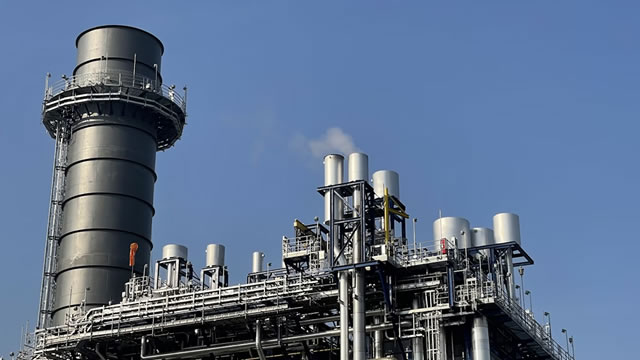
COP's Australian Drilling Campaign Yields Unexpected Gas Encounter
ZACKS· 2025-12-31 14:15
Group 1 - ConocoPhillips' Australian subsidiary has discovered unexpected gas while drilling the Charlemont-1 exploration well in the Otway Basin, offshore Victoria [1][10] - The Charlemont-1 well encountered significant gas presence in the Waarre C reservoir formation, approximately 160 meters above the target formation, Waarre A [2][10] - Drilling operations were paused on December 25 due to high-pressure conditions at 2,552 meters, indicating potential safety and operational risks [3][10] Group 2 - The Essington-1 well, drilled earlier in the same permit, confirmed the presence of hydrocarbons in both Waarre A and C reservoir formations, marking the first natural gas discovery in the Otway Basin since 2021 [4][10] - ConocoPhillips holds a 51% interest in the VIC/P79 permit, with partners 3D Energi and the Korea National Oil Company holding 20% and 29% stakes, respectively [5]

Banks Are Unanimously Bearish On Oil – Is It The Contrarian Opportunity For 2026? - ConocoPhillips (NYSE:COP), United States Oil Fund (ARCA:USO)
Benzinga· 2025-12-28 18:30
Core Viewpoint - Oil is expected to be one of the negative-performing assets in 2025, with significant discrepancies in performance among oil majors [1][2] Market Outlook - Major banks forecast subdued oil prices for 2026, with J.P. Morgan predicting an average of $53 per barrel and Goldman Sachs at $52, citing oversupply and slowing demand growth as key factors [3] - OPEC+ is likely to maintain output levels to defend price floors, which may limit downside risk while leaving the market vulnerable to upside shocks [6] Contrarian Opportunity - The prevailing pessimism in the oil market presents a contrarian investment opportunity, as structural constraints are tightening due to years of underinvestment and ESG pressures [5] - Discovery rates are weak, and natural decline rates of existing fields are eroding supply, suggesting potential for price increases despite bearish forecasts [5][7] Demand Dynamics - Demand destruction has been slower than anticipated, with resilient consumption in sectors like aviation and petrochemicals, and China playing a supportive role through strategic stockpiling [6] Challenges Ahead - The contrarian case for oil is not guaranteed, as factors such as a global recession, rapid electric vehicle adoption, or a breakdown in OPEC+ cohesion could lead to lower prices [8] - US shale production may respond more quickly to price signals than expected, adding to the uncertainty in timing for potential price recovery [8] Market Sentiment - The extreme bearish consensus, combined with structural underinvestment and OPEC+ supply management, suggests that oil may offer asymmetric upside in 2026, where even modest surprises could have significant effects [9]


Here Are My Top 3 Energy Stocks to Buy Now
The Motley Fool· 2025-12-27 15:16
Core Viewpoint - The energy sector has underperformed compared to the broader market, with average energy stocks in the S&P 500 up about 4% year-to-date, while the broader market index rose nearly 18% due to lower oil prices [1][2] Group 1: ConocoPhillips - ConocoPhillips is a leading oil and gas producer with a diversified portfolio and low operating costs [4] - The company requires an average oil price in the mid-$40s to sustain capital spending and about $10 more per barrel to fund its dividend, currently generating substantial surplus free cash flow with crude oil priced in the low $60s [4][5] - Expected completion of large-scale liquefied natural gas projects and the Willow oil project in Alaska could add an incremental $6 billion in annual free cash flow by 2029, assuming a $60 oil price [5] - ConocoPhillips produced $6.1 billion in free cash flow through the first nine months of the year and recently increased its dividend by 8%, aiming for dividend growth within the top 10% of S&P 500 companies [7] Group 2: Oneok - Oneok is one of the largest energy midstream companies in the U.S., generating stable cash flow supported by long-term contracts and government-regulated rate structures [8] - The company has expanded its midstream platform through acquisitions, including Magellan Midstream Partners and Medallion Midstream, totaling $10.2 billion [10] - Oneok expects to capture hundreds of millions in cost savings and synergies from these acquisitions and has approved several organic expansion projects, which should enhance its dividend growth by 3% to 4% annually [11] Group 3: NextEra Energy - NextEra Energy is a leading electric utility and energy infrastructure development company, with a Florida-based utility generating steadily rising rate-regulated earnings [12] - The company plans to invest upwards of $100 billion by 2032 to support growing energy demand in Florida, alongside investments in electricity transmission lines and clean power projects [14] - Expected compound annual earnings-per-share growth of over 8% over the next decade positions NextEra Energy to increase its dividend by 10% next year and at a 6% compound annual growth rate through at least 2028 [15] Group 4: Overall Investment Potential - ConocoPhillips, Oneok, and NextEra Energy are identified as top energy stocks with visible growth ahead, expected to continue increasing their high-yielding dividends [16]



Why Hold Strategy Is Apt for ConocoPhillips Stock Right Now
ZACKS· 2025-12-26 19:41
Core Viewpoint - ConocoPhillips (COP) is an independent exploration and production company with a diversified asset base across 14 countries, showing stable performance with a 1.8% share gain over the past six months compared to a 5.1% growth in the broader Oils-Energy sector [1] Positive Factors Boosting COP's Performance - High-quality assets in the U.S. support low-cost production, with significant untapped drilling locations in major shale basins, providing 15 years of low-cost drilling inventory [3] - The company has a rigorous annual asset review process, recently selling Anadarko Basin assets for $1.3 billion and achieving $3 billion in asset sales towards a $5 billion target by 2026, enhancing its portfolio quality [4] - The acquisition of Marathon Oil in 2024 expands COP's low-cost resource base in the U.S. Lower 48, with an estimated $500 million in annual synergies expected to exceed $1 billion by the end of 2025 [5][8] Risk Factors to Consider - Commodity price sensitivity poses a risk, with oil prices expected to remain under pressure, potentially limiting earnings growth and stock value [9] - The Willow project in Alaska has seen capital costs rise to $8.5-$9 billion from initial estimates of $7-$7.5 billion due to inflation and localized cost escalations, which could impact project economics [10]

If You Own Occidental Petroleum Stock, Take A Look At This Instead
The Motley Fool· 2025-12-22 07:45
Core Viewpoint - ConocoPhillips is positioned as a more attractive investment compared to Occidental Petroleum due to its clear growth strategy and strong financial position. Group 1: Occidental Petroleum - Occidental Petroleum is a leading international energy company with operations in the U.S., Middle East, and North Africa, but it has accumulated significant debt from acquisitions [3]. - The company plans to reduce its principal debt balance below $15 billion by selling OxyChem to Berkshire Hathaway for $9.7 billion, which will allow it to focus on shareholder value creation [4]. - Despite the sale, Occidental lacks a firm action plan for growth, relying on free cash flow and asset sales to manage its debt [6]. Group 2: ConocoPhillips - ConocoPhillips has a robust growth strategy, having invested heavily in acquisitions funded primarily through equity, resulting in a strong balance sheet [6]. - The company is investing $3.4 billion in three liquefied natural gas (LNG) projects and $8.5 billion to $9 billion in the Willow oil project in Alaska, which is expected to generate an additional $6 billion in annual free cash flow by 2029 [8]. - This increasing cash flow will support dividend growth within the top 25% of S&P 500 companies and enable share repurchases, positioning ConocoPhillips for strong total returns [9].

My Top High-Yield ETF to Buy Before the End of the Year (and It's Not Even Close)
The Motley Fool· 2025-12-20 10:45
Core Viewpoint - The Schwab U.S. Dividend Equity ETF (SCHD) is highlighted as an ideal investment for income-focused investors, offering a combination of high yield and potential capital gains through a diversified portfolio of stocks [2][4]. Group 1: ETF Overview - The Schwab U.S. Dividend Equity ETF has been established for 14 years and is managed by Charles Schwab, boasting over $71 billion in net assets, making it one of the largest high-yield ETFs [4]. - The ETF has a low expense ratio of 0.06%, ensuring that investors are not overpaying for its benefits [5]. - It pays quarterly dividends with a 30-day SEC yield of 3.8%, which is close to the 10-year Treasury rate of 4.2%, providing a competitive passive income option [6]. Group 2: Investment Strategy - The ETF targets large-cap, high-yield stocks, with approximately 90% of its investments in companies with market capitalizations exceeding $15 billion, appealing to investors seeking diversification [8]. - Over half of the ETF's investments are concentrated in three sectors: energy, consumer staples, and healthcare, which are known for prioritizing dividend growth [9]. Group 3: Sector and Holdings - Key energy holdings include major companies like Chevron, ConocoPhillips, and EOG Resources, which help manage risk across the oil and gas value chain [10]. - The top healthcare holdings, such as Merck and Amgen, offer high yields and favorable valuations, while leading consumer staples like PepsiCo and Coca-Cola have consistently raised dividends for over 50 years, earning the title of Dividend Kings [11]. Group 4: Performance and Value - Since its inception in October 2011, the Schwab U.S. Dividend Equity ETF has more than tripled in value, demonstrating its potential for capital gains alongside dividend income [13]. - The ETF is positioned as a foundational holding for value-focused portfolios or as a means to balance portfolios that have become overly concentrated in growth stocks [12].

Subsea7 Secures EPCI Contract From ConocoPhillips Offshore Norway
ZACKS· 2025-12-19 18:20
Core Insights - Subsea7 has been awarded a significant EPCI contract for the development of the Previously Produced Fields offshore Norway by ConocoPhillips, which includes engineering, procurement, construction, and installation of subsea structures [1][8] - The contract value is estimated to be between $300 million and $500 million, following a previous FEED study contract awarded in May 2025 [2] - The development will utilize existing infrastructure from the Ekofisk Complex, which is expected to reduce development timelines and costs [3][8] Company Relationships - This contract strengthens Subsea7's long-standing relationship with ConocoPhillips, allowing Subsea7 to engage early in the field development process [4] Project Details - The Previously Produced Fields are located approximately 290 kilometers southwest of Stavanger and will be developed through a tie-back to the Ekofisk Complex [3] - The project is pending regulatory approval of the Plan for Development and Operations (PDO) required for offshore projects in Norway [3]

ConocoPhillips: Why The Stock Outperformed Over The Past Month (NYSE:COP)
Seeking Alpha· 2025-12-16 16:36
Group 1 - ConocoPhillips (COP) has outperformed the broader energy sector, the S&P 500, and Nasdaq-100 over the past month [1] - The article emphasizes the importance of a well-diversified portfolio, suggesting a core foundation of a high-quality low-cost S&P 500 fund [1] - For investors willing to accept short-term risks, an overweight position in the technology sector is recommended, as it is believed to be in the early stages of a long-term bull market [1] Group 2 - The article suggests that large oil and gas companies providing strong dividend income and growth should be considered for dividend income [1] - A top-down capital allocation approach is recommended, tailored to individual investor situations, including factors like age, risk tolerance, and financial goals [1]