
Roche

Search documents
Roche Reports Upbeat Efficacy Data From Phase II Obesity Study
ZACKS· 2026-01-28 15:16
Core Insights - Roche Holding AG announced positive top-line data from a mid-stage study of its investigational candidate, CT-388, for obesity treatment, which is a once-weekly injectable dual GLP-1/GIP RA designed to curb appetite and improve blood-sugar control [1][3] Group 1: Study Details - The phase II dose-finding study evaluated CT-388's efficacy and safety in 469 adults with obesity or overweight and at least one weight-related comorbidity without type II diabetes, testing doses up to 24 mg [2] - The primary endpoint was the percentage change in body weight from baseline to week 48, with results showing a placebo-adjusted weight reduction of 22.5% at the highest dose [3][6] - Under the treatment regimen estimand, CT-388 produced a placebo-adjusted weight loss of 18.3% at week 48, with 95.7% of patients on the 24 mg dose achieving at least 5% weight loss [4][6] Group 2: Efficacy and Safety - The study demonstrated a clear dose-response relationship, with nearly half (47.8%) of patients achieving 20% or more weight loss and 26.1% exceeding 30% weight loss [4][6] - CT-388 showed favorable metabolic effects, with 73% of pre-diabetic participants achieving normal blood glucose levels by week 48 on the 24 mg dose, compared to 7.5% in the placebo group [7] - The safety profile was consistent with expectations for incretin-based therapies, with low discontinuation rates at 5.9% due to adverse events [8] Group 3: Market Context - Roche's shares have increased by 40.6% over the past six months, outperforming the industry growth of 26.5% [5] - The obesity market is significant, with projections indicating that by 2035, over four billion people will be overweight or obese, highlighting the growing healthcare burden [10] - Competitors in the obesity space include Eli Lilly and Novo Nordisk, both of which have established products and are advancing their own therapies [13][14]



Roche Is The 'Value Play' Of The 2026 Obesity Gold Rush
Seeking Alpha· 2026-01-28 08:56
Core Viewpoint - The article provides insights into the investment landscape, emphasizing the importance of thorough research and independent verification of information before making investment decisions [2][3]. Group 1: Company Analysis - The article does not provide specific details about any particular company or its financial performance, focusing instead on general investment advice [2][3]. Group 2: Industry Insights - The content highlights the inherent volatility and risks associated with investing in stocks, suggesting that investors should be aware of these factors when considering their financial circumstances [2][3].

X @The Wall Street Journal
The Wall Street Journal· 2026-01-27 18:32
Swiss pharmaceutical company Roche said that a once-weekly injection of an experimental drug known as CT-388 helped patients shed weight in a midstage clinical trial—resulting in a weight loss of 22.5% when adjusting for placebo at 48 weeks. https://t.co/1IWDsXJIWf ...
X @Bloomberg
Bloomberg· 2026-01-27 07:18
Roche says patients on its experimental shot lost 18% more weight than those who got placebo in a mid-stage trial https://t.co/q9nRdIu83q ...
Roche Says Weight-Loss Shot Achieved Positive Results in Midstage Trial
WSJ· 2026-01-27 07:00
Core Insights - A late-stage trial program of CT-388 is expected to start this quarter [1] Company and Industry Summary - The initiation of the late-stage trial program indicates a significant advancement in the development of CT-388, which may impact the company's position in the market [1] - The timing of the trial program suggests that the company is progressing towards potential commercialization of CT-388, which could lead to new revenue streams [1] - The late-stage trials are critical for assessing the efficacy and safety of CT-388, which will be essential for regulatory approval and market entry [1]

Roche announces positive phase II results for dual GLP-1/GIP receptor
Reuters· 2026-01-27 06:12
Core Insights - Swiss pharmaceutical firm Roche announced positive results from a phase II clinical trial of CT-388, an investigational dual GLP-1/GIP receptor aimed at treating obesity [1] Company Summary - Roche is developing CT-388 as a potential treatment for obesity, indicating a strategic focus on addressing metabolic disorders [1] Industry Summary - The positive results from the clinical trial highlight the ongoing innovation in the pharmaceutical industry, particularly in the area of obesity treatment [1]

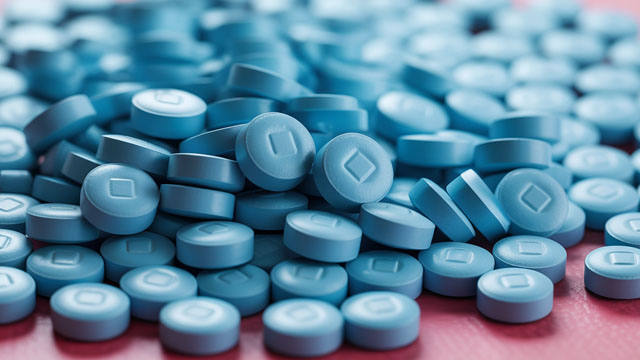
[Ad hoc announcement pursuant to Art. 53 LR] Roche announces positive Phase II results for its dual GLP-1/GIP receptor agonist CT-388 in people living with obesity
Globenewswire· 2026-01-27 06:00
Core Insights - Roche announced positive topline results from a Phase II clinical trial of CT-388, a dual GLP-1/GIP receptor agonist for obesity treatment, showing significant placebo-adjusted weight loss of 22.5% at 48 weeks [1][7] - The treatment demonstrated a well-tolerated safety profile, with a low discontinuation rate due to adverse events [2] Clinical Trial Results - The Phase II trial involved 469 participants with obesity, showing a clear dose-response relationship with a maximum dose of 24 mg [6] - At week 48, 95.7% of participants on the 24 mg dose achieved a weight loss of ≥5%, 87% achieved ≥10%, 47.8% achieved ≥20%, and 26.1% achieved ≥30% [1] - For pre-diabetic participants, 73% achieved normal blood glucose levels compared to 7.5% in the placebo group [1] Safety and Tolerability - The treatment was well-tolerated, with mild-to-moderate gastrointestinal-related adverse events consistent with the incretin class of medicines [2] - The discontinuation rate due to adverse events was low at 5.9% for CT-388 and 1.3% for the placebo [2] Future Development - Roche has fast-tracked CT-388's clinical development and plans to initiate Phase III trials (Enith1 and Enith2) this quarter [5] - An additional Phase II study (CT388-104) is ongoing to evaluate CT-388 in participants with obesity or overweight and type 2 diabetes [5] Industry Context - Obesity is recognized as a significant global health risk, with projections indicating over four billion people will be living with excess weight or obesity by 2035 [4] - The rise in obesity is attributed to a mix of genetic, biological, behavioral, environmental, and socioeconomic factors, increasing the burden on healthcare systems [4]

How TEM Is Capitalizing on AI-Driven Pathology Market Growth
ZACKS· 2026-01-26 15:41
Industry Overview - The artificial intelligence (AI) in pathology market is projected to reach $1.15 billion by 2033, growing at a CAGR of 27.18% from 2025 to 2033, driven by demand for precision medicine, increasing chronic disease prevalence, and technological advancements in diagnostic tools [1] Company Developments - Tempus AI acquired Paige, a leading AI-driven digital pathology company, enhancing its capabilities with a proprietary dataset of nearly 7 million clinically annotated, digitized pathology slides [2] - Following the acquisition, Tempus launched Paige Predict, a suite of advanced digital pathology applications that analyze hematoxylin and eosin (H&E) whole-slide images to support informed testing decisions, predicting 123 biomarkers and oncogenic molecular pathways across 16 cancer types [3][7] - Labcorp entered a collaboration with Roche in 2025 to implement FDA-cleared VENTANA DP 600 and DP 200 slide scanners, enhancing efficiency and supporting AI integration in its anatomic pathology services [4] - Labcorp's Biopharma Laboratory Services added digital pathology capabilities and agreed to acquire select technical assets of Incyte Diagnostics' anatomic pathology business [5] - Quest Diagnostics introduced a new testing panel for amyloid brain pathology in symptomatic patients and acquired PathAI Diagnostics to accelerate AI adoption in digital pathology [6]


Breaking Up With U.S. Stocks? SPDW Offers Lower Costs and Higher Yield Than ACWX.
The Motley Fool· 2026-01-25 16:40
Core Viewpoint - The SPDR Portfolio Developed World ex-US ETF (SPDW) and iShares MSCI ACWI ex US ETF (ACWX) offer distinct investment strategies, with SPDW providing lower fees and higher yields, while ACWX offers broader non-U.S. equity exposure and a higher technology allocation [1][2]. Cost and Size Comparison - SPDW has an expense ratio of 0.03%, significantly lower than ACWX's 0.32% [3][10]. - As of January 9, 2026, SPDW's one-year return is 37.84%, compared to ACWX's 35.89% [3][10]. - SPDW has a dividend yield of 3.3%, higher than ACWX's 2.83% [3][10]. - Assets under management (AUM) for SPDW is $33.45 billion, while ACWX has $7.87 billion [3]. Performance and Risk Comparison - Over the past five years, SPDW has a maximum drawdown of -30.23%, slightly worse than ACWX's -30.03% [4]. - An investment of $1,000 would have grown to $1,304 in SPDW and $1,251 in ACWX over five years [4]. Holdings and Sector Allocation - ACWX holds 1,751 stocks, with a sector allocation of 25% in financial services, 15% in technology, and 15% in industrials [5]. - Major holdings in ACWX include Taiwan Semiconductor Manufacturing (3.9%), ASML (1.53%), and Tencent Holdings (1.4%) [5]. - SPDW focuses on developed markets, with a sector allocation of 23% in financial services, 19% in industrials, and 11% in technology [7]. - Key positions in SPDW include ASML (1.73%), Samsung (1.65%), and Roche (0.98%) [7]. Investment Implications - Investors seeking exposure to emerging markets and technology may prefer ACWX, particularly due to its holdings like TSMC, which has seen significant growth [12]. - Conversely, those looking for lower-cost access to developed markets and higher dividend yields may find SPDW more appealing [12].

International ETFs: SPDW and SCHF Both Offer Low Cost International Exposure
Yahoo Finance· 2026-01-24 23:37
Core Insights - The Schwab International Equity ETF (SCHF) and SPDR Portfolio Developed World ex-US ETF (SPDW) are designed to provide broad exposure to developed markets outside the United States, with both funds maintaining low expense ratios of 0.03% [4][7][8] - SCHF holds 1,499 stocks with a sector mix of 25% financial services, 18% industrials, and 12% technology, while SPDW holds 2,390 stocks with a sector mix of 23% financial services, 19% industrials, and 11% technology [1][2] - SCHF has a slightly lower beta of 0.86 compared to SPDW's beta of 0.88, indicating that SCHF is marginally less volatile [5][7] Fund Characteristics - SCHF has approximately $58 billion in assets under management (AUM), while SPDW has around $35 billion in AUM, suggesting a significant size difference [8] - The top holdings for SCHF include Asml Holding Nv, Samsung Electronics Ltd, and Roche, while SPDW's top holdings are Roche Holding Ag, Novartis Ag, and Toyota Motor Corp [1][2] - Both funds have experienced a maximum drawdown of about -30% over the same period, indicating similar risk profiles [7] Performance Metrics - Over the last five years, a $1,000 investment in SCHF would have grown to $1,593, while the same investment in SPDW would have grown to $1,567, showing that SCHF has outperformed SPDW in terms of growth [5] - SCHF offers a marginally higher dividend yield compared to SPDW, making it more attractive for income-focused investors [3][5]