B转A

Search documents
三年来首例“B转A”方案高票通过 杭汽轮董事长:迈出关键一步
Zheng Quan Shi Bao· 2025-06-09 17:55
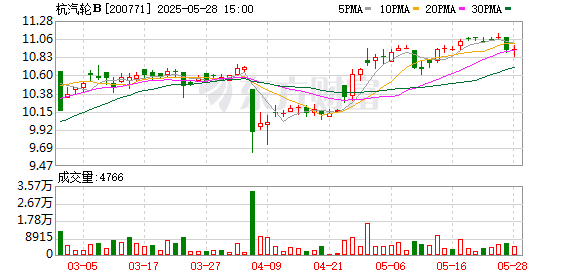
Core Viewpoint - Hangzhou Steam Turbine Power Group Co., Ltd. (referred to as "Hangzhou Steam Turbine") has successfully passed a key step in its transition from B-share to A-share, marking the first B-to-A case in the B-share market in three years [2][7]. Group 1: Company Background and Historical Context - Hangzhou Steam Turbine, established in 1958, is a large state-controlled company focused on equipment manufacturing, particularly steam and gas turbines, and is a significant player in the global equipment manufacturing sector [3]. - The company was listed on the B-share market in 1998 and has been a subject of investor interest regarding its potential return to the A-share market for many years [3][4]. Group 2: B-to-A Transition Details - The recent shareholder meeting approved the merger plan with Hailianxun Technology Co., Ltd., which is a crucial step for Hangzhou Steam Turbine's B-to-A transition [2][7]. - The merger plan received 87.57% approval from shareholders, with significant participation from minority shareholders, indicating strong support for the transition [7][8]. Group 3: Strategic Considerations for B-to-A - The decision to transition from B to A is driven by two main considerations: enhancing financing capabilities and better protecting the interests of minority shareholders [5]. - The B-share market has limited financing functions, which has hindered Hangzhou Steam Turbine's ability to raise capital effectively [5][6]. Group 4: Future Development Plans - Post-merger, the company aims to leverage the A-share market to focus on its core business and enhance its competitive edge and profitability [9]. - The future business strategy will emphasize technological innovation and transformation towards a "service-oriented manufacturing" model, with a focus on industrial turbine machinery and supporting power information systems [9][10].


杭汽轮B:机构热盼“B转A” 新能源业务前景可期
Zheng Quan Shi Bao Wang· 2025-05-28 11:09
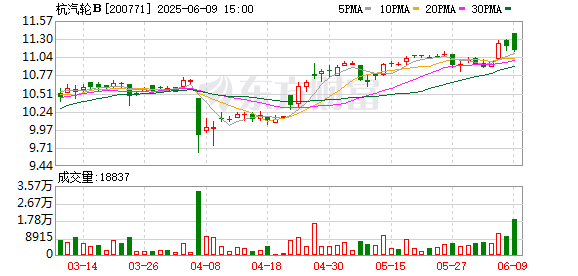
Core Viewpoint - Hangzhou Steam Turbine Power Group Co., Ltd. is actively expanding its business in both traditional and renewable energy sectors, with a focus on gas turbines and a strategic transition towards high-end equipment manufacturing and services [2][3][4][6]. Group 1: Company Overview - Founded in 1958, the company specializes in industrial steam turbines, serving various industries including oil, chemical, steel, coal, electricity, metallurgy, energy, and nuclear power across over 40 countries [2]. - In 2024, the company reported a revenue of 663.89 million yuan and a net profit of 53.99 million yuan attributable to shareholders [2]. - In Q1 2025, the company achieved a revenue of 107.74 million yuan with a net profit of 4.23 million yuan attributable to shareholders [2]. Group 2: Business Expansion and Strategy - The company is diversifying its business into three main sectors, including partnerships with Siemens Energy and Mitsubishi Heavy Industries to provide lifecycle services for gas turbines [3]. - The gas turbine power station EPC (Engineering, Procurement, and Construction) business offers comprehensive solutions, including consulting, design, equipment supply, construction, operation management, and financing [3]. - The company is exploring integrated smart energy solutions based on distributed photovoltaic power stations, incorporating hydrogen energy, gas power generation, and energy storage [3]. Group 3: Research and Development - Since 2014, the company has been advancing its independent gas turbine research, achieving significant breakthroughs, including the successful ignition and continuous operation of a 50MW heavy-duty gas turbine [4]. - The company aims to transition from industrial steam turbines to gas turbines, focusing on technology development and exploring multi-fuel applications [4]. Group 4: Capital Restructuring - The company is actively pursuing a major asset restructuring to transition from B shares to A shares, which is expected to enhance its financing capabilities and optimize its industrial layout [6]. - Institutional investors are highly interested in the company's move to the A-share market, viewing it as a critical opportunity for broader development and resource support [6].