Emotional Regulation

Search documents
Trust the Process: The Power of Movement | Nainika Mukherjee | TEDxNIIT University
TEDx Talks· 2025-07-09 15:14
Core Argument - The speaker's journey from selective mutism to professional Katak dancer highlights art's power in communication and identity formation [3][4][5] - The speaker experienced a shift from joyful expression to constrained performance in professional Katak training, leading to self-doubt [6][7][8] - Dance movement therapy is introduced as a psychotherapeutic tool for emotional, social, cognitive, and physical integration [9][10] - Movement is presented as a primary language, essential for emotional regulation, resilience, and empathy [13][14][16] - The speaker advocates for moving to express rather than impress, rediscovering the body's rhythm and understanding oneself [19][20] Key Concepts - Art as a communication tool for individuals with special needs [4] - The impact of professional training on artistic expression and self-perception [6][7] - Dance movement therapy as a means of holistic integration and healing [10][11] - The importance of movement in emotional regulation and psychological well-being [16][17] - Authenticity and self-discovery through movement [18][19]


Healthy screen time and the importance of play | Emily Northmore | TEDxLadies College Guernsey
TEDx Talks· 2025-07-01 15:15
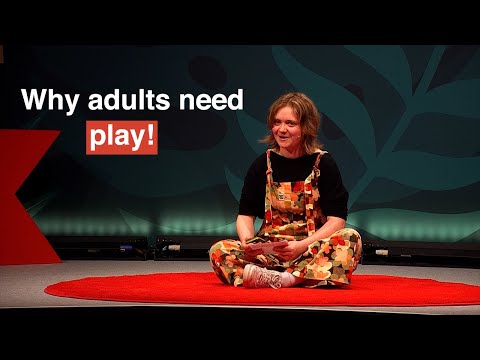
Child Psychology and Development - Play is crucial for children's emotional, cognitive, and social development, supporting learning at their own pace and expanding thinking and problem-solving skills [5][6] - Play facilitates emotional regulation, creative thinking, and social connection in children, as demonstrated by the "Bluey" case study [8][9][10] - Make-believe play helps children safely explore and manage emotions like stress, sadness, and frustration [9][10] - Play encourages creative thinking by detaching the meaning of objects, forcing reliance on imagination and enriching language development [11][12] Adult Play and Well-being - Adults can benefit from play by experiencing stress relief, emotional regulation, and improved mood through activities they enjoy [16][17] - Playfulness can be a beneficial emotional resource, allowing adults to navigate situations with resilience and positivity [17] - Play stimulates the brain, improving creative thinking and problem-solving skills in adults [18] - Play builds social connections by creating a safe environment for experimentation, strengthening communication and honesty [19] Incorporating Play into Adult Life - Individuals can make small adjustments to incorporate more of what they enjoy into their lives, identifying their play personality to guide their choices [21][22][23] - Playfulness can be incorporated into working environments through humor and fostering a more playful culture, leading to benefits in creativity and employee well-being [25][26] - Companies are seeing benefits in creativity and employee well-being by fostering a more playful culture [26]