
Financial security

Search documents
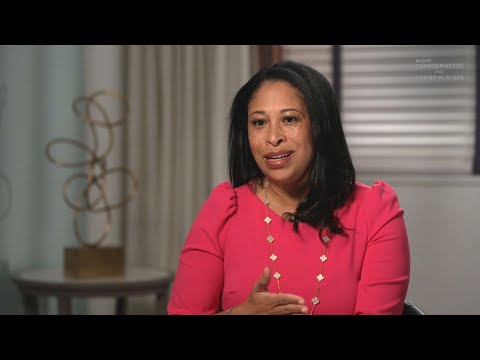
TIAA retirement CEO on how to set yourself up for a secure financial future
CNBC Television· 2025-11-04 13:31
Retirement Savings & Financial Planning - The financial services industry, including companies like TIAA, faces the challenge of engaging younger generations (23-25 years old) to prioritize retirement savings, emphasizing the importance of contributing to retirement plans, especially when companies offer matching contributions, such as a 100% match on a 3% contribution, resulting in a 6% total contribution [2] - Many people, including younger individuals, lack a clear understanding of their life expectancy and retirement needs, highlighting the importance of financial protection to ensure basic needs are met, even up to ages like 80, 90, or even 106 [3] - 45% of Americans are not saving enough for retirement, underscoring the urgency for financial institutions to streamline processes and improve efficiency in helping people plan for their future [8] Innovation & Culture in Financial Institutions - Innovating in the financial services industry, which has a long history, is a key focus for companies like TIAA [1] - TIAA's culture is driven by its people, who are dedicated to the company's mission [5] - Bureaucracy in large firms can hinder entrepreneurial efforts, requiring a focus on streamlining processes and empowering teams to improve speed and efficiency [7][8] - The company emphasizes the importance of setting a clear strategy, building a strong team, and allowing them to execute, accepting that mistakes will happen but focusing on resilience and quick recovery [9]

X @Forbes
Forbes· 2025-10-27 20:40
Career & Financial Security - Job hugging is not a reliable strategy for financial security [1] - The report suggests exploring five alternative paths to financial security [1] Risk Management - The report warns against relying solely on one's job, as it may not provide long-term security [1]
The retirement paradox: Here's what to know
CNBC Television· 2025-10-24 12:20
Retirement Confidence and Planning - Over 80% of mass affluent adults in the US, Brazil, Mexico, and Japan are confident they'll cover essential costs in retirement [2] - Only 55% of respondents in the US and Brazil factored inflation into their retirement planning [3] - Many investors aren't ready for retirement despite the peak 65 being in full swing [5] Financial Concerns and Expectations - 54% of Americans believe their financial situation will improve during their lifetime, while the same share fear running out of savings once they retire [5] Key Economic Indicators - The September consumer price index (CPI) and 2026 cost of living adjustment for social security benefits will be released [1] Demographic Trends - Over 4 million adults in the United States are expected to reach age 65 this year and over the next two years [4] Survey Details - Credential's first global retirement pulse survey included more than 4,000 adults aged 30 and over with over $100,000 in investable assets or the equivalent [2]

6 Figures Won’t Make You Wealthy — 3 Money Milestones That Matter More
Yahoo Finance· 2025-10-19 20:23
Core Insights - The perception of wealth among Americans has shifted, with only 23% believing that an annual income of $100,000 qualifies as wealthy [1] - There is a growing emphasis on personal financial goals such as debt elimination and financial security rather than just high income [2] Group 1: Definition of Wealth - The primary definition of wealth for many Americans is the ability to live comfortably without financial concerns, which is a significant source of stress for over 70% of the population [4][5] - Wealth is increasingly associated with not worrying about covering essential expenses and having some discretionary income for comfort [5] Group 2: Financial Security - Feeling financially secure is a key component of wealth, with around half of U.S. adults indicating that an income of $100,000 would suffice for this sense of security [6] - However, a notable portion of Americans believe that higher incomes are necessary for financial security, with 25% stating they would need at least $150,000 and 16% requiring $200,000 [7]
X @Forbes
Forbes· 2025-10-16 00:00
Forgotten 401(k)s are a silent threat to your financial security, but they don’t have to be. By understanding the costs of inaction—high fees, stagnant returns, and lost growth—you can take charge of your retirement savings. https://t.co/yUjCLeWkjs https://t.co/iERsQHN5De ...
Why Middle-Class Earners Quietly Becoming Millionaires Can Still Feel Broke
Yahoo Finance· 2025-10-06 20:15
Core Insights - More middle-class Americans are achieving a net worth of $1 million due to long-term gains in home values and retirement accounts, but this does not equate to financial security [1][4][5] - The actual buying power of $1 million has significantly declined due to inflation and rising costs in housing, healthcare, and everyday expenses [5][6] - Many middle-class millionaires are experiencing a disconnect between their asset wealth and cash flow, leading to a situation where they are "house rich, cash poor" [5][7] Group 1 - The increase in millionaires among middle-class households is attributed to decades of home appreciation, retirement savings, and stock market growth [1][3] - Despite reaching the $1 million milestone, many households do not feel wealthy due to rising costs and unexpected expenses [2][3] - The perception of wealth is changing, as financial security is not guaranteed by net worth alone [4][5] Group 2 - The rising cost of healthcare is a significant factor eroding the value of $1 million in retirement, with couples potentially facing medical expenses of at least $300,000 annually [7] - Basic living costs, such as food, rent, and insurance, are increasing at a rate faster than wages and some investment returns [6][7] - The challenge of being asset-rich but cash-stressed is becoming more prevalent among middle-class millionaires [5][7]
X @Investopedia
Investopedia· 2025-10-05 22:00
Risk Management - Concentration of company stock in retirement plans poses risks to long-term financial security [1] - Reducing concentration risk is crucial for protecting retirement savings [1] Strategies - Tax-efficient strategies can be employed to manage company stock in retirement plans [1]
Suze Orman once shared a money rule she believes is the key to financial security for Americans
Yahoo Finance· 2025-09-22 09:17
Core Insights - The article emphasizes the importance of living below one's means as a strategy for financial stability and wealth-building, highlighting the practices of successful individuals like Suze Orman and Warren Buffett [3][4][8]. Group 1: Financial Strategies - Acorns app allows users to invest spare change from purchases, promoting a habit of saving and investing even while spending [1]. - Suze Orman advises individuals to prioritize needs over wants, suggesting that this approach can lead to better financial outcomes [4][8]. - The article mentions that nearly 50% of Americans are making significant mistakes regarding Social Security, indicating a widespread need for financial education [4]. Group 2: Consumer Debt and Spending - Household debt in the U.S. reached a record $18.39 trillion in Q2 2025, with rising credit card and auto loans contributing to financial strain [8]. - A significant portion of homeowners, approximately 22.8%, are considered cost-burdened, spending over 30% of their income on housing costs [10]. - Over 18 million American homeowners are classified as "house poor," indicating a struggle to balance housing expenses with income [9].
I planned to retire by 55 — but my son has asked me to help pay for college. Should I just push off my plans?
Yahoo Finance· 2025-09-21 12:00
Core Perspective - The article discusses the dilemma faced by Derek regarding early retirement and the financial implications of supporting his son's college education, particularly in the context of a significant medical program cost of nearly $250,000, which could delay his retirement by about five years [2][3]. Financial Implications - Derek currently earns approximately $150,000 annually and spends about $65,000 on mortgage, healthcare, and everyday expenses, indicating a carefully budgeted retirement savings plan [2]. - The average federal student loan debt is reported to be $39,075 per person, which can negatively impact lifetime earnings [4]. - An analysis by the Kresge Foundation indicates that the average student debt burden can lead to a lifetime wealth loss of nearly $208,000 for dual-earner households with bachelor's degrees, primarily due to lower retirement savings and reduced home equity [5]. Considerations for Funding Education - The family's financial situation must be assessed to determine if they can cover tuition without depleting retirement accounts, as withdrawing from savings could incur penalties and missed growth opportunities [7]. - Health considerations are crucial; if Derek or his wife face health challenges, the need for early retirement may arise, further impacting retirement portfolio growth [7]. - Job security is a factor; losing employment could hinder Derek's ability to fund both his son's education and his own financial needs [7]. - The student's academic commitment and performance should be evaluated to ensure readiness for a demanding medical program [7]. - The earning potential of medical doctors is generally higher, which may make student loan repayment more feasible; Derek might consider loaning money to his son instead of providing it outright [7].