Health Insurance

Search documents
Lawmakers spar over future of health insurance costs as subsidies are set to expire
NBC News· 2025-12-10 01:17
FIGURES THIS OUT. HERE'S RYAN NOBLES IN TONIGHT'S BREAKDOWN. - REMEMBER THIS.- GOOD EVENING. THE LONGEST GOVERNMENT SHUTDOWN IN AMERICAN HISTORY. - AND WHILE THE SHUTDOWN MAY BE OVER FOR NOW, THE CRISIS OF RISING HEALTH CARE COSTS IS NOT.WITH HEALTH CARE SUBSIDIES FOR MILLIONS SET TO EXPIRE WHEN THE CLOCK STRIKES MIDNIGHT ON NEW YEAR'S EVE. REPUBLICAN LEADERSHIP NOW COMMITTING TO A VOTE ON AN ALTERNATIVE PLAN. - BUT I CAN TELL YOU, IS AS A CONFERENCE, OUR MEMBERS AND I CAN'T SAY 100%, BUT I THINK FOR THE MO ...

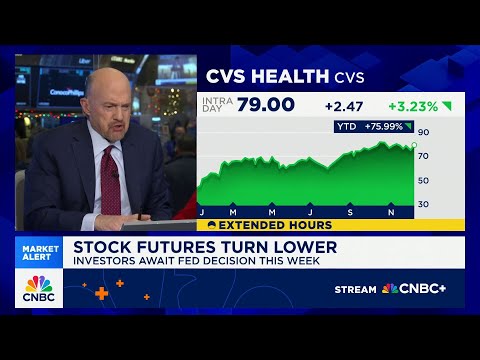
Cramer’s Mad Dash: CVS Health
CNBC Television· 2025-12-09 14:48
Let's get to a mad dash for this Tuesday. Uh, nice to have everybody back here at the table. What do you want to uh do.CBS, I guess, is the name. >> Yeah. As opposed to CBS, >> correct.Which is owned by which is owned by Paramount. >> I want to say that David Joiner understands all the weaknesses of what he inherited and the strengths and he's playing it to to health insurance and he's playing it to wellness. And what I think the people at home should know, he ain't planted to the front of the store, which ...

Rep. Dingell: Too many people can't afford health insurance right now
MSNBC· 2025-12-03 11:41
Yes, >> Congress has less than 30 days before health insurance premiums are set to jump for millions of Americans, and hope for an extension of those Affordable Care Act subsidies appears to be diminishing. Last month, you'll remember, Democrats agreed to reopen the government in exchange for a December healthc care vote in the Senate, and they were hoping to work with Republicans to extend those ACA tax credits. But a plan would require 60 votes to pass the Senate, and Republicans are struggling to rally a ...
WSJ's Greg Ip: Affordability is as much a state of mind as it is an economic condition
CNBC Television· 2025-11-26 14:25
>> AFFORDABILITY IS FRONT AND CENTER IN WASHINGTON, D. C. RIGHT NOW, ESPECIALLY AFTER PRESIDENT TRUMP'S MEETING WITH NEW YORK CITY MAYOR ELECT ZORAN MAD MONEY LAST WEEK.BUT OUR NEXT GUEST SAYS THAT DESPITE THIS RENEWED FOCUS, AFFORDABILITY IS A PROBLEM THAT JUST CAN'T BE SOLVED. GREG IP IS THE WALL STREET JOURNAL'S DEPUTY ECONOMICS EDITOR AND CHIEF ECONOMICS COMMENTATOR. STEVE LIESMAN, BY THE WAY, IS BACK WITH US FOR THIS CONVERSATION AS WELL.BUT, GREG, WELCOME. IT'S IT'S GOOD TO SEE YOU THIS MORNING. YOUR ...
Sen. Cassidy: ACA subsidies alternative gives power to patients, not profits to insurance companies
CNBC Television· 2025-11-24 14:12
Proposed Healthcare Plan Overview - Senator Bill Cassidy is proposing an alternative to extending Obamacare subsidies, focusing on bronze plans and Health Savings Accounts (HSAs) [1][2][3] - The plan aims to provide more generous benefits while saving money for federal taxpayers [8][10] - The proposal targets the 7% of the insured population using Obamacare exchanges [5] Key Components of the Plan - The plan allows enhanced premium tax credits to be used on bronze plans, which are cheaper than silver plans [2] - Savings from the cheaper bronze plans are directed into a health savings account (HSA) for families [3] - The HSA can be used to cover deductibles, co-pays, eyeglasses, dental work, and orthodontia [3][16] - The plan intends to give the 26 billion USD currently allocated to insurance companies (with 20% overhead and profit) directly to patients [9][10] Financial Implications and Savings - Families with silver plans often face 5,000-6,000 USD deductibles in addition to premiums [3][7] - Under the proposed plan, families could have up to 4,000 USD in their HSA to pay for deductibles [4][7] - The plan aims to lower healthcare costs in general, not just premiums [6] - The proposal seeks to address healthcare affordability for those on the exchanges by January 1, 2026 [6] Political and Ideological Positioning - Senator Cassidy positions the plan as an "American plan" appealing to various political viewpoints [20][21] - The plan aims to give power to the patient, not profit to the insurance companies [10][13] - The proposal continues the enhanced premium tax credits, ensuring that those at 600% of the federal poverty level would pay no more than 85% of their premium [12]
How To Get Ready For Medicare | Fidelity Investments
Fidelity Investments· 2025-11-18 19:28
Medicare Basics - Medicare is not free, with estimated average annual healthcare costs of $6,400 [2] - Unlike employer health insurance, Medicare plans are individual, requiring each spouse or partner to enroll separately [2] - Enrollment should occur three months before turning 65 or when employer healthcare ends to avoid late enrollment penalties [2][3] - Original Medicare consists of Part A (hospital insurance) and Part B (medical insurance) [4] Medicare Parts & Coverage - Part A covers hospital visits, treatments, procedures, and hospice care, typically without a premium but with a deductible per hospital visit [4] - Part B covers doctor visits, outpatient care, physical therapy, lab tests, and medical equipment, with a monthly premium based on income and 20% cost-sharing for medical services [5] - Part D covers prescription drugs, requiring selection of a provider whose plan covers needed medications, with premiums and deductibles [8] - Medigap policies can be purchased to cover out-of-pocket costs related to Parts A and B, providing more predictable expenses [7] Medicare Advantage (Part C) - Medicare Advantage (Part C) is an all-in-one managed care plan that combines coverage from original Medicare, Medigap, and potentially Part D, vision, and dental [10] - Medicare Advantage plans require using in-network doctors and providers [10] Enrollment & Cost Saving Tips - Social Security should be contacted to enroll in Parts A and B, with premiums often deducted from retirement benefits [6] - Individuals should check eligibility for low-income discounts and enroll in each Medicare part on time to avoid penalties [14]
‘Lots of people will actually die’: Expert outlines consequences of letting ACA subsidies expire
MSNBC· 2025-11-15 19:55
Healthcare Coverage & Subsidies - Approximately 22 million Americans face potential loss of healthcare subsidies initially established under the Affordable Care Act in 2014 and expanded in 2021 [1] - The Kaiser Family Foundation estimates that Obamacare recipients paid an average of $888 in premiums this year [1] - Without subsidies, average premiums are expected to jump 114%, from $888 to $1,94 [2] - The potential loss of subsidies could nearly double the number of uninsured Americans, adding to the existing 25 million uninsured [3] US Healthcare System & International Comparison - The United States stands out as the only high-income nation without universal healthcare coverage [4][5] - Between 60 and 73 countries have some form of universal healthcare [5][11] - The US healthcare system lags behind other wealthy nations in key health outcomes [6] Consequences of Lack of Coverage - Lack of affordable healthcare may lead to delayed care, increased reliance on community clinics and emergency rooms, and potentially fatal outcomes [3][15] - The US has the lowest life expectancy, highest death rates for avoidable conditions, highest maternal and infant mortality, and among the highest suicide rates compared to other wealthy nations [6] - Reduced insurance coverage leads to higher prices for those who remain insured [16] Economic Impact - The potential healthcare crisis could trigger an economic crisis, diverting resources from other vital sectors like infrastructure, education, and the environment [14][15] - High family premiums, averaging $27,000, strain employers and contribute to the economic burden [17]
Oscar Health CEO Mark Bertolini on fixing U.S. health care: We need to put consumers in charge
CNBC Television· 2025-11-13 13:23
Healthcare Industry Challenges - Healthcare insurance premiums are likely to rise sharply next year [1] - The current healthcare system sees inflation far outpace inflation in other arenas [3] - High cost of healthcare, drug development, and skyrocketing healthcare costs in facilities contribute to a system built 80 years ago with built-in inflation [6] - 100 million Americans don't have access to employer-sponsored health insurance [6] - If the uninsured rate increases, it will reverse to an $80 billion problem over the next 10 years [7][8] Affordable Care Act (ACA) Impact - 50% of American small businesses use the Affordable Care Act, and small businesses contribute 50% of the GDP [4] - 27% of farmers use the Affordable Care Act, with the average farmer making $60,000 per year gross [4] - The Affordable Care Act has reduced the uninsured rate from 15% to 8%, saving $10 billion per year in uncompensated care and charity costs [7] - 75% of the people in the ACA today are from red states [5] Proposed Solutions & Perspectives - Proposes creating a qualified account for healthcare spending, putting consumers in charge of buying the product to impact price [9][10] - Suggests redoing the whole system and using the individual market as a single risk pool [12] - Advocates for subsidies to be put into Health Savings Accounts (HSAs) [14] - 40% of Americans borrowed $74.9 billion from banks last year to pay their out-of-pocket costs for healthcare [15] - Argues for evolving the current system, emphasizing the network and risk pool concepts [17][18]
X @Bloomberg
Bloomberg· 2025-11-13 11:06
Healthcare Policy - Donald Trump has a plan to replace Obamacare [1] - The plan involves giving Americans cash to buy their own health insurance [1] Potential Impact - The report questions whether "Trumpcare" can work [1]
Could Health Care Become Affordable Under Republican Leadership?
Bloomberg Television· 2025-11-11 22:43
Healthcare Affordability & Policy Debate - The discussion centers on making healthcare affordable in the United States, particularly regarding Affordable Care Act (ACA) premium subsidies [5][7][14] - A key point of contention is whether subsidies benefit families or primarily go to big insurance companies [3] - Republicans propose structural changes to the ACA, including cost-sharing provisions, to reduce premium costs [6] - The "Working Families Tax Cut Act," proposed by House Republicans, aimed for a 12.7% decrease in premium costs, but was opposed by Senate Democrats [6] - The concept of "Trumpcare," where individuals manage their own health insurance accounts, is introduced as a potential alternative [8][9] - Eliminating the "middleman" (pharmacy benefit managers and insurance companies) is suggested to lower healthcare costs [11][12][13] Economic Impact & Political Messaging - A Harris poll indicates that half of respondents feel the economy isn't working for them, highlighting affordability concerns [14] - Republicans believe the economy will improve after the implementation of the "Working Families Tax Cuts Act" [15] - The focus is on addressing housing and healthcare affordability nationwide [15] - Constituents are more concerned with putting American workers first than receiving tariff revenue [18] - The administration aims to make America affordable, safe, and secure through various policies [19]