Museum

Search documents
Preserving the story of 9/11 | 60 Minutes Archive
60 Minutes· 2025-09-11 10:02
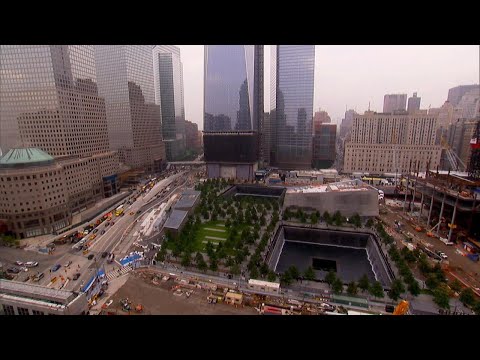
Museum Overview - The National September 11th Memorial Museum, located seven stories underground at ground zero in New York City, aims to memorialize the events of 9/11 [2] - The museum project faced challenges including delays, funding battles, and a flood, but the primary challenge is conveying the horror of 9/11 without being unbearable [2] - The museum is located below the memorial plaza, which features two giant cascading pools in the footprints of the World Trade Center towers, surrounded by the names of 2,983 victims [3][4] - The museum is described as a museum *in* an artifact, emphasizing the sacredness of the location where the buildings collapsed [6] Content and Exhibits - The museum begins with the voices of people from around the world, remembering where they were when they heard about the attack, acknowledging the global impact of 9/11 [9] - Key artifacts include the "survivor staircase" and the "last column," remnants of the towers, around which the museum was built [11] - The museum includes a large projection showing the morning of 9/11, including the flight paths of the four planes [12] - Voicemail messages left by passengers and victims will be included with family permission, recognizing the emotional power of the human voice [13][14] Sensitive Content and Family Perspectives - The inclusion of images of people jumping from the towers was a sensitive issue, debated internally, with the decision to include an exhibit in an alcove with clear warnings [16][18][19] - The "heart of the museum" is a space devoted to honoring the victims with photographs lining the walls, representing nearly 3,000 faces from over 90 countries [19][20][21] - The museum acknowledges the diverse perspectives of the families of the victims, with varying opinions on what should be included, such as images of the perpetrators [25][26][27] Educational Goals - The museum aims to educate future generations about the events of 9/11, as many young people will not have firsthand memories of the event [29][30] - The museum also wants to showcase stories of heroism, selflessness, and unity following the attacks, including tributes to recovery workers and volunteers [28]

X @The Wall Street Journal
The Wall Street Journal· 2025-08-30 15:25
A jellyfish museum on the site of Ukraine’s most important historical events seemed like a joke. Now, it’s exactly what everyone needs. 🔗 https://t.co/ELK2gnykX1 https://t.co/vAJGywszu0 ...
X @The Wall Street Journal
The Wall Street Journal· 2025-08-26 15:07
A jellyfish museum on the site of Ukraine’s most important historical events seemed like a joke. Now, it’s exactly what everyone needs. 🔗 https://t.co/O6RcGXtDq0 https://t.co/DQHyJDeyhe ...
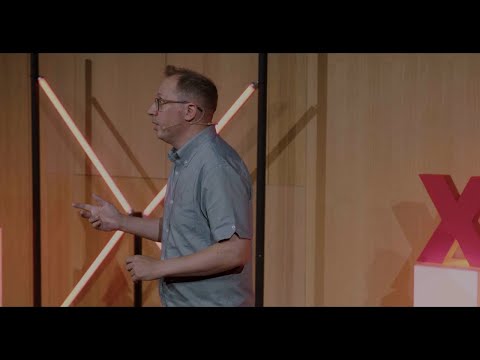
Teaching AI about war: Why democratising history leads to better AI | Nick Hodder | TEDxWinchester
TEDx Talks· 2025-07-11 16:36
Museums and Accessibility - Museums should strive to create a sense of belonging and community to enable shared knowledge for everyone [25] - Museums need to engage with everyone, from staff recruitment to collecting and interpretation, to foster inclusivity [23] - Museums should use relatable language and humor to create human connections and make history engaging [25] AI in Museums - AI can help museums understand their collections and find new connections, enabling discovery and participation [21] - AI can be used to analyze images and provide detailed descriptions, but the quality of data used to train AI is critical [15][22] - AI can accelerate change in museums, but the focus should remain on human understanding and storytelling [23] Collection and Interpretation - Museums often focus on a narrow, white middle-class Western narrative, neglecting other perspectives [16] - Museums face a storage problem, leading them to refuse many personal items and stories [11][12] - There is a need to make room for new perspectives and stories in museum collections [13]

Teaching AI about war: Why democratising history leads to better AI | Nick Hodder | TEDxWinchester
TEDx Talks· 2025-07-01 16:43
I became middle class in 1975. It's weirdly specific, isn't it. Yeah.Uh I'm the child of boomers. The interesting thing about the baby boomer generation is you had all these workingclass families whose ancestors had been perfecting the art of peasantry for centuries and then they suddenly decided you know what uh let's try being middle class for a change. And so they were rooted rooted in poverty since the middle of middle middle ages.And then all of a sudden, boom, golf club membership and avocado on toast ...