Supply Disruption

Search documents
X @Bloomberg
Bloomberg· 2025-09-24 02:54
Market Dynamics - Copper prices are stable, influenced by a new supply disruption in Peru and the Federal Reserve's interest rate policy [1]
Copper Faces a Volatile Outlook | Presented by CME Group
Bloomberg Television· 2025-08-06 15:31
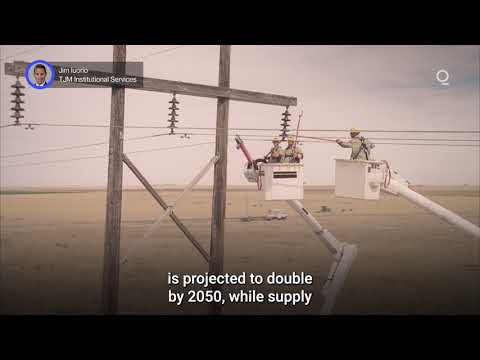
Market Trends & Demand - Global copper consumption exceeds 25 million metric tons per year, driven by electric vehicles, renewable energy, and AI data centers [1] - Clean energy and electrification are projected to double global copper demand by 2050 [3] - China consumes over half of the world's copper, but a weaker property market may slow demand [4] Price Volatility & Supply Issues - Copper prices experienced significant volatility in 2025 due to US tariffs, with a 13% jump on July 8th and a subsequent 25% drop on July 30th after policy amendment [2] - New mines can take decades to come online, and existing mines face disruptions, potentially leading to supply issues [4] - Tariffs and supply issues could continue to cause wild price swings in the second half of 2025 [4] Long-Term Outlook - Long-term copper demand is strong due to the energy transition and AI, but supply may struggle to keep up [5] - Supply constraints create uncertainty and price risks for copper [5] - Electric vehicles use three to four times as much copper as gasoline-powered cars [3]

X @Bloomberg
Bloomberg· 2025-07-24 06:48
Supply and Demand - The UK's top natural gas storage facility will shift from stockpiling to producing fuel this winter [1] - This shift removes an important buffer against potential supply disruptions for the country [1]
Energy leaders gather in Austria
CNBC Television· 2025-07-09 19:01
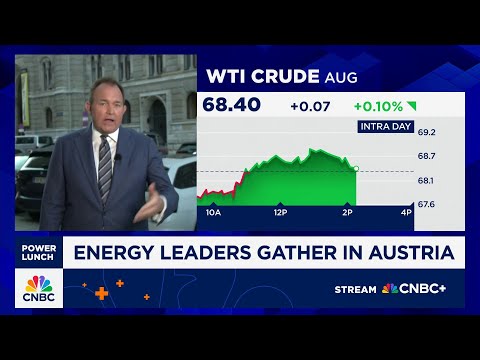
Oil Market Dynamics & Geopolitical Tensions - Trade tensions are adding uncertainty to the future of oil production [1] - OPEC nations decided to raise production [1] - Geopolitical tensions, particularly around Iran, are a major concern [4] - Attacks on cargo ships by Houthi rebels in the Red Sea highlight potential supply shock risks [11] - Market has not reacted to potential supply shock, with oil prices around $68 [12] OPEC & UAE Strategy - OPEC aims for market stability, not targeting a specific price or volume [5] - UAE is ready to fill any supply gap resulting from disruptions like those involving Iran [4] - UAE emphasizes partnership with US shale producers, recognizing their importance in the market [5] Investment & Production - Continued investment in oil production is needed to satisfy future global economic requirements [6] - Baker Hughes rig counts are going down, potentially leading to lower output due to lower oil prices [8][9] - Abu Dhabi National Oil Company (ADNO) is actively investing in the US, including gas and renewable energy sectors [6][7] - ADNO and the Carlile Group made an $18.8 billion bid for Santos, an Australian company with a significant presence in Alaska [7][8]
Oil Plunges as Iran Retaliates for US Missile Strikes
Bloomberg Television· 2025-06-23 19:37
I guess if you take away the worst case scenario, that's actually helpful for lower oil prices. A couple of things to consider, though. One, Ali McCrossin RBC said over the weekend that she would caution against that knee jerk reaction that, quote, The worst is behind us.Now, the other factor to consider here, irrespective of the supply issue that may or may not happen with Iran is the demand side. So there's been a lot of stockpiling by China, a lot of stockpiling by other countries within the West as well ...
Iran Vows Retaliation for US Strikes, Trump Threatens More Attacks | Daybreak Europe 06/23/2025
Bloomberg Television· 2025-06-23 07:06
Geopolitical Risks & Market Impact - U S airstrikes on Iranian nuclear sites have heightened geopolitical risks, leading to concerns about potential Iranian retaliation and supply disruptions in the Middle East [1][2][5][16] - Oil prices initially spiked nearly 6%, but gains were later pared down to 1 4%, with Brent crude trading at $78 per barrel, reflecting market uncertainty regarding Iran's response [4][16] - The market is focused on whether Iran will disrupt shipping in the Strait of Hormuz, a crucial route for approximately 1/5 of the world's crude oil output [1][17] - Risk-off sentiment is observed across equity markets, with European futures down by 0 5% and similar trends in Asia, while the U S dollar gains amid concerns about escalation [2][57] - Gold prices are slightly weaker, down 0 2%, despite its traditional safe-haven status, indicating the primary focus remains on oil price volatility and potential retaliation [5][58] Potential Iranian Responses - Iran reserves the right to protect its people and sovereignty, with the possibility of a targeted response, such as striking U S military sites within the GCC [9][11] - Disrupting shipping in the Strait of Hormuz is another option, but it could be self-destructive for Iran's oil exports [12] - Iran may consider leaving the Non-Proliferation Treaty to signal its resolve to develop nuclear weapons [12] U S Objectives & International Reactions - The U S claims the strikes significantly set back Iran's uranium enrichment capabilities, but independent analysis is pending [6] - The U S asserts the mission was a precise attack on nuclear sites, not an attack on the Iranian people or a regime change move [6][31] - European leaders are calling for de-escalation and diplomacy, emphasizing that Iran should never be permitted to acquire nuclear weapons [50][51] - There are concerns among the international community about whether the U S airstrikes constitute a preemptive or preventative strike under international law [52][53] Long-Term Implications & Analysis - The location of 400 kilograms of highly enriched uranium in Iran is unknown, raising concerns about the effectiveness of military action alone in eliminating the nuclear threat [15][37] - The debate continues regarding the Joint Comprehensive Plan of Action (JCPOA), with some arguing it capped Iran's nuclear ambitions, while others criticize its expiration date and failure to address ballistic missiles and terrorism [41][42] - Some analysts suggest the U S should support regime change in Iran, but emphasize it must come from the Iranian people, not external intervention [44][45][46]

Could Oil Reach $200 a Barrel Amid Israel-Iran Conflict Escalation?
Bloomberg Television· 2025-06-16 08:29
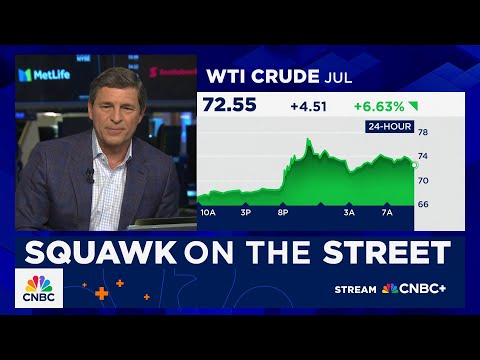
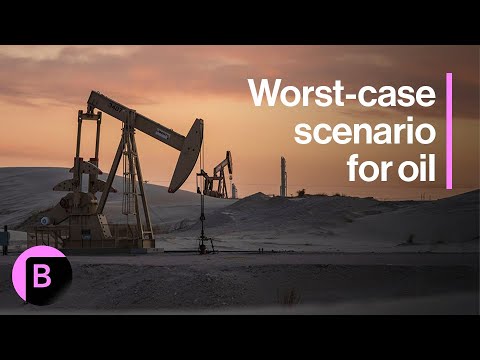
Oil Price Scenarios - In an extreme scenario involving a complete disruption to Iranian oil supply and closure of the Strait of Hormuz, oil prices could temporarily rise above $200 per barrel [2] - The industry's base case suggests a risk premium pushing Brent crude prices into the low $80s [4] - A scenario involving Israeli attacks on Iranian energy infrastructure could push prices towards $100, reflecting further risk premium due to actual supply disruptions [5] Geopolitical Risk and Market Dynamics - The market's direction in the next two weeks depends on whether there is de-escalation, potentially with US diplomatic involvement, or escalation involving attacks on Iranian energy infrastructure [5] - A de-escalation scenario could lead to a decay of the risk premium over time, similar to other geopolitical risk events where initial spikes subside without significant supply disruptions [5][6] - The sustainability of extreme oil price increases is questionable, even if they occur temporarily [2][3]
Energy prices surge on Middle East risks
CNBC Television· 2025-06-13 14:19
Oil Market Dynamics - Oil prices initially surged, with WTI jumping 14%, but retreated as no actual supply disruptions occurred [2] - Market focus shifts to Iran's response, which is expected to dictate oil's next move [2] - Iran exports approximately 15 million barrels of oil per day, representing about 15% of global supply [3] - A wider conflict could disrupt oil supply in Saudi Arabia or Iraq [3] - Potential blockade of the Strait of Hormuz could impact 20% of global oil flow [3] Natural Gas Market - European natural gas prices increased by 5% [4] - The Strait of Hormuz is the sole export route for Qatar and the UAE [4] - Qatar and the UAE together account for approximately 20% of global LNG supply [4] Risk Assessment - CIBC private wealth indicates a rising probability of a low probability scenario as the situation evolves [4] - Prices cannot sustain current levels unless barrels actually come off the market [2]