human trafficking

Search documents
'DOUBLE STANDARD': Top Dem DEMANDS transparency before big Kash Patel hearing
MSNBC· 2025-09-14 15:37
I director Cash Patel is set to be grilled by lawmakers on Capitol Hill next week in hearings before the Senate and House Judiciary Committees. It all comes as Patel along with other officials in the FBI and Justice Department continue to face push back over their handling of the Epstein case. You will remember that in July, these agencies tried to put an end to the intrigue and announced they would not disclose any further information, which quickly prompted a firestorm within President Trump's own base an ...


‘Regaining their autonomy’: Epstein survivors making their own client list
MSNBC· 2025-09-03 17:43
Well, this is a key question, Michael. Is Donald Trump listening. It was fascinating to hear one of the lawyers for uh the victims saying there was a point at which Donald Trump was not just verbally supportive, but he was actually trying to help them years ago with this.And they're trying to figure out how he made the turn. And by the turn, almost simultaneously, within minutes, you heard Donald Trump in the Oval Office being asked about this. Listen to what he says now.So, this is a Democrat hoax that nev ...

'We know the names': Epstein accusers will compile their own client list
NBC News· 2025-09-03 16:47
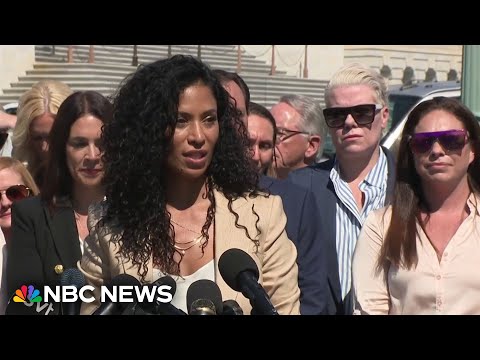
In the year 2000, I was taken to Jeffrey Epstein's island while on a photo shoot on a nearby island. Who I saw and what I experienced there was a was a glimpse into a very dark and disturbing world. For years after, I tried to avoid Jeffrey, but he had introduced me to Katie Ford, the owner of the Ford modeling agency.Epstein's reach went to the very top of fashion, arts, and entertainment. This did not just happen to underage girls in Florida. In New York City, hundreds of young, ambitious women were abuse ...
Epstein survivors say they're creating their own list to release
MSNBC· 2025-09-03 15:59
Allegations and Testimonies - Survivors recount experiences of abuse by Jeffrey Epstein and Ghislaine Maxwell, detailing manipulation, exploitation, and the involvement of powerful figures [1][2][5][6][7][8][9][22][24] - Epstein's network extended to high-profile individuals in fashion, arts, and entertainment, enabling his abuse of young women [2][6][8][9][24] - Ghislaine Maxwell actively participated in the abuse and was a key architect of the trafficking scheme [20][22] Calls for Accountability and Justice - Survivors demand accountability for enablers and those who protected Epstein, urging Congress to prioritize survivors over predators [3][11][12][13] - There is a call for transparency and the release of government files related to Epstein, to reveal who knew, who was involved, and who protected him [11][13][26] - Survivors are creating a confidential list of names of those involved in Epstein's world, compiled by and for survivors [4][25][26][27][28][30] Reactions and Concerns - Survivors express devastation and dehumanization in response to claims that the Epstein issue is a hoax [15][16][17] - There is outrage and concern over Ghislaine Maxwell's transfer to a lower security prison, fearing she may receive a pardon [19][20][21][22] - Survivors highlight the fear of speaking out due to potential legal and personal attacks, emphasizing the lack of protection they received initially [27][28]

Scams, Shame,Digital Slavery: The rise of the pig butchering scam | Prashasth Baliga | TEDxDavangere
TEDx Talks· 2025-08-05 15:13
Pig Butchering Scam Overview - Pig butchering is a scam where victims are exploited and held captive to perform digital slavery, often originating from random WhatsApp messages [1] - The scam involves grooming victims by selling them a dream lifestyle through fancy pictures and promises of financial success [4] - Scammers redirect victims to fake investment portals, initially asking for small investments to gain trust before escalating to larger sums [6][7] - Victims are often lured with promises of high returns, sometimes exceeding those of established investments like the S&P 500 [7] - When victims try to withdraw their money, they are either asked to pay more or the website disappears, leaving them with financial and psychological trauma [9] Origin and Evolution - The scam originated in China around 2016 with online betting scams known as "杀猪盘" (shazup pan), meaning fattening the pig before butchering it [11] - After crackdowns in China around 2019, scammers moved to special economic zones in countries like Myanmar, where they opened casinos and continued their operations [12][13] - The COVID-19 pandemic led to a shift towards digital scams due to increased online activity and vulnerability [15] - Human trafficking became a key component, with individuals lured by fake job ads and then forced into digital slavery in scam compounds [16][17][19] Scale and Impact - Scam compounds, such as those in KK Park in Myanmar, have emerged as IT centers where trafficked individuals are forced to scam others [20][21] - Approximately 300,000 people are estimated to be trapped in these scam compounds worldwide [21] - The scam targets individuals globally, not just those in Asian countries seeking jobs, and can affect anyone, including high-profile individuals [22][23][24] - Deepfakes and AI technologies are increasingly used to enhance the scams, making them more convincing [25][27] - The economic impact is estimated to be a $75 billion market with a 40% year-on-year growth [29] Societal Implications and Call to Action - The scam leads to erosion of trust in society, with people questioning the reality of their interactions [32] - The industry calls for increased digital awareness, development of deepfake detection algorithms, and holding big tech companies accountable [34][35][36] - Governments and law enforcement agencies need to build policies, regulations, and treat these cases with empathy and sensitivity [36][37]

X @Andrew Tate
Andrew Tate· 2025-07-24 12:12
Scumbags.They totally devalue the idea of “human trafficking” by charging men over the lies of prostitutes.Joseph D. McBride, Esq. (@McBrideLawNYC):How do I apply for the executioner position? https://t.co/myaxfOtRNI ...
Human Trafficking: You are not alone in your pain | Sharon Kamukama | TEDxMableton
TEDx Talks· 2025-07-14 16:09
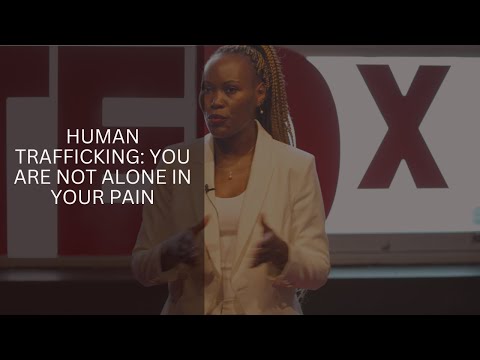
[Applause] Just like many of you, I also didn't know what human trafficking was. But I remember the exact moment I found out that it was real. I remember the money exchanging hands when I found myself trapped in the warehouse in Poland, being threatened by my traffickers and being exploited for forced labor.Then I understood that what happened to me six years ago actually had a name. I was human traffked. Today I'm here to tell you all that human trafficking does happen in Poland.And I don't quote statistic ...
Frost: Republicans short on votes for Trump budget bill as Democrats raise public alarm
MSNBC· 2025-07-02 04:15
Political Strategy & Legislative Action - The Democratic party is employing delay tactics, including introducing approximately 500 amendments, each providing 5 minutes of debate, to postpone the vote and raise public awareness [1] - The strategy involves constituents contacting Republican representatives to influence their vote against the bill [1] - The ultimate goal is to defeat the bill entirely and start over with a bipartisan solution [1] Bill's Content & Impact - The bill includes approximately $170 billion for immigration enforcement, with around $45 billion allocated for new detention centers and nearly $30 billion for ICE [2] - The bill is projected to cause approximately 17 million people to lose their healthcare coverage [1][2] - Concerns are raised about the potential for increased immigration enforcement activities, described as "kidnapping" and "human trafficking," impacting communities nationwide [3] Healthcare Implications - The speaker expresses strong opposition to the bill, arguing it will negatively impact healthcare access, particularly for vulnerable populations like individuals with disabilities relying on Medicaid [2] - The speaker criticizes the perspective that the potential loss of healthcare for millions is considered "minutia," emphasizing the human cost [1][2]