Gene Therapy

Search documents
Candel Therapeutics (CADL) FY Conference Transcript
2025-08-13 19:00
Summary of Candel Therapeutics (CADL) FY Conference Call - August 13, 2025 Company Overview - **Company**: Candel Therapeutics (CADL) - **Industry**: Biotechnology, specifically focused on cancer immunotherapy Key Points and Arguments Vaccine Approach - Candel's approach involves a novel vaccine strategy that immunizes patients against their own tumors without needing to identify specific antigens [3][4] - Utilizes a replication-defective adenovirus to deliver the HSV thymidine kinase gene, leading to localized enzyme expression and subsequent tumor cell death [4][5] - The process induces a strong pro-inflammatory response, creating optimal conditions for T cell activation against tumors [5][6] Pipeline Focus - Current focus on three main indications: - Early localized nonmetastatic prostate cancer - Borderline resectable pancreatic cancer - Therapy-resistant non-small cell lung cancer (NSCLC) [7][8] Prostate Cancer Data - Positive Phase 3 trial results with a primary endpoint of disease-free survival, showing a 30% improvement in disease-free survival rates [10][12] - Secondary endpoint showed a 38% improvement in prostate cancer-specific disease-free survival [13] - Plans to submit a Biologics License Application (BLA) by 2026 [9][10] Commercial Launch Preparation - Scaling up commercial manufacturing with partner SAFC in California [16][17] - Positive feedback from urologists and radiation oncologists regarding the adoption of CAN 2409 in combination with standard care [18][20] - Initial payer feedback has been favorable, indicating potential cost savings for healthcare systems [21] Non-Small Cell Lung Cancer (NSCLC) Data - Focus on patients with unresectable stage 3 or stage 4 NSCLC who have failed standard treatments [23] - Median overall survival of over 24 months in treated patients, doubling the expected survival [24] - Fast track designation received from the FDA based on these results [26][27] Pancreatic Cancer Data - Conducted a small randomized trial showing a median overall survival of over 32 months compared to 12.5 months in the control group [34] - Fast track and orphan drug designations received from the FDA and EMA [35] Manufacturing and Capacity - Manufacturing process involves replication-defective adenoviruses, similar to COVID-19 vaccines, with established industry capacity [38][39] - Product stability confirmed for over ten years under refrigeration [40] Future Directions - Candel is preparing for a potential registrational Phase 3 trial in therapy-resistant NSCLC and pancreatic cancer [27][35] - Ongoing exploration of CAN 3110, a next-generation oncolytic virus for glioblastoma, showing promising early results [42][45] Financial Position - Current cash runway extends into Q1 2027, with upcoming data announcements expected [53] Additional Important Information - Candel emphasizes the importance of a strong scientific rationale and unmet clinical needs in prioritizing its pipeline [36] - The company aims to advance multiple programs in parallel to maximize commercial value [37]

Tenaya Therapeutics (TNYA) FY Earnings Call Presentation
2025-08-12 15:30
Clinical Programs & Data - Tenaya Therapeutics has 3 clinical-stage programs focused on heart disease [9] - TN-201 for MYBPC3-associated HCM plans data release including longer-term follow-up for Cohort 1 (3E13 vg/kg) and initial safety and biopsy results for Cohort 2 (6E13 vg/kg) in Q4'25 [15] - TN-401 for PKP2-associated ARVC plans data release will include initial Cohort 1 (3E13 vg/kg) data focused on safety and biopsy results in Q4'25 [16] - Interim Cohort 1 TN-201 data showed improvements in ≥ 1 measures of hypertrophy in two of three patients [17] Disease & Patient Populations - MYBPC3-associated HCM is estimated to affect 120,000 people in the U S alone [22] - Approximately 57% of identified genetic variants underlying familial HCM are MYBPC3 mutations [22] - Over 30% of genetic variants underlying childhood-onset HCM are MYBPC3 mutations [22] - PKP2-associated ARVC is estimated to affect >70,000 people in the U S [75] - In ARVC patients, >15% of heart-related deaths in patients < 35 are due to ARVC [75] - In ARVC patients, 23% of ARVC patients present with sudden cardiac death [75] - In ARVC patients, 40% of ARVC patients carry pathogenic PKP2 mutations [75] Capabilities & Milestones - Tenaya has cGMP AAV manufacturing scale achieved; 1000L clinical supply for TN-201 and TN-401 ready [115]

Adverum Biotechnologies Reports Second Quarter 2025 Financial Results and Provides Pipeline Highlights
Globenewswire· 2025-08-12 11:00
Core Insights - Adverum Biotechnologies is making significant progress in the ARTEMIS Phase 3 trial for its gene therapy product Ixo-vec, with enrollment exceeding expectations due to strong interest from retina specialists and patients [1][2][5] - The company has announced a $10 million private placement with Frazier Life Sciences, indicating investor confidence [1][10] - A survey of retina specialists shows nearly 50% view gene therapy as the most exciting advancement in the wet AMD field, highlighting a disconnect between clinical enthusiasm and current market valuations [3][5] Trial and Data Milestones - Enrollment in the ARTEMIS Phase 3 trial is expected to be completed in Q1 2026, with topline data anticipated in the first half of 2027 [1][5] - Long-term follow-up data from the LUNA Phase 2 study is planned for presentation in Q4 2025 [1][4][5] - The AQUARIUS Phase 3 study is anticipated to initiate in Q4 2025, pending funding availability [5][10] Financial Overview - As of June 30, 2025, Adverum reported cash and cash equivalents of $44.4 million, down from $125.7 million at the end of 2024 [10][14] - Research and development expenses for Q2 2025 were $37.1 million, significantly higher than $17.1 million for the same period in 2024, driven by clinical trial costs [10][16] - The net loss for Q2 2025 was $49.2 million, or $2.34 per share, compared to a net loss of $30.5 million, or $1.46 per share, in Q2 2024 [10][16] Product and Market Potential - Ixo-vec is designed as a one-time intravitreal injection for wet AMD, aiming to provide long-term efficacy and reduce the burden of frequent treatments [8][9] - The FDA has granted Fast Track and RMAT designations for Ixo-vec, recognizing its potential to address unmet needs in wet AMD treatment [8] - The enthusiasm for gene therapy among retina specialists suggests a significant opportunity for broad adoption and value inflection in the market [3][5]



Klotho Neurosciences, Inc. (KLOTHO) Initiates Manufacturing of KLTO-202 Product Candidate Using AAVnerGene's Platform Technology
Prnewswire· 2025-08-12 10:00
Core Insights - Klotho Neurosciences, Inc. has signed a binding agreement with AAVnerGene Inc. to initiate the manufacturing and development of its KLTO-202 gene therapy candidate using AAVnerGene's platform technology [1] - The collaboration aims to leverage AAVnerGene's innovative AAV manufacturing and tissue-targeted delivery technologies to enhance the efficacy and safety of Klotho's gene therapy products [2][6] Company Overview - Klotho Neurosciences, Inc. focuses on developing disease-modifying cell and gene therapies derived from the patented "anti-aging" Klotho gene, targeting neurodegenerative and age-related disorders such as ALS, Alzheimer's, and Parkinson's disease [4] - The company’s portfolio includes proprietary cell and gene therapy programs utilizing DNA and RNA therapeutics, along with genomics-based diagnostic assays [4] Technology and Development - AAVnerGene's AAVone platform technology simplifies the AAV production process by using a one-plasmid system, which increases production efficiency and reduces impurities compared to the traditional triple transfection method [3] - The ATHENA platform technology developed by AAVnerGene enables precise tissue targeting, which is expected to enhance the safety profile of Klotho's gene therapy candidates by minimizing liver-related side effects [2][6] Strategic Importance - The initiation of manufacturing is considered a key milestone in the biotech product development process, particularly for gene therapy products, which often face complex manufacturing challenges [2] - The partnership with AAVnerGene is anticipated to accelerate the clinical development of Klotho's product candidates, potentially leading to faster market entry at lower costs and higher efficacy [2]

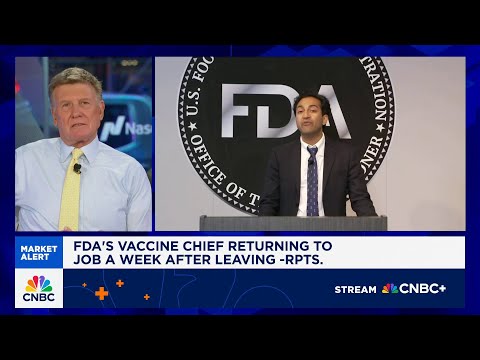
FDA's vaccine chief returning to job a week after leaving: Report
CNBC Television· 2025-08-11 11:15
two. The FDA's head of vaccines, we were just talking about this last week. He's returning, reportedly returning uh to the agency just uh more than a week after he departed.Uh Dr. . Vaneet Prasad left his post overseeing gene therapies and vaccines on July 30th. uh after just a few months on the job.He had been criticized in connection with the FDA's handling of that surrepta therapeutics situation with gene therapy for Duchine musculardrophe. He had also been targeted by uh online by faright activist Laura ...
Sangamo Therapeutics(SGMO) - 2025 Q2 - Earnings Call Transcript
2025-08-07 21:30
Financial Data and Key Metrics Changes - The company reported positive top-line results from the registrational STAR study in Fabry disease, with a mean annualized estimated glomerular filtration rate (eGFR) slope of almost 2 observed at 52 weeks across all 32 patients [7][8] - The FDA has agreed that the mean eGFR slope will serve as the primary basis for approval under the accelerated approval pathway [8][14] - The company completed an equity offering to bridge to an anticipated Fabry commercialization agreement, with the current cash runway expected to fund operations into 2025 [20] Business Line Data and Key Metrics Changes - The Fabry disease program showed a positive annualized eGFR slope of 1.7 for 19 patients who achieved two years of follow-up, compared to an average untreated decline of -3 to -4 [9][12] - The neurology pipeline program initiated its first clinical site for the Phase one/two STAND study in chronic neuropathic pain, with plans to dose the first patient in fall 2025 [15][19] Market Data and Key Metrics Changes - The company is engaging in business development negotiations for a potential Fabry commercialization agreement and broader discussions across its pipeline and platforms [20] - There is strong enthusiasm from both patients and physicians regarding the potential adoption of the Fabry treatment, with patients expressing a desire for better solutions compared to current standard care [40][41] Company Strategy and Development Direction - The company aims to secure a commercialization partner for its Fabry treatment while advancing its neurology genomic medicine pipeline [20] - The strategic focus includes addressing long-term funding needs to support the promising neurology pipeline and ensuring successful clinical trial outcomes [20] Management's Comments on Operating Environment and Future Outlook - Management expressed pride in the progress made despite a challenging environment, highlighting the importance of the recent clinical advancements [6][19] - The company anticipates preliminary proof of efficacy data for the STAND study in 2026 and is preparing for a BLA submission for the Fabry treatment as early as Q1 2026 [14][19] Other Important Information - The company held a productive meeting with the UK's MHRA regarding the prion disease program, aligning on planned studies and expected CTA submission by mid-2026 [16][17] - The company showcased its epigenetic regulation and capsid delivery technology at a recent conference, emphasizing the potential of its prion disease treatment [17] Q&A Session Summary Question: Has the team held the pre-BLA meeting with the FDA regarding the one-year eGFR data? - The company has not yet held the pre-BLA meeting but plans to do so in the future, with the FDA previously agreeing that one-year eGFR data could suffice for accelerated approval [24][25] Question: What additional insights should be anticipated at the upcoming presentation? - The company plans to present top-line data with additional details compared to previous releases, but individual patient data will not be shown [26][27] Question: How does the efficacy of ST-503 compare to recent small molecule Nav1.8 inhibitors? - Management remains convinced that targeting NaV1.7 is the right approach, citing evidence of its fundamental role in pain signaling [32][34] Question: Have any surveys been conducted to understand potential adoption rates for the Fabry treatment? - Feedback from patient advocacy groups indicates a strong desire for the treatment, with patients eager for a one-time injection solution compared to the burdensome current standard of care [39][40] Question: What is the status of discussions with potential partners? - All potential partners have expressed excitement about the data and are reassured by the company's interactions with the FDA, which have de-risked the product [43][45]

Sarepta Soars on Q2 Earnings & Sales Beat, Resumes Elevidys Deliveries
ZACKS· 2025-08-07 14:32
Core Insights - Sarepta Therapeutics, Inc. (SRPT) reported a second-quarter 2025 adjusted EPS of $2.02, significantly exceeding the Zacks Consensus Estimate of $1.11, primarily due to higher collaboration revenues and lower operating expenses [1][9] - Total revenues reached $611.1 million, marking a 68% year-over-year increase, driven by sales of Elevidys, a gene therapy for Duchenne muscular dystrophy (DMD), which also surpassed the Zacks Consensus Estimate of $529.5 million [2][9] Financial Performance - Adjusted EPS of $2.02 compared to 43 cents in the same quarter last year, while including depreciation and amortization, the EPS was $1.89 compared to 7 cents previously [1][2] - Product revenues increased by 42% year over year to $513.1 million, with Elevidys sales contributing significantly [3][4] - Elevidys sales alone generated $281.9 million, a 132% increase year over year, exceeding estimates [4][5] Collaboration and Revenue Streams - Collaboration revenues associated with Elevidys amounted to approximately $98.0 million, including a $63.5 million milestone payment from Roche for Elevidys approval in Japan [5][6] - The licensing agreement with Roche grants exclusive rights to market Elevidys in non-U.S. markets [6] Operating Costs - Adjusted R&D expenses totaled $181.7 million, an 18% increase year over year, reflecting higher clinical material expenses for Elevidys [7] - Adjusted SG&A expenses rose 7% to $113.4 million, driven by increased professional service expenses related to Elevidys marketing efforts [7] Future Guidance - The company expects to generate around $900 million from its three PMO therapies in 2025 [12] - Management anticipates minimum annual revenues of $500 million from Elevidys infusions in the ambulant population for the full year [11] Pipeline and Restructuring - Sarepta is addressing safety concerns related to patient deaths linked to its gene therapies and is developing a new protocol for safer administration in non-ambulatory patients [13][18] - A restructuring plan aims to save nearly $400 million annually starting in 2026, including a workforce reduction of 36% [19][20] - The company has shifted focus to siRNA programs acquired from Arrowhead Pharmaceuticals, pausing most of its LGMD pipeline development [20][21]

FDA Regulation On Gene Therapy | The Brainstorm EP 96
ARK Invest· 2025-08-06 20:30
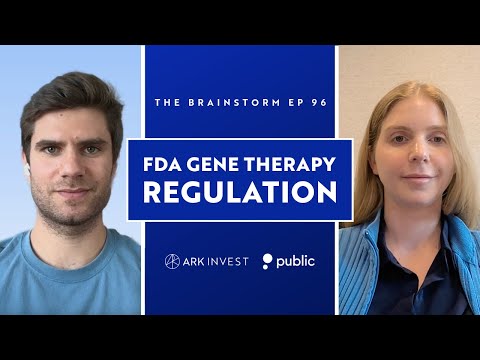
FDA Regulation and Drug Approval - The FDA's drug and biological approvals, including gene therapies, are under scrutiny following the departure of Dr Assad [3] - The FDA commissioner aims to recalibrate standards for more efficient regulatory pathways, leveraging AI and big data to improve the drug approval process [10][11] - The industry anticipates the incoming head of the division handling biologics to share the same priorities of improving the FDA and facilitating innovation [12] - The FDA is considering approving rare disease therapies at the first sign of promise, recognizing the lack of meaningful disease-modifying options for these patients [19] Gene Therapy and Clinical Trials - A gene therapy from Sarepta Therapeutics for Duchenne muscular dystrophy faced safety concerns due to patient deaths, leading to a temporary halt of shipments [4][5] - Patient advocacy groups expressed devastation over losing the gene therapy option, which could potentially halt or reverse disease progression [6] - Acute liver failure was linked to the deaths of teenage boys in the Sarepta Therapeutics trial, potentially due to higher doses per kilogram in older patients [13][14] - AI can be embedded into clinical trials to simulate and explore avenues, potentially preventing patient deaths and improving the success rate of getting the right drugs to the right patients faster [16][17] Genomics and AI - The industry is excited about the potential of gene editing for common diseases like cardiovascular disease, building on the proof of concept in rare diseases [21] - CRISPR Therapeutics is developing gene editing therapies targeting genes involved in liver metabolism to address cardiovascular disease [22] - Advances in AI are unlocking new possibilities in genomics, enabling better target design, faster pre-clinical studies, and improved clinical trial design [30][31][32]

Ultragenyx's Q2 Loss Narrower Than Expected, Revenues Rise Y/Y
ZACKS· 2025-08-06 16:45
Core Insights - Ultragenyx Pharmaceutical reported a second-quarter 2025 loss of $1.17 per share, which is an improvement from a loss of $1.52 per share in the same quarter last year and better than the Zacks Consensus Estimate of a loss of $1.27 [1][5] - Total revenues for the quarter reached $166.5 million, reflecting a 13% year-over-year increase, driven primarily by higher product sales, and surpassing the Zacks Consensus Estimate of $162 million [1][5] Revenue Breakdown - Crysvita generated total revenues of $120.4 million, up 6% year over year, with contributions of $79 million from North America, $35 million from Latin America and Turkey, and $7 million from Europe [3] - Mepsevii product revenues increased by 35% year over year to $8.3 million, while Dojolvi revenues rose 20% to $23.2 million due to new patient demand [4] - Evkeeza recorded sales of $14.6 million in the first quarter, showing significant growth as the drug continues to be launched in territories outside the United States [4] Financial Guidance - The company reaffirmed its 2025 financial guidance, expecting total revenues between $640 million and $670 million, which represents a growth of approximately 14-20% compared to 2024 [9] - Crysvita revenues are anticipated to be in the range of $460-$480 million, reflecting a year-over-year increase of 12-17%, while Dojolvi revenues are expected to be between $90 million and $100 million, up 2-14% year over year [9] Operating Expenses - Operating expenses for the quarter were $274.4 million, a 4% increase year over year, attributed to higher investments in late-stage pipeline programs and marketing costs for approved drugs [7] - Research and development expenses were $164.7 million (up 2%), selling, general and administrative expenses were $86.6 million (up 7%), and cost of sales was $23 million (up 8%) [7] Pipeline Updates - The FDA issued a complete response letter for Ultragenyx's biologics license application for UX111, requesting additional information related to manufacturing processes, which the company plans to address promptly [11][12] - The company is also developing GTX-102 for Angelman syndrome, which received Breakthrough Therapy designation, with data expected in the second half of 2026 [14] - Ultragenyx plans to submit a BLA for DTX401, a gene therapy for glycogen storage disease type Ia, in the fourth quarter of 2025 [15]


CRSP Stock Down on Huge Q2 Loss, Focus on Increasing Casgevy Adoption
ZACKS· 2025-08-05 16:56
Core Insights - CRISPR Therapeutics reported a second-quarter 2025 loss of $2.40 per share, wider than the previous year's loss of $1.49, primarily due to a $96.3 million expense related to a collaboration with Sirius Therapeutics [1][6] - Adjusted loss, excluding special items, was $1.29 per share, better than the Zacks Consensus Estimate of a loss of $1.47 [2] - Total revenues for the quarter were $0.89 million, significantly below the Zacks Consensus Estimate of $6.6 million, compared to $0.5 million in the same period last year [2] Financial Performance - CRISPR Therapeutics' stock fell over 8% in after-market trading following the wider-than-expected loss, continuing the downward trend in pre-market trading [3] - The stock has increased by 51% year-to-date, outperforming the industry growth of 2% [3] - Research and development expenses decreased by 13% year-over-year to $69.9 million, while general and administrative expenses fell by 3% to $18.9 million [8] Product Development and Sales - Casgevy, a CRISPR/Cas9 gene-edited therapy developed in partnership with Vertex Pharmaceuticals, saw sales of $30.4 million in Q2, up from $14.2 million in the previous quarter [5][6] - Over 75 treatment centers have been activated globally for Casgevy, with approximately 115 patients completing their first cell collection since its launch [6][7] - The company is advancing its CAR-T and in-vivo therapy pipelines, with updates expected later this year [10][11] Pipeline Expansion - CRISPR Therapeutics is developing two next-generation CAR-T therapy candidates, CTX112 and CTX131, currently in phase I/II studies [10] - The company is also studying in-vivo candidates CTX310 and CTX320, with promising early data showing significant reductions in LDL and triglyceride levels [11] - A collaboration with Sirius Therapeutics has diversified the pipeline into RNA therapeutics, with a focus on the investigational siRNA candidate SRSD107 [12][13] Financial Position - As of June 30, 2025, CRISPR Therapeutics had cash and marketable securities totaling $1.72 billion, down from $1.86 billion at the end of March 2025 [9]