inflation

Search documents
Marjorie Taylor Greene is 'out MAGA-ing the head of MAGA': Journalist
MSNBC· 2025-11-07 21:33
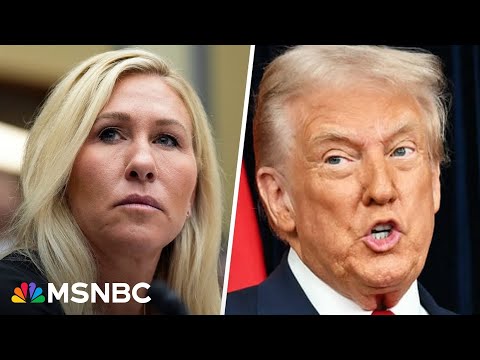
Joining us now we have staff writer for The Atlantic and MSNBC political contributor Mark Lieovich, New York Times opinion columnist David French, senior writer at The Dispatch and MSNBC contributor David Ducker and staff writer for the New Yorker Susan Glasser. Welcome to all of you. David French, to you first.Has the GOP migration begun as former Senator Jeff Flake is claiming. I mean, how accurate is his assessment. I I'm going to say it's possibly accurate, but it's premature.Um I do think there are sig ...

X @Ash Crypto
Ash Crypto· 2025-11-07 18:45
Inflation & Interest Rates - US President Trump stated inflation is almost non-existent, currently around 2%, potentially even 1% [1] - Low inflation environment suggests potential for more comfortable interest rate cuts [1]
Dems have 'great shot' at winning House, GOP 'out of touch': Former Rep.
MSNBC· 2025-11-06 22:45
Joining us now, former Ohio Congressman Tim Ryan, chief Washington correspondent for Puck, Leanne Caldwell, professor of economics and public policy at the Ford School of Public Policy at the University of Michigan, Betsy Stevenson, and former RNC communications director and Republican strategist Doug Hai. Um, I want to make a couple notes here. Um the Walmart deal is in fact uh cheaper than it was last year, but it is also offering less food than it did last year.Um and on top of all that data that I cited ...

X @Cointelegraph
Cointelegraph· 2025-11-06 22:00
🇺🇸 LATEST: Ray Dalio warns the Fed is inflating a late-stage bubble by easing policy amid growth, saying it may lift hard assets but signal deeper economic decay. https://t.co/rzwdvV4LHD ...
X @CoinMarketCap
CoinMarketCap· 2025-11-06 21:35
LATEST: ⚡️ Jan3 founder Samson Mow says the Bitcoin bull run hasn't started yet and that BTC is just marginally outperforming inflation at current prices, while also dismissing fears that early holders are selling. https://t.co/9TnjQz69dm ...
X @Bloomberg
Bloomberg· 2025-11-06 17:28
Federal Reserve Bank of Cleveland President Beth Hammack said monetary policy should continue putting downward pressure on inflation, which she says is too high and remains a bigger risk for the US central bank than labor-market weakness https://t.co/gdfpUrRC3r ...
BOE's Bailey Says Inflation 'Could Be Sticky'
Bloomberg Television· 2025-11-06 17:04
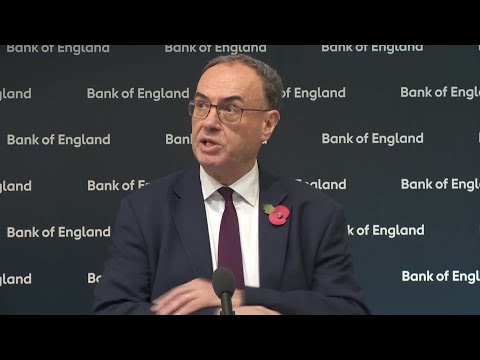
On the one hand, inflation is still well above the 2% target. It is possible that it could be sticky, for example, if increases in administered prices were repeated or if labor cost pressures continued to be elevated. There is a risk that the inflationary shocks we have had could have effects of inflation expectations on the way wages and prices are determined in the economy.That could lead to more inflationary pressure. A scenario in the report illustrates that the path of bank rate might have to be higher ...
Watch CNBC's full interview with Chicago Fed President Austan Goolsbee
CNBC Television· 2025-11-06 14:24
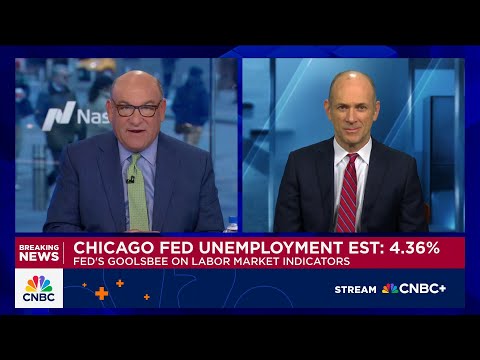
Economy & Labor Market - The report discusses the state of the economy and the strength of the labor market [1] Monetary Policy & Inflation - The report addresses the impact on the Fed's interest rate outlook and inflation concerns [1]
X @Bloomberg
Bloomberg· 2025-11-06 05:38
Rachel Reeves stands to be the biggest beneficiary of her own efforts to bring down UK inflation and help with the cost of living in this month’s budget — but only if she gets it right https://t.co/2h2G6Q9GjW ...
History suggests gold has yet to peak, inflation could drive the next leg up – AJ Bell's Mould
KITCO· 2025-11-05 19:56
Core Insights - The article discusses the impact of inflation on the market and its implications for investment strategies [1][2]. Group 1: Inflation Trends - Inflation rates have shown significant fluctuations over the past decade, with notable peaks in 2020 and 2021 [1][2]. - The data indicates a consistent increase in inflation, reaching levels that have prompted discussions among investors regarding asset allocation [1][2]. Group 2: Market Reactions - Investors are increasingly concerned about how inflation will affect various asset classes, particularly cryptocurrencies and commodities [1][2]. - The market's response to inflationary pressures has led to a reevaluation of traditional investment strategies, with a shift towards more inflation-hedged assets [1][2].