
Affordable Care Act (ACA)

Search documents
Molina Healthcare stock falls as medical costs spike, Obamacare worries mount
Yahoo Finance· 2025-10-23 17:15
Core Viewpoint - Molina Healthcare's stock plummeted over 20% following a significant earnings miss for Q3, attributed to rising medical expenses and a lowered guidance for Q4 [1][2]. Financial Performance - Molina's adjusted EPS for Q3 was $1.84, missing analyst expectations of $3.89 by more than 50% [2]. - The company projects Q4 adjusted earnings of $0.35, significantly below analysts' expectations of $2.42 [2]. Medical Care Ratio (MCR) - Molina's consolidated MCR for Q3 was 92.6%, up from 89.2% in the same quarter last year, indicating increased medical expenses impacting profitability [4]. - A 92.6% MCR means the company retained only 7.4 cents per dollar of premium revenue after covering medical expenses [5]. - The MCR for ACA plans was particularly high at 95.6%, exceeding both analyst predictions of 86% and Molina's own 73% from the previous year [6]. Industry Context - The MCR is a critical metric for healthcare providers, reflecting the balance between premium revenue and medical expenses [3]. - Rising medical costs and the structure of ACA plans have posed significant challenges for Molina, affecting its financial stability [5][6].

Ripple effect: how the health care fight could affect how much you pay
MSNBC· 2025-10-18 04:21
Healthcare Policy & Subsidies - Democrats are prioritizing the restoration of healthcare subsidies, despite potential political ramifications [1][15] - Failure to extend subsidies could more than double premium payments for ACA plans on average, according to the Kaiser Family Foundation [2] - The lapse of subsidies affects a broad range of people, not just lower-income individuals, potentially leading to increased uncompensated care costs [6][7] - Enhanced premium subsidies led to a doubling of Affordable Care Act plan enrollment, from approximately 12 million to 24 million people [11] Enrollment & Market Impact - Open enrollment has already begun in some states, with individuals window shopping and potentially being deterred by higher premiums without subsidies [3][4] - If subsidies are not extended, people may not re-enroll even if Congress eventually continues the tax credits [5] - The Congressional Budget Office (CBO) estimates that the cost of uncompensated care will increase if subsidies go away, leading to higher insurance costs for those already insured [8] Political Implications - A significant portion (six in 10) of ACA recipients reside in congressional districts represented by Republicans, creating political irony [12] - Republicans may face blame if people lose their health insurance due to subsidy expiration, potentially impacting midterm elections [14]

‘It terrifies everyone’: Former HHS Secretary on the potential end to healthcare subsidies
MSNBC· 2025-10-12 14:09
Healthcare Subsidies & Political Landscape - The expiration of healthcare subsidies could potentially more than double premiums for millions of Americans [1] - There is uncertainty regarding the fate of healthcare costs due to the tug-of-war on healthcare subsidies between political parties [1] - The administration considered a compromise with Democrats on Affordable Care Act (ACA) subsidies but later backtracked, linking it to government reopening [2][3] Impact of Government Actions on Public Health - Federal government actions, such as shutdowns and budget cuts, are decimating the CDC and HHS, potentially endangering public health [3][5] - Mass firings at HHS, some done in error, are disrupting disease outbreak investigations, infectious disease responses, and data collection [4] - Eliminating data collection and monitoring of disease outbreaks could lead to operating "in the blind," increasing health risks for the public [6] Importance of Healthcare Subsidies - Healthcare subsidies are crucial for helping individuals below certain income levels afford health insurance, especially those without employer-sponsored coverage [12][13] - Eliminating subsidies could cause premiums to double, potentially leading to younger, healthier individuals dropping out of the insurance market and destabilizing the insurance pool [15][16] - The current level of health coverage in the United States is at its highest point, and taking away subsidies could reverse this progress, leading to more medical bankruptcies and less preventive care [17][18]
Speaker Johnson Says Healthcare Subsidies Fight is a Distraction | Balance of Power 10/08/2025
Bloomberg Television· 2025-10-08 23:56
Government Shutdown & Political Standoff - The U S government is experiencing its fourth-longest shutdown in history, with no immediate resolution in sight [1] - House Democrats express readiness to reopen the government, while Republicans blame Democrats for holding the budget hostage [1] - The shutdown is attributed to political games and a lack of trust between parties, particularly regarding healthcare negotiations [4][43] - A clean continuing resolution (CR) until November 21st was proposed but rejected, prolonging the shutdown [57] - The shutdown is impacting federal workers, potentially leading to job losses and affecting essential services [1][55] Healthcare & ACA Subsidies - Democrats are pushing for negotiations around making healthcare affordable, focusing on extending Obamacare subsidies [2][3] - Republicans express concerns about the cost and effectiveness of Obamacare subsidies, suggesting reforms are needed [4] - The potential cutting of ACA tax credits could double or triple insurance premiums for many, affecting 20 million people [2] - Extending ACA subsidies is seen as a key issue, with polls indicating strong public support [72][73] Economic & National Security Impact - The ongoing shutdown could lead to a loss of $15 billion in gross domestic product (GDP) each week [9][49] - Prolonged closure could result in the loss of 43,000 civilian employees and have a ripple effect throughout the economy [9][49] - National security is also at risk, with programs like nuclear deterrence being stalled [10] Potential Solutions & Obstacles - Democrats insist on negotiating healthcare as a condition for reopening the government [67] - Republicans are hesitant to negotiate on key issues and accuse Democrats of prioritizing political gains [4][46] - The Hastert Rule may prevent bringing ACA subsidies to a floor vote if it lacks majority support within the majority party [23] - There is a lack of trust between parties, hindering negotiations and potential resolutions [43]

Speaker Johnson on families paying more for health care: 'Boy, I hope not'
MSNBC· 2025-10-06 10:21
Healthcare Policy & Subsidies - The debate centers on healthcare, specifically Obamacare subsidies, impacting families' open enrollment decisions [1] - 24 million Americans could see their healthcare costs double, and 4 million could lose coverage entirely in the coming months [5] - 78% of Americans support extending ACA subsidies [6] - The subsidies are set to expire on December 31st, leaving a 3-month negotiation window [2] - 30,000 people in one district in southwest Ohio could see their healthcare premiums double, and 14,000 could lose coverage starting January 1 [11] Government Shutdown & Political Stance - The government shutdown is impacting healthcare, with long-term care facilities and rural hospitals potentially shutting down, and hospitals laying off staff [15][16] - There are conflicting reports regarding communication between parties since the Oval Office meeting [16] - Some Republicans are reportedly uncomfortable with the strategy of waiting for Democrats to agree on a clean continuing resolution [9][10] - The President is being urged to facilitate a deal to reopen the government and protect healthcare [8][12]
Suze Orman: How To Prepare For Rising Healthcare Costs
Yahoo Finance· 2025-10-05 23:06
Core Insights - Rising healthcare costs are attributed to inflation, increased prescription drug use, and new therapies, necessitating significant financial planning for healthcare [1] - The "Big Beautiful Bill" is expected to increase health insurance premiums for ACA plans by an average of 75% starting in 2026, as enhanced premium credits will effectively end [3] Group 1: Impact of Legislation - The "Big Beautiful Bill" could lead to higher premiums for ACA marketplace plans, affecting many individuals [2][3] - Enhanced ACA premium credits, which have been in place since 2021, will be terminated due to the new legislation [3] Group 2: Personal Financial Planning - Individuals are advised to review their ACA coverage and prepare for the upcoming premium increases [5] - Open enrollment season is an opportunity for individuals to consider high-deductible plans, which may offer lower monthly premiums [5][6] - Those in good health with substantial emergency savings may benefit from high-deductible health insurance plans [6] Group 3: Broader Implications - Changes in employment status, such as layoffs or starting a business, could necessitate a shift to ACA marketplace plans [4] - Young adults aging out of their parents' insurance plans will need to seek their own coverage soon [4]
Health care premiums ‘going to double or triple’ unless Congress acts: Dem Rep.
MSNBC· 2025-09-30 16:26
Healthcare Policy & Debate - The debate centers around a "clean" continuing resolution versus Republican policy agenda priorities, particularly concerning healthcare [1][2] - Democrats argue Republican healthcare policies, including HR1, will cause healthcare premiums to double or triple, impacting American people [3][4][11] - Republicans accuse Democrats of wanting to fund free healthcare for undocumented immigrants, a claim Democrats refute as dishonest [8][9] - The core issue is healthcare affordability and access for regular people, especially regarding Medicaid funding and ACA tax credits [10][14] Political & Governmental Operations - A potential government shutdown could negatively impact constituents, including approximately 40,000 federal employees representing 11% of a district [4] - The Trump administration is accused of firing federal government employees, impacting critical government services like clinical trials and vaccine development [5][6] - There's a lack of trust in Donald Trump among some constituents due to perceived actions over the past nine months [7] Social & Ethical Concerns - Republicans are accused of prioritizing tax cuts for wealthy individuals ("billionaire friends") at the expense of Medicaid funding for the needy [9] - Concerns are raised about potential discriminatory targeting of undocumented immigrants and transgender individuals in policy debates [10] - The release of the Epstein files is mentioned, but healthcare for the American people is prioritized [12][13][14]
Trump, top lawmakers fail to make progress in averting looming shutdown
MSNBC· 2025-09-30 09:46
Government Shutdown & Political Stance - A potential government shutdown looms due to disagreements on tax and healthcare policies, with Republicans blaming Democrats [1] - Democrats are resisting a Republican spending bill, citing concerns over healthcare cuts and the expiration of the Affordable Care Act (ACA) subsidies [1] - The White House and Democrats are in a standoff, with little incentive for Democrats to vote for continued government funding due to trust issues and past actions [1] - The expiration of ACA subsidies is a key point of contention, potentially affecting tens of millions of Americans with increased healthcare costs [1] - Both parties believe they can politically benefit from a shutdown, blaming each other for the consequences [2] Potential Impact - A government shutdown could disrupt essential services and negatively impact the lives of ordinary citizens [1][3] - The shutdown could lead to real-world consequences for individuals who have no say in the political decisions in Washington [3] Negotiation Dynamics - The White House's approach to negotiations is questioned, with accusations of insincerity and a focus on political maneuvering [1] - Democrats are seeking to protect healthcare and may view ACA subsidies as a key negotiation point [1]
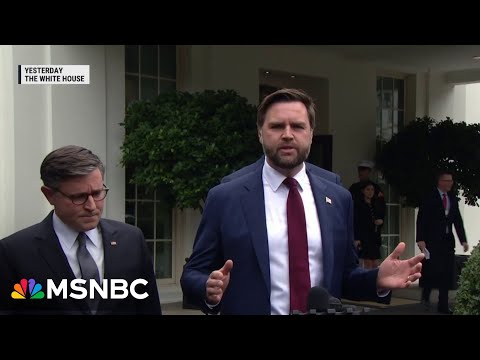
Why your health insurance prices go up if Obamacare tax credits end. Fmr. HHS Secretary explains
MSNBC· 2025-09-27 22:44
Affordable Care Act (ACA) Subsidies and Healthcare Costs - The potential expiration of ACA tax credits could lead to a 75% increase in healthcare costs [3] - Approximately 22 million people rely on the marketplaces for health insurance [5] - The expiration of tax credits may cause younger, healthier individuals to drop coverage, leading to a high-risk pool of older and sicker individuals [6] - Without subsidies, hospitals may face increased costs due to uninsured patients seeking care [15][16] Political Stance and Healthcare Debate - Democratic leaders are demanding that Republicans link the extension of ACA subsidies to a short-term spending bill to avoid a government shutdown [1] - Republicans have repeatedly refused to address the ACA tax credit issue [8] - The debate includes accusations of fraud related to the expanded tax credits, which have been refuted [11] Healthcare Advice and Public Health Concerns - Concerns are raised about President Trump's medical advice, particularly regarding Tylenol use during pregnancy and its alleged link to autism [17][18] - The advice is considered dangerous and not backed by scientific evidence, potentially undermining public health [19][20]
I’m 62 and want to retire but I want to avoid huge insurance premiums. Can I afford to just wait for Medicare?
Yahoo Finance· 2025-09-15 13:00
Core Insights - The article discusses the financial concerns of a couple in their early 60s regarding healthcare costs before they qualify for Medicare [1][4] - It highlights the potential financial burden of private insurance during the gap years until they turn 65 [1][3] Financial Situation - The couple plans to retire at 63, expecting an annual income of $50,000 from Social Security and 401(k) withdrawals [2] - They have $80,000 in emergency savings, but are aware that this could be depleted by a single health emergency [2] Insurance Options - Simon could extend his employer's coverage under COBRA, with premiums ranging from $400 to $700 per month per person, totaling up to $1,400 per household [3] - Affordable Care Act (ACA) options could reduce premiums to about $500 per month, but typically range from $800 to $1,200 per month without subsidies [3] - Even with ACA, the couple could face annual costs of $9,600 to $14,400 for health insurance, which is significant given their fixed budget [3] Healthcare Costs - Average healthcare costs for individuals aged 60 and older in the U.S. are approximately $12,000 per year for routine care [4] - Without insurance, the couple would be responsible for the full costs of emergency care, which can be substantial, such as hospital stays for serious conditions costing upwards of $18,931 [4] Cost Comparison - A comparison of costs shows that under subsidized ACA, the couple might pay approximately $11,880 for two years of health premiums [5]