Cost Synergies

Search documents
Kimberly-Clark to acquire Tylenol owner Kenvue in $48.7 billion deal
Youtube· 2025-11-03 13:40
Core Viewpoint - Kimberly Clark is set to acquire Ken View for over $40 billion, with a significant equity component in the deal, potentially lowering the cash value of the transaction [1][5]. Company Overview - Ken View has faced organizational challenges, including the removal of its CEO and ongoing struggles since its spin-off from Johnson & Johnson, despite having a strong brand portfolio that includes Tylenol and Listerine [2][4]. - Kimberly Clark has been interested in acquiring Ken View for an extended period, previously attempting a reverse Mars trust deal to separate it from J&J before the spin-off [8]. Financial Aspects - The proposed acquisition includes $2.1 billion in cost synergies, with $1.9 billion primarily from cost reductions, and additional revenue synergies anticipated [4][5]. - The deal structure involves a cash component of $3.50 per share and a stock component, with Ken View shareholders expected to own 46% of the combined entity [5][7]. - The acquisition is priced at a 50% premium, but the overall valuation is impacted by Kimberly Clark's declining share price, leading to a deal multiple of approximately 14.5 times, below the typical median of 18 times for similar transactions [6][10]. Market Implications - The merger aims to create a competitive portfolio that could rival Procter & Gamble, with hopes of achieving a market multiple closer to that of P&G or Colgate in the future [3][7]. - The acquisition is expected to be accretive over time, allowing for potential upside as synergies are realized and Ken View's business is reorganized [4][7].




Kimberly-Clark agrees to buy Tylenol owner Kenvue in $48.7 billion deal, creating consumer staples giant
CNBC· 2025-11-03 12:56
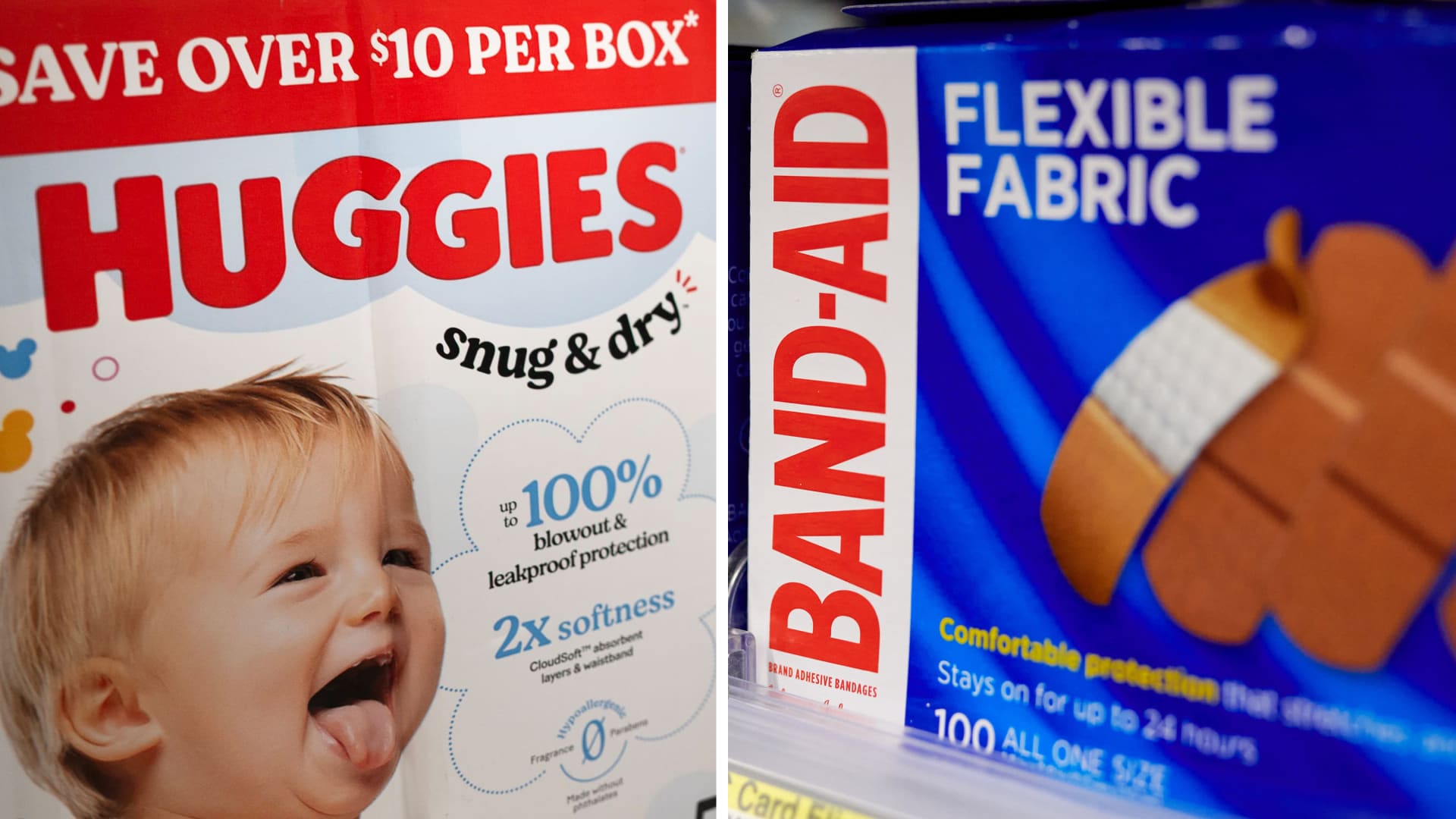
Core Viewpoint - Kimberly-Clark has announced an agreement to acquire Kenvue for $48.7 billion, creating a significant player in the consumer staples sector [1][2]. Group 1: Deal Overview - The acquisition is a mix of cash and stock, with Kenvue's shares rising 20% in premarket trading, while Kimberly-Clark's shares fell 14% [1]. - The combined entity will feature brands such as Huggies, Kleenex, Band-Aid, and Tylenol, totaling 10 billion-dollar brands [2]. - The transaction is anticipated to close in the second half of 2026 [2]. Group 2: Strategic Intent - Kimberly-Clark's CEO Mike Hsu emphasized the company's commitment to leveraging science and technology for enhanced consumer care, marking this acquisition as a pivotal step in their transformation towards higher-growth, higher-margin businesses [2][3]. - Kenvue, which was spun off from Johnson & Johnson in May 2023, has seen its shares decline nearly 35% since its IPO, trading at about $14 per share with a market cap of approximately $27 billion [2]. Group 3: Financial Projections - The combined company is projected to generate annual net revenues of around $32 billion and adjusted EBITDA of approximately $7 billion by 2025 [3]. - Kimberly-Clark and Kenvue expect to achieve about $1.9 billion in cost synergies within the first three years post-acquisition [4].

Paramount to lay off 1,000 employees, with more cuts expected
CNBC· 2025-10-29 16:04
Core Insights - Paramount Skydance Corporation is initiating significant layoffs, starting with nearly 1,000 jobs, which will eventually total 2,000 roles following its recent merger [1][2][3] Company Actions - CEO David Ellison emphasized the need for restructuring to build a future-focused company, acknowledging that workforce reductions are necessary to address redundancies and align with evolving priorities [2][3] - The merger between Paramount and Skydance was completed in August after receiving regulatory approval, and the leadership had previously indicated upcoming job cuts [2][3] - The company has identified over $2 billion in cost synergies as part of the restructuring process [3] Recent Developments - Under Ellison's leadership, Paramount has engaged in several strategic moves, including a $7.7 billion media rights deal for UFC and attempts to acquire Warner Bros. Discovery [4] - Prior to the merger, Paramount had already reduced its U.S.-based workforce by 15% and cut several hundred employees in June [5] Industry Context - The media industry is experiencing widespread layoffs due to challenges such as the decline of traditional pay-TV and macroeconomic factors affecting advertising revenue [6]

Herc Holdings(HRI) - 2025 Q3 - Earnings Call Transcript
2025-10-28 13:32
Financial Data and Key Metrics Changes - For Q3 2025, equipment rental revenue increased approximately 30% year-over-year, driven by the acquisition of H&E Equipment Services Inc. and strong contributions from mega projects and specialty solutions [23] - Adjusted EBITDA rose 24% compared to the previous year's third quarter, benefiting from higher equipment rental revenue and used equipment sales [23] - Net income for the third quarter included $38 million of transaction costs related to the acquisition, with adjusted net income at $74 million [25] Business Line Data and Key Metrics Changes - Local accounts represented 52% of rental revenue, down from 53% a year ago on a pro forma basis, while national accounts continue to show robust private funding for large-scale projects [14] - The company is focusing on optimizing its fleet management and has made significant progress in disposing of underutilized and aged equipment [19][20] Market Data and Key Metrics Changes - The industrial spending forecast indicates strong capital and maintenance spending through the end of the decade, with non-residential construction starts in 2025 estimated at $467 billion, a 4% increase year-over-year [16] - The mega project pipeline is projected to exceed $650 billion for 2025, indicating significant growth opportunities in the construction sector [16][17] Company Strategy and Development Direction - The company is prioritizing the integration of H&E Equipment Services Inc. and has paused other M&A initiatives to focus on achieving cost and revenue synergies [10] - Plans include consolidating general rental branches and expanding specialty equipment locations, aiming for a 25% increase in specialty network next year [9][11] Management's Comments on Operating Environment and Future Outlook - Management noted that while local market growth is limited due to high interest rates, robust activity in mega projects continues to drive demand [4][14] - The company remains confident in its ability to deliver full value from the acquisition and achieve long-term growth strategies [10][12] Other Important Information - The company completed a full systems integration in just 90 days, significantly faster than the typical timeline for similar-sized companies [6] - The integration allows for real-time visibility into performance metrics and operational KPIs, enhancing decision-making capabilities [7][8] Q&A Session Summary Question: What is the status of the fleet right-sizing process? - The heavy lifting was completed in Q3, with more work expected in Q4, aiming to close this part of the process by the end of the year [31][33] Question: How does the mix of national accounts impact margins? - Management does not expect significant margin dilution from national accounts or mega projects, as these projects typically involve minimal movement and higher volumes of specialty products [35][36] Question: Can you clarify the consolidation of general rental locations? - The strategy involves opening specialty businesses within general rental branches rather than closing them, with plans for 50 new specialty locations [38] Question: Are there updates on cost and revenue synergies? - Cost synergy targets are evolving, with ongoing efficiency reviews now that the companies are on the same platform [40] Question: How is customer attrition being managed post-acquisition? - Customer attrition has stabilized, and efforts are being made to engage with former H&E Equipment Services Inc. customers to regain business [44][61]

Skyworks Solutions (NasdaqGS:SWKS) M&A Announcement Transcript
2025-10-28 13:00
Summary of Skyworks Solutions and Qorvo Conference Call Industry and Companies Involved - **Industry**: RF (Radio Frequency) semiconductor industry - **Companies**: Skyworks Solutions (NasdaqGS:SWKS) and Qorvo Core Points and Arguments 1. **Transaction Overview**: Skyworks and Qorvo are merging to create a U.S.-based global leader in high-performance RF, analog, and mixed-signal semiconductors with a combined enterprise value of approximately $22 billion [6][7][8] 2. **Shareholder Structure**: Upon closing, Skyworks and Qorvo shareholders will own approximately 63.37% of the combined company, with Qorvo shareholders receiving 0.96 shares of Skyworks common stock plus $32.5 in cash for each share of Qorvo [6][7] 3. **Financial Highlights**: The combined company will have revenue of approximately $7.7 billion and adjusted EBITDA of $2.1 billion, with a mobile business valued at $5.1 billion and a diversified broad markets platform worth $2.6 billion [7][8][9] 4. **Cost Synergies**: The transaction is expected to be immediately accretive to non-GAAP EPS post-close, with anticipated annual cost synergies of $500 million or more within 24 to 36 months [8][12] 5. **Market Diversification**: The merger will enhance scale and diversify revenue across various markets, including mobile, defense, aerospace, edge IoT, AI data centers, and automotive [9][10][11] 6. **R&D and Manufacturing**: The combined entity will have enhanced R&D resources and a stronger manufacturing platform, with approximately 8,000 engineers and over 12,000 patents [17][18] 7. **Regulatory Approval**: The companies are confident in obtaining regulatory approvals, expecting to close the transaction early in calendar year 2027 [13][50] 8. **Customer Support**: Both companies have received support from major customers, indicating confidence in the transaction's benefits [22][76] Additional Important Content 1. **Synergy Breakdown**: More than half of the $500 million in synergies are expected to come from operational expenses (OpEx), with the remainder from cost of goods sold (COGS) [23][66] 2. **Long-term Growth Model**: The combined company anticipates mid to high single-digit growth, with the handset market projected to grow in low single digits and broad markets in low double digits [61][62] 3. **Focus on Premium Markets**: The combined company will continue to focus on premium and flagship phone markets, while moving away from lower-margin segments [52][49] 4. **Future M&A Opportunities**: The favorable capital structure of the combined company will allow for potential future mergers and acquisitions [34][35] 5. **Manufacturing Optimization**: Both companies are working to optimize their manufacturing footprints, which is expected to contribute to cost synergies [35][72] This summary encapsulates the key points discussed during the conference call regarding the merger between Skyworks Solutions and Qorvo, highlighting the strategic benefits, financial implications, and future outlook for the combined entity.

Stifel Turns Bullish on Amcor (AMCR), Citing Strong Synergy Potential
Yahoo Finance· 2025-10-15 06:36
Core Viewpoint - Amcor plc (NYSE:AMCR) is recognized as a strong investment opportunity with significant upside potential, particularly following its merger with Berry, which is expected to enhance its market position and financial performance [2][3]. Group 1: Analyst Upgrades and Price Target - Stifel upgraded Amcor from Hold to Buy, adjusting its price target to $10.20 from $10.83, reflecting confidence in the company's future performance post-merger [3]. - The merger is projected to create a major consumer packaging company with combined annual revenues of $23 billion [3]. Group 2: Synergy Potential - The merger is anticipated to generate $530 million in total synergies, including $530 million in cost synergies, $60 million in growth synergies, and $60 million in financial synergies [3]. - Stifel estimates that $355 million in total cost synergies will be realized by 2028, which is expected to support margin expansion and stronger free cash flow [4]. Group 3: Dividend Sustainability - Amcor has a strong track record of dividend payments, having raised its payouts for 41 consecutive years, currently offering a quarterly dividend of $0.1275 per share [5]. - As of October 14, the stock has a dividend yield of 6.30%, indicating a solid return for investors [5].

Benson Adds $5.2 Million Stake in Amrize After Holcim Spinoff
The Motley Fool· 2025-10-12 17:17
Company Overview - Amrize AG is a Switzerland-based provider of construction materials, operating independently since June 2025, with a market capitalization exceeding $26 billion and trailing 12-month revenue of $11.6 billion as of June 30 [5][4] - The company focuses on the building materials business in North America, serving commercial builders, infrastructure developers, and public sector clients across the United States and Canada [8] Recent Developments - Benson Investment Management Company, Inc. disclosed a new position in Amrize AG, acquiring 106,955 shares valued at $5.2 million, marking the first time Amrize AG has appeared in the fund's portfolio [2][6] - This new position represents 1.8% of the reportable assets under management (AUM) for Benson Investment Management [3] Financial Performance - As of the latest market close, Amrize AG shares were priced at $46.96, with a market capitalization of $26.1 billion [4][3] - The company's second-quarter 2025 results showed steady revenue of $3.22 billion and net income of $428 million, indicating a strong foundation despite a 4% decline in share price since its debut [7][9] Strategic Initiatives - Management is pursuing over $250 million in cost synergies through its ASPIRE efficiency program, targeting more than 50 basis points of margin improvement per year [9] - The company has an investment-grade balance sheet and is well-positioned to benefit from long-term U.S. infrastructure and manufacturing trends, suggesting potential for steady growth beyond the tech sector [9]

Paychex(PAYX) - 2026 Q1 - Earnings Call Transcript
2025-09-30 14:32
Financial Data and Key Metrics Changes - Total revenue increased by 17% year-over-year to $1.5 billion [14] - Adjusted diluted EPS grew by 5% to $1.22, while diluted EPS decreased by 10% to $1.06 [15] - Total expenses rose by 29% to $998 million, primarily due to the Paycor acquisition [15] - Cash flow from operations was $718 million for the first quarter [15] - The company returned $549 million to shareholders through dividends and share repurchases [15] Business Line Data and Key Metrics Changes - Management Solutions revenue increased by 21% to $1.2 billion, driven by the addition of Paycor and higher revenue per client [14] - PEO and Insurance Solutions revenue grew by 3% to $329 million, supported by an increase in average PEO worksite employees [14] - Interest on funds held for clients rose by 27% to $48 million due to the inclusion of Paycor balances [14] Market Data and Key Metrics Changes - The PEO business experienced mid-single-digit worksite employee growth, with strong demand and retention performance [11] - The small business employment environment remains stable, with no signs of recession and moderating wage inflation [11][12] Company Strategy and Development Direction - The integration of Paycor is on track, with targeted revenue synergies and cost synergies expected to exceed initial estimates [4][5] - The company is focusing on cross-selling opportunities, particularly in retirement, ASO, and PEO solutions to Paycor's client base [5][6] - The Partner Plus program for brokers has seen nearly double enrollment, indicating strong momentum in referral channels [7][8] - New product offerings, such as Bill Pay Powered by BILL, aim to enhance service delivery for small and mid-sized businesses [8][9] Management's Comments on Operating Environment and Future Outlook - Management remains optimistic about the resilience of small businesses and expects renewed business confidence due to clarity on tariffs, taxes, and inflation [11][12] - The company anticipates total revenue growth for fiscal 2026 to be between 16.5% and 18.5%, with Management Solutions expected to grow by 20%-22% [16][17] - Adjusted operating income margin is projected to be approximately 43% [16] Other Important Information - The company has launched AI-driven tools to enhance client experiences and operational efficiency [9][10] - The integration of Paycor is expected to provide additional growth opportunities and improve overall service offerings [4][5] Q&A Session Summary Question: Update on demand environment and employer size segments - Demand remains consistent with historical trends, with increased activity and solid RPO bookings [20][21] Question: Paycor recurring revenue growth - Recurring revenue growth for Paycor is expected to be double digits for the full year, with Q1 performance in line with expectations [22][23] Question: PEO environment characterization - PEO continues to perform well with mid-single-digit worksite employee growth and record retention [25][26] Question: Direct expenses and SG&A comparison - Direct expenses showed strong leverage, while SG&A expenses were impacted by integration costs [31][32] Question: Paycor integration and recurring revenue - Integration is progressing well, with high retention rates and strong sales performance [38][39] Question: EPS increase drivers - EPS guidance was raised due to strong retention and confidence in achieving cost and revenue synergies [47][48] Question: PEO market competitiveness - The competitive environment remains stable, with a focus on value proposition rather than aggressive pricing [59][60] Question: Bill.com partnership and customer profile - The partnership aims to enhance payment capabilities for small businesses, integrating with existing platforms [65][66] Question: Regulatory environment impact - The company does not expect significant impacts from regulatory changes, with small businesses remaining resilient [82][83]

Advanced Drainage Systems (NYSE:WMS) Earnings Call Presentation
2025-09-23 13:00
Transaction Overview - ADS will acquire National Diversified Sales (NDS) for approximately $1 billion, or $875 million when adjusted for expected tax benefits[9] - The transaction value represents a multiple of 10x NDS Adjusted EBITDA from TTM ended June 2025, inclusive of expected run-rate cost synergies[9] - Approximately $25 million of annual cost synergies are expected to be realized by year 3[9, 35] - The transaction is expected to close in the first quarter of CY2026[9] NDS Overview - NDS is a leading U S supplier of residential stormwater management, landscape irrigation and connecting flow management components for water infrastructure[10] - Landscape Irrigation accounts for approximately 30% of NDS' business mix, while Flow Management accounts for approximately 15%[12] - The Americas account for 90% of NDS' geographic revenue[12] Financial Impact - Pro forma net sales including $25 million cost synergies is approximately $3 2 billion[34] - Pro forma adjusted EBITDA including $25 million cost synergies is approximately $980 million[34] - Pro forma adjusted EBITDA margin including $25 million cost synergies is approximately 31%[34]

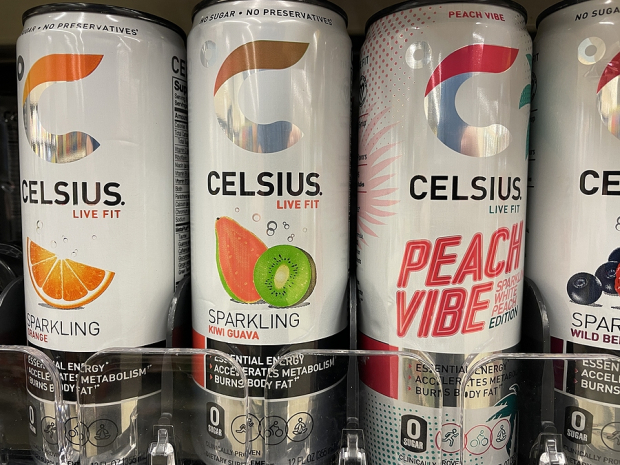
Celsius Adjusted EBITDA Doubles in Q2: How Durable Are Cost Synergies?
ZACKS· 2025-09-04 16:11
Group 1: Company Performance - Celsius Holdings, Inc. reported a 109% increase in adjusted EBITDA for Q2 2025, reaching $210.3 million compared to $100.4 million in the same period last year, driven by the strong performance of the Alani Nu brand and operational efficiencies [1][9] - The company expects to achieve $50 million in run-rate cost synergies within two years following the Alani Nu acquisition, with initial signs of these synergies already materializing [2] - Celsius' overall gross margin for Q2 was 51.5%, supported by lower material costs and an improved product mix, although higher input costs are anticipated to pressure margins in the second half of the year [3][9] Group 2: Industry Comparison - PepsiCo is focused on cost optimization, expecting to deliver 70% more productivity in the second half of the year as part of a multi-year effort to improve its cost structure [4] - The Coca-Cola Company has demonstrated comparable operating margin expansion through effective cost management, focusing on end-to-end revenue growth management capabilities [5] Group 3: Valuation and Estimates - Celsius shares have gained 43% in a month, significantly outperforming the industry's 1% growth [8] - The forward price-to-earnings ratio for Celsius is 47.82X, compared to the industry average of 15.7X [10] - The Zacks Consensus Estimate indicates year-over-year EPS growth of 55.7% for 2025 and 27.4% for 2026 [11]