Gold Exploration

Search documents
Hamelin Gold begins on-ground exploration at Venus gold project in WA
Yahoo Finance· 2025-12-08 14:54
Core Viewpoint - Hamelin Gold has initiated on-ground exploration at its Venus gold project in Western Australia, following the acquisition of a second exploration license, positioning the company as one of the largest tenement holders in the Cue region with a total of 300 km² of granted tenure [1][3]. Group 1: Project Details - The Venus gold project is located approximately 15 km south-east of Cue and 10 km east of Caprice Resources' Island Gold discovery [1]. - The project lies south-west of the Comet and Tuckabianna gold corridors, which each host deposits exceeding one million ounces of gold [2]. - The majority of the tenements are covered by lake sediments and have seen limited historical exploration [2]. Group 2: Exploration Activities - The initial exploration program includes surface soil sampling across the western and southern extensions of the +1 million ounce Comet gold deposit [4]. - A surface soil sampling program has recently been completed, targeting the interpreted western margin and southern extension of the Comet mine sequence [4]. - Exploration license E58/644 was granted on December 3, 2025, covering the interpreted southern extension of the Tuckabianna shear zone [5]. Group 3: Future Plans - The company is finalizing plans for a heritage survey across multiple targets within the project area, with the survey scheduled for completion in February 2026, followed by the commencement of drilling [5]. - A detailed aeromagnetic survey over the recently granted southern tenement is planned for January 2026 [6]. - The Venus gold project represents a significant opportunity for exploration beneath Lake Austin, an area that has not been previously explored [6].
Wesdome's Surface Exploration Program at Kiena Confirms High-Grade Growth Potential
Globenewswire· 2025-12-08 11:30
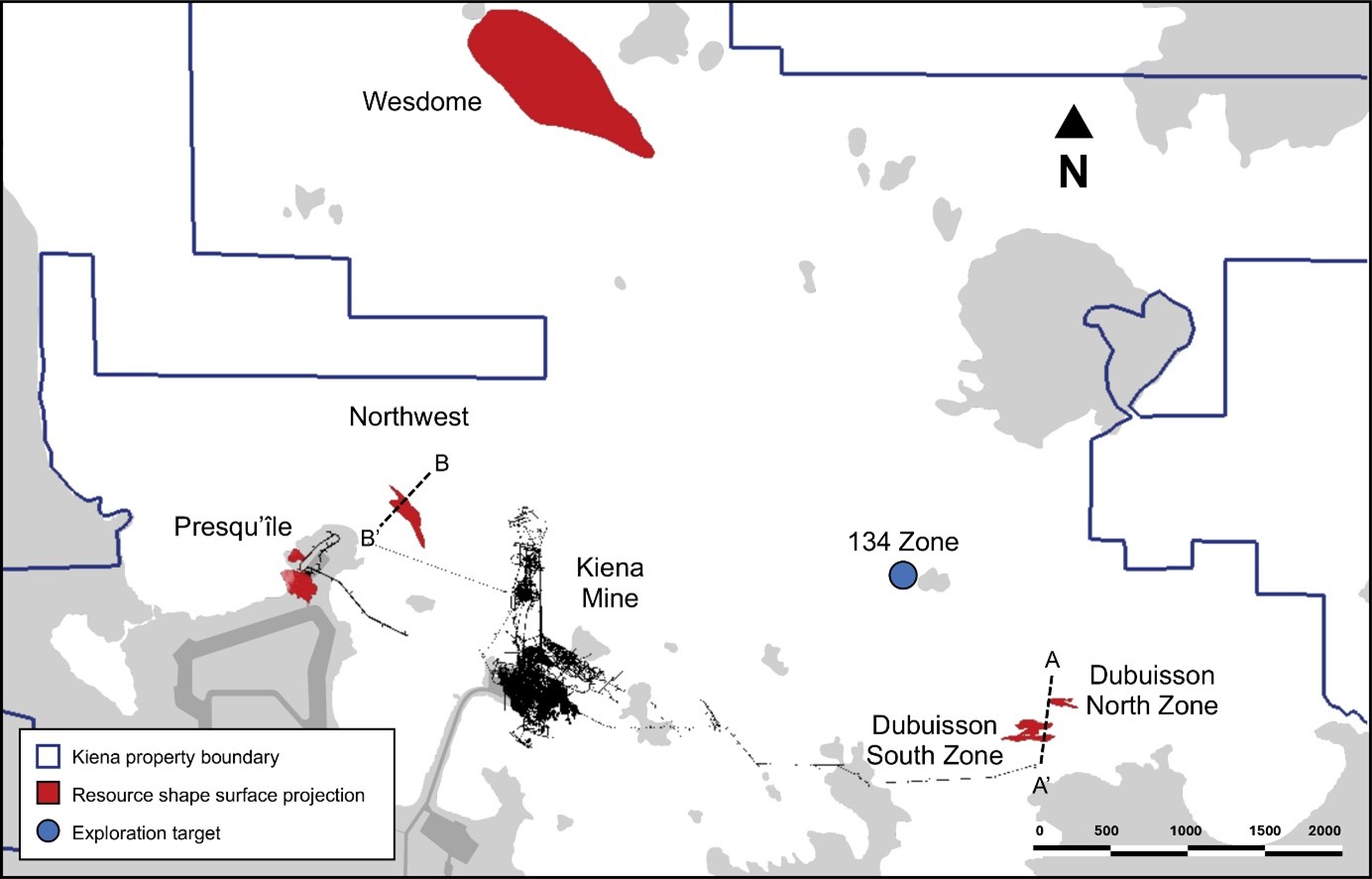
Core Insights - Wesdome Gold Mines Ltd. has reported promising high-grade results from its Kiena Mine Complex in Val-d'Or, Québec, particularly from the Dubuisson North Zone, which returned two distinct thick, high-grade intercepts within the same drillhole [1][2] Dubuisson Zone - The Dubuisson North Zone has shown exceptional grade and thickness with significant intercepts, indicating strong potential for growth and resource upgrade [2][12] - A total of 10,500 meters of drilling was completed in 2025, primarily as an infill campaign, with a focus on near-deposit exploration targets [11] - Notable intercepts include 8.1 g/t Au over 9.3 meters and 10.7 g/t Au over another 9.3 meters, highlighting the opportunity to enhance resource estimates [12][14] Northwest Zone - The Northwest Zone drilling program completed approximately 7,300 meters, revealing a high-grade intercept of 203.0 g/t Au over 1.2 meters, suggesting the potential for a new lens of mineralization [4][15] - The mineralization remains open to the west and at depth, with plans for further exploration in 2026 to expand the known extent of the zone [16][17] 134 Zone - The 134 Zone, which has not been explored since 2010, returned a highlight intercept of 56.8 g/t Au over 1.8 meters, indicating significant potential for future resource growth [5][18] - The 2026 drilling campaign will focus on advancing understanding of this underexplored area [19] Wesdome Zone - The Wesdome Zone underwent its first drilling campaign since 2010, confirming the geological model and identifying new mineralized envelopes [20][21] - The zone is classified as inferred, with a resource of 1.3 million tonnes grading 4.9 g/t Au, indicating substantial growth potential if the resource base is expanded [21][22] Future Exploration Plans - The company plans to dedicate approximately 55,000 meters to drilling in 2026, focusing on advancing existing targets and testing new ones identified from a recent drone magnetic survey [2][14] - The Dubuisson Zone will be a key focus for systematic drilling in 2026, particularly at depth, to refine geological interpretations and assess the potential for resource growth [14][19]

Benz Confirms Major High Grade Gold Extensions to Zone 126 and Discovery of New Lens 5
Newsfile· 2025-12-08 02:54
Core Insights - Benz Mining Corp has confirmed significant high-grade gold extensions at Zone 126 and the discovery of a new Lens 5 at the Glenburgh Gold Project in Western Australia, with the deepest intercept recorded at over 150 grams per meter [1][3][10]. Group 1: Zone 126 Developments - Ongoing drilling at Zone 126 has revealed a major down-dip extension, with hole 25GLR117 returning 15 meters at 12.7 grams per ton (g/t) gold from 850 meters, marking a 200-meter step-out from previous drilling [5][10]. - Lens 4 has shown significant growth, with a new intercept of 20 meters at 5 g/t gold from 676 meters, extending the lens further to the west [5][11]. - All lenses from 1 to 5 remain open at depth, indicating substantial potential for further high-grade gold additions [7][14]. Group 2: New Discoveries and Future Targets - The new Lens 5 discovery has been confirmed with an intercept of 2 meters at 16.8 g/t gold from 528 meters, suggesting thicker and higher-grade mineralization may be found down-dip [5][13]. - The NE3 and Hurricane targets have been identified as the next high-grade discovery corridors, with NE3 interpreted as an opposing fold limb to Zone 126 and Hurricane presenting a 1 km long gold-in-soil anomaly [8][16]. - Both targets have shown potential for discoveries comparable in size and scale to the Zone 126 trend, with historical drilling intersecting high-grade mineralization near the surface [9][17]. Group 3: Geological Insights and Project Potential - The Glenburgh Gold Project is emerging as a new frontier gold district with multi-million-ounce potential, featuring a mineralized corridor of 18-20 kilometers [36][37]. - The combination of thick, bulk-style gold mineralization and multiple high-grade underground lenses positions Glenburgh as a unique opportunity in the Australian gold sector [37][41]. - The project is supported by advanced geological techniques and a deep understanding of the geological framework, which is expected to enhance exploration success [42][34].

Onyx Gold Discovers New Gold Zone 250 meters from Argus North
Newsfile· 2025-12-03 12:00
Core Insights - Onyx Gold Corp. has discovered a new near-surface gold mineralization zone located 250 meters southwest of the Argus North Zone, indicating significant potential for further gold exploration and development [1][7][11] Summary by Sections Discovery and Drilling Results - The new gold zone was identified as part of the ongoing 75,000 meters diamond drill program at the Munro-Croesus Project, which is 100% owned by the company [1][7] - Drill hole MC25-213 at Argus West returned 21.2 meters grading 2.1 grams per tonne (g/t) gold, including 14.0 meters grading 3.0 g/t gold and a notable 1.0 meter grading 19.7 g/t gold with visible gold occurrences [3][6][12] - Drill hole MC25-199, located 430 meters from Argus North, intersected 14.0 meters grading 1.0 g/t gold [6][13] Geological Context - The Argus Fault, a key structural feature, is emerging as an important control on gold mineralization, with drilling indicating broad zones of gold mineralization over a total strike length of 900 meters and extending vertically from surface to approximately 400 meters [2][10][11] - The geological setting includes mafic variolitic volcanic rocks and fine-grained metasedimentary rocks, with mineralization characterized by strong albitization, silicification, and the presence of pyritic stringers [10][12] Project Overview - The Munro-Croesus Project is located in the Abitibi greenstone belt, a premier gold mining jurisdiction in Canada, covering 109 square kilometers of highly prospective geology [26][30] - The project includes the historic Croesus Gold Mine, known for yielding some of the highest-grade gold in Ontario, and has seen extensive land consolidation to enhance exploration potential [26][30] Future Exploration Plans - The company plans to continue systematic step-out drilling along the Argus Fault to evaluate the size of the new gold zone and the broader Argus trend, with three rigs currently active [7][16] - Ongoing drilling efforts are focused on defining the extent of mineralization and exploring additional targets within the project area [7][16]

Bullion Gold Presents the Historical Overview of Its Terragold Gold Project
Newsfile· 2025-12-02 21:49
Core Viewpoint - Bullion Gold Resources Corp. is preparing to file an ATI permit application for a stripping and drilling program on its Terragold project, aiming to validate historical data and enhance exploration efforts in the Abitibi region [1][2]. Project Overview - The Terragold project encompasses 36 mineral claims over approximately 2,060 hectares, located about 12 km south-southeast of Senneterre, Quebec, and is accessible year-round [6]. - Historical work on the project dates back to the 1960s, with significant drilling and surface sampling conducted by previous operators, indicating a substantial gold presence [7][8]. Exploration Strategy - Initial fieldwork will focus on verifying historical data in the main zone, where previous drilling identified promising gold-bearing structures [2]. - The company plans to compile historical work, perform 3D modeling, and conduct geophysical surveys to enhance understanding of the geological framework [3]. - Upcoming activities include cleaning old trenches, mechanical stripping, and systematic channel sampling, followed by a drilling campaign to validate historical results [4]. Economic Context - With gold prices around US$4,000 per ounce, the economic viability of low-grade deposits has improved significantly, making the Terragold project more attractive for potential open-pit operations [5][15]. - Historical drilling has outlined a low-grade gold corridor over more than 1.2 km, with several significant intersections reported, although modern technologies have not been systematically applied to follow up on these results [8][9]. Historical Data Insights - Historical drilling results indicate significant grade variability, likely due to the nugget effect, which has led to fluctuations in assay results [16]. - Previous drilling by various companies has confirmed the continuity of mineralized zones, with notable gold grades reported, although some areas remain under-tested [11][12][13]. Analytical Methods - The company will adopt modern analytical methods tailored for free-gold systems to reduce variability and provide a clearer picture of the project's economic potential [18][20].

Kenorland identifies gold-in-till anomalies at two Ontario projects
Yahoo Finance· 2025-12-02 14:59
Core Insights - Kenorland Minerals has identified significant gold-in-till geochemical anomalies at the Western Wabigoon and Flora projects in north-western Ontario, Canada [1] - The company is currently under an option agreement with Centerra Gold, which allows Centerra to earn up to a 70% interest in each project through staged exploration [7] Western Wabigoon Project - A gold-in-till trend extending approximately 19km has been defined by systematic geochemical surveys [1] - Infill sampling in 2025 refined several high-tenor gold-in-till anomalies across the W1, W2, and W3 target areas, with the W2 target producing a strong anomaly of up to 251 grains per sample along a 4km trend [2] - The W2 target area includes multi-gram per tonne gold showings, with rock samples returning up to 7.75 grams per tonne gold, expanding the historical footprint into the current W2 target [3] - Planning for the 2026 field campaign includes up to 5,000m of diamond drilling at Western Wabigoon, focusing on the priority W2 target [6] Flora Project - Geochemical surveys in 2024 and 2025 outlined the F1 target as a large-scale, high-tenor gold-in-till anomaly extending more than 7km [4] - High-grade gold mineralisation was identified, with rock samples returning up to 31.70g/t gold in the central area and up to 17.40g/t gold approximately 3km to the north-east [5] - Work in 2026 will focus on further surface exploration, including mapping and prospecting to refine targets for a future drill programme [6]
Lodestar Metals Completes Initial 2025 Exploration Work and Finalizes Plans for Strategic Drill Program
Newsfile· 2025-12-02 12:35
Core Insights - Lodestar Metals Corp. has completed initial exploration work for the Gold Run Project in Nevada and is finalizing plans for a strategic drill program set to begin in Q1 2026, focusing on high-potential targets [1][3][5] - The company aims to create shareholder value by testing known mineralized trends and expanding the pipeline of high-quality targets for follow-up in 2026 [1][5] Exploration Plans - The maiden drill program will target four priority prospects: Independence Trend, Gomes, Robbers Knob, and Crown North, based on multi-element soil geochemistry and historical data [5][6] - A property-wide DDIP geophysical survey will be conducted to expand geophysical coverage, identify new anomalies, and refine target prioritization for follow-up drilling [6][19] Target Areas - **Independence Trend**: Notable for strong gold, silver, and arsenic geochemistry, possibly indicative of epithermal style mineralization [3][11] - **Gomes**: High-grade silver and gold identified from surface rock sampling, with historical drilling showing significant intersections [10][11] - **Robbers Knob**: Characterized by strong gold and mercury geochemistry, with historical gold intersections remaining open for further exploration [15][16] - **Crown North**: High-grade gold intersection noted, with potential for new zones of mineralization to be tested [16][18] Ongoing Work - The company is actively preparing for drilling by finalizing targets, conducting the DDIP survey, and engaging with drilling contractors to ensure readiness for the 2026 field season [22][28]


Kenorland Identifies Significant Gold-In-Till Geochemical Anomalies at the Western Wabigoon and Flora Projects in Northwestern Ontario
Newsfile· 2025-12-02 12:30
Kenorland Identifies Significant Gold-In-Till Geochemical Anomalies at the Western Wabigoon and Flora Projects in Northwestern OntarioDecember 02, 2025 7:30 AM EST | Source: Kenorland Minerals Ltd.Vancouver, British Columbia--(Newsfile Corp. - December 2, 2025) - Kenorland Minerals Ltd. (TSXV: KLD) (OTCQX: KLDCF) (FSE: 3WQ0) ("Kenorland" or the "Company") is pleased to announce results from its 2025 geochemical and prospecting surveys targeting gold systems at the Western Wabigoon and Flora pr ...

GFG Drills 1.05 g/t Au over 71.0 m including 7.51 g/t Au over 3.0 m at Aljo and Initiates Aggressive Regional Exploration Program at Goldarm
Globenewswire· 2025-11-27 12:09
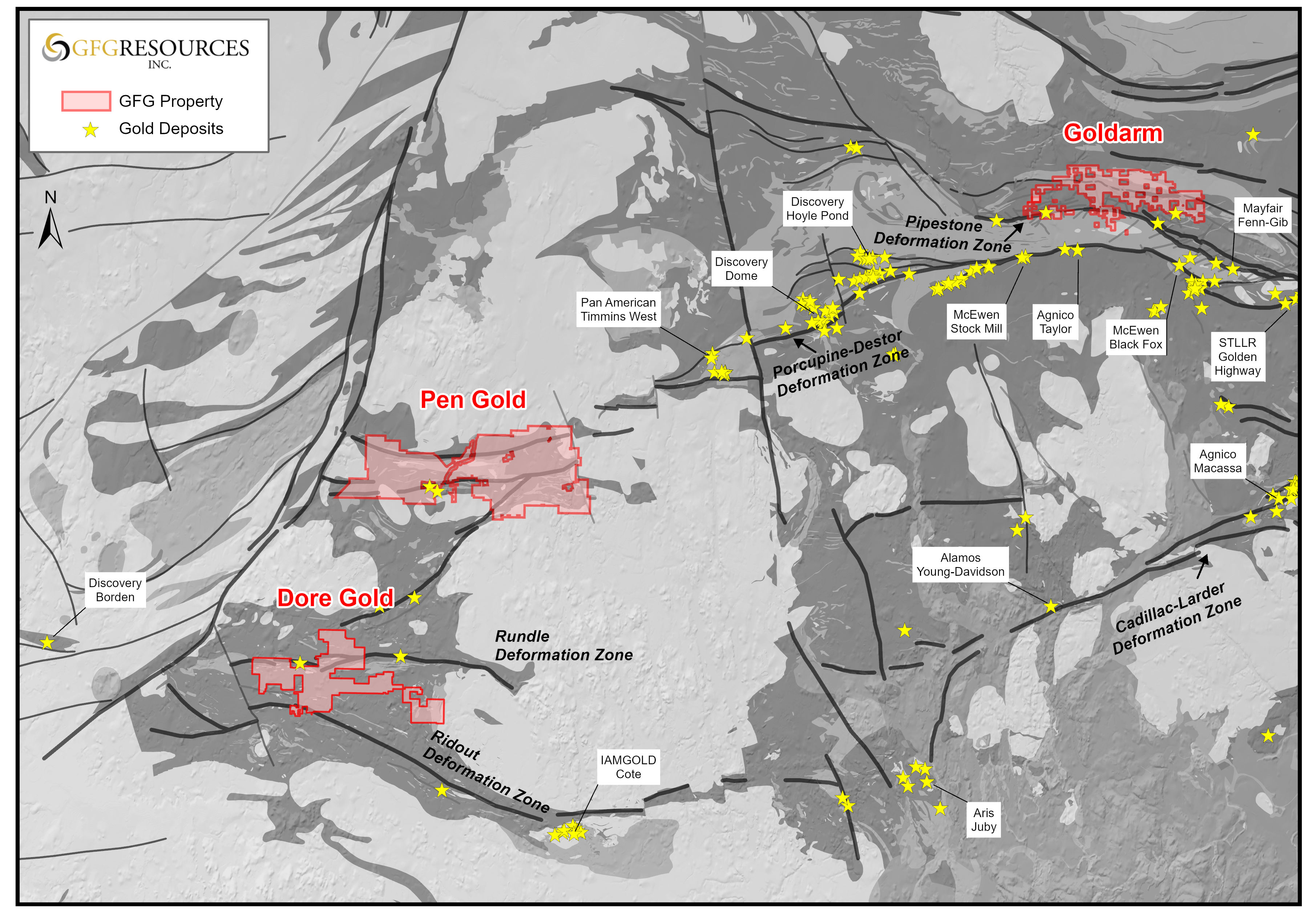
SASKATOON, Saskatchewan, Nov. 27, 2025 (GLOBE NEWSWIRE) -- GFG Resources Inc. (TSXV: GFG | OTCQB: GFGSF) (“GFG” or the “Company”) reports initial assay results from the 12-hole (2,650 metre) Phase 2-2025 drill program at the Aljo Gold Project (“Aljo”), located on the Company’s Goldarm Property (“Goldarm”) in the prolific Timmins Gold District of Ontario, Canada (See Figures 1 and 2). GFG’s Phase 2-2025 drill program at Aljo was designed to confirm and expand key mineralized zones across the Main, Hangingwal ...
November Field Program at South Hedley Gold-Copper Project, Boosts Potential of the Glix Exploration Target
Thenewswire· 2025-11-26 15:30
Core Viewpoint - Adamera Minerals Corp. has significantly expanded the Glix Gold Prospect on the South Hedley property, indicating a larger and more cohesive target than previously recognized [1] Exploration Program Summary - The exploration program included 13 line-kilometres of detailed ground magnetic surveying and 6 line-kilometres of VLF-EM surveying, with a total of 441 soil samples collected on the Glix Prospect and 165 soil samples on the Max Prospect [3][4] - A total of 606 soil samples are awaiting analysis, which will be integrated with existing geophysical and geological datasets to build a 3D model of the Glix prospect [8] Geological Findings - The VLF-EM survey outlines a conductive corridor over 300 meters long and 100 meters wide, with strong gold responses in soil samples ranging from 80 ppb to 4,283 ppb, particularly over the VLF-EM conductor [4][5] - The geological setting at Glix is similar to the Nickel Plate and Mascot gold mines, with favorable secondary NW–SE cross-structures present that are known to host mineralization [5][6] Next Steps - The next phase will focus on integrating pending soil sample results to prioritize drill targets, alongside submitting a Notice of Work (NoW) drill application for permitting [8] Property Overview - The South Hedley property spans 18,714 hectares and is located within a mineral belt in southern British Columbia, extending from the historic Nickel Plate gold mine, which has produced over 2.5 million ounces of gold [9]