Social Security Benefits

Search documents
The Little-Known Reason Why Working After Claiming Social Security Could Increase Your Benefits
Yahoo Finance· 2025-10-12 10:03
Core Points - The rules for working while collecting Social Security benefits can be complex, especially for those under full retirement age [1] - Individuals over full retirement age can work without affecting their benefits, while those under full retirement age may see temporary reductions in their benefits based on their earnings [2][5] - Working can lead to an increase in future Social Security benefits due to recalculations based on missed benefits [6][9] Summary by Sections Working Before Full Retirement Age - Full retirement age (FRA) is 67 for individuals born in 1960 or later, and earlier for those born before [5] - Earnings above certain thresholds can lead to a reduction in benefits for those under FRA, with specific limits for 2025 being $23,400 and $62,160 depending on whether the individual will reach FRA that year [8] Impact of Working on Benefits - Temporary reductions in benefits can occur if earnings exceed the specified limits, but this can result in larger benefits later due to recalculations [6][9] - Working can also increase Social Security benefits if it boosts average wages, which is often overlooked by retirees [7]
Can We Live on $100k Per Year at 67 With $2.5M Saved and $40k in Benefits?
Yahoo Finance· 2025-10-10 10:00
Core Insights - A couple with $2.5 million in savings and $40,000 in annual Social Security benefits can likely support a $100,000 lifestyle in retirement [1] - Strategic planning is essential for couples retiring simultaneously, particularly regarding health insurance and Social Security benefits [2][3] Retirement Timing and Health Insurance - Couples retiring before age 65 may face high private healthcare costs, making employer-sponsored healthcare valuable [2] - At age 67, eligibility for Medicare reduces the necessity for employer-sponsored healthcare [2] Social Security Strategy - It is advisable for the higher earner in a couple to defer Social Security benefits until age 70 to maximize income [3] - Deferring Social Security can create opportunities for Roth IRA conversions during low-income years post-retirement [3] Income Generation in Retirement - To achieve a $100,000 annual income, a conservative withdrawal rate of 4% is recommended, alongside investment diversification and careful budgeting [5] - With $2.5 million in savings and $40,000 from Social Security, the couple needs to generate an additional $60,000 annually, which is feasible with a well-structured portfolio [5]
What Is a Realistic Retirement Budget at 62 With $890k in a 401(k), $115k in a Roth IRA and Social Security?
Yahoo Finance· 2026-04-08 05:00
Core Insights - The article emphasizes the importance of planning a realistic retirement budget as individuals approach retirement, highlighting the need for a detailed understanding of income sources and expenses [2]. Social Security Benefits - Social Security benefits are a crucial component of retirement income for many retirees, providing lifelong, government-guaranteed income with annual cost-of-living adjustments [4]. - Estimated annual Social Security benefits based on claiming age are as follows: $2,508 at age 62, $41,670 at age 67, and $52,271 at age 70, suggesting that delaying benefits can lead to a larger overall payout [4]. Investment Income - Income can also be generated from an investment portfolio, with retirement age influencing the investment strategy [5]. - A conservative investment strategy, balanced between stocks and fixed-income investments, may yield a 5% annual return, while a more aggressive growth strategy could potentially return 10% annually [6]. - Implementing a growth strategy could increase a combined total of $1,005,000 in retirement accounts to approximately $2,154,307 in eight years [6].
What Should I Do With Just $850 in My 401(k) at Retirement?
Yahoo Finance· 2025-11-24 09:00
Core Insights - The timing of retirement significantly impacts the total savings accumulated, with delaying retirement potentially increasing savings to $1.16 million from $850,000 through additional contributions and compounding returns [1][3][13] Retirement Planning - The last few years of work are crucial for maximizing retirement savings due to peak earning potential and compounding effects [3][4] - A hybrid approach to retirement planning is recommended, balancing spending, taxes, and lifestyle without drastically cutting luxuries [6][7] Social Security Considerations - Social Security benefits play a vital role in retirement income, with the average monthly benefit being $1,907, translating to $22,884 annually if retired at age 67 [9][10] - Delaying Social Security benefits can increase lifetime payments by 8% per year, potentially reaching $28,376 annually if benefits are claimed at age 70 [10] Income Calculation - Retirement income can vary significantly based on retirement age and investment strategy, with examples showing potential annual incomes ranging from $72,884 to $100,376 depending on portfolio management and Social Security timing [13][14] - A conservative bond portfolio may yield a 5% return, while a mixed portfolio could aim for an 8% return, necessitating a flexible approach to risk management [12][13] Spending and Tax Planning - Anticipating monthly and yearly spending is essential for maintaining lifestyle in retirement, with adjustments possible based on income and expenses [17][20] - Taxes can significantly impact spendable income, with an example showing a retiree in New York City paying approximately $14,089 in taxes on a $72,884 income, leaving $58,795 for living expenses [21][22] Conclusion - A comprehensive retirement strategy requires careful planning regarding income sources, spending needs, and tax implications to ensure financial stability in retirement [23]
Divorced Spouses Have an Advantage When It Comes to Social Security Benefits
Yahoo Finance· 2025-09-28 09:52
Core Points - Social Security primarily provides retirement benefits, intended to replace approximately 40% of income for retirees [1] - Additional benefits include spousal benefits, which can be crucial for individuals who earned less than their spouses during their careers [2] Spousal Benefits - Spousal benefits are available to married individuals and can also be claimed after a divorce if the marriage lasted at least 10 years [5] - Individuals who are divorced have an advantage in claiming spousal benefits, as they do not need to wait for their ex-spouse to claim their own benefits [7][9] - Married individuals must wait until their higher-earning spouse claims their retirement benefits before they can start receiving spousal benefits [8][10]
I'm 67 With $900k in a 401(k), $200k in Cash and $2,400 Monthly Social Security. How Should I Budget?
Yahoo Finance· 2025-09-25 20:00
Core Perspective - The article discusses the importance of setting a retirement budget based on accumulated savings and benefits, emphasizing that by age 67, retirement finances are largely established [1][2]. Retirement Income Sources - Social Security benefits are highlighted as a reliable income source, with an expected amount of $2,400 per month or $28,800 per year at age 67, which adjusts for inflation [4]. - Delaying the collection of Social Security benefits can increase the monthly amount to $2,976 or $35,712 per year by age 70, representing a potential lifetime increase in benefits [6][5]. Financial Management Strategies - Individuals may need to consider various strategies for managing their retirement funds, including charitable giving, estate planning, or adjusting their lifestyle based on their financial situation [2]. - The total retirement budget will depend on how individuals manage their combined assets, which in this example totals $1.1 million across cash and investments [7]. Investment Considerations - The article emphasizes the balance between risk and reward in investment strategies, noting that aggressive investing may yield higher returns but also increases portfolio volatility [7].
Can I Retire at 60 With $1M in a 401(k) and a Paid-Off $500k Home?
Yahoo Finance· 2025-09-25 17:00
Core Insights - Early retirement at age 60 is feasible with proper financial planning, particularly with sufficient assets and no mortgage [1][5] - Key considerations include understanding retirement accounts, healthcare costs, and Social Security benefits [3][4][7] Financial Situation Assessment - Evaluating financial status involves analyzing assets such as retirement accounts, savings, and home equity against expenses including housing, food, and discretionary spending [3] - A comparison of income sources to expenses is essential to determine if adjustments to savings are necessary [3] Retirement Age Implications - Retirement age significantly impacts future income and expenses, with Social Security benefits not available until age 62, and full benefits at age 67 or 70 [4][7] - Early retirees must self-fund healthcare for five years until Medicare eligibility at age 65, necessitating budgeting for private insurance [4][6] Retirement Account Rules - Withdrawals from a 401(k) can be made penalty-free starting at age 55 if the employer is left, but income tax will still apply [5] - Delaying withdrawals is advisable to allow investments to grow [5] Healthcare Considerations - Budgeting for five years of individual health coverage or COBRA is crucial for those retiring before age 65 [6] - Individuals with health issues may consider delaying retirement to maintain employer-sponsored insurance [6] Social Security Strategy - Claiming Social Security at age 62 results in a permanent reduction in benefits, while waiting until full retirement age increases benefits by approximately 30% [7] - Delaying until age 70 maximizes benefits further to 132% [7] Mortgage Management - Paying off a mortgage before retirement can alleviate financial stress when transitioning to a fixed income [8]
3 Reasons Couples Should Try To Retire at Different Times
Yahoo Finance· 2025-09-24 09:17
Core Insights - Only 11% of couples retire at the same time, with many choosing to stagger their retirements by at least a year despite concerns about overspending [1][3] Group 1: Retirement Timing - 26% of future retirees planned to retire together, but only 11% of current retirees did so, indicating a significant gap between expectation and reality [3] - Couples who retire simultaneously may need to rely on Social Security benefits, which can be reduced if taken early at age 62 [4] Group 2: Financial Confidence and Concerns - Only 31% of surveyed individuals felt confident that their savings would last throughout their lifetime, while 36% expressed anxiety about spending their retirement savings [4] - The first year of retirement is particularly challenging financially due to adjustment periods and uncertainty regarding expenditures [2] Group 3: Social Security Benefits - Delaying Social Security benefits until age 70 can maximize monthly payouts, making staggered retirements beneficial for couples [5] - Staggering retirement allows one spouse to potentially wait longer to withdraw Social Security, ensuring larger monthly benefits [5] Group 4: Savings Opportunities - Continuing to save until retirement is fully funded is advisable, as many retirees are unprepared for the transition from saving to spending [6] - The trend of longer life expectancies necessitates careful financial planning, with the SSA noting that about 1 in 3 65-year-olds will live to at least age 90 [7]
Social Security Retirees Face Unexpected Downside of Early Retirement
Yahoo Finance· 2025-09-21 09:55
Core Insights - Early retirement can lead to significant financial consequences, particularly affecting Social Security benefits due to reduced savings and fewer working years [1][2]. Group 1: Impact on Social Security Benefits - Claiming Social Security benefits before age 70 can reduce monthly income due to early filing penalties or missing out on delayed retirement credits [2][4]. - The benefit formula for Social Security is based on the average wages over the 35 highest earning years, which can be negatively impacted if an individual works less than 35 years, resulting in $0 wage years being included in the calculation [4][5]. - Early retirement while earning a higher salary can prevent the replacement of lower-earning years, thus lowering the average wage used to calculate Social Security benefits, leading to smaller checks for life [6]. Group 2: Working Years and Benefits - Working for at least 35 years can enhance Social Security benefits, making it advisable for individuals to consider this if feasible [9]. - The decision to retire early should take into account the potential for reduced benefits, which may not be immediately apparent to many retirees [8].
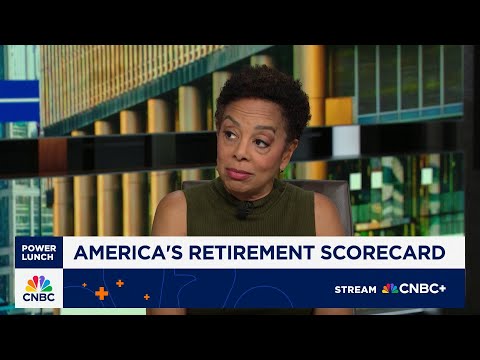
America's retirement scorecard ranks 21st globally
CNBC Television· 2025-09-12 19:54
Retirement Security Ranking - Norway ranks number one in retirement security, followed by Ireland, Switzerland, and Iceland [2] - The US ranks 21st in retirement security with a C grade [2][3] - Smaller countries are perceived to have an easier time implementing programs that enhance retirement security due to less concern about losing benefits and income inequality [4] Concerns and Fears - 67% of people are concerned that inflation will erode the future value of their savings [5] - 20% (one in five) of people believe it will take a miracle to achieve retirement security [6] - People are afraid of running out of money and are concerned about the future of social security and government benefits [5] Factors Influencing Retirement Security - Retirement security is viewed holistically, encompassing healthcare, finances, quality of life, and overall well-being [2]