
构建中国哲学社会科学自主知识体系

Search documents
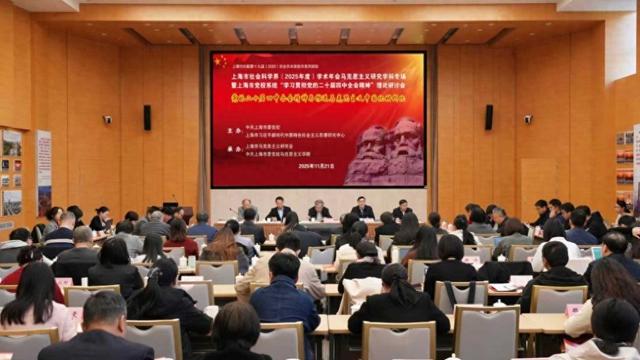
上海社科年会马研学科专场暨市党校系统“学习贯彻党的二十届四中全会精神”理论研讨会在市委党校举行
Xin Lang Cai Jing· 2025-11-29 09:03
Group 1 - The conference focused on the theme of "The Spirit of the 20th Central Committee's Fourth Plenary Session and Advancing the Sinicization of Marxism in the New Era" [1][5] - The event gathered over 150 theorists from universities, research institutions, and party schools in Shanghai to discuss the implementation of the session's spirit [13] - Keynote speeches emphasized the importance of integrating contemporary Chinese Marxism with traditional Chinese culture and the necessity of a self-reliant knowledge system in social sciences [3][6] Group 2 - The significance of studying and implementing the spirit of the 20th Central Committee's Fourth Plenary Session was highlighted as a major political task for the current and future periods [5] - The discussions included a comparative analysis of the new concepts and requirements outlined in the "15th Five-Year Plan" and previous planning documents [5][10] - The conference aimed to provide theoretical depth and practical insights for advancing the Sinicization of Marxism and fulfilling the development tasks of the "15th Five-Year Plan" [10]

技术赋能哲学社会科学研究
Jing Ji Ri Bao· 2025-05-28 03:25
Group 1 - The forum on building an independent knowledge system for Chinese philosophy and social sciences emphasizes the importance of cultural subjectivity and innovation in knowledge creation, with a focus on utilizing Chinese culture as a source of strength [1] - Experts highlight the need to expand the international perspective of Chinese academia to contribute more Chinese wisdom to global governance and human civilization progress [1] - The rapid development of artificial intelligence presents both opportunities and challenges for research in philosophy and social sciences, necessitating a balance between AI-driven research and human cultural advantages [1][2] Group 2 - Think tanks are encouraged to conduct extensive research and consultations to identify real issues and enhance their ability to meet national strategic needs [2] - The identification of "real problems" is crucial for theoretical innovation, reflecting the contradictions in society and aligning with academic logic [2] - The importance of recognizing the trends of the AI era and establishing risk prevention mechanisms to address challenges such as weakened researcher subjectivity and the production of low-quality research is emphasized [2]