3D Reconstruction

Search documents
首次将十亿参数三维模型塞进手机!4比特量化,速度2.5倍、内存降3.7倍、精度98%|ICLR'26
量子位· 2026-03-08 04:26
Core Insights - The article discusses the development of QuantVGGT, a quantization framework designed to effectively compress and accelerate the Visual Geometry Grounded Transformers (VGGT) model, which has over 1 billion parameters, while maintaining high accuracy and performance [2][5][58]. Group 1: Quantization Framework - QuantVGGT utilizes 4-bit quantization, achieving a speed increase of 2.5 times and a memory reduction of 3.7 times, while preserving 98% of the reconstruction accuracy compared to the full precision model [2][5][7]. - The framework introduces two main technical contributions: Dual-Smoothed Fine-Grained Quantization (DSFQ) and Noise-Filtered Diverse Sampling (NFDS) [5][9]. Group 2: Challenges in Quantization - VGGT's unique properties, such as the presence of data-independent special tokens and the inherent complexity of 3D data, pose significant challenges for quantization [11][12]. - The data-independent tokens lead to a heavy-tailed activation distribution, complicating the quantization process and increasing the risk of information loss [11][12]. Group 3: Technical Contributions - DSFQ combines pre-global Hadamard rotation and post-local channel smoothing to mitigate the heavy-tailed distribution and inter-channel variance issues [5][9][30]. - NFDS employs deep statistical information to filter out noise and create frame-aware diverse calibration clusters, ensuring the stability of the quantization range [5][9][40]. Group 4: Experimental Results - Extensive experiments demonstrate that QuantVGGT outperforms existing quantization methods across various benchmark datasets and bit widths, achieving optimal performance [5][13][59]. - In camera pose estimation tasks, QuantVGGT maintains 99.9% performance at 8-bit quantization and achieves an AUC@30 of 88.2 at 4-bit quantization, significantly outperforming other methods [47][50]. Group 5: Efficiency and Deployment - The proposed quantization framework shows minimal additional latency, with only a 0.2% increase in delay while significantly retaining model performance [56][58]. - The results indicate that QuantVGGT is well-suited for deployment in resource-constrained environments, demonstrating its practical advantages [5][58].

打破恶性循环!CoherentGS:稀疏模糊图像也能高清重建
自动驾驶之心· 2025-12-20 02:16
Core Viewpoint - The article discusses the breakthrough technology CoherentGS developed by Peking University, which enables high-quality 3D scene reconstruction from a limited number of blurry images, addressing the challenges of sparse views and motion blur [5][33]. Group 1: CoherentGS Technology Overview - CoherentGS utilizes a "dual prior guidance" strategy, allowing the reconstruction of high-definition, coherent 3D scenes from just 3 to 9 blurry images [5][7]. - The system effectively addresses both "deblurring" and "geometric completion" issues through a collaborative optimization process [7][12]. - The core framework integrates deblurring and geometric completion into the entire 3D Gaussian optimization process, ensuring clear and coherent reconstruction results [10][12]. Group 2: Key Technologies of CoherentGS - The deblurring prior restores clear details and provides photometric guidance, essential for extracting reliable details from blurry images [13]. - The diffusion prior completes geometric gaps, ensuring global coherence by filling in unobserved areas with structured images [18]. - Consistency-guided camera exploration intelligently selects valuable viewpoints, enhancing optimization efficiency without blindly increasing perspectives [19][21]. - Joint optimization incorporates geometric regularization to avoid distortion, ensuring the reliability of reconstructed geometry [24][26]. Group 3: Performance Validation - CoherentGS outperforms existing methods, achieving a PSNR improvement of up to 2.78 dB and reducing LPIPS by over 40% on the Deblur-NeRF and DL3DV-BLUR datasets with 3 to 9 sparse blurry inputs [26]. - The qualitative results demonstrate that CoherentGS can recover texture details and maintain structural coherence, unlike other methods that produce either blurriness or fragmented structures [29]. - Frequency analysis shows that CoherentGS retains natural high-frequency details, confirming that the restored details are genuine and not artificially generated [32]. Group 4: Future Implications - CoherentGS represents a significant advancement in 3D reconstruction, breaking the dependency on dense, clear inputs, and has the potential to extend to various real-world scenarios involving defocus blur and exposure anomalies [33].

分割一切并不够,还要3D重建一切,SAM 3D来了
机器之心· 2025-11-20 02:07
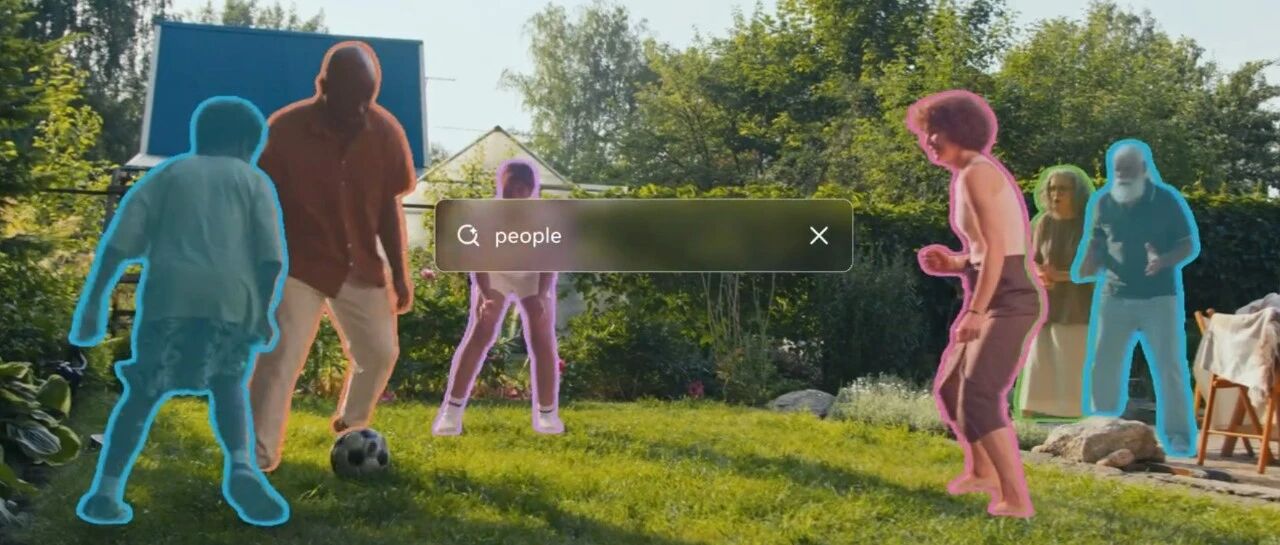
Core Insights - Meta has launched significant updates with the introduction of SAM 3D and SAM 3, enhancing the understanding of images in 3D [1][2] Group 1: SAM 3D Overview - SAM 3D is the latest addition to the SAM series, featuring two models that convert static 2D images into detailed 3D reconstructions [2][5] - SAM 3D Objects focuses on object and scene reconstruction, while SAM 3D Body specializes in human shape and pose estimation [5][28] - Meta has made the model weights and inference code for SAM 3D and SAM 3 publicly available [7] Group 2: SAM 3D Objects - SAM 3D Objects introduces a novel technical approach for robust and realistic 3D reconstruction and object pose estimation from a single natural image [11] - The model can generate detailed 3D shapes, textures, and scene layouts from everyday photos, overcoming challenges like small objects and occlusions [12][13] - Meta has annotated nearly 1 million images, generating approximately 3.14 million 3D meshes, leveraging a scalable data engine for efficient data collection [17][22] Group 3: SAM 3D Body - SAM 3D Body addresses the challenge of accurate human 3D pose and shape reconstruction from a single image, even in complex scenarios [28] - The model supports interactive input, allowing users to guide and control predictions for improved accuracy [29] - A high-quality training dataset of around 8 million images was created to enhance the model's performance across various 3D benchmarks [31] Group 4: SAM 3 Capabilities - SAM 3 introduces promptable concept segmentation, enabling the model to identify and segment instances of specific concepts based on text or example images [35] - The architecture of SAM 3 builds on previous AI advancements, utilizing Meta Perception Encoder for enhanced image recognition and object detection [37] - SAM 3 has achieved a twofold improvement in concept segmentation performance compared to existing models, with rapid inference times even for images with numerous detection targets [39]

Feed-Forward 3D综述:3D视觉进入“一步到位”时代
自动驾驶之心· 2025-10-31 16:03
Core Insights - The article discusses the evolution of 3D vision technologies, highlighting the transition from traditional methods like Structure-from-Motion (SfM) to advanced techniques such as Neural Radiance Fields (NeRF) and 3D Gaussian Splatting (3DGS), emphasizing the emergence of Feed-Forward 3D as a new paradigm in the AI-driven era [2][6]. Summary by Categories 1. Technological Evolution - The article outlines the historical progression in 3D vision, noting that previous methods often required per-scene optimization, which was slow and lacked generalization capabilities [2][6]. - Feed-Forward 3D is introduced as a new paradigm that aims to overcome these limitations, enabling faster and more generalized 3D understanding [2]. 2. Classification of Feed-Forward 3D Methods - The article categorizes Feed-Forward 3D methods into five main architectures, each contributing to significant advancements in the field: 1. **NeRF-based Models**: These models utilize a differentiable framework for volume rendering but face efficiency issues due to scene-specific optimization. Conditional NeRF approaches have emerged to allow direct prediction of radiance fields [8]. 2. **PointMap Models**: Led by DUSt3R, these models predict pixel-aligned 3D point clouds directly within a Transformer framework, eliminating the need for camera pose input [10]. 3. **3D Gaussian Splatting (3DGS)**: This innovative representation uses Gaussian point clouds to balance rendering quality and speed, with advancements allowing direct output of Gaussian parameters [11][13]. 4. **Mesh / Occupancy / SDF Models**: These methods combine traditional geometric modeling with modern techniques like Transformers and Diffusion models [14]. 5. **3D-Free Models**: These models learn mappings from multi-view inputs to new perspectives without relying on explicit 3D representations [15]. 3. Applications and Tasks - The article highlights diverse applications of Feed-Forward models, including: - Pose-Free Reconstruction & View Synthesis - Dynamic 4D Reconstruction & Video Diffusion - SLAM and visual localization - 3D-aware image and video generation - Digital human modeling - Robotic manipulation and world modeling [19]. 4. Benchmarking and Evaluation Metrics - The article mentions the inclusion of over 30 commonly used 3D datasets, covering various types of scenes and modalities, and summarizes standard evaluation metrics such as PSNR, SSIM, and Chamfer Distance for future model comparisons [20][21]. 5. Future Challenges and Trends - The article identifies four major open questions for future research, including the need for multi-modal data, improvements in reconstruction accuracy, challenges in free-viewpoint rendering, and the limitations of long-context reasoning in processing extensive frame sequences [25][26].

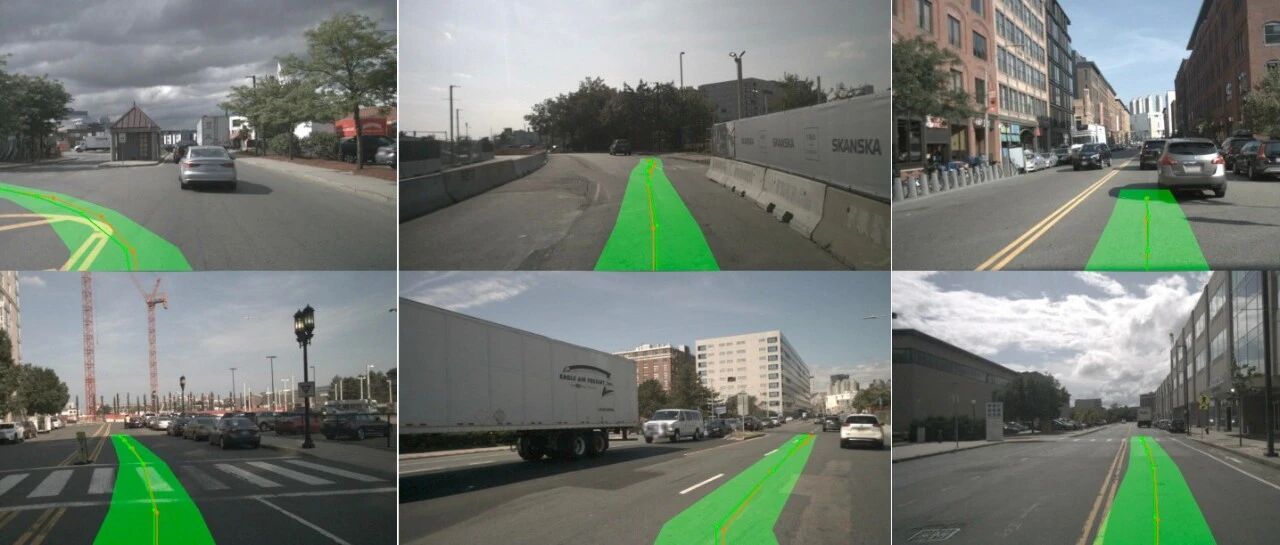
自动驾驶论文速递!VLA、世界模型、强化学习、轨迹规划等......
自动驾驶之心· 2025-10-18 04:00
Core Insights - The article discusses advancements in autonomous driving technologies, highlighting various research contributions and their implications for the industry. Group 1: DriveVLA-W0 - The DriveVLA-W0 training paradigm enhances the generalization ability and data scalability of VLA models by using world modeling to predict future images, achieving 93.0 PDMS and 86.1 EPDMS on NAVSIM benchmarks [6][12] - A lightweight Mixture-of-Experts (MoE) architecture reduces inference latency to 63.1% of the baseline VLA, meeting real-time deployment needs [6][12] - The data scaling law amplification effect is validated, showing significant performance improvements as data volume increases, with a 28.8% reduction in ADE and a 15.9% decrease in collision rates when using 70M frames [6][12] Group 2: CoIRL-AD - The CoIRL-AD framework combines imitation learning and reinforcement learning within a latent world model, achieving an 18% reduction in collision rates on the nuScenes dataset and a PDMS score of 88.2 on the Navsim benchmark [13][16] - The framework integrates RL into an end-to-end autonomous driving model, addressing offline RL's scene expansion issues [13][16] - A decoupled dual-policy architecture facilitates structured interaction between imitation learning and reinforcement learning, enhancing knowledge transfer [13][16] Group 3: PAGS - The Priority-Adaptive Gaussian Splatting (PAGS) framework achieves high-quality real-time 3D reconstruction in dynamic driving scenarios, with a PSNR of 34.63 and SSIM of 0.933 on the Waymo dataset [23][29] - PAGS incorporates semantic-guided pruning and regularization to balance reconstruction fidelity and computational cost [23][29] - The framework demonstrates a rendering speed of 353 FPS with a training time of only 1 hour and 22 minutes, outperforming existing methods [23][29] Group 4: Flow Planner - The Flow Planner achieves a score of 90.43 on the nuPlan Val14 benchmark, marking the first learning-based method to surpass 90 without prior knowledge [34][40] - It introduces fine-grained trajectory tokenization to enhance local feature extraction while maintaining motion continuity [34][40] - The architecture employs adaptive layer normalization and scale-adaptive attention to filter redundant information and strengthen key interaction information extraction [34][40] Group 5: CymbaDiff - The CymbaDiff model defines a new task for sketch-based 3D outdoor semantic scene generation, achieving a FID of 40.74 on the Sketch-based SemanticKITTI dataset [44][47] - It introduces a large-scale benchmark dataset, SketchSem3D, for evaluating 3D semantic scene generation [44][47] - The model employs a Cylinder Mamba diffusion mechanism to enhance spatial coherence and local neighborhood relationships [44][47] Group 6: DriveCritic - The DriveCritic framework utilizes vision-language models for context-aware evaluation of autonomous driving, achieving a 76.0% accuracy in human preference alignment tasks [55][58] - It addresses limitations of existing evaluation metrics by focusing on context sensitivity and human alignment in nuanced driving scenarios [55][58] - The framework demonstrates superior performance compared to traditional metrics, providing a reliable solution for human-aligned evaluation in autonomous driving [55][58]