
AI in medical imaging

Search documents
HOLX vs. GEHC: Which Women's Health Stock Should You Pick Now?
ZACKS· 2026-02-26 17:16
Industry Overview - The medical imaging industry is experiencing growth due to the increasing prevalence of chronic diseases, a rising geriatric population, and a focus on early and accurate diagnosis, with a projected CAGR of 6.65% through 2034 from $46.9 billion in 2026 [1] - Major companies in this sector, such as Hologic (HOLX) and GE HealthCare (GEHC), are attracting investor attention [1] Hologic (HOLX) Analysis - Hologic has developed multiple growth drivers through internal innovation and acquisitions, with Breast Health revenues increasing by 1.8% year over year in Q1 fiscal 2026, driven by Endomagnetics products [3] - GYN Surgical revenues rose by 8.7%, attributed to higher sales of MyoSure and Fluent devices, as well as the acquisition of Gynesonics [3] - However, Molecular Diagnostics revenues declined by 3.5% due to lower sales of COVID-19 tests and legacy assays, although growth in certain assays partially offset this decline [4] - Hologic ended Q1 with cash and cash equivalents of $2.17 billion and an adjusted net leverage ratio of 0.3X, and received FDA approval for its Aptima HPV Assay [5] - Hologic agreed to a buyout by Blackstone and TPG valued at up to $18.3 billion, offering shareholders $76 per share in cash, with a total potential value of $79 per share, indicating a 46% premium [6] GE HealthCare (GEHC) Analysis - GE HealthCare reported strong performance in Q4 2025, with double-digit organic revenue growth in Pharmaceutical Diagnostics and mid-single-digit growth in Imaging and Advanced Visualization Solutions, ending with a record backlog of $21.8 billion [7] - The company signed significant agreements, including a 7-year deal with the University of Rochester Medical Center, and plans to acquire Intelerad to enhance cloud-enabled imaging [8] - GEHC's D3 strategy focuses on using smart devices and digital tools for precision care, with new products contributing nearly 55% of revenues [10] - The company anticipates an increase in service agreement capture rates due to new innovations and has improved its business system, Heartbeat, leading to better sales and cash conversion [11] - Recent FDA clearances for new MR innovations and collaborations to advance AI in fetal ultrasound assessments further strengthen GEHC's position [12] Earnings Projections - The Zacks Consensus Estimate for Hologic's fiscal 2026 earnings indicates a 4.9% year-over-year growth to $4.47, with mixed estimate movements in the past 60 days [13] - For GE HealthCare, the earnings estimate for 2026 shows an 8.7% year-over-year growth to $4.99, with upward revisions in the last 60 days [14] Price Performance & Valuation - Hologic shares have increased by 0.7% over the past three months, while GE HealthCare shares have gained 4.2% [15] - Hologic trades at a forward price-to-sales (P/S) ratio of 3.87X, lower than its median, whereas GE HealthCare trades at a P/S of 1.76, in line with its median [16] Investment Outlook - Hologic's recent quarter performance was impacted by lower COVID testing and legacy STI test sales, with minimal upside potential from the buyout offer, suggesting current shareholders may consider exiting [19] - In contrast, GE HealthCare's strong segment performance and innovation strategy present it as a compelling investment opportunity, with bullish earnings projections [20]




GEHC Expands BARDA Collaboration With $35M Boost for AI Ultrasound
ZACKS· 2026-02-18 19:10
Core Insights - GE HealthCare Technologies Inc. (GEHC) has expanded its contract with the Biomedical Advanced Research and Development Authority (BARDA) by $35 million to enhance the development of AI-enabled ultrasound technologies and next-generation imaging platforms [1][2][5] Company Developments - The additional investment aims to accelerate the development of AI-enabled ultrasound tools for trauma assessment and improve readiness for large-scale casualty incidents [2][5] - GEHC's partnership with BARDA focuses on advancing ultrasound innovation through AI-powered tools and specialized hardware designed for frontline healthcare providers [3][5] - The expanded clinical scope of the agreement will support the development of multiple AI-enabled tools to enhance diagnostic workflows and reduce reliance on specialized operators, making them usable by non-expert ultrasound users [9][11] Market Position and Financial Performance - Following the announcement, GEHC shares increased by 1.6%, with a 11.6% rise over the past six months, contrasting with a 12.9% decline in the industry [4] - GEHC currently holds a market capitalization of $36.61 billion [7] Strategic Initiatives - The contract expansion is expected to strengthen GE HealthCare's position in the growing AI-enabled medical imaging market, enhancing its innovation pipeline and driving long-term revenue opportunities [5][12] - GEHC plans to advance point-of-care ultrasound systems that are reliable, portable, and easy to use in high-intensity environments [10] - The program also includes collaboration with clinicians to generate real-world evidence and guide product development, aiming to validate the clinical effectiveness of innovations [11] Industry Prospects - The AI in the ultrasound imaging market is projected to reach $1.22 billion by 2026, with a CAGR of 8.4% through 2035, driven by the recognition of AI-based technologies' benefits [13]

HOLX Stock Up 16% in 6 Months: Is it Still a Hold Heading Into 2026?
ZACKS· 2025-12-08 15:21
Core Insights - Hologic (HOLX) has experienced a 16.1% increase in share price over the last six months, outperforming the industry growth of 15% and the broader Zacks Medical sector's 10% gains [1][7] - The company is undergoing a take-private process led by Blackstone and TPG, offering $76 per share in cash plus a potential Contingent Value Right (CVR) of up to $3 per share, pending shareholder approval [2][7] - Hologic's stock is currently trading close to its 52-week high of $80.31, indicating strong market performance [1][7] Financial Performance - Hologic's shares are trading above the 50-day simple moving average, indicating positive technical momentum [3] - The forward three-year Price-to-Sales (P/S) ratio for Hologic is 3.87X, which is lower than its industry peers QIAGEN (4.76X) and Abbott (4.55X) [14] Clinical and Technological Advancements - Hologic's 3DQuorum imaging technology has shown effectiveness in maintaining cancer detection rates while reducing the workload for radiologists, as evidenced by studies presented at RSNA 2025 [4][8] - The company is set to launch the Envision Mammography Platform, which features a high-speed 3D mammogram with a scan time of 2.5 seconds, enhancing cancer screening accuracy [13] Business Segments - The Diagnostics division is a key growth driver, with increased sales volumes and adoption of assays, particularly in the U.S. vaginitis market [10][11] - Hologic's Breast Health division is showing renewed strength under new leadership, with strategies to upgrade older equipment and diversify its product offerings [12] Market Challenges - The Diagnostics business outside the U.S. faces challenges due to geopolitical issues and funding constraints, particularly in Africa and China [17] - Hologic anticipates incurring quarterly costs of $10 million to $14 million in fiscal 2026, which may impact gross margins [17] Strategic Outlook - The proposed go-private strategy provides a valuation floor and minimizes downside risk, while the stock's current trading price near the $76 cash offer suggests limited short-term gains [18]

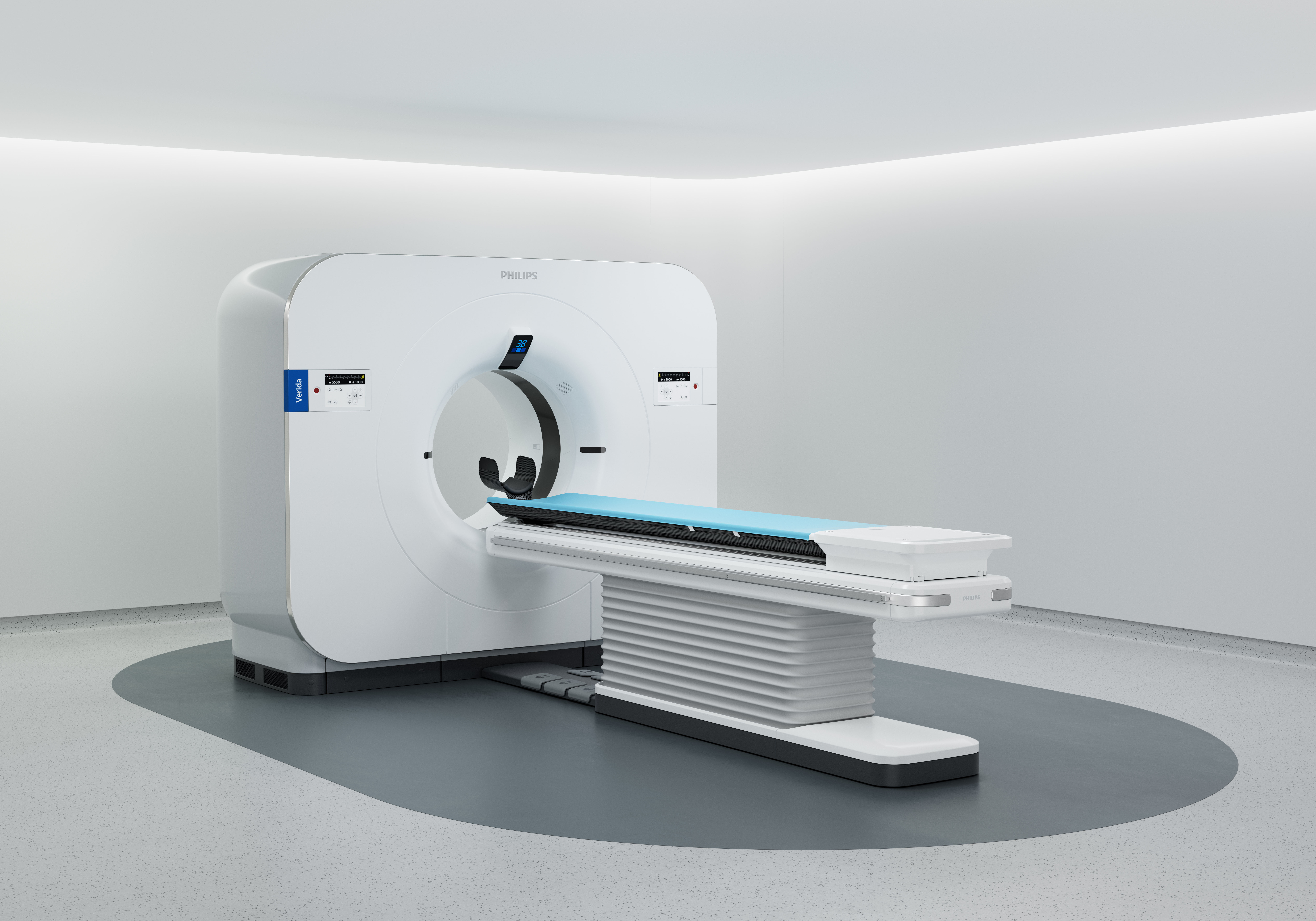
Philips launches Verida, world’s first detector-based spectral CT powered by breakthrough AI, to advance diagnostic precision
Globenewswire· 2025-11-30 17:00
Core Insights - Royal Philips has launched Verida, the world's first detector-based spectral CT fully powered by AI, marking a significant advancement in CT technology [1][6] - The integration of AI optimizes the imaging chain, resulting in lower system noise, improved image quality, and faster clinical workflows [1][3] Company Overview - Royal Philips is a global leader in health technology, focusing on improving health and well-being through innovation [13][14] - The company generated sales of EUR 18 billion in 2024 and employs approximately 67,000 people across more than 100 countries [14] Product Features - Verida features AI-driven spectral precision, enabling superior image quality and accelerated scans, fully integrated into radiology workflows [5][6] - The system can reconstruct 145 images per second, allowing for exams to be completed in less than 30 seconds, effectively doubling the speed of previous systems [4][6] - Verida can achieve a dose reduction of up to 80% and reduce energy consumption by up to 45% [3][11] Clinical Impact - The introduction of Verida is expected to enhance diagnostic confidence and reduce the need for invasive procedures, particularly in cardiac imaging [4][5] - The system has been designed to meet the demands of high-throughput environments, allowing up to 270 exams per day [11] Market Position - Philips has pioneered detector-based spectral CT technology, which has been widely adopted in clinical settings, supported by over 800 peer-reviewed publications [2][8] - The company emphasizes that its spectral CT technology has been a reliable clinical tool for over a decade, providing comparable or superior clinical outcomes at a lower total cost of ownership [5][6]

Perimeter Medical Imaging AI (OTCPK:PYNK.F) 2025 Conference Transcript
2025-10-16 18:00
Summary of Perimeter Medical Imaging AI Conference Call Company Overview - **Company**: Perimeter Medical Imaging AI - **Ticker Symbols**: OTCQX: PYNKF, TSXV: PINK - **Industry**: Medical Imaging Technology, specifically focused on cancer surgery Core Issues Addressed - **Problem Statement**: High rates of reoperations in cancer surgeries due to incomplete removal of cancerous tissues, leading to emotional and financial burdens on patients, hospitals, and insurers [4][10][12] - **Statistics**: - Breast cancer reoperation rate: 23% - Thyroid cancer reoperation rate: 12% - Prostate cancer reoperation rate: 21% [6][7] Technology and Solutions - **Imaging Technology**: Optical Coherence Tomography (OCT) provides high-resolution imaging (10x better than X-ray, 100x better than MRI) to visualize cancerous cells in real-time during surgery [13][14] - **Device Description**: The imaging system allows surgeons to see cellular-level details and make informed decisions during surgery, potentially reducing reoperation rates [16][22] - **AI Integration**: Future products will incorporate AI algorithms to assist surgeons by highlighting suspicious areas in real-time, thus improving efficiency and accuracy [20][26][28] Market Opportunity - **Total Addressable Market (TAM)**: Estimated at $17 billion globally, with a U.S. market of $4 billion and a specific breast cancer surgery market of $650 million [36][37] - **Annual Healthcare Costs**: Over $1 billion in healthcare costs due to re-excisions, not including emotional costs and survival rates [32][33] Clinical Results and Performance - **Clinical Trials**: Successful trials with major cancer institutions, showing significant improvements in reoperation rates [31][40] - **Surgeon Feedback**: Surgeons using the technology reported reoperation rates dropping from 20% to around 5% [39][41] Financial Performance - **Revenue Growth**: Revenue increased from a few hundred thousand to over half a million per quarter, primarily driven by high-margin recurring revenue from consumables [43][44] - **Gross Margin**: Approximately 90% gross margin on consumables, indicating a strong business model [44] Competitive Advantages - **Intellectual Property**: Strong patent protection around imaging technology and proprietary algorithms, making it difficult for competitors to replicate [47] - **Market Demand**: Surgeons are driving demand for the technology, leading to increased adoption and market share [38][42] Future Outlook - **Regulatory Approval**: The AI-enabled device is undergoing FDA approval, expected to be on the market by Q2 of the following year [55][56] - **Growth Strategy**: Focus on expanding market presence and increasing the number of devices in use to drive consumable sales [57] Leadership Team - **Key Members**: - Adrian Mendes, CEO - Sarah O'Brien, CFO - Dr. Ted James, Chief Medical Officer [49][50] Conclusion - Perimeter Medical Imaging AI is positioned to significantly impact cancer surgery outcomes through innovative imaging technology and AI integration, with a strong market opportunity and a solid growth trajectory ahead [51][58]