Autonomous Driving Trajectory Prediction

Search documents
BEVTraj:一个端到端的无地图轨迹预测新框架
自动驾驶之心· 2025-10-02 03:04
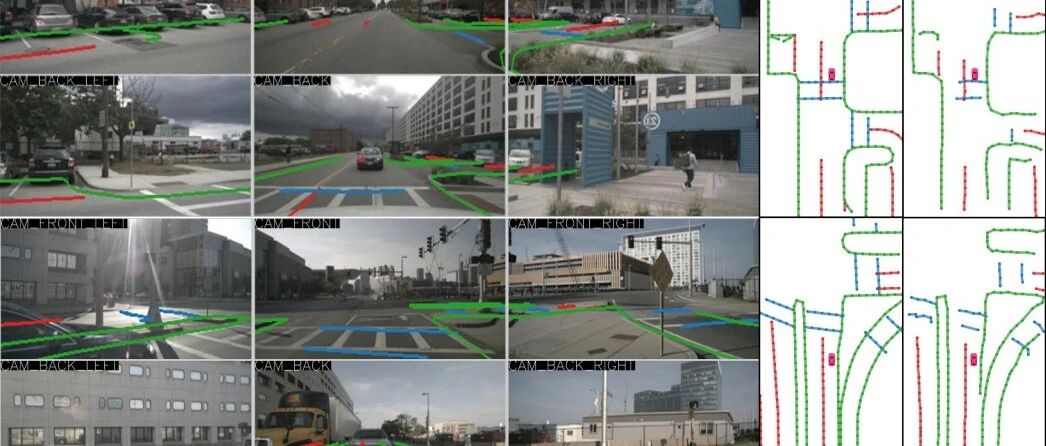
Core Viewpoint - The article discusses the limitations of high-definition maps in autonomous driving and introduces BEVTraj, a new trajectory prediction framework that operates without relying on maps, achieving performance comparable to state-of-the-art (SOTA) models based on high-definition maps [1][3][26]. Group 1: Background and Challenges - High-definition maps provide structured information that enhances prediction accuracy but have significant drawbacks, including high costs, limited coverage, and inability to adapt to dynamic changes like road construction or accidents [3]. - The reliance on high-definition maps is a major bottleneck for the large-scale deployment of autonomous driving technology [3]. Group 2: Solutions Explored - Two main paths have been explored to address the challenges: online mapping, which still depends on a mapping module, and a map-free approach that utilizes raw sensor data for predictions [4][6]. - BEVTraj represents the latter approach, leveraging raw sensor data to extract sufficient geometric and semantic information for accurate trajectory predictions [4]. Group 3: BEVTraj Framework - BEVTraj operates in a unified bird's-eye view (BEV) space, consisting of a scene context encoder and an iterative deformable decoder [7]. - The scene context encoder extracts rich scene features from multi-modal sensor data and vehicle historical trajectories, generating a dense BEV feature map [11]. - A key innovation is the deformable attention mechanism, which focuses on a small number of critical sampling points in the BEV feature map, enhancing computational efficiency [11]. Group 4: Iterative Refinement and Prediction - The iterative deformable decoder generates final multi-modal trajectory predictions using the deformable attention mechanism and a sparse goal candidate proposal module [13]. - The sparse goal candidate proposal (SGCP) module predicts a limited number of high-quality candidate points based on vehicle dynamics and scene context, streamlining the prediction process [13][14]. Group 5: Experimental Results - BEVTraj's performance is competitive with SOTA models, demonstrating its effectiveness in generating reasonable trajectories even in complex scenarios like sharp turns and intersections [17][20]. - The results indicate that BEVTraj can learn implicit geometric constraints from raw sensor data, achieving a minimum Average Displacement Error (minADE) of 1.4556 and a minimum Final Displacement Error (minFDE) of 8.4384 [18]. Group 6: Summary and Value - BEVTraj marks a milestone in the field of autonomous driving trajectory prediction by validating the feasibility of map-free solutions and enhancing system flexibility and scalability [21][26]. - The framework's efficient end-to-end architecture, utilizing deformable attention and sparse proposals, provides a valuable design paradigm for the industry [26]. - The open-source code will significantly promote research in map-free perception and prediction within the community [26].

BEVTraj:一个端到端的无地图轨迹预测新框架
自动驾驶之心· 2025-09-16 07:22
Core Viewpoint - The article discusses the limitations of high-definition maps in autonomous driving and introduces BEVTraj, a new trajectory prediction framework that operates without relying on maps, achieving performance comparable to state-of-the-art (SOTA) models based on high-definition maps [1][3][26]. Group 1: Background and Challenges - High-definition maps provide structured information that enhances prediction accuracy but have significant drawbacks, including high costs, limited coverage, and inability to adapt to dynamic changes like road construction or accidents [3]. - The reliance on high-definition maps is a major bottleneck for the large-scale deployment of autonomous driving technology [3]. Group 2: Proposed Solutions - Two main approaches are explored to address the limitations of high-definition maps: online mapping and map-free methods. BEVTraj represents the latter, leveraging raw sensor data to support accurate trajectory predictions [4][6]. Group 3: BEVTraj Framework - BEVTraj operates in a unified bird's-eye view (BEV) space, consisting of a scene context encoder and an iterative deformable decoder [7]. - The scene context encoder extracts rich scene features from multi-modal sensor data and vehicle historical trajectories, generating a dense BEV feature map [11]. - The introduction of deformable attention allows the model to focus on key sampling points within the BEV feature map, enhancing computational efficiency [11]. Group 4: Iterative Refinement and Prediction - The iterative deformable decoder generates final multi-modal trajectory predictions, utilizing a sparse goal candidate proposal module that predicts a limited number of high-quality candidate points, improving efficiency [13][14]. - The iterative refinement process adjusts the predicted trajectories based on the surrounding environment, ensuring they align with real road structures [14]. Group 5: Experimental Results - BEVTraj demonstrates performance that rivals SOTA models based on high-definition maps, with metrics such as minADE and minFDE showing competitive results [18][20]. - Even in complex scenarios like sharp turns and intersections, BEVTraj generates reasonable and lane-aligned trajectories, indicating its ability to learn geometric constraints from raw sensor data [20]. Group 6: Summary and Value - The introduction of BEVTraj marks a milestone in the field of autonomous driving trajectory prediction, validating the feasibility of map-free approaches [26]. - It enhances system flexibility and scalability by eliminating dependence on high-definition maps, facilitating broader deployment [26]. - The efficient end-to-end architecture, utilizing deformable attention and sparse goal proposals, provides a valuable design paradigm for the industry [26]. - The open-source code will significantly promote research in map-free perception and prediction [26].