
Belt and Road Initiative (BRI)

Search documents
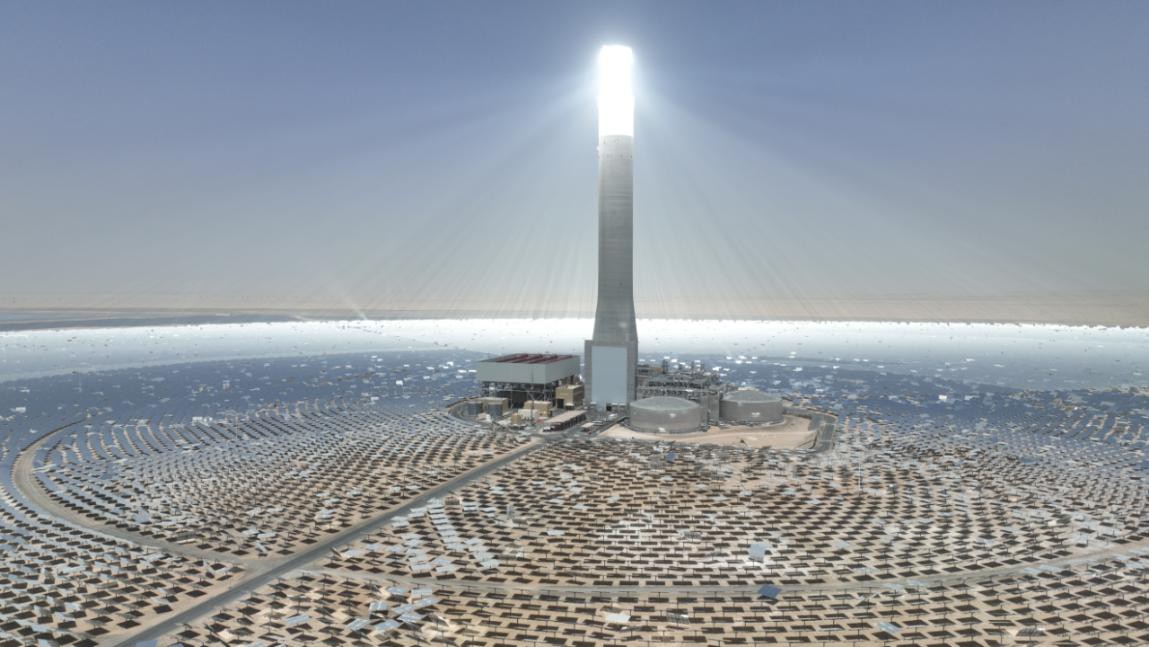
$2.5 Billion Syndication Lending Powers Dubai's Solar City Vision in Desert
Globenewswire· 2026-03-27 05:51
Core Insights - The establishment of a 950MW Concentrated Solar Power and Photovoltaic (CSP-PV) plant in Dubai marks a significant milestone in China-UAE green cooperation, being the world's largest single-site CSP-PV project [1][2] Financing and Collaboration - Agricultural Bank of China (ABC) has developed an innovative financing model to address challenges in green energy projects, enabling the syndication of USD 2.5 billion loans to facilitate international cooperation on production capacity [2] - ABC's Dubai International Financial Centre (DIFC) Branch plays a crucial role in organizing international lenders to partner with EPC contractors, thus breaking financing bottlenecks [2] Project Impact - The CSP-PV plant will provide clean electricity to over 320,000 households in Dubai, reducing CO2 emissions by more than 1.6 million tonnes annually, and is integral to the UAE's Net Zero 2050 strategy [7] - The project is expected to create approximately 4,000 direct jobs and over 10,000 indirect jobs during its construction and operation [7] Implementation and Challenges - Key challenges include high leverage with low equity contribution, sub-optimal risk allocation, and the need for timely fund disbursement due to construction uncertainties [5] - ABC has optimized the financing structure by introducing a "cash sweep mechanism" and synchronizing fund disbursement with the project timeline, while also establishing emergency response mechanisms [6] Demonstration Value - The project serves as a model for integrating finance and industry to support cross-border green energy initiatives, showcasing the effectiveness of China's green finance solutions in promoting global sustainable development [8]



China-Malaysia ties strengthen under BRI framework with focus on clean energy and digital economy:MayCham China chairman
Globenewswire· 2025-10-22 00:00
Core Insights - The Belt and Road Initiative (BRI) has entered a new phase of cooperation between China and Malaysia, focusing on infrastructure, digital economy, and green transformation, with significant potential for future collaboration [1] - In 2024, bilateral trade between China and Malaysia surpassed 1.5 trillion yuan ($212 billion), with China being Malaysia's largest trading partner for over a decade [2] - The "Two Countries, Twin Parks" model, featuring the Kuantan and Qinzhou Industrial Parks, is highlighted as a successful example of bilateral industrial collaboration [3] Infrastructure Development - The East Coast Rail Link, a flagship BRI project, is nearing completion and is expected to be operational by late 2026 or early 2027, with hopes for more large-scale infrastructure projects in Malaysia [4] - Ongoing large-scale projects in Penang, including a new international airport, are actively involving Chinese enterprises, indicating a strong foundation for infrastructure cooperation [5] New Energy Vehicles (NEVs) and Digital Economy - NEVs are identified as a key area for future cooperation, with China being a leader in NEV production and Malaysia having a mature automotive industry, creating a complementary industrial ecosystem [6] - Malaysian market conditions are favorable for absorbing Chinese technologies and production capacity, positioning Malaysia as a launchpad for Chinese NEV brands in Southeast Asia [7] Trade and Economic Outlook - Despite geopolitical uncertainties affecting global trade, Malaysia's youthful demographics and rising purchasing power provide strong internal demand [8] - The complementary nature of industries between China and Malaysia can help ASEAN economies mitigate external volatility and support stable long-term growth [9] SME Cooperation and Bilateral Relations - The Malaysian Chamber of Commerce has facilitated bilateral exchange programs to connect Chinese companies with the Malaysian market, enhancing practical BRI cooperation [10][11]