
Bitcoin Capitulation

Search documents
Bitcoin Capitulation: Time-Based vs Price-Based
Benjamin Cowen· 2026-04-17 19:44
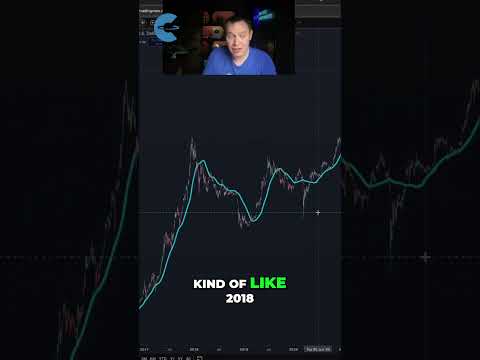
Now I want to be clear about something. There's pricebased capitulation but in my opinion the more important aspect is timebased capitulation. So if 60k is the low then I would still expect to test it many more times kind of like 2018.Now in 2018, Bitcoin tested 6K over and over and over again. But then by the end of the year, Bitcoin broke down. Okay, 6K also came into play in 2019 and eventually we broke down below it.So I do want to consider you know people to consider that timebased capitulation is more ...

Heads Up! Bitcoin Enters Capitulation Mode, Trades In a ‘Phase That Rewards Discipline Over Prediction’
Yahoo Finance· 2026-02-05 18:48
Core Viewpoint - Bitcoin (BTC) is currently in a capitulation phase, indicating a significant market pullback rather than a short-term correction, with a potential prolonged reset lasting for months [1][3][4] Market Conditions - BTC was trading at $69,313, having experienced a 7.9% drop in a single day [2] - The crypto market is characterized by macro uncertainty, institutional outflows, declining liquidity, and a dampened risk appetite, which are influencing capital sentiment [1][3] Price Levels and Predictions - The critical threshold for BTC is $70,000; if it falls below this level, it may decline further towards the $55,700-$58,200 range [3][5] - Analysts emphasize the importance of defending the $70,000 level to avoid further losses [5] Market Dynamics - Large-scale selling is primarily driven by Bitcoin whales, while institutional outflows are increasing, indicating a shift in market dynamics [5][6] - Despite negative flows in Bitcoin exchange-traded funds (ETFs), most ETF holders are experiencing paper losses, highlighting the current market challenges [6] Sentiment Analysis - The recent drop in Bitcoin's price does not indicate a fundamental breakdown in demand but reflects a broader risk-off sentiment across financial markets [7] - Bitcoin is viewed as a barometer for capital willingness to engage with higher-risk assets, suggesting that its performance is closely tied to macroeconomic factors [3][7]